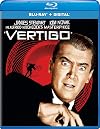
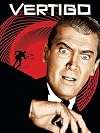
Vertigo [1958 film]
by Alfred Hitchcock (Director), Alec Coppel (Screenwriter), Samuel A. Taylor (Screenwriter)
On This Page
Description
Scottie Ferguson, a San Francisco police detective is forced to retire when a freak accident gives him a severe case of acrophobia. Ferguson is hired by a rich shipbuilder to follow his wife who is behaving suspiciously and might be planning suicide. He falls in love with her, she is later murdered and Ferguson becomes demonic in his desire to re-create her in another woman.Tags
Recommendations






Member Reviews
A retired cop is hired to follow a woman whose husband claims she’s possessed.
Suspenseful, fairly unique, and unmistakably 1958. It’s kind of two different movies, one after the other. About two thirds of the way through the film, the first story comes to a climax, things twist around, and a new story starts in a different direction. The first time I saw it, that bothered me a lot, and I wasn't really able to get into the second story. Watching it a second time, it's like a completely different movie. The first section now seems like prolonged set-up to the second section - which, now that I'm not distracted by having the rug pulled out by Stewart's miscasting, I can appreciate as having some of Hitchcock's strongest show more moments.
Concept: B
Story: B
Characters: B
Dialog: B
Pacing: B
Cinematography: A
Special effects/design: B
Acting: B
Music: A
Enjoyment: A
GPA: 3.3/4 show less
Suspenseful, fairly unique, and unmistakably 1958. It’s kind of two different movies, one after the other. About two thirds of the way through the film, the first story comes to a climax, things twist around, and a new story starts in a different direction. The first time I saw it, that bothered me a lot, and I wasn't really able to get into the second story. Watching it a second time, it's like a completely different movie. The first section now seems like prolonged set-up to the second section - which, now that I'm not distracted by having the rug pulled out by Stewart's miscasting, I can appreciate as having some of Hitchcock's strongest show more moments.
Concept: B
Story: B
Characters: B
Dialog: B
Pacing: B
Cinematography: A
Special effects/design: B
Acting: B
Music: A
Enjoyment: A
GPA: 3.3/4 show less
A retired San Francisco detective suffering from acrophobia investigates the strange activities of an old friend's wife, all the while becoming dangerously obsessed with her.
(Source: TMDB)
(Source: TMDB)
CHECK SHELVES
Cool film reveals the big plot twist midway through. Très chic double-deaths with an over-the-top, over-the-tower Grand Guignol ending!
Mar 15, 2024Portuguese (Brazil)
128 minutos
Feb 25, 2012Portuguese (Brazil)
Ratings
Members
- Recently Added By
Published Reviews
ThingScore 100
As Hitchcock cuts back and forth between Novak's face (showing such pain, such sorrow, such a will to please) and Stewart's (in a rapture of lust and gratified control), we feel hearts being torn apart: They are both slaves of an image fabricated by a man who is not even in the room--Gavin, who created “Madeleine” as a device to allow himself to get away with the murder of his wife.
As show more Scottie embraces “Madeleine,” even the background changes to reflect his subjective memories instead of the real room he's in. Bernard Herrmann's score creates a haunting, unsettled yearning. And the camera circles them hopelessly, like the pinwheel images in Scottie's nightmares, until the shot is about the dizzying futility of our human desires, the impossibility of forcing life to make us happy. This shot, in its psychological, artistic and technical complexity, may be the one time in his entire career that Alfred Hitchcock completely revealed himself, in all of his passion and sadness. (Is it a coincidence that the woman is named Madeleine--the word for the French biscuit, which, in Proust, brings childhood memories of loss and longing flooding back?) show less
As show more Scottie embraces “Madeleine,” even the background changes to reflect his subjective memories instead of the real room he's in. Bernard Herrmann's score creates a haunting, unsettled yearning. And the camera circles them hopelessly, like the pinwheel images in Scottie's nightmares, until the shot is about the dizzying futility of our human desires, the impossibility of forcing life to make us happy. This shot, in its psychological, artistic and technical complexity, may be the one time in his entire career that Alfred Hitchcock completely revealed himself, in all of his passion and sadness. (Is it a coincidence that the woman is named Madeleine--the word for the French biscuit, which, in Proust, brings childhood memories of loss and longing flooding back?) show less
added by SnootyBaronet
YOU might say that Alfred Hitchcock's latest mystery melodrama, "Vertigo," is all about how a dizzy fellow chases after a dizzy dame, the fellow being an ex-detective and the dame being—well, you guess. That is as fair a thumbnail digest as we can hastily contrive to give you a gist of this picture without giving the secret away. And, believe us, that secret is so clever, even though it is show more devilishly far-fetched, that we wouldn't want to risk at all disturbing your inevitable enjoyment of the film.... Mr. Stewart, as usual, manages to act awfully tense in a casual way, and Miss Novak is really quite amazing in—well, here is a bit of a hint—dual roles. Tom Helmore is sleek as the husband and Barbara Bel Geddes is sweet as the nice girl who loves the detective and has to watch him drifting away. show less
added by Lemeritus
"Vertigo" is prime though uneven Hitchcock and with the potent marquee combination of James Stewart and Kim Novak should prove to be a highly profitable enterprise at the boxoffice. Stewart, on camera almost constantly throughout the film's 126 minutes, comes through with a startlingly fine performance as the lawyer-cop who suffers from acrophobia--that is, vertigo or dizziness in high places.
added by Lemeritus
Lists

100 Films Challenge
100 works; 1 member
Author Information

Alfred Hitchcock was born on August 13, 1899 in London, England. He graduated from St. Ignatius College, where he studied engineering, and took art courses at the University of London. He worked briefly as a technical calculator for a cable company, but soon decided to focus on art, becoming an advertising layout draftsman for a London department show more store. In 1920, he got a job writing and illustrating title cards for silent pictures. He rose quickly, to script writer, art director and assistant director. By 1925, he had become a director, making a melodrama called The Pleasure Garden. In 1929, he directed Blackmail, Britain's first widely successful talking feature. The other movies he directed in England included The Lodger (U.S. title, The Case of Jonathan Drew), The Man Who Knew Too Much, The 39 Steps, and The Lady Vanishes. He was approached by producer David O. Selznick about directing in the United States, and he accepted so he could take advantage of the better-equipped American studios. His first American film, Rebecca, won the Academy Award for best picture. The other movies he directed in the United States included Shadow of a Doubt, Spellbound, Rear Window, Vertigo, Psycho, The Birds, Frenzy, and Family Plot. In 1979, he was awarded the American Film Institute Life Achievement Award. In 1980, he was knighted by Queen Elizabeth II. He died from liver failure and heart problems on April 29, 1980 at the age of 80. (Bowker Author Biography) show less
All Editions
Some Editions
Awards and Honors
Awards
Work Relationships
Is contained in
The Alfred Hitchcock Collection: The Best of Hitchcock, Vol. 2: Vertigo / The Birds / The Trouble with Harry / Frenzy / Marnie / Saboteur / Torn Curtain / Family Plot by Alfred Hitchcock
Alfred Hitchcock Classics Collection: Rear Window, Vertigo, Psycho and The Birds by Alfred Hitchcock
Alfred Hitchcock ,The Masterpiece Collection, Discs 5-8: The Trouble With Harry / The Man Who Knew Too Much / Vertigo / Psycho [Psycho HDX digital / all DVD] by Alfred Hitchcock
The James Stewart Hollywood Legend Collection (Vertigo / Rear Window / Harvey / Winchester '73 / Destry Rides Again) by James Stewart
The Alfred Hitchcock Collection Vol. 1 (Psycho / Vertigo / Alfred Hitchcock Presents Vol. 1) by Alfred Hitchcock
Is an adaptation of
Is parodied in
Has as a reference guide/companion
Common Knowledge
- Canonical title
- Vertigo [1958 film]
- Original title
- Vertigo
- Original publication date
- 1958-05-09
- People/Characters
- Scottie Ferguson (James Stewart); Judy Barton / Madeleine Elster (Kim Novak)
- Important places
- Golden Gate Bridge, San Francisco, California, USA; San Francisco, California, USA; San Juan Bautista, California, USA; California, USA
- Related movies
- Vertigo (1958 | IMDb)
- Quotations
- Only one is a wanderer; two together are always going somewhere.
- Original language
- English
- Canonical DDC/MDS
- 791.4372
- Canonical LCC
- PN1997
- Disambiguation notice
- From the novel “D’entre Les Morts” by Pierre Boileau and Thomas Narcejac
Classifications
- DDC/MDS
- 791.4372 — Arts & recreation Recreation, sports, and performing arts Public performances Motion pictures, radio, television, podcasting Motion pictures Films; screenplays Single films
- LCC
- PN1997 — Language and Literature Literature (General) Literature (General) Drama Motion pictures Plays, scenarios, etc.
Statistics
- Members
- 461
- Popularity
- 66,189
- Reviews
- 5
- Rating
- (4.25)
- Languages
- 5 — Dutch, English, French, Italian, Spanish
- ISBNs
- 11
- UPCs
- 9
- ASINs
- 28