
Kokoro
by Natsume Soseki
On This Page
Description
"The subject of 'Kokoro,' which can be translated as 'the heart of things' or as 'feeling,' is the delicate matter of the contrast between the meanings the various parties of a relationship attach to it. In the course of this exploration, Soseki brilliantly describes different levels of friendship, family relationships, and the devices by which men attempt to escape from their fundamental loneliness. The novel sustains throughout its length something approaching poetry, and it is rich in show more understanding and insight. The translation, by Edwin McClellan, is extremely good." -Anthony West, The New Yorker. show lessTags
Recommendations
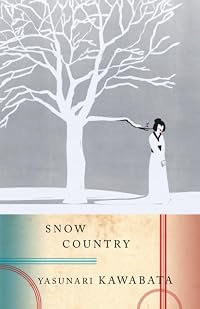
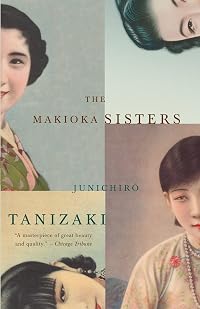
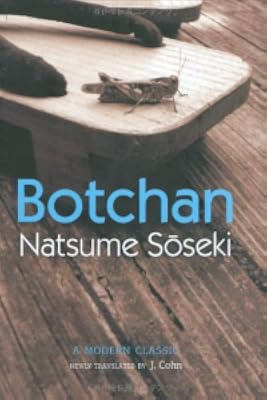
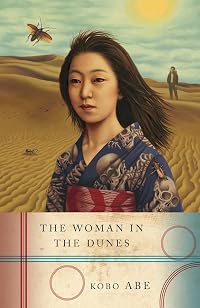
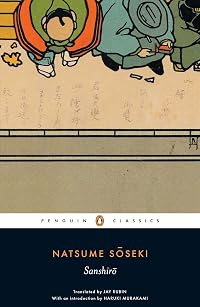
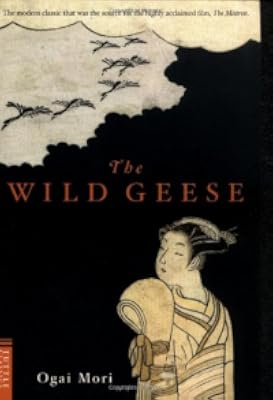
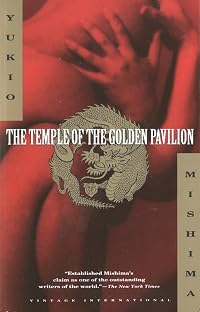
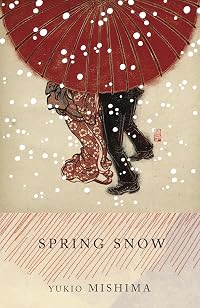
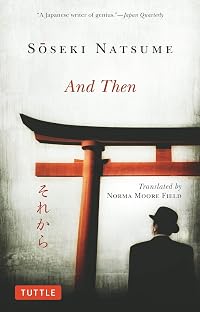
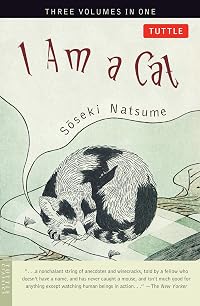
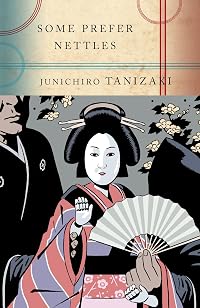
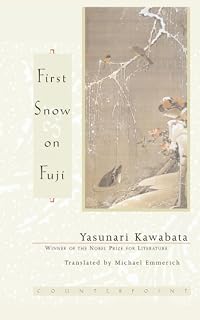


Member Recommendations
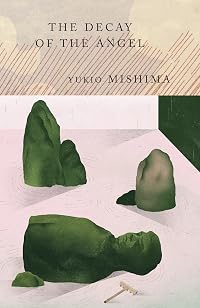
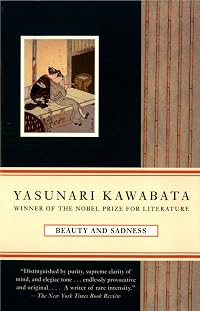
Limelite Another dark psychological novel sharing the theme of isolation or loneliness told mostly through the two main character's thoughts, but more beautifully written.
20
Member Reviews
I felt like reading Kokoro because the characters in The Great Passage talked about it. Yes, I will take book recommendations from fictional characters now, thank you very much ;)
The writing is like looking at the sea, seeing the waves come and go. The rhythm lulls you and you follow along, almost despite yourself. It feels both light and heavy, simple and very intricate.
This short novel has 110 chapters. The reader can take a breath in between, reading slower, reflecting, letting thoughts settle for a moment. I liked that.
There are three stories here:
📖 The unnamed young narrator who meets and comes to admire an older man he calls Sensei. “Admire” is the wrong word, though, it is more of an intellectual obsession born out of show more loneliness and an undefined youthful longing for “something else”. A very strange, yet compelling, friendship dance follows, with the narrator always wanting more, and with Sensei always drawing back.
“...whenever some unexpected terseness of his shook me, my impulse was to press forward with the friendship. It seemed to me that if I did so, my yearning for the possibilities of all he had to offer would someday be fulfilled.”
There are hints of tragedy and dark secrets in Sensei’s past, and his marriage is a melancholy thing. Sensei seems to fear the young man’s admiration.
“The memory of having sat at someone’s feet will later make you want to trample him underfoot. I am trying to fend off your admiration for me, you see, in order to avoid your future contempt.”
📖 The narrator coming to his parents’ home to be with his dying father. These are harrowing chapters. Young man’s time with Sensei has corrupted him somehow, I feel, made him less of who he should be. The decision he makes at the end of Part 2 is impulsive and rash. We never see its aftermath, making it all the more tragic.
📖 The third story is Sensei’s letter, his confession. The love story has a lovely beginning. “Whenever I saw her face, I felt that I myself had become beautiful.” I found the portrayal of romantic love in a misogynic society interesting. How does a clever, sensitive man reconcile romantic love with his contempt for women in general? (He tries. He doesn’t, not really.)
With the love triangle in place, the story turns ugly. It is about people unable to express their feelings and talk to each other about them. This evolves into an emotional impotence and an inability to act when you need to (it gets tedious for the reader, though).Words said and words unsaid destroy everyone involved.
“Words are not just vibrations in the air, they work more powerfully than that, on more powerful objects.”
Sensei does a vile, dishonourable thing. After that, his life is but an imitation of one.
It’s interesting how things authors don’t show you can still be powerful – we never see the young man’s reaction to the letter, but just thinking about it hits you hard.
I feel melancholy after finishing, but I liked the experience of reading this classic. show less
The writing is like looking at the sea, seeing the waves come and go. The rhythm lulls you and you follow along, almost despite yourself. It feels both light and heavy, simple and very intricate.
This short novel has 110 chapters. The reader can take a breath in between, reading slower, reflecting, letting thoughts settle for a moment. I liked that.
There are three stories here:
📖 The unnamed young narrator who meets and comes to admire an older man he calls Sensei. “Admire” is the wrong word, though, it is more of an intellectual obsession born out of show more loneliness and an undefined youthful longing for “something else”. A very strange, yet compelling, friendship dance follows, with the narrator always wanting more, and with Sensei always drawing back.
“...whenever some unexpected terseness of his shook me, my impulse was to press forward with the friendship. It seemed to me that if I did so, my yearning for the possibilities of all he had to offer would someday be fulfilled.”
There are hints of tragedy and dark secrets in Sensei’s past, and his marriage is a melancholy thing. Sensei seems to fear the young man’s admiration.
“The memory of having sat at someone’s feet will later make you want to trample him underfoot. I am trying to fend off your admiration for me, you see, in order to avoid your future contempt.”
📖 The narrator coming to his parents’ home to be with his dying father. These are harrowing chapters. Young man’s time with Sensei has corrupted him somehow, I feel, made him less of who he should be. The decision he makes at the end of Part 2 is impulsive and rash. We never see its aftermath, making it all the more tragic.
📖 The third story is Sensei’s letter, his confession. The love story has a lovely beginning. “Whenever I saw her face, I felt that I myself had become beautiful.” I found the portrayal of romantic love in a misogynic society interesting. How does a clever, sensitive man reconcile romantic love with his contempt for women in general? (He tries. He doesn’t, not really.)
With the love triangle in place, the story turns ugly. It is about people unable to express their feelings and talk to each other about them. This evolves into an emotional impotence and an inability to act when you need to (it gets tedious for the reader, though).Words said and words unsaid destroy everyone involved.
“Words are not just vibrations in the air, they work more powerfully than that, on more powerful objects.”
Sensei does a vile, dishonourable thing. After that, his life is but an imitation of one.
It’s interesting how things authors don’t show you can still be powerful – we never see the young man’s reaction to the letter, but just thinking about it hits you hard.
I feel melancholy after finishing, but I liked the experience of reading this classic. show less
I have a feeling that Kokoro is a book that will make more and more sense the more I know about modern Japanese culture. On one level it's a simple story about friendship and betrayal, but on another level it's a working-out of the cultural tensions set up in the minds of Japanese intellectuals who lived through the opening-up of Japan to western ideas during the Meiji period (Sōseki was born in the year of Meiji's accession to the imperial throne). The foreground story of Kokoro takes place in the months around the emperor's death, and its main character, Sensei (teacher), is an older man - a contemporary of the author - whose life has been messed up by his inability to resolve the existential conflict between the demands of the two show more threads of his upbringing, the requirement to subsume himself into the traditional, collective family values of middle-class Japanese society setting itself against the western need for intellectual self-determination. The narrator of the first part of the book is a man of a younger generation who gets into a similar ethical tangle, but with different dimensions and results.
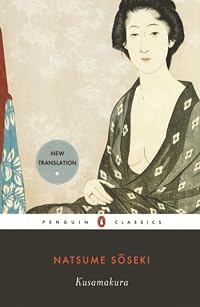
It's all very carefully, delicately built up, with a lot of everyday detail about the rapidly-changing face of Japan in the decades before 1914 used to reflect and explain the development of the conflicts the characters are dealing with. Very much a book about male friendships (what used to be called "homosocial" relationships in the good old days of literary theory), where the women rarely speak and don't have all that much to do apart from arranging flowers and cooking (is that why Penguin coincidentally put a brush-stroke across the woman's eyes in the cover design?). But that's an accusation that would be equally true of a lot of western novels of the same period.
Very interesting, and McKinnon's translation reads very naturally and transparently. show less
It's all very carefully, delicately built up, with a lot of everyday detail about the rapidly-changing face of Japan in the decades before 1914 used to reflect and explain the development of the conflicts the characters are dealing with. Very much a book about male friendships (what used to be called "homosocial" relationships in the good old days of literary theory), where the women rarely speak and don't have all that much to do apart from arranging flowers and cooking (is that why Penguin coincidentally put a brush-stroke across the woman's eyes in the cover design?). But that's an accusation that would be equally true of a lot of western novels of the same period.
Very interesting, and McKinnon's translation reads very naturally and transparently. show less
A tragedy that grips the reader right from the beginning, it’s somber elegiac mood slowly unwinds a story that leads inexorably to a conclusion that has been signposted nearly from the start. It is set in around Tokyo Japan at the start of the 20th century when Emperor Meiji (1868-1912) was leading a rapid drive to Westernise his semi-feudal country. The effects were keenly felt at the universities and students and teachers had to adapt quickly in rapidly changing times, some could not and Kokoro is the story of two individuals who were out of step with the modern world and found themselves cast adrift, in a world in-between the old and the new.
The story is told in the first person by a young student who is studying for his show more graduation at the University in Tokyo. He has few friends and does not want to return home to the country house for his holidays and goes on vacation to the coast. On a crowded beach he first spies Sensei a middle aged Japanese man in the company of a Westerner. The student is curious and engineers a chance meeting on the beach a few days later when Sensei is on his own. He finds someone who seems to be a kindred spirit in that he also has few friends and has an inner life that is rarely revealed, but who has a wisdom and conversation on issues that particularly appeals to the young student. He assiduously courts Sensei’s company and eventually gets invited to his home after the vacation where he meets Sensei’s wife. He becomes Sensei’s friend and soon discovers that he is his only friend and he gradually becomes aware of a tragic event in Sensei’s earlier life that has shaped his current situation and left him with a melancholia that prevents him from working and from participation in normal life. Sensei is enigmatic and like the student, the reader is almost afraid to find out his terrible secret:
Sensei “I do not have the right to expect anything from this world”
Sensei “there is guilt in loving” he insists more than once.
Sensei “it is not you in particular that I distrust, But the whole of humanity”
Sensei "You see, loneliness is the price we have to pay for being born in this modern age, so full of freedom, independence, and our own egotistical selves”
The student is called away from Tokyo to attend to his father who is slowly dying of a disease of the liver and he cannot get away to see Sensei. The students own problems take over his thoughts, but he is worried when a telegram arrives from Sensei followed shortly after by a long letter. Sensei has decided to unburden himself to his only friend and he starts by relating how his relations have cheated him out of his inheritance, but there is so much more and slowly the tragedy unfolds.
How can a sensitive, intelligent man like Sensei become so embittered and so isolated and the answer to this question goes to the core of the human condition; love, death, honour, friendship, family and betrayal are themes played out against the clash of the old country culture and modern city Westernisation. Above all this is a very human story of people unable to fit into a world in which the ground seems to be shifting away from under them and it is the old values which trap them, but which they cling to nevertheless.
Apart from an unforgettable story Soseki takes the reader into the milieu of pre first world war Japan. We glimpse a culture and a tradition that is told to us by an insider in such a way that we are soon immersed in it. Natsume Soseki has been labelled Japan’s first truly modern writer and this book published in 1914 is his masterpiece and enough to see him included in many lists of classic 20th century fiction, however don’t take the critics word for it, explore this mesmerising book yourself. From the first page to the last I was hooked and could not put it down. A five star read. show less
The story is told in the first person by a young student who is studying for his show more graduation at the University in Tokyo. He has few friends and does not want to return home to the country house for his holidays and goes on vacation to the coast. On a crowded beach he first spies Sensei a middle aged Japanese man in the company of a Westerner. The student is curious and engineers a chance meeting on the beach a few days later when Sensei is on his own. He finds someone who seems to be a kindred spirit in that he also has few friends and has an inner life that is rarely revealed, but who has a wisdom and conversation on issues that particularly appeals to the young student. He assiduously courts Sensei’s company and eventually gets invited to his home after the vacation where he meets Sensei’s wife. He becomes Sensei’s friend and soon discovers that he is his only friend and he gradually becomes aware of a tragic event in Sensei’s earlier life that has shaped his current situation and left him with a melancholia that prevents him from working and from participation in normal life. Sensei is enigmatic and like the student, the reader is almost afraid to find out his terrible secret:
Sensei “I do not have the right to expect anything from this world”
Sensei “there is guilt in loving” he insists more than once.
Sensei “it is not you in particular that I distrust, But the whole of humanity”
Sensei "You see, loneliness is the price we have to pay for being born in this modern age, so full of freedom, independence, and our own egotistical selves”
The student is called away from Tokyo to attend to his father who is slowly dying of a disease of the liver and he cannot get away to see Sensei. The students own problems take over his thoughts, but he is worried when a telegram arrives from Sensei followed shortly after by a long letter. Sensei has decided to unburden himself to his only friend and he starts by relating how his relations have cheated him out of his inheritance, but there is so much more and slowly the tragedy unfolds.
How can a sensitive, intelligent man like Sensei become so embittered and so isolated and the answer to this question goes to the core of the human condition; love, death, honour, friendship, family and betrayal are themes played out against the clash of the old country culture and modern city Westernisation. Above all this is a very human story of people unable to fit into a world in which the ground seems to be shifting away from under them and it is the old values which trap them, but which they cling to nevertheless.
Apart from an unforgettable story Soseki takes the reader into the milieu of pre first world war Japan. We glimpse a culture and a tradition that is told to us by an insider in such a way that we are soon immersed in it. Natsume Soseki has been labelled Japan’s first truly modern writer and this book published in 1914 is his masterpiece and enough to see him included in many lists of classic 20th century fiction, however don’t take the critics word for it, explore this mesmerising book yourself. From the first page to the last I was hooked and could not put it down. A five star read. show less
This gentle, atmospheric book is more about an existential feeling than it is about plot. It reminded me of Le Grand Meaulnes, and also the story The Judgment by Kafka. I’m going to go ahead and spoil such plot as there is. A university student makes friends with an older man his father’s age, whom he calls Sensei. Sensei is not very demonstrative and likes to keep his personal business to himself. I saw the character Sensei as a very realistic portrayal of a person who has been depressed for a long time, but the young man just sees Sensei as enigmatic and fascinating. It felt to me like the university student was practicing for being in love or making friends with his peers by trying to get close to Sensei, and also looking for a show more father figure because it turns out his own father is terminally ill. The young man goes home to be with his family. I thought the description of the father’s illness and the varied ways that everyone involved tried to avoid or deny what’s happening was incredibly realistic and timeless and this alone makes this book a masterpiece. However, during his father’s final hours, the young man receives a by-the-time-you-get-this-I-will-be-dead letter from Sensei. He rushes off the to the train station to go to Sensei. The rest of the book is Sensei’s long suicide letter, explaining what happened to him when he was young and why he’s going to end his life. So, when Sensei was a young man, he fell in love with the daughter of the family he was boarding with, but he was completely stalled and unable to declare his love. Then he asked his friend to live in the house too. This man falls in love with the same woman, although it takes Sensei a while to figure this out because no one ever has a straightforward conversation with anyone in this book. But the friend has deep spiritual/philosophical beliefs that involve asceticism and renouncing love, so he feels like a terrible hypocrite. Sensei basically tells his friend, “Yes, you are a terrible hypocrite,” and then immediately asks the young woman’s mother for her daughter’s hand. After the friend finds out, he stabs himself to death in the nighttime. Sensei feels responsible for his friend’s suicide and is wracked with guilt for decades, but he never explains anything to his wife because he doesn’t want to spoil her flowerlike purity. I don’t know if this was cultural, generational, the author’s own life view, or something else, but no one in this book has any get-up-and-go. It’s very hard for the characters to take any actions whatsoever and so they can never solve their problems; they just sink deeper into despond. The one thing they are able to do with great gusto and resolve is die by suicide. According to the introduction, the title of this book means “the heart of things.” I bought this book online, and it arrived with a yellow post-it note recommending further reading, which I found very touching. show less
I love this book despite its flaws. What flaws? Well, a latent misogyny and the implication that poverty reflects a character failing, for starters, but the principle flaw for me was an aloof, distant, overly-formal narrator in the first 2/3 of the story. This nameless voice could have been very sympathetic if his delivery had been different. A lonely university student, insecure and uncertain about his future? I could have identified with him, if he had been more engaging. He could have been a Holden Caulfield or a Gene Forrester. Instead the Student (that's what I'm going to call him from now on) held me at arm's length, coldly reporting his father's death and his estranged relationship with an older brother, as if he were giving a show more deposition. No doubt some of this stiff stoicism reflects his upbringing in the Japan of 1914- a time and place that stood on a lot of formality, and which probably regarded grieving as so much emo handwringing, and friendly familiarity as disrespectful frivolity. A wisecracking Holden Caulfield would be out-of-place here. Still, I would have liked a more intimate bond with the narrator. Looking past that, this was a melancholy book that I could not put down. It grieves at human suffering without shaking its fists at the sky or cutting itself in the bathroom stall of some nightclub. The narration is infused with a tired resignation which strikes me as vaguely Buddhist, the same way Vonnegut’s phrase "So it goes" does.
Kokoro is divided into three parts: in part one, Student befriends a retired professor he refers to as "Sensei" (i.e. "Teacher"). Part two follows recently-graduated Student back to his parents' modest rural home to his father's deathbed, and to settle the details of his inheritance with his estranged brother. Part three takes the form of a letter Sensei left for Student, to be opened after his death. That letter is far and away the most gripping part of the book, because Sensei's voice is much more relatable and intimate than Student‘s.
Without spoiling too much, Sensei's story carries the book, and is a truly heartbreaking account of love and loss, friendship tested, regret and remorse. You know; the big stuff; the stuff that actually happens to everyday people, who then spend years dissecting and analyzing the events, playing them over in their minds, both as part of a healing process, and in an effort to learn whatever lessons their mistakes may hold. Who reading this review hasn't reflected back on some regrettable incident, years after the fact, imagining how it could have gone better? Who hasn't sat pondering, embarrassed with oneself over how indefensible some youthful outburst, indiscretion or impulsive act seems, looking back on it now with added experience and maturity? This is all part of living and growing, isn't it? The story here feels very real- that is to say it does not strike me as the least bit contrived, and it's all very sad, but I guess I really appreciate Kokoro for not feeling compelled to keep the tone upbeat, or to end the story with a happy resolution that has a neat bow on top. Life can feel like a mess sometimes.
I haven't read Barbara Ehrenreich's book "Bright-sided" but I think it is about the modern (and especially American) tendency to fetishize happiness to the exclusion of all other emotions. And that's really sick, because limiting oneself to a narrow band of feelings at the happy end of the spectrum is to deny a part of one's self and one's experiences, as if they don't have value; as if they don’t belong to the overall substance of who we are, or what our life has meant. I almost feel ridiculous writing this, as if maybe this is a straw man I'm putting out there just to knock down, but let me share some context here: the last couple months have seen a minor controversy in medicine, as proposed changes to the Diagnostic and Statistical Manual, 5th Edition (DSM-5) have been leaked prior to its expected release later this year. The DSM provides Psychiatrists with guidelines on diagnosing psychiatric disorders. Unless the current controversy changes things, it looks like the new DSM will regard depressive symptoms as pathologic, regardless of context or duration. In other words, there will be no recognition of grieving as a normal human experience; if you're depressed on the day of a loved one's death, you'll be considered pathologically depressed, and in need of medication. It's a bit off-topic here, but shyness will apparently also no longer qualify as a normal condition. There is little doubt in my mind that the influence of psychotropic drug manufacturers has something to do with these changes, but that isn‘t what I want to discuss here. What's concerning is that a portion of the normal range of human emotions is under attack. Part of who we are is about to be pathologized, marginalized, stigmatized and medicated away. And for what? If this "war on sadness" (my expression) successfully puts a pharmaceutical smile on everybody's faces, and exterminates any trace of negativity from the population, can anybody honestly imagine that humankind will be the better for it? Koroko has been a wonderful book to read in the midst of this debate, because everything of interest on these pages is terribly tragic yet deeply fulfilling to read. There is substance here; and I don't want to be misunderstood as equating mopey self-pity with depth, because that's not what this book implies. These characters are richer, more interesting, more human for their suffering. Sensei's remorse, his regret at words left unsaid, are deeply human. Could somebody perpetually happy ever be this human? True: at some point, Sensei's remorse becomes pathologic, and he probably could have benefited from whatever assistance modern psychiatrists are qualified to offer. Finding that fine line between normal and disease is a challenge; a skill that psychiatrists spend years honing. The anticipated revisions in the DSM-5 suggest that Psychiatry as a profession has given up looking for that line, which is unfortunate. It's a disservice to patients, which strikes me -ironically- as a very sad development. show less
Kokoro is divided into three parts: in part one, Student befriends a retired professor he refers to as "Sensei" (i.e. "Teacher"). Part two follows recently-graduated Student back to his parents' modest rural home to his father's deathbed, and to settle the details of his inheritance with his estranged brother. Part three takes the form of a letter Sensei left for Student, to be opened after his death. That letter is far and away the most gripping part of the book, because Sensei's voice is much more relatable and intimate than Student‘s.
Without spoiling too much, Sensei's story carries the book, and is a truly heartbreaking account of love and loss, friendship tested, regret and remorse. You know; the big stuff; the stuff that actually happens to everyday people, who then spend years dissecting and analyzing the events, playing them over in their minds, both as part of a healing process, and in an effort to learn whatever lessons their mistakes may hold. Who reading this review hasn't reflected back on some regrettable incident, years after the fact, imagining how it could have gone better? Who hasn't sat pondering, embarrassed with oneself over how indefensible some youthful outburst, indiscretion or impulsive act seems, looking back on it now with added experience and maturity? This is all part of living and growing, isn't it? The story here feels very real- that is to say it does not strike me as the least bit contrived, and it's all very sad, but I guess I really appreciate Kokoro for not feeling compelled to keep the tone upbeat, or to end the story with a happy resolution that has a neat bow on top. Life can feel like a mess sometimes.
I haven't read Barbara Ehrenreich's book "Bright-sided" but I think it is about the modern (and especially American) tendency to fetishize happiness to the exclusion of all other emotions. And that's really sick, because limiting oneself to a narrow band of feelings at the happy end of the spectrum is to deny a part of one's self and one's experiences, as if they don't have value; as if they don’t belong to the overall substance of who we are, or what our life has meant. I almost feel ridiculous writing this, as if maybe this is a straw man I'm putting out there just to knock down, but let me share some context here: the last couple months have seen a minor controversy in medicine, as proposed changes to the Diagnostic and Statistical Manual, 5th Edition (DSM-5) have been leaked prior to its expected release later this year. The DSM provides Psychiatrists with guidelines on diagnosing psychiatric disorders. Unless the current controversy changes things, it looks like the new DSM will regard depressive symptoms as pathologic, regardless of context or duration. In other words, there will be no recognition of grieving as a normal human experience; if you're depressed on the day of a loved one's death, you'll be considered pathologically depressed, and in need of medication. It's a bit off-topic here, but shyness will apparently also no longer qualify as a normal condition. There is little doubt in my mind that the influence of psychotropic drug manufacturers has something to do with these changes, but that isn‘t what I want to discuss here. What's concerning is that a portion of the normal range of human emotions is under attack. Part of who we are is about to be pathologized, marginalized, stigmatized and medicated away. And for what? If this "war on sadness" (my expression) successfully puts a pharmaceutical smile on everybody's faces, and exterminates any trace of negativity from the population, can anybody honestly imagine that humankind will be the better for it? Koroko has been a wonderful book to read in the midst of this debate, because everything of interest on these pages is terribly tragic yet deeply fulfilling to read. There is substance here; and I don't want to be misunderstood as equating mopey self-pity with depth, because that's not what this book implies. These characters are richer, more interesting, more human for their suffering. Sensei's remorse, his regret at words left unsaid, are deeply human. Could somebody perpetually happy ever be this human? True: at some point, Sensei's remorse becomes pathologic, and he probably could have benefited from whatever assistance modern psychiatrists are qualified to offer. Finding that fine line between normal and disease is a challenge; a skill that psychiatrists spend years honing. The anticipated revisions in the DSM-5 suggest that Psychiatry as a profession has given up looking for that line, which is unfortunate. It's a disservice to patients, which strikes me -ironically- as a very sad development. show less
a novel written in a linear, highly continuous fashion, it's really a story of the blind leading the blind. a young man on vacation in the midst of his college years finds an old man from whom he finds himself impossible to extricate. according to our narrator, his sensei teaches him more than any of his formal studies could, but in truth, whatever his unoccupied and largely silent "mentor" imparts onto the little freak who's latched himself to him is rarely transmitted to the reader. it's only when the sensei emerges from his lifelong stupor to pen his testament in light of his imminent suicide that the reader understands why he's as stoic as he is. the narrator is hilariously stupid; he graduates from college unsure of what he wants show more to do in life, and balks at his family's inability to understand that his sensei isn't some wise mentor under whose wing he's been taken but rather another bum that he just kicks it with. all in all, it's a rather humorous story about a couple of guys who've fallen victim to convention and as products of a bygone era, see no place in the world for themselves any longer. show less
This novel is blow-me-away kind of gorgeous. It's my first novel by Natsume Soseki who has been considered to be Japan's finest contemporary novelist. I think that most Japanese fiction, in its simplicity of voice is beautiful, but this story has a grace in a class by itself.
It's a story about friendship, love, and betrayal. It's strength lies in the last part of the book in which we hear directly from Sensei, a friend of the university student who narrates the beginning of this book, as Sensei reveals how one important decision he makes during his life causes him unending guilt and deep spiritual pain.
I sincerely want to delve into more work by this amazing Japanese writer. I can't believe it took me so long to remove this book from show more my bookshelf and finally read it. What a treasure! show less
It's a story about friendship, love, and betrayal. It's strength lies in the last part of the book in which we hear directly from Sensei, a friend of the university student who narrates the beginning of this book, as Sensei reveals how one important decision he makes during his life causes him unending guilt and deep spiritual pain.
I sincerely want to delve into more work by this amazing Japanese writer. I can't believe it took me so long to remove this book from show more my bookshelf and finally read it. What a treasure! show less
Members
- Recently Added By
Lists

1001 Books You Must Read Before You Die
1,448 works; 1,134 members

Japanese Literature
230 works; 40 members

20th Century Literature
1,161 works; 55 members

Best Japanese Fiction
41 works; 10 members

Favorite World Literature in English Translation
22 works; 5 members

1,001 BYMRBYD Concensus
723 works; 27 members

Books from around the world: Asia
11 works; 1 member

End of Your Life Book Club
134 works; 4 members

Philip Ward's Lifetime Reading Plan
592 works; 22 members

New Lifetime Reading Plan by Fadiman and Major
225 works; 5 members
Canon de la narrativa universal del s. XX (cicutadry)
499 works; 3 members
Talk Discussions
Past Discussions
Kokoro by Natsume Soseki in Author Theme Reads (February 2012)
Author Information

Natsume Soseki's early education included the study of Chinese classics and architecture, but as an English literature major he found his life's work, as well as the friendship of haiku poet Masaoka Shiki, an important personal and literary influence. Soseki's prose, for example, is often interspersed with his own haiku. In 1900 the Japanese show more government sent Soseki, who was a professor of English literature, to London, but, poorly funded and isolated, he found his years abroad painful and began to exhibit neurotic behavior. On his return, he shocked society by giving up his teaching position at Tokyo University to write fiction for the Asahi newspaper, a profession associated with the world of "entertainers." Despite poor health in the last years of his life, Soseki continued to write an average of one novel a year. (Bowker Author Biography) show less
Some Editions
Awards and Honors
Awards
Notable Lists
Series
Belongs to Publisher Series
Work Relationships
Has the adaptation
Is parodied in
Has as a study
Common Knowledge
- Canonical title
- Kokoro
- Original title
- こころ
- Original publication date
- 1914 (original Japanese) (original Japanese); 1957 (English: Edwin McClellan ∙ Regnery Publishing) (English: Edwin McClellan ∙ Regnery Publishing); 2010 (English: McKinney Meredith) (English: McKinney Meredith)
- People/Characters
- Narrator [Kokoro]; Sensei [Kokoro]; Ojosan
- Important places
- Japan
- Related movies
- Kokoro (1955 | IMDb); Love Betrayed (1973 | IMDb)
- First words
- I always called him “Sensei.”
- Quotations
- Could that delicate and complex instrument that lies in the human breast ever really produce a reading that was absolutely clear and truthful, like a clock's hands pointing to numbers on its dial?
- Last words
- (Click to show. Warning: May contain spoilers.)So as long as my wife is alive, I want you to keep everything I have told you a secret—even after I myself am dead.
- Original language
- Japanese
Classifications
- Genres
- General Fiction, Fiction and Literature
- DDC/MDS
- 813 — Literature & rhetoric American literature in English American fiction in English
- LCC
- PL812 .A8 .K613 — Language and Literature Languages and literatures of Eastern Asia, Africa, Oceania Languages of Eastern Asia, Africa, Oceania Japanese language and literature Japanese literature Individual authors and works
- BISAC
Statistics
- Members
- 3,302
- Popularity
- 5,174
- Reviews
- 81
- Rating
- (3.97)
- Languages
- 18 — Chinese, Czech, Dutch, English, Finnish, French, German, Indonesian, Italian, Japanese, Korean, Latvian, Norwegian (Bokmål), Polish, Russian, Spanish, Swedish, Portuguese (Portugal)
- Media
- Paper, Audiobook, Ebook
- ISBNs
- 86
- ASINs
- 35