On This Page
Description
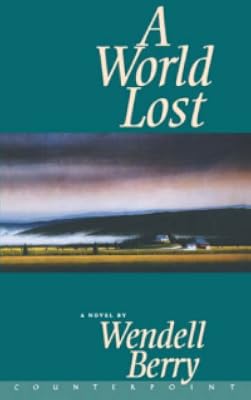
It is the summer of 1944, and nine-year-old Andy Catlett is engrossed in the wide easy countryside near Port William, Kentucky. But sadness, loss, and mystery invade Andy's world on a hot July afternoon when his Uncle Andrew is murdered.Tags
Recommendations








Member Reviews
Summary: Young Andy Catlett's life is forever changed the day his namesake Uncle Andrew is murdered, an event he spends a lifetime trying to understand.
Andy Catlett is nine years old on the summer day when his adored Uncle Andrew refused to take him on a job salvaging material from an old building. Otherwise it is a perfect day with a satisfying dinner with grandparents, meandering across farm fields, quenching his thirst at a cold spring, watching insects and a world alive, and swimming in a pond to cool off, even though it was forbidden. He arrives home that evening in 1944 to be told by his father that Uncle Andrew had been shot twice by the ill-tempered Carp Harmon. Shortly after he dies.
It is like a long swath of fabric being torn show more out of a favorite shirt for all of them, never to be repaired. He tells of being with his grandparents and father one night, all of them in tears as they think of what they've lost. And shortly after, grandfather dies. Andy's father no longer plays songs on their piano. We learn how close his disciplined, responsible father came to savage revenge. Something had been snatched out of their world that left it irreparably changed. As the title states, a world lost.
But who was the beloved uncle, brother, son, and why did Carp Harmon kill him? Andy spends the rest of his life trying to understand these things and this novel is his narrative of both discovery and lingering questions. Uncle Andrew was the strong, handsome ladies man who married into the town's elite, only to live in a loveless marriage with a hypochondriac wife and demanding mother-in-law. He struggled financially, drank too much, and was trying to put his life back together with his brother's help. This complicated man was the uncle Andy adored.
He interviews witnesses to the murder, reads news stories, and trial records. None of it fully makes sense and often seems contradictory. Even the accounts of whether Uncle Andrew had done anything to provoke the murder conflict. Letters in his father's effects, shed little more light. It was senseless, as all murder is senseless. He wonders sometimes if things would have been any different had he been with Uncle Andrew that day.
This is the narrative of any family who has suddenly lost someone by violent means. Life may go on but it can never be the same. We discover the complicated mystery of the one we have loved and lost, the shades of light and dark that comprise the portrait of a life, and the ambiguities that fail to resolve. We wrestle with making sense of the senseless--and fail. We carry our own private grief, guilt, perplexity, and trauma, hidden to the world but never far from mind.
Wendell Berry, in his measured way, unfolds this exploration of a world lost in the context of the Port William membership we've met in other novels. We have the familiar backdrop of the web of relations and the care of the family farms and the work that must be done that reminds us of the tension of darkness and life within which we live. Berry captures that tension in the narrator's concluding reflections:
"I imagine the dead waking, dazed, into a shadowless light in which they know themselves altogether for the first time. It is a light that is merciless until they can accept its mercy; by it they are at once condemned and redeemed. It is Hell until it is Heaven. Seeing themselves in that light, if they are willing, they see how far they have failed the only justice of loving one another; it punishes them by their own judgment. And yet, in suffering that light's awful clarity, in seeing themselves within it, they see its forgiveness and its beauty, and are consoled. In it they are loved completely, even as they have been, and so are changed into what they could not have been but what, if they could have imagined it, they would have wished to be.
"That light can come into this world only as love, and love can enter only by suffering. Not enough light has ever reached us here among the shadows, and yet I think it has never been entirely absent." show less
Andy Catlett is nine years old on the summer day when his adored Uncle Andrew refused to take him on a job salvaging material from an old building. Otherwise it is a perfect day with a satisfying dinner with grandparents, meandering across farm fields, quenching his thirst at a cold spring, watching insects and a world alive, and swimming in a pond to cool off, even though it was forbidden. He arrives home that evening in 1944 to be told by his father that Uncle Andrew had been shot twice by the ill-tempered Carp Harmon. Shortly after he dies.
It is like a long swath of fabric being torn show more out of a favorite shirt for all of them, never to be repaired. He tells of being with his grandparents and father one night, all of them in tears as they think of what they've lost. And shortly after, grandfather dies. Andy's father no longer plays songs on their piano. We learn how close his disciplined, responsible father came to savage revenge. Something had been snatched out of their world that left it irreparably changed. As the title states, a world lost.
But who was the beloved uncle, brother, son, and why did Carp Harmon kill him? Andy spends the rest of his life trying to understand these things and this novel is his narrative of both discovery and lingering questions. Uncle Andrew was the strong, handsome ladies man who married into the town's elite, only to live in a loveless marriage with a hypochondriac wife and demanding mother-in-law. He struggled financially, drank too much, and was trying to put his life back together with his brother's help. This complicated man was the uncle Andy adored.
He interviews witnesses to the murder, reads news stories, and trial records. None of it fully makes sense and often seems contradictory. Even the accounts of whether Uncle Andrew had done anything to provoke the murder conflict. Letters in his father's effects, shed little more light. It was senseless, as all murder is senseless. He wonders sometimes if things would have been any different had he been with Uncle Andrew that day.
This is the narrative of any family who has suddenly lost someone by violent means. Life may go on but it can never be the same. We discover the complicated mystery of the one we have loved and lost, the shades of light and dark that comprise the portrait of a life, and the ambiguities that fail to resolve. We wrestle with making sense of the senseless--and fail. We carry our own private grief, guilt, perplexity, and trauma, hidden to the world but never far from mind.
Wendell Berry, in his measured way, unfolds this exploration of a world lost in the context of the Port William membership we've met in other novels. We have the familiar backdrop of the web of relations and the care of the family farms and the work that must be done that reminds us of the tension of darkness and life within which we live. Berry captures that tension in the narrator's concluding reflections:
"I imagine the dead waking, dazed, into a shadowless light in which they know themselves altogether for the first time. It is a light that is merciless until they can accept its mercy; by it they are at once condemned and redeemed. It is Hell until it is Heaven. Seeing themselves in that light, if they are willing, they see how far they have failed the only justice of loving one another; it punishes them by their own judgment. And yet, in suffering that light's awful clarity, in seeing themselves within it, they see its forgiveness and its beauty, and are consoled. In it they are loved completely, even as they have been, and so are changed into what they could not have been but what, if they could have imagined it, they would have wished to be.
"That light can come into this world only as love, and love can enter only by suffering. Not enough light has ever reached us here among the shadows, and yet I think it has never been entirely absent." show less
The summer of 1944 finds nine-year-old Andy Catlett in the fictional town of Port William, occupied more with watching meadowlarks and dipping into the nearby spring than with the weary news of the day. But when his Uncle Andrew is murdered, Andy confronts his own sense of culpability for the senseless brawl that took his uncle’s life. Told from Andy’s perspective some fifty years later, the novel explores the gripping power of memory, even after decades have passed and asks each of us what in our own pasts we might have remedied.
Andy Catlett is 9 years old when his beloved Uncle Andrew is killed in a shocking act of violence. Andy’s parents and grandparents are consumed with grief; Andy, too, tries to process what has happened but instinctively knows he cannot ask too many questions of the adults in his life. In this novella, the adult Andy remembers his uncle and attempts to understand who he was and the circumstances surrounding his tragic death.
A World Lost is part of Wendell Berry’s Port William series, set in a fictional Kentucky town with agriculture at its core. Most of the novels focus on one member of the community during a period in history, and in telling their story Berry also portrays a way of life that has largely been lost due to changes in show more farming. Port William is undoubtedly modeled on Berry’s hometown in Henry County, Kentucky. Andy Catlett appears to be the most autobiographical of his characters, and takes center stage in both A World Lost and Andy Catlett: Early Travels. Unfortunately, both of these books lack the richness and emotion I have experienced in Berry’s other novels. The themes explored in A World Lost might have had more impact written as a personal essay than semi-autobiographical fiction. show less
A World Lost is part of Wendell Berry’s Port William series, set in a fictional Kentucky town with agriculture at its core. Most of the novels focus on one member of the community during a period in history, and in telling their story Berry also portrays a way of life that has largely been lost due to changes in show more farming. Port William is undoubtedly modeled on Berry’s hometown in Henry County, Kentucky. Andy Catlett appears to be the most autobiographical of his characters, and takes center stage in both A World Lost and Andy Catlett: Early Travels. Unfortunately, both of these books lack the richness and emotion I have experienced in Berry’s other novels. The themes explored in A World Lost might have had more impact written as a personal essay than semi-autobiographical fiction. show less
Interesting exploration of how people work their way around paradoxes - the person offends our standards and yet is dear because of family ties.
In this fifth Berry novel, a man approaching sixty contemplates the murder of an uncle much earlier in his life — the reader seeing how it has affected him, family, and community members. The remembrances are presented as disembodied fragments in time. Herein, Berry considers man's violence and the ripple affects of the consequences.
In my view, this book is another example of first-class writing skills.
In my view, this book is another example of first-class writing skills.
Another wonderful book by Wendell Berry. 9-year-old Andrew Catlett is breaking the rules by swimming in the pond at the beginning when he finds out that his namesake uncle has been murdered. The rest of the book is his search for answers, observations of his family and how they and he deal with the grief in their own ways, and his own relationships with each of them. The writing is fantastic. his poetry comes out in the writing. Enjoy.
Mr. Berry's stories and characters stay with you long after you finish his books.This one is no different.His books are treasures.
Members
- Recently Added By
Author Information

160+ Works 24,777 Members
Wendell Berry The prolific poet, novelist, and essayist Wendell Berry is a fifth-generation native of north central Kentucky. Berry taught at Stanford University; traveled to Italy and France on a Guggenheim Fellowship; and taught at New York University and the University of Kentucky, Lexington, before moving to Henry County. Berry owns and show more operates Lanes Landing Farm, a small, hilly piece of property on the Kentucky River. He embraced full-time farming as a career, using horses and organic methods to tend the land. Harmony with nature in general, and the farming tradition in particular, is a central theme of Berry's diverse work. As a poet, Berry gained popularity within the literary community. Collected Poems, 1957-1982, was particularly well-received. Novels and short stories set in Port William, a fictional town paralleling his real-life home town of Port Royal further established his literary reputation. The Memory of Old Jack, Berry's third novel, received Chicago's Friends of American Writers Award for 1975. Berry reached his broadest audience and attained his greatest popular acclaim through his essays. The Unsettling of America: Culture and Agriculture is a springboard for contemporary environmental concerns. In his life as well as his art, Berry has advocated a responsible, contextual relationship with individuals in a local, agrarian economy. (Bowker Author Biography) show less
Series

Work Relationships
Common Knowledge
- Original publication date
- 1996
- People/Characters
- Andrew Catlett (Uncle Andy); Andrew Catlett; Judith Catlett; Wheeler Catlett; Henry Catlett; Bess Catlett (show all 43); Yeager Stump; Buster Simms; Fred Brightleaf; Dick Watson; Sarah Jane Watson (Aunt Sarah Jane); Jess Brightleaf; Leonidas Wheeler (Uncle Peach); Jarrat Coulter; Tim Kentfield; Bubby Kentfield; Noah Burk; Carp Harmon; Iris Flynn; Mat Feltner; Margaret Feltner; Nettie Banion; Hannah Feltner; Virgil Feltner; Marian Davis; Jake Branch; Minnie Branch; R.T. Purlin; Ester Purlin; Chumpy Corvin; Grover Corvin; Momma-Pie; Jockey Partlet; Mrs. Partlet; Coreen Branch; Elton Penn; Nathan Coulter; Mary Penn; Rufus Brightleaf; Thelma Wheeler; Charlie Hardy; P.R. Gadwell; Col Oaks
- Important places
- Port William, Kentucky, USA; Hargrave, Kentucky, USA; Lexington, Kentucky, USA; Stoneport, Kentucky, USA
- Epigraph
- The dead rise and walk about
The timeless fields of thought - First words
- It was early July, bright and hot; I was staying with my grandmother and grandfather Catlett.
- Last words
- (Click to show. Warning: May contain spoilers.)Sometimes in the darkness of my own shadow I know that I could not see at all were it not for this old injury of love and grief, this little flickering lamp that I have watched beside for all these years.
Classifications
Statistics
- Members
- 362
- Popularity
- 86,992
- Reviews
- 8
- Rating
- (4.09)
- Languages
- English
- Media
- Paper, Audiobook, Ebook
- ISBNs
- 7
- ASINs
- 3