
James Still (1) (1906–2001)
Author of River of Earth
For other authors named James Still, see the disambiguation page.
About the Author
Image credit: James Still Homepage
Works by James Still
Measure of a Man 1 copy
Associated Works
Tagged
Common Knowledge
- Birthdate
- 1906-07-16
- Date of death
- 2001-04-28
- Gender
- male
- Education
- Lincoln Memorial University
Vanderbilt University
University of Illinois - Occupations
- poet
novelist
folklorist - Awards and honors
- James Still Award for Writing about the Appalachian South (1997)
Appalachian Treasure Award (1988)
American Academy of Arts and Letters Academy Award (1947)
Weatherford Award (Special ∙ 1977) - Nationality
- USA
- Birthplace
- La Fayette, Alabama, USA
- Places of residence
- Knott County, Kentucky, USA
- Place of death
- Hazard, Kentucky, USA
- Associated Place (for map)
- Kentucky, USA
Members
Reviews

A classic of Appalachian literature-- River of Earth is told through the eyes of the oldest son (around 7 years old, he remains unnamed throughout, although his parents lovingly call him one of their chaps) who narrates the story of his family's struggles in the hills of eastern Kentucky. The father maintains that he is a born coal miner and insists his family follow him to live in town, while the mother longs to stay lonesome farming in the mountains. I am reminded of The Grapes of Wrath show more when the family leaves their farm to live in the depressing coal mining camps.
A favorite section that had me smilin' early on is when the wife stands up to her husband and tells him to ask his kinfolk to leave-there simply isn't enough food. He refuses to turn them out, so what does she do?--burns down their cabin and moves her children into the smokehouse!
Another part I loved was when the 2 oldest children find out that they will be able to finally attend school. Father tells them,
"I saw Jonce Weathers, the Flat Creek school-teacher today. I asked him how many scholars he had and he says eighty-six, he thinks, but they wiggle so he couldn't count 'em for shore. I said I had two chaps ought to be in school. He says send them along, now he did."
The title is referred to by Ma's favorite mountain preacher, Brother Sim Mobberly-- "My brethren, they hain't a valley so low but what hit'll rise agin. They hain't a hill standing so proud but hit'll sink to the low ground o' sorrow. Oh, my children, where air we going on this mighty river of earth, a-borning, begetting, and a-dying--the living and the dead riding the waters? Where air it sweeping us?"
Indeed the theme of birth and death resonates strongly. (In one of the words the author uses often): This beautiful novel leaves me with a feeling of dolesomeness -a sad, but hopeful, longing for my home state of Kentucky. show less
A favorite section that had me smilin' early on is when the wife stands up to her husband and tells him to ask his kinfolk to leave-there simply isn't enough food. He refuses to turn them out, so what does she do?--burns down their cabin and moves her children into the smokehouse!
Another part I loved was when the 2 oldest children find out that they will be able to finally attend school. Father tells them,
"I saw Jonce Weathers, the Flat Creek school-teacher today. I asked him how many scholars he had and he says eighty-six, he thinks, but they wiggle so he couldn't count 'em for shore. I said I had two chaps ought to be in school. He says send them along, now he did."
The title is referred to by Ma's favorite mountain preacher, Brother Sim Mobberly-- "My brethren, they hain't a valley so low but what hit'll rise agin. They hain't a hill standing so proud but hit'll sink to the low ground o' sorrow. Oh, my children, where air we going on this mighty river of earth, a-borning, begetting, and a-dying--the living and the dead riding the waters? Where air it sweeping us?"
Indeed the theme of birth and death resonates strongly. (In one of the words the author uses often): This beautiful novel leaves me with a feeling of dolesomeness -a sad, but hopeful, longing for my home state of Kentucky. show less
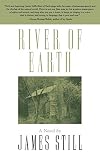
A thoroughly enjoyable, plotless account of the Baldridge family, barely scratching out a living in the coalfield of Eastern Kentucky, during the early part of the 20th century. This is a part of the country, in the Appalachian mountain range, that is deeply beautiful and desperately poor.
The main focus is on the Baldridge family, which is emblematic of other families in the region at the time, families that were moving from lives of subsistence farming to better paying but highly irregular show more work in the coalfields. The Baldridge family did a little of both, out of necessity. They farmed and could keep the family in enough beans and corn and squash to get them through the year, with some lean months as provisions ran low and they held back seed corn for the coming year. Work in the coalfields wasn’t regular enough — it was on demand as colder months settled in and the need for coal went up.
It couldn’t be clearer that this novel is telling a tale about two different ways of relying on the land for subsistence. On one hand a life of farming that might keep a family on a plot of land for lifetime, allowing them to enrich it as much as they took sustenance from it. The contrast to coal mining is obvious: a model of pure extraction and itinerancy as families chased jobs throughout the valley, in mines and companies that offered the better wages and hours.
Over and above these economic motivations, however, the novel is a book about place. The sentiment is beautifully captured in a sermon by Brother Sim Mobberly, which includes these lines:
Readers can tell that James Still loved this part of the country and his descriptions are evocative and full of emotion. I can picture the sights and sounds. Here’s one:
I have copied down many of these openings because they are a joy to read. show less
The main focus is on the Baldridge family, which is emblematic of other families in the region at the time, families that were moving from lives of subsistence farming to better paying but highly irregular show more work in the coalfields. The Baldridge family did a little of both, out of necessity. They farmed and could keep the family in enough beans and corn and squash to get them through the year, with some lean months as provisions ran low and they held back seed corn for the coming year. Work in the coalfields wasn’t regular enough — it was on demand as colder months settled in and the need for coal went up.
It couldn’t be clearer that this novel is telling a tale about two different ways of relying on the land for subsistence. On one hand a life of farming that might keep a family on a plot of land for lifetime, allowing them to enrich it as much as they took sustenance from it. The contrast to coal mining is obvious: a model of pure extraction and itinerancy as families chased jobs throughout the valley, in mines and companies that offered the better wages and hours.
Over and above these economic motivations, however, the novel is a book about place. The sentiment is beautifully captured in a sermon by Brother Sim Mobberly, which includes these lines:
These hills are jist dirt waves, washing through eternity. My brethern, they hain't a valley so low but what hit'll rise agin. They hain't a hill standing so proud but hit'll sink to the low ground o' sorrow. Oh, my proud children, where air we going on this mighty river of earth, aborning, begetting, and a-dying the living and the dead riding the waters? Where air it sweeping us?..." (76)
Readers can tell that James Still loved this part of the country and his descriptions are evocative and full of emotion. I can picture the sights and sounds. Here’s one:
“January was a bell in Lean Neck Valley. The ring of an ax was a mile wide, and all passage over the spewed-up earth was lifted on frosty air and sounded against the fields of ice” (110)
I have copied down many of these openings because they are a joy to read. show less
’Mother was on the rag edge of crying. “Forever moving yon and back, setting down nowhere for good and all, searching for God knows what,” she said. “Where air we expecting to draw up to?” Her eyes dampened. “Forever I’ve wanted to set us down in a lone spot, a place certain and enduring, with room to swing arm and elbow, a garden-piece for fresh victuals, and a cow to furnish milk for the baby. So many places we’ve lived – the far side one mine camp and next the slag pile show more of another.”’
A refrain that was probably heard in many homes in 1940s Appalachia. Coal mining and its faster money supplanting farming as a way of life, but though the money was faster, living was uglier in a coal town. And the need was diminishing, diggers being let go, mines shutting down. Life decisions. A hard life, whichever route you took, births, deaths. The narrator is a young son of the family in this story. The author, James Still, lived his whole life in Appalachia, and it makes me wonder if this story isn’t somewhat biographical. I found this a fascinating slice of life from a not-too-distant time and a place changed, for better or worse, by coal mines. From Brother Mobberly’s sermon:
”Oh, my children, where air we going on this mighty river of earth, a-borning, begetting, and a-dying – the living and the dead riding the waters? Where air it sweeping us?” show less
A refrain that was probably heard in many homes in 1940s Appalachia. Coal mining and its faster money supplanting farming as a way of life, but though the money was faster, living was uglier in a coal town. And the need was diminishing, diggers being let go, mines shutting down. Life decisions. A hard life, whichever route you took, births, deaths. The narrator is a young son of the family in this story. The author, James Still, lived his whole life in Appalachia, and it makes me wonder if this story isn’t somewhat biographical. I found this a fascinating slice of life from a not-too-distant time and a place changed, for better or worse, by coal mines. From Brother Mobberly’s sermon:
”Oh, my children, where air we going on this mighty river of earth, a-borning, begetting, and a-dying – the living and the dead riding the waters? Where air it sweeping us?” show less
The first thing you notice about this story of the depression era in the mining towns of Eastern Kentucky is the beauty of the writing itself and the genuine flavor of the dialog. James Still captures the stark, almost hopeless, situation of the families, while simultaneously showing the strength and endurance of the individuals and their connections to one another. I was struck by the generous nature of the people, who scraped into their near-empty larders to help one another survive their show more common perils.
One of the themes explored here seems to be the separation of man from nature. As the family is pulled from working fields on farms to living in camps and working coal mines, they seem to be separating themselves from a birthright and a bond that even they themselves do not understand.
The earth parted; it fell back from the shovel plow; it boiled over the share. I walked the fresh furrow and balls of dirt welled between my toes. There was a smell of old mosses, or bruised sassafras roots, of ground new-turned.
The share rustled like drifted leaves. It spoke up through the handles. I felt the earth flowing, steady as time.
There is also the conviction that whatever happens, however difficult or unjust, life continues. Indeed, it springs up from death itself.
Shot so his life's blood flowed a river. Yonder, up Lean Neck where the road comes off the hill and crosses the creek, years ago. The spot is marked, I hear. Marked peculiar. A locust post was driv on the spot, and I hear it tuck root.
That tree is a reminder of the spot of a death, but it is also a reminder that life, and family, continue. The locust tree itself rises from a post, unintentional and improbable, but determined and strong.
There is a thread of humor that runs through the novel as well that offsets the bleak conditions and reinforces the idea that even though the life is hard, the people are not necessarily unhappy. They are, in fact, accepting and uncomplaining; strong and rugged, even the children.
After several unsatisfying reads, it was a joy to open a book and find a voice that resonated, a world that seemed authentic, and a narrator who could convey his experiences with meaning and honesty. My thanks to the Southern Literary Trail for another dynamite read. show less
One of the themes explored here seems to be the separation of man from nature. As the family is pulled from working fields on farms to living in camps and working coal mines, they seem to be separating themselves from a birthright and a bond that even they themselves do not understand.
The earth parted; it fell back from the shovel plow; it boiled over the share. I walked the fresh furrow and balls of dirt welled between my toes. There was a smell of old mosses, or bruised sassafras roots, of ground new-turned.
The share rustled like drifted leaves. It spoke up through the handles. I felt the earth flowing, steady as time.
There is also the conviction that whatever happens, however difficult or unjust, life continues. Indeed, it springs up from death itself.
Shot so his life's blood flowed a river. Yonder, up Lean Neck where the road comes off the hill and crosses the creek, years ago. The spot is marked, I hear. Marked peculiar. A locust post was driv on the spot, and I hear it tuck root.
That tree is a reminder of the spot of a death, but it is also a reminder that life, and family, continue. The locust tree itself rises from a post, unintentional and improbable, but determined and strong.
There is a thread of humor that runs through the novel as well that offsets the bleak conditions and reinforces the idea that even though the life is hard, the people are not necessarily unhappy. They are, in fact, accepting and uncomplaining; strong and rugged, even the children.
After several unsatisfying reads, it was a joy to open a book and find a voice that resonated, a world that seemed authentic, and a narrator who could convey his experiences with meaning and honesty. My thanks to the Southern Literary Trail for another dynamite read. show less
Awards


You May Also Like


Associated Authors
Statistics
- Works
- 17
- Also by
- 5
- Members
- 506
- Popularity
- #48,974
- Rating
- 3.8
- Reviews
- 11
- ISBNs
- 92
- Languages
- 1
- Favorited
- 1