
Silas House
Author of Clay's Quilt
About the Author
Image credit: Photo by Cheyenne House
Series
Works by Silas House
Kentucky Quilt Trails: Views and Voices Photographs and Writings From Kentucky Visual and Literary Artists (2008) — Introduction & Contributor — 2 copies
Associated Works
Don't Quit Your Day Job: Acclaimed Authors and the Day Jobs They Quit (2010) — Contributor — 45 copies
Christmas in the South: Holiday Stories from the South's Best Writers (2004) — Contributor — 31 copies, 1 review
Missing Mountains: We went to the mountaintop but it wasn't there (2005) — Introduction & Contributor — 27 copies
Tagged
Common Knowledge
- Legal name
- House, Silas Dwayne
- Other names
- House, S.D.
- Birthdate
- 1971
- Gender
- male
- Occupations
- author
- Organizations
- Berea College
- Awards and honors
- James Still Award for Writing about the Appalachian South (2003)
Kentucky Writers Hall of Fame (2026)
Poet Laureate of Kentucky (2023-2025) - Nationality
- USA
- Places of residence
- Lily, Kentucky, USA
- Associated Place (for map)
- Kentucky, USA
Members
Reviews
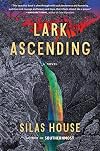
The grief and the resilience of Silas House's latest provides for a roller coaster of emotion. House depicts the trajectory of climate change in a way that is as believable as it is horrifying. In this novel, the story takes place after society has passed the point of no return.
The speaker, Lark, reflects that "some say 'We destroyed our world," but I don't agree with that. Some of us did. The rest of us were powerless. The rest of us are the ones who had to pay the biggest price. " The show more life that results is that of evading the religious fanatics, the extremists, and people driven by fear while trying to maintain one's humanity in the process. Powerful emotional journey. show less
The speaker, Lark, reflects that "some say 'We destroyed our world," but I don't agree with that. Some of us did. The rest of us were powerless. The rest of us are the ones who had to pay the biggest price. " The show more life that results is that of evading the religious fanatics, the extremists, and people driven by fear while trying to maintain one's humanity in the process. Powerful emotional journey. show less
Lark Ascending, Silas House, author; Charlie Thurston, narrator
In this novel, sometime in the near future, it is believed that environmental abuses have caused devastating changes to the climate and the entire world is burning. Australia and California, the south and the west, are all on fire. Crops have been destroyed causing food shortages and people are starving. The military could not maintain order as chaos grew, and governments collapsed. Fundamentalists achieved power and those that show more didn’t fall in line were rounded up, arrested and disappeared. Rebellions developed and resistance organizations began to fight back against the Fundies. War broke out.
Lark, now 90, is telling his story, a story that began more than seven decades before. The world has changed enormously, during that time, but he has survived as its witness. As chaos raged, Lark promised his parents he would not give up trying to reach safety in Glendalough, Ireland. Seamus, the anthropomorphic dog was his companion, and Helen, the Black Fox of the resistance, searching for her son, was his protector and guide, as the three journeyed to the sanctuary city. They made a strange kind of family unit that was unique in its devotion to each other. Their history and traumatic journeys to safety tell quite the tale. While I prefer the personality and values of Lark, which he always maintained, they were often unintentionally destructive. One has to wonder, therefore, what were the right choices?
Lark had been a happy young man, with kind parents that had readily accepted his love for his boyfriend Arlo. The seventeen-year-olds were set up in a small cabin of their own so they could share their lives together. Since same sex love was forbidden by the Fundies, it had to be kept secret. If discovered, they would be arrested, never to be seen again. Relatives had already disappeared. The choice of a same sex couple was probably made to emphasize the contrast between the Fundies and the resistance forces against them.
Lark’s family lived in a remote location, which seemed relatively safe. Because they knew about seeds, they had the skills to subsist even when food was growing scarcer with the developing famine. Seeds could also be used to barter for goods and services which gave them a distinct advantage. They were lucky because they knew how to survive, but soon, it became too dangerous there, even for them. Bounty hunters sought, and often captured, those that resisted and didn’t conform. The captives were soon eliminated in brutal and barbaric fashion. So, as conditions worsened, Lark’s and Arlo’s family decided it was time to try to escape to Ireland, the last safe place offering sanctuary to immigrants. They began their dangerous and arduous walk from Maine to Nova Scotia, in order to board a ship that would take them to Glendalough, their hoped-for new home.
The journey and the conditions of travel were brutally hard, but eventually, the boat made it to Ireland, albeit with fewer passengers. Between the time the family left and the time the boat got to Ireland, however, sanctuary was no longer available. They were attacked, and Lark, now completely alone, was the only survivor to reach the shores of Ireland. Somehow, through all of the harrowing events he faced as he plowed on to Glendalough, Lark lived and maintained his values and his humanity. However, many of the choices he made somehow left death and destruction in its wake. Although his intentions were noble, most people seemed to follow their basest instincts. His trust in some people was misplaced, his actions were often too impetuous without enough aforethought. Still, he managed to survive in this world with its changing values and danger lurking everywhere. He maintained his kindness and compassion and the three of them, in their odd little family unit, Helen, Seamus and Lark, learned to live happily together with the limited services available.
One has to ask how some people maintained their humanity in spite of those around them who defeated them and behaved like animals, with no consideration of what was right or wrong, but instead were motivated simply by their own survival. Did all survivors have to give up their humanity to survive? Lark did not think so. In the future, one has to ask what will eventually drive people and society, an inability to communicate with each other, inspiring hate, anger and conflict, or conversation, compromise, compassion and love? Is it possible to come together or will we forever be divided and at war with each other? Actually, today, we might well ask these same questions of ourselves as our country is very divided and we are communicating with each other poorly.
The author has chosen to promote one political point of view which makes the book a bit of propaganda for the left and will be absolutely embraced by them. However, he seems to have totally ignored the actual events on the ground while preparing his novel. While there have been catastrophic climate events, they were not caused by Fundamentalists. They were caused by nature. In the real world we live in, the Fundamentalists are not silencing those they disagree with, are not insulting those they disagree with, are not making false charges or arresting those they disagree with, are not separating people by race or dividing them by religious beliefs, are not shutting down civil rights for those they disagree with, are not attacking the LGBTQ+ groups, and are not self-segregating. They are not forcing their views on others and ask the same of others with different views than theirs. Is it possible that the author is pointing his finger in the wrong direction, at the wrong instigators of the conflict and destructive forces.
The book implies that we must listen to science, even as we have learned that our scientists skew the science to suit their needs, and even pay to have their opinions published. Even if we are somehow causing some climate change because of our societal advances, we alone, cannot effect the change necessary to have an impact on the world. Another idea promoted by the author, is that we are all a little confused about our sexuality. This is a concept I disagree with since I, and many of the people I know, have never been confused. The main message of this book seems to be political. He promotes the idea, without directly saying so, that those on the left are good, those on the right are bad. I thought there was a great deal of misrepresentation in the book.
The most important message of the book, however, seemed to me to be that divisiveness causes violence and a breakdown in society which has the capacity to destroy our world and create animosity between enemies that is insurmountable. With the divisiveness that exists today, and the lack of intellectual honesty and real curiosity about the true and solvable issues we need to confront, I believe we are creating a major, possibly irreversible problem. To have unity, you must have shared goals and a loyalty to each other as well as a desire to treat everyone with respect. It is absent today, and our world is in a dangerous place because of that. With all that being said, this author writes very artfully, with a spare narrative that drives his points home, whether or not you agree with his philosophy. show less
In this novel, sometime in the near future, it is believed that environmental abuses have caused devastating changes to the climate and the entire world is burning. Australia and California, the south and the west, are all on fire. Crops have been destroyed causing food shortages and people are starving. The military could not maintain order as chaos grew, and governments collapsed. Fundamentalists achieved power and those that show more didn’t fall in line were rounded up, arrested and disappeared. Rebellions developed and resistance organizations began to fight back against the Fundies. War broke out.
Lark, now 90, is telling his story, a story that began more than seven decades before. The world has changed enormously, during that time, but he has survived as its witness. As chaos raged, Lark promised his parents he would not give up trying to reach safety in Glendalough, Ireland. Seamus, the anthropomorphic dog was his companion, and Helen, the Black Fox of the resistance, searching for her son, was his protector and guide, as the three journeyed to the sanctuary city. They made a strange kind of family unit that was unique in its devotion to each other. Their history and traumatic journeys to safety tell quite the tale. While I prefer the personality and values of Lark, which he always maintained, they were often unintentionally destructive. One has to wonder, therefore, what were the right choices?
Lark had been a happy young man, with kind parents that had readily accepted his love for his boyfriend Arlo. The seventeen-year-olds were set up in a small cabin of their own so they could share their lives together. Since same sex love was forbidden by the Fundies, it had to be kept secret. If discovered, they would be arrested, never to be seen again. Relatives had already disappeared. The choice of a same sex couple was probably made to emphasize the contrast between the Fundies and the resistance forces against them.
Lark’s family lived in a remote location, which seemed relatively safe. Because they knew about seeds, they had the skills to subsist even when food was growing scarcer with the developing famine. Seeds could also be used to barter for goods and services which gave them a distinct advantage. They were lucky because they knew how to survive, but soon, it became too dangerous there, even for them. Bounty hunters sought, and often captured, those that resisted and didn’t conform. The captives were soon eliminated in brutal and barbaric fashion. So, as conditions worsened, Lark’s and Arlo’s family decided it was time to try to escape to Ireland, the last safe place offering sanctuary to immigrants. They began their dangerous and arduous walk from Maine to Nova Scotia, in order to board a ship that would take them to Glendalough, their hoped-for new home.
The journey and the conditions of travel were brutally hard, but eventually, the boat made it to Ireland, albeit with fewer passengers. Between the time the family left and the time the boat got to Ireland, however, sanctuary was no longer available. They were attacked, and Lark, now completely alone, was the only survivor to reach the shores of Ireland. Somehow, through all of the harrowing events he faced as he plowed on to Glendalough, Lark lived and maintained his values and his humanity. However, many of the choices he made somehow left death and destruction in its wake. Although his intentions were noble, most people seemed to follow their basest instincts. His trust in some people was misplaced, his actions were often too impetuous without enough aforethought. Still, he managed to survive in this world with its changing values and danger lurking everywhere. He maintained his kindness and compassion and the three of them, in their odd little family unit, Helen, Seamus and Lark, learned to live happily together with the limited services available.
One has to ask how some people maintained their humanity in spite of those around them who defeated them and behaved like animals, with no consideration of what was right or wrong, but instead were motivated simply by their own survival. Did all survivors have to give up their humanity to survive? Lark did not think so. In the future, one has to ask what will eventually drive people and society, an inability to communicate with each other, inspiring hate, anger and conflict, or conversation, compromise, compassion and love? Is it possible to come together or will we forever be divided and at war with each other? Actually, today, we might well ask these same questions of ourselves as our country is very divided and we are communicating with each other poorly.
The author has chosen to promote one political point of view which makes the book a bit of propaganda for the left and will be absolutely embraced by them. However, he seems to have totally ignored the actual events on the ground while preparing his novel. While there have been catastrophic climate events, they were not caused by Fundamentalists. They were caused by nature. In the real world we live in, the Fundamentalists are not silencing those they disagree with, are not insulting those they disagree with, are not making false charges or arresting those they disagree with, are not separating people by race or dividing them by religious beliefs, are not shutting down civil rights for those they disagree with, are not attacking the LGBTQ+ groups, and are not self-segregating. They are not forcing their views on others and ask the same of others with different views than theirs. Is it possible that the author is pointing his finger in the wrong direction, at the wrong instigators of the conflict and destructive forces.
The book implies that we must listen to science, even as we have learned that our scientists skew the science to suit their needs, and even pay to have their opinions published. Even if we are somehow causing some climate change because of our societal advances, we alone, cannot effect the change necessary to have an impact on the world. Another idea promoted by the author, is that we are all a little confused about our sexuality. This is a concept I disagree with since I, and many of the people I know, have never been confused. The main message of this book seems to be political. He promotes the idea, without directly saying so, that those on the left are good, those on the right are bad. I thought there was a great deal of misrepresentation in the book.
The most important message of the book, however, seemed to me to be that divisiveness causes violence and a breakdown in society which has the capacity to destroy our world and create animosity between enemies that is insurmountable. With the divisiveness that exists today, and the lack of intellectual honesty and real curiosity about the true and solvable issues we need to confront, I believe we are creating a major, possibly irreversible problem. To have unity, you must have shared goals and a loyalty to each other as well as a desire to treat everyone with respect. It is absent today, and our world is in a dangerous place because of that. With all that being said, this author writes very artfully, with a spare narrative that drives his points home, whether or not you agree with his philosophy. show less

Co-authors Silas House and Neela Vaswani join forces in this epistolary middle-grade novel, exploring, through their characters' correspondence with one another, the differences and commonalities in the lives of a Kentucky coal-miner's son and the daughter of recent Indian immigrants, studying to become citizens in New York City. Although River Dean Justice and Meena Joshi come from different places, and lead very different lives, they also share many of the same experiences, from coping show more with the absence of a father, whose work has taken him far away, to feeling just a little bit out-of-step with those around them. When tragedy strikes in both of their lives, their letters to one another provide an avenue for expression, and their strong friendship an important source of strength.
Chosen as our September selection over in The Children's Fiction Book-Club to which I belong, Same Sun Here touches upon many important themes, from family relationships and the stresses put upon those relationships by separation, to environmental stewardship and the terrible consequences when people ignore their responsibility of care, for both earth and people. Unlike some readers, I really appreciated the fact that politics, whether one defines that in terms of elections or of personal activism, was featured so prominently here. Children, after all, live in the same political world as the rest of us, and are affected by many of the same economic and social factors as adults, so it was good to see some recent issues - the 2008 presidential election, mountain top removal coal-mining in Appalachia, rent-control and abusive landlords in New York City - being depicted in a book intended for them. I also really appreciated the format of the book itself, and think that having two different authors pen the two protagonists' letters was an inspired choice, leading to believably different voices for River and Meena.
All in all, this was a strong book, one with engaging characters and an always interesting, often poignant story. I came away with a desire to read more by both authors. show less
Chosen as our September selection over in The Children's Fiction Book-Club to which I belong, Same Sun Here touches upon many important themes, from family relationships and the stresses put upon those relationships by separation, to environmental stewardship and the terrible consequences when people ignore their responsibility of care, for both earth and people. Unlike some readers, I really appreciated the fact that politics, whether one defines that in terms of elections or of personal activism, was featured so prominently here. Children, after all, live in the same political world as the rest of us, and are affected by many of the same economic and social factors as adults, so it was good to see some recent issues - the 2008 presidential election, mountain top removal coal-mining in Appalachia, rent-control and abusive landlords in New York City - being depicted in a book intended for them. I also really appreciated the format of the book itself, and think that having two different authors pen the two protagonists' letters was an inspired choice, leading to believably different voices for River and Meena.
All in all, this was a strong book, one with engaging characters and an always interesting, often poignant story. I came away with a desire to read more by both authors. show less
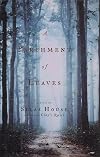
This is the story of a young woman named Vine, from an assimilated Cherokee family living in Kentucky in the early 20th century. She falls in love and marries a white man named Saul Sullivan, who takes her to live among his family, far enough away from home to make visits a rare occurrence. She finds life among these strong descendants of Irish immigrants different from what she has been accustomed to, and she misses her parents, but she builds strong relationships with her mother-in-law, show more and other women of God's Creek. The character development is good, the regional history and culture very well presented, but there isn't an awful lot to this story, until a traumatic event threatens to destroy Vine's composure and possibly rip her new family apart. I enjoyed spending time in this place, with these people, but the ending was a bit abrupt and unsatisfying. This is considered to be the first of House's Appalachian trilogy, but he wrote these books chronologically inside out, starting with Clay's Quilt set in the late 20th century, then A Parchment of Leaves which takes place during WWI, and ending with The Coal Tattoo set in the 1960's. I'm reading them in publication order by happenstance, not choice. show less
Lists
Awards


You May Also Like


Associated Authors
Statistics
- Works
- 19
- Also by
- 10
- Members
- 2,678
- Popularity
- #9,586
- Rating
- 3.9
- Reviews
- 138
- ISBNs
- 88
- Languages
- 1
- Favorited
- 11
