
Denise Giardina
Author of Storming Heaven
About the Author
Works by Denise Giardina
Giardina, Denise Archive 1 copy
Associated Works
Bloodroot: Reflections on Place by Appalachian Women Writers (1998) — Contributor — 54 copies, 2 reviews
Tagged
Common Knowledge
- Birthdate
- 1951-10-25
- Gender
- female
- Education
- West Virginia Wesleyan College (BA|1973)
Virginia Theological Seminary (MDiv|1979)
Marshall University (graduate work) - Occupations
- novelist
deacon - Organizations
- West Virginia State University (teacher)
- Awards and honors
- Hillsdale Award for Fiction (2007)
- Nationality
- USA
- Birthplace
- Bluefield, West Virginia, USA
- Places of residence
- Charleston, West Virginia, USA
- Associated Place (for map)
- West Virginia, USA
Members
Reviews
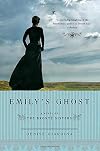
Eight years ago I visited the parsonage at Haworth. I'd been to the homes of other authors before: Jane Austen, Louisa May Alcott, Byron. But the experience of setting foot at the home of Emily Bronte -- all the Brontes, really -- was something deeply spiritual. I cried. Mournful, regretful tears for someone I didn't know at all, but felt a connection to, regardless.
The story history tells of Emily Bronte is of someone who is wild, vulnerable, and raw. A person I connect with at gut level, show more but would likely never have even a conversation with in person. It takes a special person to write about the Brontes well, but especially about Emily. This author must feel that same gut connection because the way she presented this image of Emily was beyond phenomenal. She put into words all I've ever seen her to be, and much of what I believe I would be, if I had the freedoms that Emily did.
To be able to tell this story that is so fully what I believe Emily to have been, and so cleanly inserting in the completely evidence-less storyline that features Weightman --- wow. How can it not be true? I found myself wishing for it to be true and mourning that there's not a shred of evidence.
I am also beyond thrilled that this author wasn't sympathetic to Charlotte. All she does and is in this story is just as I've always seen her --- the ultimate "Karen", though I hate when people use that term. What Charlotte does at the very end is more than horrifying; but I almost hope it to be true, just to vindicate me despising her so much. show less
The story history tells of Emily Bronte is of someone who is wild, vulnerable, and raw. A person I connect with at gut level, show more but would likely never have even a conversation with in person. It takes a special person to write about the Brontes well, but especially about Emily. This author must feel that same gut connection because the way she presented this image of Emily was beyond phenomenal. She put into words all I've ever seen her to be, and much of what I believe I would be, if I had the freedoms that Emily did.
To be able to tell this story that is so fully what I believe Emily to have been, and so cleanly inserting in the completely evidence-less storyline that features Weightman --- wow. How can it not be true? I found myself wishing for it to be true and mourning that there's not a shred of evidence.
I am also beyond thrilled that this author wasn't sympathetic to Charlotte. All she does and is in this story is just as I've always seen her --- the ultimate "Karen", though I hate when people use that term. What Charlotte does at the very end is more than horrifying; but I almost hope it to be true, just to vindicate me despising her so much. show less
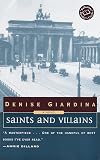
Is it fiction? Is it biography? it's both. A fictionalized history of Dietrich Bonhoeffer, a Lutheran pastor in Germany during WWII, committed to nonviolence and yet hung for his role in a plot to assassinate Hitler. I have read Bonhoeffer's texts and seen movies: nothing was as vivid as this book. It was tremendously stimulating to be asking myself constantly - is this real? is this true? is this fact? what's the difference?
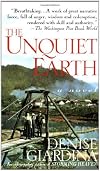
This story spans the period between 1941 and 1990 and examines the daily lives, politics and political landscape surrounding a West Virginia coal mine. I loved this book, probably in part because the era nicely matches my own life span and I've spent the past 20 years in another part of Appalachia. Thankfully, I've never had to watch the geological rape of coal mining but the people, their ways and their problems are all very familiar to me. Giardina is an excellent writer, drawing her show more characters with depth and compassion. One has the sense that she draws very heavily on her own experiences and so there is an authenticity to the material that adds to the appeal. Recommended. show less
William Weightman comes to Haworth as a curate and soon finds himself attached to the entire Brontë clan. He assumes some of Patrick’s duties at the parish, helps Branwell with his addictions and keeps each of the sisters from being too lonely. Weightman harbors a special attraction to Emily, who returns his feelings, but knows in her heart that she’s not the proper material for a churchman’s wife. They agree that she will governess for six months, broaden herself, and then evaluate show more their future. But six months is a long time, time they might not have.
This book is so very readable. The pages just flew by and it was over, in one sitting. Of course, that may be because Emily has always been my favorite of the Brontë sisters. There is never enough ‘Emily’ material around to suite me and it was nice to see her enjoy a little romance. I knew that Charlotte married one of Patrick’s curates (Arthur Bell Nichols) but I never considered that Emily or Anne ever had feelings for the men in their father’s employ. It seems a little cliché until you consider how isolated they were, and then it feels sad. Well, most everything around the Brontës carries a tragic weight, doesn’t it?
I was surprised at how Haworth was portrayed in the novel as a dirty, unsanitary slum. Honestly, I know nothing about the place but I’ve always imagined it as heartbreakingly beautiful in the way wild and natural places can sometimes be. This setting was such a change from that. It reminded me somewhat of Gaskell’s North and South.
This has been my favorite Brontë book so far this year. show less
This book is so very readable. The pages just flew by and it was over, in one sitting. Of course, that may be because Emily has always been my favorite of the Brontë sisters. There is never enough ‘Emily’ material around to suite me and it was nice to see her enjoy a little romance. I knew that Charlotte married one of Patrick’s curates (Arthur Bell Nichols) but I never considered that Emily or Anne ever had feelings for the men in their father’s employ. It seems a little cliché until you consider how isolated they were, and then it feels sad. Well, most everything around the Brontës carries a tragic weight, doesn’t it?
I was surprised at how Haworth was portrayed in the novel as a dirty, unsanitary slum. Honestly, I know nothing about the place but I’ve always imagined it as heartbreakingly beautiful in the way wild and natural places can sometimes be. This setting was such a change from that. It reminded me somewhat of Gaskell’s North and South.
This has been my favorite Brontë book so far this year. show less
Lists
Awards


You May Also Like


Associated Authors
Statistics
- Works
- 7
- Also by
- 1
- Members
- 1,184
- Popularity
- #21,706
- Rating
- 3.9
- Reviews
- 34
- ISBNs
- 38
- Languages
- 1
- Favorited
- 4