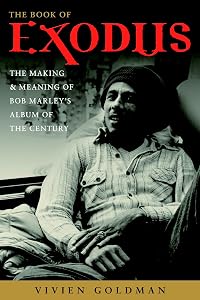
The Book of Exodus: The Making and Meaning of Bob Marley and the Wailers' Album of the Century
by Vivien Goldman
On This Page
Description
Follow the Sacred Journey to Create One of the Lasting Musical Masterpieces of Our Time Bob Marley is one of our most important and influential artists. Recorded in London after an assassination attempt on his life sent Marley into exile from Jamaica, Exodus is the most lasting testament to his social conscience. Named by Time magazine as “Album of the Century,” Exodus is reggae superstar Bob Marley’s masterpiece of spiritual exploration. Vivien Goldman was the first journalist to show more introduce mass white audiences to the Rasta sounds of Bob Marley. Throughout the late 1970s, Goldman was a fly on the wall as she watched reggae grow and evolve, and charted the careers of many of its superstars, especially Bob Marley. So close was Vivien to Bob and the Wailers that she was a guest at his Kingston home just days before gunmen came in a rush to kill “The Skip.” Now, in The Book of Exodus, Goldman chronicles the making of this album, from its conception in Jamaica to the raucous but intense all-night studio sessions in London. But The Book of Exodus is so much more than a making-of-a-record story. This remarkable book takes us through the history of Jamaican music, Marley’s own personal journey from the Trench Town ghetto to his status as global superstar, as well as Marley’s deep spiritual practice of Rastafari and the roots of this religion. Goldman also traces the biblical themes of the Exodus story, and its practical relevance to us today, through various other art forms, leading up to and culminating with Exodus. Never before has there been such an intimate, first-hand portrait of Marley’s spirituality, his political involvement, and his life in exile in London, leading up to histriumphant return to the stage in Jamaica at the Peace Concert of 1978. Here is an unforgettable portrait of Bob Marley and an acutely perceptive appreciation of his musical and spiritual legacy. show lessTags
Recommendations










Member Reviews
This is 10 years old now, but I only just picked up a copy because back when I was a youth I enjoyed Viv Goldman's coverage of reggae when she wrote for Sounds. The book itself is an enjoyable discussion of the build up to and the making of Bob Marley and The Wailers' Exodus album, generally considered their breakout record (although personally, I'd take Rastaman Vibration any day). Obviously written with an eye to books such as Ashley Kahn's detailed breakdown of seminal jazz records such as John Coltrane's A Love Supreme and Miles Davis' Kind of Blue, but not as successful as those, mainly because there isn't as much to say about the record itself. Yes, there are even more rock elements included. Yes there are love songs - Waiting in show more Vain, kind of works. Turn Your Lights Down Low, at this distance, sounds like the work of the mawkish adolescent Bob wasn't. And finally, there are songs about the attempt on his life the year previously
Goldman deals with the assassination attempt well, and fingers the most likely suspects. And she is also good on the murderous Jamaican politics that led up to it and the creation of the terrifying Jamaican Yardie Gangs that dominated the drug trade for so many years. But, for a music journalist, she is less good on the making of the record itself - probably because she's not a musicologist, and the surviving participants have only vague memories of how they actually made the record
But its enjoyable and engrossing enough for all that. But the book would have benefitted from a lot more fact checking and editing. First, the editing; we are constantly reintroduced to some, secondary but important characters, to the point of irritation. We are told at least 6 times who Alan "Skill" Cole was; Michael Campbell of the Twelve Tribes seemingly gets 12 introductions as does his partner, King Sounds. And there are factual errors galore; The National Front never won any Parliamentary seats in England (Local council seats, yes). The political area leader Bucky Marshall's real name was not Aston Marshall but Aston Thompson (he was known as Bucky Marshall because he liked to use a shot gun). More importantly - for a music journalist - Queen's guitarist was Brian May not Phil May, and Rico Rodriguez was never known as Don Drummond Junior - that's Vin Gordon. This matters, because Jamaican music of the 70s and 80s was notoriously sketchy about who played on what track. Large scale ganja consumption was one reason - but so was the fact that session players were rarely compensated properly. Getting the nickname wrong leaves the reader in doubt as to whether it was Gordon or Rodriguez who played on the track (and probably, it was Gordon)
So a good book, but spoiled by poor editing show less
Goldman deals with the assassination attempt well, and fingers the most likely suspects. And she is also good on the murderous Jamaican politics that led up to it and the creation of the terrifying Jamaican Yardie Gangs that dominated the drug trade for so many years. But, for a music journalist, she is less good on the making of the record itself - probably because she's not a musicologist, and the surviving participants have only vague memories of how they actually made the record
But its enjoyable and engrossing enough for all that. But the book would have benefitted from a lot more fact checking and editing. First, the editing; we are constantly reintroduced to some, secondary but important characters, to the point of irritation. We are told at least 6 times who Alan "Skill" Cole was; Michael Campbell of the Twelve Tribes seemingly gets 12 introductions as does his partner, King Sounds. And there are factual errors galore; The National Front never won any Parliamentary seats in England (Local council seats, yes). The political area leader Bucky Marshall's real name was not Aston Marshall but Aston Thompson (he was known as Bucky Marshall because he liked to use a shot gun). More importantly - for a music journalist - Queen's guitarist was Brian May not Phil May, and Rico Rodriguez was never known as Don Drummond Junior - that's Vin Gordon. This matters, because Jamaican music of the 70s and 80s was notoriously sketchy about who played on what track. Large scale ganja consumption was one reason - but so was the fact that session players were rarely compensated properly. Getting the nickname wrong leaves the reader in doubt as to whether it was Gordon or Rodriguez who played on the track (and probably, it was Gordon)
So a good book, but spoiled by poor editing show less
Ratings
Members
- Recently Added By
Lists

Music Journalism and Biography
56 works; 1 member
Author Information

5 Works 152 Members
Vivien Goldman is an adjunct professor teaching Punk, Afrobeat and Reggae at New York University. Her five previous books include The Book of Exodus: The Making and Meaning of Bob Marley and the Waiters' Album of the Century.
Classifications
- Genres
- Music, Nonfiction, Biography & Memoir, History, General Nonfiction, Religion & Spirituality
- DDC/MDS
- 781.646092 — Arts & recreation Music General principles and musical forms Traditions of music Western popular music {equally instrumental and vocal} Reggae
- LCC
- ML420 .M3313 .G65 — Music Literature on music Literature on music History and criticism Biography
- BISAC
Statistics
- Members
- 34
- Popularity
- 839,380
- Reviews
- 1
- Rating
- (3.00)
- Languages
- English
- Media
- Paper, Ebook
- ISBNs
- 3
- ASINs
- 1