
Tom Moon (1)
Author of 1,000 Recordings to Hear Before You Die
For other authors named Tom Moon, see the disambiguation page.
About the Author
Image credit: Tom Moon.
Works by Tom Moon
Tagged
Common Knowledge
- Gender
- male
Members
Reviews
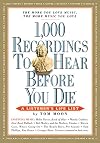
This is fantastic, within the bounds of how fantastic a work like this can be. Tom Moon is very well-seasoned, and of course I immediately jumped to the types of music I know best - opera, folk, classical - and found that I agreed with almost all of his choices. Sometimes he may challenge me (the LuPone "Sweeney Todd" over the Lansbury?) but rarely did I disagree (the right Wagners, the ideal "Porgy and Bess", a great "Pelleas", and so on). More to the point, by providing a range of show more suggestions with each album, he effectively expands the book's scope to 3 or 4,000 recordings, and allows you to delve more.
Of course no-one will agree with all of his choices, or with best recordings by an artist or composer, but that's the perils of making a decision. Moon here has shown an open-mindedness to music genres that has me keen to explore everything I've missed. There's a Spotify playlist, which I think is official, to go with it.
If there's a flaw for me, it's that I think he could use an introduction. Maybe 40 pages: a 15-page history of music, and then 2-3 pages on each genre, just the most basic of primers. This is, of course, an absurd proposition on some level. How can anyone explain a genre so quickly, and how do we teach how to "read" music in this way? Problem is: I think it's necessary. As an opera lover, I agree with all of Moon's choices (even if I could fill a book on 1,000 opera recordings alone) but many of these are moderate-to-advanced level, not for amateurs. These are the best recordings, but they may not be obvious to a newcomer to opera. Particularly works like "Pelleas" or "Wozzeck". Even an attempt at explaining some of the major evolutions of the artform, and things to listen for, may have been good. For me, with genres I'm completely uncertain of (e.g. rock) I would have appreciated the same. But, this is the age of the internet, so I'm sure I will find someone's blog to guide me. A+ show less
Of course no-one will agree with all of his choices, or with best recordings by an artist or composer, but that's the perils of making a decision. Moon here has shown an open-mindedness to music genres that has me keen to explore everything I've missed. There's a Spotify playlist, which I think is official, to go with it.
If there's a flaw for me, it's that I think he could use an introduction. Maybe 40 pages: a 15-page history of music, and then 2-3 pages on each genre, just the most basic of primers. This is, of course, an absurd proposition on some level. How can anyone explain a genre so quickly, and how do we teach how to "read" music in this way? Problem is: I think it's necessary. As an opera lover, I agree with all of Moon's choices (even if I could fill a book on 1,000 opera recordings alone) but many of these are moderate-to-advanced level, not for amateurs. These are the best recordings, but they may not be obvious to a newcomer to opera. Particularly works like "Pelleas" or "Wozzeck". Even an attempt at explaining some of the major evolutions of the artform, and things to listen for, may have been good. For me, with genres I'm completely uncertain of (e.g. rock) I would have appreciated the same. But, this is the age of the internet, so I'm sure I will find someone's blog to guide me. A+ show less

This is a well-written synopsis of great recordings by someone who loves music. The arrangement is useful in that it points you to related recordings within a genre. It is arranged alphabetically by performance artist, which as the author points out, can lead to some very interesting and diverse individuals turning up beside each other. It's a great reference tool to develop or broaden a music collection or your listening history.
1000 essays on exceptional recordings. Those that I have listened to have hyponotized me John Adams' setting of Emily Dickinson's "Because I Could Not Stop for Death" from his "Harmonium". The review are well-developed, often contain a photo of the artist and end with a data sidebar, which includes one of my favorite categories--"Next Stop". My next stop was the major minimalist, Steve Reich, whose "Different Trains" blew me away with the sound collage of clips from track and depot. show more Especially powerful was the war-time European train--heading, I imagined, for Dachau.
Lest the book seem weighted on the heavy side, its first entry (they are alphabetical) is Abba's "Gold".
The articles are very redable and Moon comes off as a fine person with intelligence and artistic sensibility.
How do I find "italics" and "underscore"? show less
Lest the book seem weighted on the heavy side, its first entry (they are alphabetical) is Abba's "Gold".
The articles are very redable and Moon comes off as a fine person with intelligence and artistic sensibility.
How do I find "italics" and "underscore"? show less
1000 essays on exceptional recordings. Those that I have listened to have hyponotized me John Adams' setting of Emily Dickinson's "Because I Could Not Stop for Death" from his "Harmonium". The review are well-developed, often contain a photo of the artist and end with a data sidebar, which includes one of my favorite categories--"Next Stop". My next stop was the major minimalist, Steve Reich, whose "Different Trains" blew me away with the sound collage of clips from track and depot. show more Especially powerful was the war-time European train--heading, I imagined, for Dachau.
Lest the book seem weighted on the heavy side, its first entry (they are alphabetical) is Abba's "Gold".
The articles are very redable and Moon comes off as a fine person with intelligence and artistic sensibility.
How do I find "italics" and "underscore"? show less
Lest the book seem weighted on the heavy side, its first entry (they are alphabetical) is Abba's "Gold".
The articles are very redable and Moon comes off as a fine person with intelligence and artistic sensibility.
How do I find "italics" and "underscore"? show less
You May Also Like


Statistics
- Works
- 1
- Members
- 595
- Popularity
- #42,222
- Rating
- 4.0
- Reviews
- 9
- ISBNs
- 6