
Robert Dimery
Author of 1001 Albums You Must Hear Before You Die
About the Author
Works by Robert Dimery
Cult Musicians: 50 Progressive Performers You Need to Know (Cult Figures) (2020) 24 copies, 2 reviews
Rock & Roll Heaven: A Fascinating Guide to Musical Icons Who Have Joined the Great Gig in the Sky (2007) 16 copies
101 discos 1 copy
Tagged
Common Knowledge
Members
Reviews
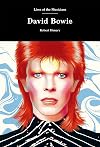
David Bowie from Robert Dimery is part of the Lives of the Musicians series, intended to be short but concise biographies of important musicians. Within that context, this book works very well.
If you come to this expecting new and as yet unpublished information, you obviously didn't read what the book was written to accomplish. Not to mention it makes no sense for you to think a short 144 page (body of the book) volume is an in depth groundbreaking work. The issue is not with the book but show more with the faux outrage of those wanting to display their pseudo credentials as "true" Bowie fans. Save it.
This volume is a very good general biography. It covers his entire life as well as his music. And no, the latter part of the book is not just music reviews, but reading comprehension is a weak point for many, so... If you know nothing about Bowie other than some of his music, this is a great introduction. Even if you have read most of the books about him, as I and many other people have, this is still a nice quick overview that lets you spend a few hours reliving his life.
I would recommend this to readers who want a short biography of the person to go along with their love of his music. I would also recommend this to those who may well have read many of the critical books about his music or his life but like to have a nice quick read that covers everything without getting into every little piece of minutiae. I might refrain from recommending this to those who are more interested in showing how much they (think) they know, after all, they already know everything.
Reviewed from a copy made available by the publisher via NetGalley. show less
If you come to this expecting new and as yet unpublished information, you obviously didn't read what the book was written to accomplish. Not to mention it makes no sense for you to think a short 144 page (body of the book) volume is an in depth groundbreaking work. The issue is not with the book but show more with the faux outrage of those wanting to display their pseudo credentials as "true" Bowie fans. Save it.
This volume is a very good general biography. It covers his entire life as well as his music. And no, the latter part of the book is not just music reviews, but reading comprehension is a weak point for many, so... If you know nothing about Bowie other than some of his music, this is a great introduction. Even if you have read most of the books about him, as I and many other people have, this is still a nice quick overview that lets you spend a few hours reliving his life.
I would recommend this to readers who want a short biography of the person to go along with their love of his music. I would also recommend this to those who may well have read many of the critical books about his music or his life but like to have a nice quick read that covers everything without getting into every little piece of minutiae. I might refrain from recommending this to those who are more interested in showing how much they (think) they know, after all, they already know everything.
Reviewed from a copy made available by the publisher via NetGalley. show less
Thanks to Netgalley and Laurence King Publishing for providing a free copy in exchange for an honest review.
I definitely consider myself an avid David Bowie fan, having dived down the rabbit hole of his work after watching the (much maligned) Glass Spider Tour on television in my teens. I loved it, but I loved Bowie even more as I stepped backwards through the eighties, seventies and sixties coming to rest at my favourite Bowie album Space Oddity. I am thus also highly cognisant of the fact show more that I'm writing this review on the 5th anniversary of Bowie's death in 2016. This is a short book on the life and works (music, films and plays) of Bowie, with a generous proportion of the book dedicated to his golden years, say the first fifteen years of his career. This is clearly also the part of Bowie's oeuvre that the author has the most appreciation for and the book book takes a riveting ride through Bowie's long musical career. I've not read a lot about David Bowie so far (although I occasionally leaf through Nicholas Pegg's "the Complete David Bowie" to get a more thorough appreciation of the meaning of his lyrics). I was pleasantly surprised by the abundance of information on the first phase of Bowie's career. Dimery is clearly less enamoured by the more commercial phase that Bowie went through in the eighties and even the many experiments that Bowie was able to pursue in the nineties. This is a book which can easily be doubled to 300 pages to further explore the last thirty years of his life more thoroughly. As I finished the book, his songs continued playing in my head, and I was left wanting for more. So now to play David Bowie's "My Death"... show less
I definitely consider myself an avid David Bowie fan, having dived down the rabbit hole of his work after watching the (much maligned) Glass Spider Tour on television in my teens. I loved it, but I loved Bowie even more as I stepped backwards through the eighties, seventies and sixties coming to rest at my favourite Bowie album Space Oddity. I am thus also highly cognisant of the fact show more that I'm writing this review on the 5th anniversary of Bowie's death in 2016. This is a short book on the life and works (music, films and plays) of Bowie, with a generous proportion of the book dedicated to his golden years, say the first fifteen years of his career. This is clearly also the part of Bowie's oeuvre that the author has the most appreciation for and the book book takes a riveting ride through Bowie's long musical career. I've not read a lot about David Bowie so far (although I occasionally leaf through Nicholas Pegg's "the Complete David Bowie" to get a more thorough appreciation of the meaning of his lyrics). I was pleasantly surprised by the abundance of information on the first phase of Bowie's career. Dimery is clearly less enamoured by the more commercial phase that Bowie went through in the eighties and even the many experiments that Bowie was able to pursue in the nineties. This is a book which can easily be doubled to 300 pages to further explore the last thirty years of his life more thoroughly. As I finished the book, his songs continued playing in my head, and I was left wanting for more. So now to play David Bowie's "My Death"... show less
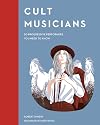
Cult Musicians: 50 Progressive Performers You Need to Know by Robert Dimery is a collection of short write-ups about, you guessed it, 50 musicians. While overall the book is very good I do have a bone to pick.
With both Cult Filmmakers and Cult Writers the author made an attempt to actually define how he was using the term "cult." When you are using a term that means something different to different people, having a working definition makes sense for both the writer and the reader. For the show more writer it helps in deciding who to include and who to exclude. For the reader it serves to provide some context for the inevitable debate about who was shunned and who the reader thinks doesn't belong. Those debates, or complaining as some people do it, is a big part of the fun. Dimery, however, does not actually define the term either in an attempt to clarify what he views a "cult" musician as or to give the reader some idea what makes a musician a cult musician. Instead he mentions different aspects of many of the artists, but none that carry throughout the list. It is the equivalent of the "I can't define it but I know it when I see it" rationale. In other words it is a cop out. He should have just said these are 50 musicians I think you should either know about or know more about (since the majority will be known to at least some degree to most music followers but maybe not "the rest of the story"). Dimery is the master of overblown hyperbole, just look at some of his other titles. You need or you have to do what he says you must in order to qualify for the club, in case anyone wants to be in a club he would be in.
Now that I have discussed what irked me, I can talk about all that is right with the book. If you just look at it as a list of 50 musicians with interesting stories, you will be very satisfied with the book. Each entry goes into enough detail to give a very good idea of what makes the artist's story a compelling one. But the entries are also brief so you can decide whether you might want to move on to the next entry or do some online research and listen to some of their work. I found myself looking up most of the artists and many of the songs mentioned, even if I was familiar with it. Coming back to a song, or any artwork, from a different perspective is rarely disappointing.
While I made the lack of clarity about how Dimery understands the word "cult" it is really a minor bump in the overall trip through the book. There likely wasn't an honest attempt at a definition because it didn't really matter to him, he knew who he wanted to include and working with a definition would have meant making them fit or eliminating them. It is a little disingenuous but the book as a whole is well worth reading and you may just find some new artists or new songs from old artists.
Reviewed from a copy made available by the publisher via NetGalley. show less
With both Cult Filmmakers and Cult Writers the author made an attempt to actually define how he was using the term "cult." When you are using a term that means something different to different people, having a working definition makes sense for both the writer and the reader. For the show more writer it helps in deciding who to include and who to exclude. For the reader it serves to provide some context for the inevitable debate about who was shunned and who the reader thinks doesn't belong. Those debates, or complaining as some people do it, is a big part of the fun. Dimery, however, does not actually define the term either in an attempt to clarify what he views a "cult" musician as or to give the reader some idea what makes a musician a cult musician. Instead he mentions different aspects of many of the artists, but none that carry throughout the list. It is the equivalent of the "I can't define it but I know it when I see it" rationale. In other words it is a cop out. He should have just said these are 50 musicians I think you should either know about or know more about (since the majority will be known to at least some degree to most music followers but maybe not "the rest of the story"). Dimery is the master of overblown hyperbole, just look at some of his other titles. You need or you have to do what he says you must in order to qualify for the club, in case anyone wants to be in a club he would be in.
Now that I have discussed what irked me, I can talk about all that is right with the book. If you just look at it as a list of 50 musicians with interesting stories, you will be very satisfied with the book. Each entry goes into enough detail to give a very good idea of what makes the artist's story a compelling one. But the entries are also brief so you can decide whether you might want to move on to the next entry or do some online research and listen to some of their work. I found myself looking up most of the artists and many of the songs mentioned, even if I was familiar with it. Coming back to a song, or any artwork, from a different perspective is rarely disappointing.
While I made the lack of clarity about how Dimery understands the word "cult" it is really a minor bump in the overall trip through the book. There likely wasn't an honest attempt at a definition because it didn't really matter to him, he knew who he wanted to include and working with a definition would have meant making them fit or eliminating them. It is a little disingenuous but the book as a whole is well worth reading and you may just find some new artists or new songs from old artists.
Reviewed from a copy made available by the publisher via NetGalley. show less

There is much for music lovers to be happy about once they get a hold of 1001 Albums You Must Hear Before You Die. Arranged by decade (1950s to present day), the hefty book is full of compulsively readable reviews written by various music critics, all more than willing to back up exactly why they consider these selections essential to your musical life.
Kicking off with Frank Sinatra’s heartbreaking In The Wee Small Hours, 1001 Albums tells us that Sinatra was almost a has-been when he show more recorded it. But by expressing quiet pain at his break-up with Ava Gardner, he brought something intriguing and unforgettable to a collection of songs already familiar to many and previously covered, but somehow made fresh and scintillating and beautiful.
As I devoured the pages, certain albums seemed to jump out at me, both ones I knew well and ones "new" to me. Purple Rain, the soundtrack to Prince’s ground-breaking film, remains fresh in my mind because I never stopped liking it. But Actually, by the Pet Shop Boys, stuck for some reason and I remembered 1987 and how much I used to like "What Have I Done To Deserve This?" (a hit for them, with the help of music legend Dusty Springfield). I went to our shelves, checked out the album and discovered that The Pet Shop Boys sound as fresh as ever.
For me, as the chapters ascended in order from the 80s to present day, I felt like I was taking a walk through all of the musical moments of my life and yet making new discoveries. If you live music like I do, can’t get enough of your favorites, and are constantly in search of more great listens, you definitely want to grab a copy of 1001 Albums You Must Hear Before You Die. show less
Lists
el (1)
You May Also Like


Associated Authors
Statistics
- Works
- 13
- Members
- 1,258
- Popularity
- #20,396
- Rating
- 4.0
- Reviews
- 20
- ISBNs
- 92
- Languages
- 14