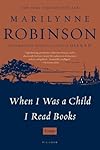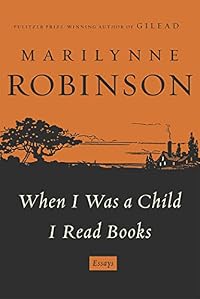
When I Was a Child I Read Books
by Marilynne Robinson
On This Page
Description
In this new collection of incisive essays, Robinson returns to the themes which have preoccupied her work: the role of faith in modern life, the inadequacy of fact, the contradictions inherent in human nature.Tags
Recommendations



Member Reviews
McLuhan said (somewhere) that books wouldn't be accepted if they contained too much novelty, and indeed, as a rule, most books seem to have just one overriding idea--a sort of monotheism of topic. This is not such a book.
Conversely, Marilynne Robinson says, of the New Atheists, that it's convenient to critique their ideas because all their writings have the same ones, so she can just use the book she has at hand.
There is also life in what she is saying. Her ideas could not have been generated by stochastic processes. There's a human being behind them who read books as a child. There is an experience of intimacy reading them.
If you think this can only be achieved at the cost of irrationality, you'd be wrong.
Conversely, Marilynne Robinson says, of the New Atheists, that it's convenient to critique their ideas because all their writings have the same ones, so she can just use the book she has at hand.
There is also life in what she is saying. Her ideas could not have been generated by stochastic processes. There's a human being behind them who read books as a child. There is an experience of intimacy reading them.
If you think this can only be achieved at the cost of irrationality, you'd be wrong.
Summary: A collection of essays reflecting on the state of the nation and our culture, the values of literacy, liberality, and Christian generosity that have shaped us, and what the loss of these values to austerity, utility, and secularist atheism might mean for us.
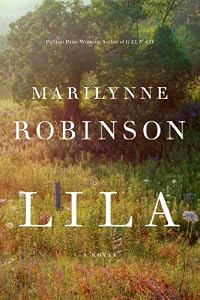
As a life-long bibliophile, this book had me at the title. I thought, “you, too?” More than this, I’ve delighted in Marilynne Robinson’s fiction, having read Gilead, Home, and Lila (reviewed here) . As an accomplished writer who combines theological acuity with a keen eye to the character of our culture, she has become something of a public intellectual, so much so that she was even interviewed by Barack Obama. And several years ago, I had a chance to hear her speak show more at Northwestern University, a delightful evening I recounted in this blog post. But I had never read any of her essays.
This is a wide-ranging collection. If I could identify any recurring themes, they would be the current state of the American experiment and a rebuttal of recent writers who seem determined to cast Christian faith and its biblical underpinnings in the worst light to suggest that these ideas might be relegated to the dustbin of history for a new, more enlightened atheist materialism. And then there was one essay (“Who Was Oberlin?”) that sort of fits both and neither, but that as an Ohioan, I enjoyed. It turns out that Oberlin was a social activist pastor from Strasbourg, Germany, who came to the American Midwest and started a college in the marshy lands between Cleveland and Sandusky, fulfilling its activist roots when the abolitionist Lane Rebels from Cincinnati joined with revivalist Charles Finney to make Oberlin a center of activism.
The title essay explores her reading of the writers of the American West and the kind resilient individualism of the homesteaders that is being lost to our detriment, she believes. Yet for her, this individualism is not an “every person for oneself” outlook. She writes trenchantly against the emphasis on austerity, and rational utility, that frames everything these days from social policy to the commodification of higher education that sees little utility in the study of foreign languages or classics. Important for her is the quality of imagination, practiced in her writing that allows characters to take shape and begins to imagine how they might respond to different turns of plot. This quality is important in real human communities, in our understanding of the “other.”
Two of her essays concern Moses: “Open Thy Hand Wide: Moses and the Origins of American Liberalism” and “The Fate of Ideas: Moses.” In both, she takes on contemporary writers and scholars who would lay everything wrong in our civilization at the feet of Moses and other monotheists. In particular, the phrase “open wide thy hand” is important as representative of the tenor of Mosaic laws that uphold the poor, the widow, the orphan, and the stranger. Critical scholars, she argues, overlook these texts, and selectively cherry pick others to fit their constructions. Likewise in her final essay on “Cosmology” she takes on atheists who use science to attack Christians and other theists.
Aside from the polemics, one of the most delightful essays, “Wondrous Love,” (also a favorite American hymn of mine), speaks of the power of many of the old American hymns. I was caught off guard, however, by her comments about one that hasn’t particularly been a favorite because it seemed a bit sentimental, “I Come to the Garden.” She writes:
“The old ballad in the voice of Mary Magdalene, who ‘walked in the garden alone,’ imagines her ‘tarrying’ there with the newly risen Jesus, in the light of a dawn which was certainly the most remarkable daybreak since God said, Let there be light.’ The song acknowledges this with fine understatement: ‘The joy we share as we tarry there/None other has ever known.’ Who can imagine the joy she would have felt? And how lovely it is that the song tells us the joy of this encounter was Jesus’s as well as Mary’s. Epochal as the moment is, and inconceivable as Jesus’s passage from death to life must be, they meet as friends and rejoice together as friends. This seems to me as good a gloss as any on the text that tells us God so loved the world, this world, our world” (p. 125).
I will never think of this gospel passage nor hear this song in quite the same way again! She does turn later in the essay to things political and makes an interesting observation that we often close public messages with “God bless America” but rarely do we affirm how God has blessed America–that we may have far more cause for gratitude than we often acknowledge.
This essay illustrates something that I encountered in a number of these essays. Where Robinson begins, and where she ends, and how she gets there is often a circuitous process. One feels you are on a ramble, perhaps a marvelous and sparkling ramble, and in the end, you can see how the various stages of the journey all connect, but this is often not where one starts, or necessarily where one expected to have gone.
Robinson’s is a distinctive voice. On many things, she sounds a bit the Obama liberal and in fact speaks critically of one of my favorite commentators, David Brooks. And then she writes of Calvin, and Moses, and takes on forces from Freud and Skinner to the new atheists. I suspect just about everyone gets mad at her at points! Perhaps the best explanation, and a good place to end, are her opening words, in the essay “Freedom of Thought”:
“Over the years of writing and teaching, I have tried to free myself of constraints I felt, limits to the range of exploration I could make, to the kind of intuition I could credit. I realized gradually that my own religion, and religion in general, could and should disrupt these constraints, which amount to a small and narrow definition of what humans are and how human life should be understood” (p. 3). show less
As a life-long bibliophile, this book had me at the title. I thought, “you, too?” More than this, I’ve delighted in Marilynne Robinson’s fiction, having read Gilead, Home, and Lila (reviewed here) . As an accomplished writer who combines theological acuity with a keen eye to the character of our culture, she has become something of a public intellectual, so much so that she was even interviewed by Barack Obama. And several years ago, I had a chance to hear her speak show more at Northwestern University, a delightful evening I recounted in this blog post. But I had never read any of her essays.
This is a wide-ranging collection. If I could identify any recurring themes, they would be the current state of the American experiment and a rebuttal of recent writers who seem determined to cast Christian faith and its biblical underpinnings in the worst light to suggest that these ideas might be relegated to the dustbin of history for a new, more enlightened atheist materialism. And then there was one essay (“Who Was Oberlin?”) that sort of fits both and neither, but that as an Ohioan, I enjoyed. It turns out that Oberlin was a social activist pastor from Strasbourg, Germany, who came to the American Midwest and started a college in the marshy lands between Cleveland and Sandusky, fulfilling its activist roots when the abolitionist Lane Rebels from Cincinnati joined with revivalist Charles Finney to make Oberlin a center of activism.
The title essay explores her reading of the writers of the American West and the kind resilient individualism of the homesteaders that is being lost to our detriment, she believes. Yet for her, this individualism is not an “every person for oneself” outlook. She writes trenchantly against the emphasis on austerity, and rational utility, that frames everything these days from social policy to the commodification of higher education that sees little utility in the study of foreign languages or classics. Important for her is the quality of imagination, practiced in her writing that allows characters to take shape and begins to imagine how they might respond to different turns of plot. This quality is important in real human communities, in our understanding of the “other.”
Two of her essays concern Moses: “Open Thy Hand Wide: Moses and the Origins of American Liberalism” and “The Fate of Ideas: Moses.” In both, she takes on contemporary writers and scholars who would lay everything wrong in our civilization at the feet of Moses and other monotheists. In particular, the phrase “open wide thy hand” is important as representative of the tenor of Mosaic laws that uphold the poor, the widow, the orphan, and the stranger. Critical scholars, she argues, overlook these texts, and selectively cherry pick others to fit their constructions. Likewise in her final essay on “Cosmology” she takes on atheists who use science to attack Christians and other theists.
Aside from the polemics, one of the most delightful essays, “Wondrous Love,” (also a favorite American hymn of mine), speaks of the power of many of the old American hymns. I was caught off guard, however, by her comments about one that hasn’t particularly been a favorite because it seemed a bit sentimental, “I Come to the Garden.” She writes:
“The old ballad in the voice of Mary Magdalene, who ‘walked in the garden alone,’ imagines her ‘tarrying’ there with the newly risen Jesus, in the light of a dawn which was certainly the most remarkable daybreak since God said, Let there be light.’ The song acknowledges this with fine understatement: ‘The joy we share as we tarry there/None other has ever known.’ Who can imagine the joy she would have felt? And how lovely it is that the song tells us the joy of this encounter was Jesus’s as well as Mary’s. Epochal as the moment is, and inconceivable as Jesus’s passage from death to life must be, they meet as friends and rejoice together as friends. This seems to me as good a gloss as any on the text that tells us God so loved the world, this world, our world” (p. 125).
I will never think of this gospel passage nor hear this song in quite the same way again! She does turn later in the essay to things political and makes an interesting observation that we often close public messages with “God bless America” but rarely do we affirm how God has blessed America–that we may have far more cause for gratitude than we often acknowledge.
This essay illustrates something that I encountered in a number of these essays. Where Robinson begins, and where she ends, and how she gets there is often a circuitous process. One feels you are on a ramble, perhaps a marvelous and sparkling ramble, and in the end, you can see how the various stages of the journey all connect, but this is often not where one starts, or necessarily where one expected to have gone.
Robinson’s is a distinctive voice. On many things, she sounds a bit the Obama liberal and in fact speaks critically of one of my favorite commentators, David Brooks. And then she writes of Calvin, and Moses, and takes on forces from Freud and Skinner to the new atheists. I suspect just about everyone gets mad at her at points! Perhaps the best explanation, and a good place to end, are her opening words, in the essay “Freedom of Thought”:
“Over the years of writing and teaching, I have tried to free myself of constraints I felt, limits to the range of exploration I could make, to the kind of intuition I could credit. I realized gradually that my own religion, and religion in general, could and should disrupt these constraints, which amount to a small and narrow definition of what humans are and how human life should be understood” (p. 3). show less
Marilynne Robinson questions many of the facile assumptions of modern society. Her probing intellect is wide-ranging, touching on politics, economics, science, and religion. Underlying this is one question: what does it mean to be human in this cosmos? Hers strikes me as a voice of sanity in a time of public discourse that seems hopelessly gridlocked and banal. I found myself highlighting so many sentences that I eventually stopped. Two small criticisms. One: It’s clear that she hones her prose with precision, and invests much care to elevate it above the trivial. In a few cases, though, she achieves a density that leaves me wondering what she wanted to say. The other: This reads like a collection of various addresses and essays, yet show more this is nowhere acknowledged in my Kindle edition. I always find it helpful to see where an address was given and what was the occasion. The fact that there are the occasional overlap and repetition that is a feature of such collections didn’t bother me, though. In fact, they helped me follow some of her main points better.
In a perfect world, this is a book that millions would read as a way of getting us out of the impasse we have reached in society. Of course, this is not a perfect world but read it anyway. show less
In a perfect world, this is a book that millions would read as a way of getting us out of the impasse we have reached in society. Of course, this is not a perfect world but read it anyway. show less
I am glad Dr. Robinson never taught me--she is razor sharp and very clear about her desire to shine light on the truths we cover up for our comfort/convenience. These essays are erudite, pointed, witty, and exacting. Most uncover hidden assumptions and contradictions common in our intellectual and even civil discourse and counter them with arguments that are based on solid research and reflection on the matter at hand, whether it be the cult of Austerity, the popular perception of Calvinism as a dour strain of Christianity, or the use of Darwin to argue against religion. This one stays in my library.
I love MRs fiction dearly. Gilead is one of my all time favorites. But the essays are too often mucked-up with mushy efforts to justify religion, defenses of the Old Testament and arguments for a return to a time when religion wasn't so nasty (when?). I admire her religious feelings, and she often writes beautifully about them and how they touch on many things public and private, yet I'm unimpressed with her particular cherry-picking of the Bible and I especially wish she would resist the urge to try to defend religion from a perceived but unspoken threat from science. Choose other battles.
On the other hand, one of the strengths of the essays is her writing on American civics. She has some exceptional things to say for public life in show more America, and offers a reminder that there's a deep human value in public institutions. I loved, too, what she has to say about life in the American West and her meditations on "lonesomeness". show less
On the other hand, one of the strengths of the essays is her writing on American civics. She has some exceptional things to say for public life in show more America, and offers a reminder that there's a deep human value in public institutions. I loved, too, what she has to say about life in the American West and her meditations on "lonesomeness". show less
The kinds of books that Marilynne Robinson read as a child were “old and thick and hard.” She was raised in Idaho, where “lonesome” is “a word with strongly positive connotations.” She learned Latin, and fell in with Horace and Virgil and especially Cicero, at what must have been a substantial high school, an adequate preparation for later attending Brown University. One gets the impression she was studious, and serious, and thoughtful, and just the slightest bit cynical about cynicism itself. In a word: wise. Was and is, if these essays are anything to go by. She was also raised in a Christian household (Presbyterian) and her Christian community (later she became a Congregationalist) has imbued her thinking and life every show more step of the way. Indeed, almost all of the essays in this volume speak to and from that base.
Even for those who are not co-religionists, Ms Robinson’s essays will impress, with their cogent and elegant prose, historical rootedness, and clear thinking. With witty and subtle turns of phrase she punctures the gaseous arguments of unthinking economists, ahistorical political scientists, illiberal liberals, and inhuman anthropologists. She urges us, in her arguments, to return to the historical record, to revisit the meanings of terms as they were used at the time they were used, to not accept blithely the cant of economists concerning human nature. A healthy drop of cynicism, perhaps, might be the curative to restore a bit of hope into our outlook. Perhaps.
She is especially good on the origins of American liberalism and the notion of community. Unless you are already extremely conversant with non-conformist religious theology of the 17th, 18th and 19th century, you will almost certainly learn something from the sources she draws upon. And even a passing familiarity with her line of thought might make one less burdened by dismay when looking at what passes as intelligent discussion in America.
And yet, I find I am at a loss as to what to make of these essays. “Make” in the sense of how they might lead my thought onward. For surely if one does not grant the religionist premise of her arguments, they amount to little more than curlicues. So, gently recommended for those for whom the arguments herein might hold substantive value (I’ll assume you know who you are), and otherwise gently recommended for an insight into the thought of one of America’s fine novelists. show less
Even for those who are not co-religionists, Ms Robinson’s essays will impress, with their cogent and elegant prose, historical rootedness, and clear thinking. With witty and subtle turns of phrase she punctures the gaseous arguments of unthinking economists, ahistorical political scientists, illiberal liberals, and inhuman anthropologists. She urges us, in her arguments, to return to the historical record, to revisit the meanings of terms as they were used at the time they were used, to not accept blithely the cant of economists concerning human nature. A healthy drop of cynicism, perhaps, might be the curative to restore a bit of hope into our outlook. Perhaps.
She is especially good on the origins of American liberalism and the notion of community. Unless you are already extremely conversant with non-conformist religious theology of the 17th, 18th and 19th century, you will almost certainly learn something from the sources she draws upon. And even a passing familiarity with her line of thought might make one less burdened by dismay when looking at what passes as intelligent discussion in America.
And yet, I find I am at a loss as to what to make of these essays. “Make” in the sense of how they might lead my thought onward. For surely if one does not grant the religionist premise of her arguments, they amount to little more than curlicues. So, gently recommended for those for whom the arguments herein might hold substantive value (I’ll assume you know who you are), and otherwise gently recommended for an insight into the thought of one of America’s fine novelists. show less
I knew that Marilynne Robinson was a deep thinker from reading her fiction. Characters like John Ames show Robinson's respect for those who do not seek easy answers and who have thought deeply about life's hardest questions. In this collection of essays, Robinson shares her thoughts on religion, politics, and society directly, without filtering them through the lens of fiction. The essays are dense, and I admit that I will likely find more layers of meaning when I reread this collection. But I found much to reflect on even in this first reading.
Although most of the essays in this book do not focus on reading or writing fiction, I did gain insight into Robinson as an author and a teacher from this collection. In one of my favorite show more passages, she notes:
"The human brain is the most complex object known to exist in the universe. By my lights, this makes the human mind and the human person the most interesting entity known to exist in the universe. I say this to my students because I feel their most common problem is also their deepest problem - a tendency to undervalue their own gifts and to find too little value in the human beings their fiction seeks to create and the reality it seeks to represent." (p. 144)
When I heard Robinson read from Lila a few weeks ago, I was struck by the respect she has for her characters, and for human life in general. Again, she touches on this point in her essays as well:
"Say that we are a puff of warm breath in a very cold universe. By this kind of reckoning we are either immeasurably insignificant or we are incalculably precious and interesting. I tend toward the second view." (P. 36)
Perhaps because I was reading this collection during election season, I appreciated Robinson's views on politics (although, in all fairness, that may be because my views are closely aligned with hers). This quote, which has bipartisan implications, especially struck me:
"Democracy, in its essence and genius, is imaginative love for and identification with a community with which, much of the time and in many ways, one may be in profound disagreement." (P. 28)
And finally with Advent and Christmas upon us, I appreciated Robinson's insistence that religion should not be used to breed fear. In writing about the Christmas story, she notes:
"It is a story written down in various forms by writers whose purpose was first of all to render the sense of a man of surpassing holiness, whose passage through the world was understood, only after his death, to have revealed the way of God toward humankind. How remarkable. This is too great a narrative to be reduced to serving any parochial Interest or to be overwritten by any lesser human tale. Reverence should forbid in particular its being subordinated to tribalism, resentment, or fear." (P. 140-1)
I read these essays slowly, one or two at a time, and as I noted above, I'll likely revisit them. They made me long for more time to think deeply, and they made me thankful that Robinson has shared the fruits of her wisdom with us. show less
Although most of the essays in this book do not focus on reading or writing fiction, I did gain insight into Robinson as an author and a teacher from this collection. In one of my favorite show more passages, she notes:
"The human brain is the most complex object known to exist in the universe. By my lights, this makes the human mind and the human person the most interesting entity known to exist in the universe. I say this to my students because I feel their most common problem is also their deepest problem - a tendency to undervalue their own gifts and to find too little value in the human beings their fiction seeks to create and the reality it seeks to represent." (p. 144)
When I heard Robinson read from Lila a few weeks ago, I was struck by the respect she has for her characters, and for human life in general. Again, she touches on this point in her essays as well:
"Say that we are a puff of warm breath in a very cold universe. By this kind of reckoning we are either immeasurably insignificant or we are incalculably precious and interesting. I tend toward the second view." (P. 36)
Perhaps because I was reading this collection during election season, I appreciated Robinson's views on politics (although, in all fairness, that may be because my views are closely aligned with hers). This quote, which has bipartisan implications, especially struck me:
"Democracy, in its essence and genius, is imaginative love for and identification with a community with which, much of the time and in many ways, one may be in profound disagreement." (P. 28)
And finally with Advent and Christmas upon us, I appreciated Robinson's insistence that religion should not be used to breed fear. In writing about the Christmas story, she notes:
"It is a story written down in various forms by writers whose purpose was first of all to render the sense of a man of surpassing holiness, whose passage through the world was understood, only after his death, to have revealed the way of God toward humankind. How remarkable. This is too great a narrative to be reduced to serving any parochial Interest or to be overwritten by any lesser human tale. Reverence should forbid in particular its being subordinated to tribalism, resentment, or fear." (P. 140-1)
I read these essays slowly, one or two at a time, and as I noted above, I'll likely revisit them. They made me long for more time to think deeply, and they made me thankful that Robinson has shared the fruits of her wisdom with us. show less
Members
- Recently Added By
Published Reviews
ThingScore 67
Like every good preacher, Marilynne Robinson judges others while including herself — in theory, at least — in the judgment.
added by 2wonderY
There is no trickery here, just a premium placed on considering all the sides, or at least many of them, before making a judgment.
added by 2wonderY
rehashes a lot of old positions...you might grow slightly impatient with all this thematic repetition, despite the fact that the prose is consistently gorgeous.
The risk of her essays is that they might come off as culturally irrelevant or out-of-touch or, worse, conservative.
But I don’t mind the repetition, because if any of her thought somehow seeped out into America I think we’d be much show more better off for it. show less
The risk of her essays is that they might come off as culturally irrelevant or out-of-touch or, worse, conservative.
But I don’t mind the repetition, because if any of her thought somehow seeped out into America I think we’d be much show more better off for it. show less
added by 2wonderY
Lists

Recommend the 20 best books you've read in the last five years
2,168 works; 606 members

Bibliomemoirs
46 works; 8 members
Author Information

20+ Works 32,326 Members
Marilynne Robinson's first novel, Housekeeping, won the Hemingway Foundation/PEN Award. Her other novels include Mother Country and Lila. Gilead won the 2005 Pulitzer Prize for Fiction and the National Book Critics Circle Award and Home won the Orange Prize and the Los Angeles Times Book Prize. Her nonfiction books include When I Was a Child I show more Read Books, Absence of Mind, and The Death of Adam. She was the recipient of a 2012 National Humanities Medal, awarded by President Barack Obama. She received the Library of Congress Prize for American Fiction in 2016. She has been named the winner of the Richard C Holbrooke Distinguished Achievement Award as part of the 2016 Dayton Literary Peace Prize. She was included on Time magazine's annual list of the 100 most influential people in the world. (Bowker Author Biography) show less
Awards and Honors
Distinctions
Common Knowledge
- Canonical title
- When I Was a Child I Read Books
- Original title
- When I Was a Child I Read Books
- Original publication date
- 2012
- Dedication
- For my brother David Summers, first and best of my teachers
- First words
- Over the years of writing and teaching, I have tried to free myself of the constraints I felt, limits to the range of exploration I could make, to the kind of intuition I could credit.
Classifications
Statistics
- Members
- 869
- Popularity
- 31,067
- Reviews
- 23
- Rating
- (3.77)
- Languages
- 5 — Danish, English, French, Italian, Spanish
- Media
- Paper, Audiobook, Ebook
- ISBNs
- 23
- ASINs
- 9