
Alan Jacobs (2) (1958–)
Author of The Narnian: The Life and Imagination of C. S. Lewis
For other authors named Alan Jacobs, see the disambiguation page.
About the Author
Alan Jacobs is professor of English at Wheaton College in Illinois
Works by Alan Jacobs
Must Christianity Be Violent?: Reflections on History, Practice, and Theology (2003) — Editor; Afterword — 96 copies
First Things May 2009 1 copy
Associated Works
Dictionary for Theological Interpretation of the Bible (2005) — Contributor, some editions — 598 copies, 5 reviews
Tagged
Common Knowledge
- Canonical name
- Jacobs, Alan
- Birthdate
- 1958-08-28
- Gender
- male
- Education
- University of Alabama (BA|1980)
University of Virginia (Ph.D|1987) - Occupations
- professor
literary critic
writer - Organizations
- Wheaton College
The New Atlantis
Baylor University - Nationality
- USA
- Birthplace
- Birmingham, Alabama, USA
- Places of residence
- Birmingham, Alabama, USA
Waco, Texas, USA - Associated Place (for map)
- USA
Members
Discussions
How to think in Pro and Con (February 2019)
Reviews
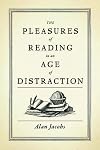
In an age where we hear tirelessly about the demise of reading, both as an activity and as a skill, Alan Jacobs thoughtfully declares how it's not that bad. More importantly, he addresses the purist snobs who hold that reading has to be a chore, done a certain way, and applied against an arbitrary list of acceptable works. What I liked most is that Jacobs gives permission to let our reading follow our appetite. Most of us will probably find ourselves advancing toward better works anyway, but show more his open approach allows younger readers to discover for themselves what is good and enjoyable to them. I especially enjoyed a middle passage of this book where Jacobs describes the reading principles advocated in the 12th century by Abbot Hugh of the St. Victor monastery in Paris. Despite his zealous outlook and a strict program, Hugh commended every reader toward humility because each is on an important journey of character.
I've read Adler's How to Read a Book. In fact, I vividly recall hearing a giggle from the woman across from me on an evening commute by train. She thought the title was funny. I've read numerous reading lists out of obligation to my profession and personal development. In my early 30's, I plowed hungrily through the entire great books curriculum of St. John's College. Taken together, I've been told how to read and what to read while finding for myself what I like to read. Alan Jacobs explains why that is the best course. I agree and am glad to have added this book to my own exploration. show less
I've read Adler's How to Read a Book. In fact, I vividly recall hearing a giggle from the woman across from me on an evening commute by train. She thought the title was funny. I've read numerous reading lists out of obligation to my profession and personal development. In my early 30's, I plowed hungrily through the entire great books curriculum of St. John's College. Taken together, I've been told how to read and what to read while finding for myself what I like to read. Alan Jacobs explains why that is the best course. I agree and am glad to have added this book to my own exploration. show less
I picked up this book because, like many readers, I struggle with focusing on a book when there are so many distractions calling my name. I was hoping to find some specific advice on how to deal with all those distractions when trying to immerse myself in a book, but, alas, what I found instead was a lengthy academic treatise on the benefits of reading. Jacobs is preaching to the choir here! I already know why reading is wonderful--the question is how to do more of it.
It also didn't help show more that Jacobs is a Professor, and writes like one: in a heavily academic style which made my eyes glaze over. Then there was the constant repetition. He reiterated his points over and over again, and even re-quoted his sources, leaving me to wonder if I'd accidentally flipped back a few pages. I finished the book thinking this could have been better as a punchy essay rather than as a full-length book.
Still, I can definitely get behind the core philosophy of this book: read primarily for enjoyment, read at whim, and don't read so you can check something off a list. Great! I'm all for telling readers to embrace their own individual reading tastes, guilt-free.
The main piece of advice that really resonated with me was the concept that reading is something that works best when done in solitude. As someone who's tried to sneak chapters amidst the daily hustle of family life, this piece of insight really struck a chord. It’s not me; it’s the chaos of the living room! Realizing that my environment is at least partly to blame for my reading frustrations was a genuine lightbulb moment.
Jacobs also reminds us that life is noisy, and distractions have always been around. Even our ancestors struggled to keep their attention glued to a book; somehow, knowing that made me feel better about my own wandering focus. show less
It also didn't help show more that Jacobs is a Professor, and writes like one: in a heavily academic style which made my eyes glaze over. Then there was the constant repetition. He reiterated his points over and over again, and even re-quoted his sources, leaving me to wonder if I'd accidentally flipped back a few pages. I finished the book thinking this could have been better as a punchy essay rather than as a full-length book.
Still, I can definitely get behind the core philosophy of this book: read primarily for enjoyment, read at whim, and don't read so you can check something off a list. Great! I'm all for telling readers to embrace their own individual reading tastes, guilt-free.
The main piece of advice that really resonated with me was the concept that reading is something that works best when done in solitude. As someone who's tried to sneak chapters amidst the daily hustle of family life, this piece of insight really struck a chord. It’s not me; it’s the chaos of the living room! Realizing that my environment is at least partly to blame for my reading frustrations was a genuine lightbulb moment.
Jacobs also reminds us that life is noisy, and distractions have always been around. Even our ancestors struggled to keep their attention glued to a book; somehow, knowing that made me feel better about my own wandering focus. show less
Summary: An argument that we should read what we delight in rather than what others think is “good” for us.
Alan Jacobs is not among the prophets of reading doom. He believes we should actually read what we want to rather than following prescribed lists of “great” books that we ought to read. He argues that the most important reason for reading is that it is pleasurable rather than it being “good” for us:
“So this is what I say to my petitioners: for heaven’ sake, don’t turn show more reading into the intellectual equivalent of eating organic greens, (or shifting the metaphor slightly) some fearfully disciplined appointment with an elliptical trainer of the mind in which you count words or pages the way some people fix their attention on the ‘calories burned’ readout…” (p. 17).
He proposes that we read “at whim,” that is, we read books when we are ready for them. That doesn’t mean we don’t read the great books. It means we don’t read them too soon. He also suggests that when we find works we like and wonder what else to read, that rather than reading books inspired by those books, we read upstream–that is, we read the books that preceded and inspired them. If we liked Tolkien, we should read Beowulf, a recommendation I agree with, especially if it is Seamus Heaney’s rendering! Now a more challenging one is his suggestion that, if we like Jane Austen, we read Hume, as many of her ideas come from him–but only under the sign of Whim.
Jacobs argues that one of the pleasures of reading is responding to the author and he describes the ways readers annotate their works and the value of this (he uses a mechanical pencil for precise underlines and sharpness of notes). Against those who worry that this will slow them down, he challenges the cult of page and book counts, contending that it is what, and not how much we read, that matters. He argues that many books become more boring the faster we read them, and that we ought to allow ourselves time to re-read, because we often miss much in our first readings.
Against those who complain of diminishing attention in an internet age, Jacobs contends that the thing that helped him most was getting a Kindle–it kept him reading, it promoted linearity, and allowed him to concentrate for a long time. Unlike reading on a computer or tablet, there are no notifications and no distractions or temptation to multi-task.
This takes Jacobs into a discussion of attentiveness and he introduces us to Hugh of St. Victor and the counsel of the Didascalion. He advises reading what we can, moving step by step, first cogitating and then meditating on the text, ruminating on it as a ruminant does its food. He contends that we need both the skills of skimming and deep and long attention, depending on the material and our reasons for engaging it.
Against those who want to turn libraries into chat-filled cafes, he argues that silence is often difficult to find, especially for the impoverished, who cannot afford the space. Libraries, or at least reading rooms, can be a place to preserve that. Against the contention that reading is solitary, he observes all the interactive possibilities from our engagement with the author to classrooms to book groups.
He concludes where he began, with the idea of serendip. Very little of our reading journey may be planned, though it may be cultivated, whether through Amazon recommendations, or the discoveries on the shelves of a bookstore or library. While pleasurable reading involves attention and the elimination of distraction, it should not be shaped by the shame or guilt of what one should read.
Like the author, I’ve been tempted at points by reading plans, and still wrestle, as a reviewer, with reading too fast, sometimes robbing myself of the enjoyment of a book. I no longer worry about reading plans, and usually have one book going that I just read for enjoyment. This was one such book, and I would recommend it for any who remember loving books, but for one reason or another struggle to read or get caught up in the tyranny of “should.” show less
Alan Jacobs is not among the prophets of reading doom. He believes we should actually read what we want to rather than following prescribed lists of “great” books that we ought to read. He argues that the most important reason for reading is that it is pleasurable rather than it being “good” for us:
“So this is what I say to my petitioners: for heaven’ sake, don’t turn show more reading into the intellectual equivalent of eating organic greens, (or shifting the metaphor slightly) some fearfully disciplined appointment with an elliptical trainer of the mind in which you count words or pages the way some people fix their attention on the ‘calories burned’ readout…” (p. 17).
He proposes that we read “at whim,” that is, we read books when we are ready for them. That doesn’t mean we don’t read the great books. It means we don’t read them too soon. He also suggests that when we find works we like and wonder what else to read, that rather than reading books inspired by those books, we read upstream–that is, we read the books that preceded and inspired them. If we liked Tolkien, we should read Beowulf, a recommendation I agree with, especially if it is Seamus Heaney’s rendering! Now a more challenging one is his suggestion that, if we like Jane Austen, we read Hume, as many of her ideas come from him–but only under the sign of Whim.
Jacobs argues that one of the pleasures of reading is responding to the author and he describes the ways readers annotate their works and the value of this (he uses a mechanical pencil for precise underlines and sharpness of notes). Against those who worry that this will slow them down, he challenges the cult of page and book counts, contending that it is what, and not how much we read, that matters. He argues that many books become more boring the faster we read them, and that we ought to allow ourselves time to re-read, because we often miss much in our first readings.
Against those who complain of diminishing attention in an internet age, Jacobs contends that the thing that helped him most was getting a Kindle–it kept him reading, it promoted linearity, and allowed him to concentrate for a long time. Unlike reading on a computer or tablet, there are no notifications and no distractions or temptation to multi-task.
This takes Jacobs into a discussion of attentiveness and he introduces us to Hugh of St. Victor and the counsel of the Didascalion. He advises reading what we can, moving step by step, first cogitating and then meditating on the text, ruminating on it as a ruminant does its food. He contends that we need both the skills of skimming and deep and long attention, depending on the material and our reasons for engaging it.
Against those who want to turn libraries into chat-filled cafes, he argues that silence is often difficult to find, especially for the impoverished, who cannot afford the space. Libraries, or at least reading rooms, can be a place to preserve that. Against the contention that reading is solitary, he observes all the interactive possibilities from our engagement with the author to classrooms to book groups.
He concludes where he began, with the idea of serendip. Very little of our reading journey may be planned, though it may be cultivated, whether through Amazon recommendations, or the discoveries on the shelves of a bookstore or library. While pleasurable reading involves attention and the elimination of distraction, it should not be shaped by the shame or guilt of what one should read.
Like the author, I’ve been tempted at points by reading plans, and still wrestle, as a reviewer, with reading too fast, sometimes robbing myself of the enjoyment of a book. I no longer worry about reading plans, and usually have one book going that I just read for enjoyment. This was one such book, and I would recommend it for any who remember loving books, but for one reason or another struggle to read or get caught up in the tyranny of “should.” show less
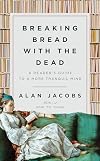
Summary: A case for reading old books as a means of increasing our “personal density” to expand our temporal bandwidth.
Alan Jacobs teaches students to read old books and contends, contrary to many critics, that this reading is essential in a day when we are bombarded by an avalanche of information, and all matter of questions about the future. Drawing upon Thomas Pynchon in Gravity’s Rainbow, he argues that old books increase our “personal density” through expanding our temporal show more bandwidth.
What does this mean? Jacobs is not arguing for learning from the lessons of the past or that old books help us recognize universal truths. Rather, he suggests that the great works of the past startle us with their difference. They help us see the choices of our own age in light of those of the past. They are the “other,” the “generative oddkin.” Jacobs believes that understanding how people of other ages met the challenges of life equip us to better face challenges of the future than if we draw only upon the resources of the present.
The greatest challenge to Jacobs’ proposal is the invidious aspects of many of these works–racist, chauvinist, colonialist, and more. Jacobs does not deny any of that. What he observes is that those in the past often enunciated ideas, the implications they failed to fully grasp in their own lives. He points to the American founders who laid the groundwork for our own ideals of equality, yet held slaves and failed until 100 years ago to enfranchise women. Reading them forces us to ask how future generations will evaluate us. Drawing upon Ursula LeGuin’s novel Lavinia, an adaptation of the Aeneid, giving voice to the woman Aeneas loved, Jacobs argues both that we read with double vision, recognizing both the work and the flawed character of work, and that our reading from our time can bring new insight that perhaps even an author like Virgil had not grasped.
Jacobs develops these themes through nine essays in which we consider works like The Iliad, The Doll’s House, and Jane Eyre, and authors from Virgil to Italo Calvino. He contends that the presence and tranquility of mind enabling us to meet the challenges of the day comes from a perspective that goes beyond “the latest thing.” If we read only sources from the present, as diverse as they may be, we may still be caught in “echo chambers.” Sometimes, the voices of the past will give voice and words that make sense of our own reality. At other times they will startle and challenge us. Rather than lulling us to sleep with placid verities, they challenge and shake us up, nurturing the kind of resistance fostering “unfragile” and resilient thought.
Jacobs does all this in elegant prose evoking the voices he would have us give more careful attention–an engaging read and a warm invitation. show less
Alan Jacobs teaches students to read old books and contends, contrary to many critics, that this reading is essential in a day when we are bombarded by an avalanche of information, and all matter of questions about the future. Drawing upon Thomas Pynchon in Gravity’s Rainbow, he argues that old books increase our “personal density” through expanding our temporal show more bandwidth.
What does this mean? Jacobs is not arguing for learning from the lessons of the past or that old books help us recognize universal truths. Rather, he suggests that the great works of the past startle us with their difference. They help us see the choices of our own age in light of those of the past. They are the “other,” the “generative oddkin.” Jacobs believes that understanding how people of other ages met the challenges of life equip us to better face challenges of the future than if we draw only upon the resources of the present.
The greatest challenge to Jacobs’ proposal is the invidious aspects of many of these works–racist, chauvinist, colonialist, and more. Jacobs does not deny any of that. What he observes is that those in the past often enunciated ideas, the implications they failed to fully grasp in their own lives. He points to the American founders who laid the groundwork for our own ideals of equality, yet held slaves and failed until 100 years ago to enfranchise women. Reading them forces us to ask how future generations will evaluate us. Drawing upon Ursula LeGuin’s novel Lavinia, an adaptation of the Aeneid, giving voice to the woman Aeneas loved, Jacobs argues both that we read with double vision, recognizing both the work and the flawed character of work, and that our reading from our time can bring new insight that perhaps even an author like Virgil had not grasped.
Jacobs develops these themes through nine essays in which we consider works like The Iliad, The Doll’s House, and Jane Eyre, and authors from Virgil to Italo Calvino. He contends that the presence and tranquility of mind enabling us to meet the challenges of the day comes from a perspective that goes beyond “the latest thing.” If we read only sources from the present, as diverse as they may be, we may still be caught in “echo chambers.” Sometimes, the voices of the past will give voice and words that make sense of our own reality. At other times they will startle and challenge us. Rather than lulling us to sleep with placid verities, they challenge and shake us up, nurturing the kind of resistance fostering “unfragile” and resilient thought.
Jacobs does all this in elegant prose evoking the voices he would have us give more careful attention–an engaging read and a warm invitation. show less
Lists
Awards


You May Also Like


Associated Authors
Statistics
- Works
- 19
- Also by
- 6
- Members
- 4,421
- Popularity
- #5,668
- Rating
- 4.0
- Reviews
- 72
- ISBNs
- 124
- Languages
- 5
- Favorited
- 4
