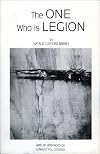
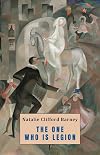
The One Who Is Legion
by Natalie Clifford Barney
On This Page
Description
"For years I have been haunted by the idea that I should orchestrate those inner voices which sometimes speak to us in unison, and so compose a novel, not so much with the people about us, as with those within ourselves, for have we not several selves and cannot a story arise from their conflicts and harmonies?"Thus wrote Natalie Clifford Barney in her author's note to The One Who Is Legion, a novel which she published privately in London in 1930 in an edition of only 560 copies. The book, show more which received scant notice at the time of its publication and has since been all but forgotten, is at once an occult work of genius and an early example of androgynous literature. Here brought forth in a new edition that should secure its place as one of the great classics of modernism, this highly experimental tour de force, in which Barney reinterprets the stream of consciousness techniques James Joyce had used in Ulysses in her own highly original style, is a strange story of possession and fourth-dimensional materialism-and is, in fact, a glorious labyrinth of visions and emotions. show lessTags
Member Reviews
Not to be melodramatic but it is a genuine tragedy that this book is not a classic of both modernist and lesbian literature. Yes it was only printed in 560 copies but Emily Dickinson was printed in none copies so that's not a fully sufficient reason. But really Barney and her circle of pre-WW2 feminist lesbians has been pretty erased historically despite their prominence at the time, which again is something of a travesty. Well, we can undo that so read this dang book.
Anyways, this is an absolutely extraordinary novel. It is a poetic, misty, painful, remarkably beautiful piece of writing that is distinctly modernist, certainly, but also should probably be considered a late Symbolist novel more than anything. Barney's style is so poetic show more and amorphous, blending together poetry, narrative, and leaps of mystical philosophy, that it feels like a predecessor to Clarice Lispector and Ingeborg Bachman which, if you know me, is a massive complement. It is also refreshing reading something from this period that is profoundly, openly, passionately queer, genderweird, plural, and polyamorous, without any plausible deniability such as a vestigial male love interest.
This book is many things. It is a prose poem about life, death, and love. It is an exploration of the internally fractured identity and its complex relationship with the body that still marks queerness. It is a passionate argument for feminist queer polyamory. And it is also, at its roots, a bittersweet story about the way death and the past are constant specters for queer people in a way they aren't for straights. A remarkable piece of work, please read it if you are invested at all in classic queer fiction. show less
Anyways, this is an absolutely extraordinary novel. It is a poetic, misty, painful, remarkably beautiful piece of writing that is distinctly modernist, certainly, but also should probably be considered a late Symbolist novel more than anything. Barney's style is so poetic show more and amorphous, blending together poetry, narrative, and leaps of mystical philosophy, that it feels like a predecessor to Clarice Lispector and Ingeborg Bachman which, if you know me, is a massive complement. It is also refreshing reading something from this period that is profoundly, openly, passionately queer, genderweird, plural, and polyamorous, without any plausible deniability such as a vestigial male love interest.
This book is many things. It is a prose poem about life, death, and love. It is an exploration of the internally fractured identity and its complex relationship with the body that still marks queerness. It is a passionate argument for feminist queer polyamory. And it is also, at its roots, a bittersweet story about the way death and the past are constant specters for queer people in a way they aren't for straights. A remarkable piece of work, please read it if you are invested at all in classic queer fiction. show less
Ratings
Members
- Recently Added By
Lists

My Lesbian Literature Library
14 works; 1 member
Author Information

15+ Works 138 Members
Classifications
Statistics
- Members
- 17
- Popularity
- 1,450,826
- Reviews
- 1
- Rating
- (4.00)
- Languages
- English
- Media
- Paper
- ISBNs
- 3