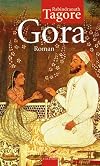
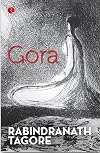
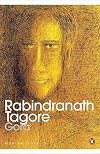
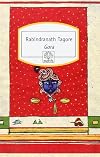
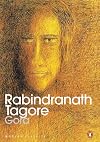
Gora
by Rabindranath Tagore
On This Page
Description
Translation based on fuller text from the Rabindra racanabali, 1941.Tags
Recommendations












Member Reviews
So it turns out Tagore is really all he's cracked out to be! This is a wonderful work of fiction (and philosophy). It was like a breath of fresh air for me, because when I read enough petty books and start wondering if maybe reading just got boring or maybe I can't quite feel like books are so grand anymore, or maybe I'm just not as impressionable, I stumble upon something like this and realise that everything is still fine with the world of books, and all I've been longing for is simply just a really good, deep read. This is precisely that kind of book, and it really impressed me how Tagore transported me into the whirlwind of thoughts and ideas that shaped the 19-20th centuries in India. It was also extremely well timed for me, as the show more previous book I read was Gissing's Odd women which also addressed a lot of the problems that this book did.
What will you find in this book? Discussions about the love for your nation, your community and family, spirituality and religion, as well as religious freedom and freedom to act as an individual, as opposed to the restrictions society puts on you and the prejudice free thinkers have to face, but that's not all. This book also talks about coming of age, finding yourself, a young person's place in the world and in the spiritual realm, also about what it truly means to be a highly evolved human being, not just by intelligence but through your deeds and understanding. If you are someone who often ponders these questions, you will greatly enjoy this book. show less
What will you find in this book? Discussions about the love for your nation, your community and family, spirituality and religion, as well as religious freedom and freedom to act as an individual, as opposed to the restrictions society puts on you and the prejudice free thinkers have to face, but that's not all. This book also talks about coming of age, finding yourself, a young person's place in the world and in the spiritual realm, also about what it truly means to be a highly evolved human being, not just by intelligence but through your deeds and understanding. If you are someone who often ponders these questions, you will greatly enjoy this book. show less
Rise of Nationalism in India
Rabindranath Tagore set his book, “Gora” during the early days of the 20th century.
This is when the nationalist movement swept through India.
After the Great Uprising of 1857, the British launched their “divide and rule” policy in India. They wished to divide Hindus and Muslims.
The British Government took control of India’s administration from the East India Company in 1858.
Allan Octavian Hume founded the Indian National Congress in 1885. He wanted to give Indians a voice with the British Government.
The Party quickly became the centre of the nationalist movement that swept through India.
Nationalist movements and thinkers in Europe, like Theodor Herzl and Giuseppe Mazzini, influenced many show more Indians.
Some of India’s leaders copied and changed the ideas that people like Mazzini promoted.
Today’s leaders have warped the original ideas even more.
Tagore’s own views were much broader than those prevalent during his time. He expressed some of his thinking in his poem, “Let My Country Awake.”
He wrote “Gora” in this setting of a rising wave of nationalism in India.
Synopsis
On the surface, the book traces two parallel love stories. The first is between Gora and Sucharita. The second is between Binoy and Lolita.
Most reviewers have found long passages on themes like caste, feminism, gender, religion, etc., scattered through the book.
Tagore also explored many nationalist themes while writing “Gora”.
My Impression
I did not find any real merit in the book. I accept that this may be because of poor translation from Bengali to English.
Gora’s character confused me. The translator used the masculine and feminine genders to refer to Gora. At times, I became unsure if the word, “Gora” was used to refer to the British.
“Gora” also refers to a fair skinned person, and we also use the word in colloquial speech to refer to a white-skinned Westerner.
The translator also mixed up the past and present tense in a single paragraph, making it difficult to follow the flow of the narrative.
There were some interesting passages in the book in which Tagore wrote about some themes like nationalism, religion, brotherhood, etc.
However, the poor translation marred the story.
Towards the end, I tired of the book, and was glad that to conclude the narrative. show less
Rabindranath Tagore set his book, “Gora” during the early days of the 20th century.
This is when the nationalist movement swept through India.
After the Great Uprising of 1857, the British launched their “divide and rule” policy in India. They wished to divide Hindus and Muslims.
The British Government took control of India’s administration from the East India Company in 1858.
Allan Octavian Hume founded the Indian National Congress in 1885. He wanted to give Indians a voice with the British Government.
The Party quickly became the centre of the nationalist movement that swept through India.
Nationalist movements and thinkers in Europe, like Theodor Herzl and Giuseppe Mazzini, influenced many show more Indians.
Some of India’s leaders copied and changed the ideas that people like Mazzini promoted.
Today’s leaders have warped the original ideas even more.
Tagore’s own views were much broader than those prevalent during his time. He expressed some of his thinking in his poem, “Let My Country Awake.”
He wrote “Gora” in this setting of a rising wave of nationalism in India.
Synopsis
On the surface, the book traces two parallel love stories. The first is between Gora and Sucharita. The second is between Binoy and Lolita.
Most reviewers have found long passages on themes like caste, feminism, gender, religion, etc., scattered through the book.
Tagore also explored many nationalist themes while writing “Gora”.
My Impression
I did not find any real merit in the book. I accept that this may be because of poor translation from Bengali to English.
Gora’s character confused me. The translator used the masculine and feminine genders to refer to Gora. At times, I became unsure if the word, “Gora” was used to refer to the British.
“Gora” also refers to a fair skinned person, and we also use the word in colloquial speech to refer to a white-skinned Westerner.
The translator also mixed up the past and present tense in a single paragraph, making it difficult to follow the flow of the narrative.
There were some interesting passages in the book in which Tagore wrote about some themes like nationalism, religion, brotherhood, etc.
However, the poor translation marred the story.
Towards the end, I tired of the book, and was glad that to conclude the narrative. show less
La narración empieza en Calcuta. Historia llena de amor, sentimientos vistos desde otra perspectiva ,desde otra cultura.
Feb 27, 2018Spanish
H1.31.9
Jan 12, 2021Catalan
Ratings
Members
- Recently Added By
Lists

In Our Time books
4,934 works; 2 members
Author Information

1,031+ Works 9,627 Members
Rabindranath Tagore was born on May 7, 1861 in Calcutta, India. He attended University College, at London for one year before being called back to India by his father in 1880. During the first 51 years of his life, he achieved some success in the Calcutta area of India with his many stories, songs, and plays. His short stories were published show more monthly in a friend's magazine and he played the lead role in a few of the public performances of his plays. While returning to England in 1912, he began translating his latest selections of poems, Gitanjali, into English. It was published in September 1912 in a limited edition by the India Society in London. In 1913, he received the Nobel Prize for literature. He was the first non-westerner to receive the honor. In 1915, he was knighted by King George V, but Tagore renounced his knighthood in 1919 following the Amritsar massacre of 400 Indian demonstrators by British troops. He primarily worked in Bengali, but after his success with Gitanjali, he translated many of his other works into English. He wrote over one thousand poems; eight volumes of short stories; almost two dozen plays and play-lets; eight novels; and many books and essays on philosophy, religion, education and social topics. He also composed more than two thousand songs, both the music and lyrics. Two of them became the national anthems of India and Bangladesh. He died on August 7, 1941 at the age of 80. (Bowker Author Biography) show less
Some Editions
Awards and Honors
Series
Belongs to Publisher Series
Work Relationships
Is contained in
Common Knowledge
- Canonical title*
- Gora
- Original title
- গোরা
- Original publication date
- 1910
- People/Characters*
- Gora; Binoy; Sucharita; Paresh Babu; Anandamori; Lolita (show all 8); Satish Prabhu; Harimohini
- Important places*
- Calcuta, La India
- Original language*
- Bengali
*Some information comes from Common Knowledge in other languages. Click "Edit" for more information.
Classifications
- Genres
- Fiction and Literature, General Fiction
- DDC/MDS
- 813 — Literature & rhetoric American literature in English American fiction in English
- LCC
- PK1723 .G6313 — Language and Literature Indo-Iranian languages and literatures Indo-Iranian philology and literature Indo-Aryan languages Modern Indo-Aryan languages Particular languages and dialects Bengali
- BISAC
Statistics
- Members
- 309
- Popularity
- 103,778
- Reviews
- 4
- Rating
- (4.14)
- Languages
- 10 — Bengali, Catalan, English, French, German, Hindi, Malayalam, Russian, Spanish, Turkish
- Media
- Paper, Audiobook, Ebook
- ISBNs
- 45
- ASINs
- 14