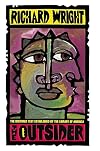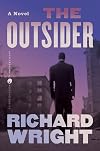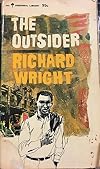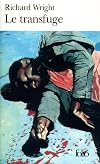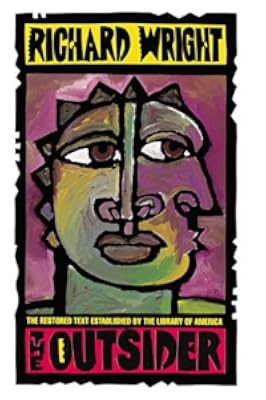
The Outsider
by Richard Wright
On This Page
Description
[The author] presents a compelling story of a black man's attempt to escape his past and start anew in Harlem. Cross Damon is a man at odds with society and with himself, a man who hungers for peace but who brings terror and destruction wherever he goes.Tags
Recommendations






Member Reviews
Oltreoceano è considerato un Classico. Ed è proprio così!
Se la gioca con Dostoevskij (il romanzo rimanda a Delitto e castigo e a I demoni, ma qui "Raskol'nikov" gioca a flipper, ascolta hot jazz e si muove nel rigido inverno di Chicago e New York).
Un signor romanzo filosofico che tratta di nichilismo, comunismo (a proposito, la disciplina di Partito dei bolscevichi americani anni '50 era ferrea come nel PCUS!), razzismo, religione, tutte tematiche che vengono sviscerate grazie all'affilatissima prosa di Wright che, non contento, tratteggia anche un protagonista e un antagonista e il tipo del Comunista con grande cura e verosimiglianza.
L'outsider del titolo originale è Cross Damon, afroamericano in un'America anglosassone di cui non show more è parte integrante e di cui non avrebbe assimilato i valori...
- Evviva le Meduse Mondadori! - show less
Se la gioca con Dostoevskij (il romanzo rimanda a Delitto e castigo e a I demoni, ma qui "Raskol'nikov" gioca a flipper, ascolta hot jazz e si muove nel rigido inverno di Chicago e New York).
Un signor romanzo filosofico che tratta di nichilismo, comunismo (a proposito, la disciplina di Partito dei bolscevichi americani anni '50 era ferrea come nel PCUS!), razzismo, religione, tutte tematiche che vengono sviscerate grazie all'affilatissima prosa di Wright che, non contento, tratteggia anche un protagonista e un antagonista e il tipo del Comunista con grande cura e verosimiglianza.
L'outsider del titolo originale è Cross Damon, afroamericano in un'America anglosassone di cui non show more è parte integrante e di cui non avrebbe assimilato i valori...
- Evviva le Meduse Mondadori! - show less
It is hard to look at the books of Richard Wright without considering the racial tension surrounding the time of publication and setting. But objectively, without bothering about the author's background, his books are masterpieces. They are bold, daring, tragic, powerful, intricate, deep and profound. Ascribe any adjective you like, but there is no substitution for immersing yourself in The Outsider or Native Son. Don't forget his short stories either. I put Richard Wright on the level of Dostoyevsky. So why isn't he read in high school English classes? Why isn't he anthologized as often as James Baldwin or even paltry Kurt Vonnegut? Sure, his themes and method are controversial. The things his characters say might send a shiver down show more your spine every once in a while. But I guarantee you will never forget this book. Don't be intimidated by its size. It is nothing like Henry James or even Dreiser. Wright writes simply, without tiptoeing around. If you can read a newspaper, you can read this book. But that doesn't stop him from ploughing headlong into immense abysses of existentialism. If you don't believe me, read his incredible short story called "Big Black Good Man." This was my first introduction to Wright, and I still think it's a great taste of what he can do. show less
The Outsider is a wonderful book by the skilled black American writer, Richard Wright. Native Son his is best book and is a must read. Wright was born in the south and moved to Chicago as an adult. He was looking to escape the segregated south and was amazed to see the integration in Chicago. Richard became a Communist. His years with and after Communism dominate this book. The story is good but would be much better without the long stream of consciousness interludes and the long philosophical introspections which impede the flow of the story. He struggles with Communism, resigns from the party but is still very much involved with it and its members. If you want to know what life was like in the 1930s, 40s and early 50s for a black man show more you will find out here and it isn't pretty. show less
"Richard Wright's 'The Outsider' is a phenomenal novel that draws the reader to the dark side of the life of the main character Cross Damon. This extraordinary character introduces the reader to a man who lives outside the norms, expectations, rules, ...more Richard Wright's 'The Outsider' is a phenomenal novel that draws the reader to the dark side of the life of the main character Cross Damon. This extraordinary character introduces the reader to a man who lives outside the norms, expectations, rules, and laws of society. He embraces no ideological, societal or governmental theories, and he claims no religious prinicipals. Wright allows the reader to imagine the life of an individual who has little emotional regard for his family, who show more constantly succombs to his desire for women, and whose destructive ideologies decide the fate of his life. This intriguing page turning novel will appeal to the reader from beginning to end. I recommend this book to anyone who enjoys classic African-American literature. show less
I unfortunately read this at a time when it must have been incomprehensible. Dewed with youth, affecting an angst and still noshing fast food while often remaining awake for 24 hours at a clip. I only recall two episodes: the queue for the train and the encounter (molestation?) and the final slugfest of the ideologues. Perhaps my latest trek will lead me back to this door.
Cross Damon, Noir de Chicago, est employé des P.T. T. Marié, père de trois enfants, il a séduit une fille de seize ans. Un hasard lui permet d'échapper aux conséquences de son acte : pris dans un accident de métro, il passe pour mort. Mais peut-on changer de personnalité ? Reconnu par un camarade, Cross le tue. Il s'enfuit à New York, réussit à se procurer des papiers et devient Lionel. Mis en rapport avec des communistes, Lionel est sollicité par eux de s'inscrire au parti. Mais une fatalité du crime semble peser sur Lionel, qui commet encore trois assassinats. Cependant, il a fait la connaissance du District-Attorney Houston, homme subtil, et il se trouve engagé avec lui dans un jeu étrange qui n'est pas sans rappeler show more celui que jouent Porphyre et Raskolnikov. show less
Jun 7, 2011French
Ratings
Members
- Recently Added By
Author Information

55+ Works 19,438 Members
Richard Wright was generally thought of as one of the most gifted contemporary African American writers until the rise of James Baldwin. "With Wright, the pain of being a Negro is basically economic---its sight is mainly in the pocket. With Baldwin, the pain suffuses the whole man. . . . If Baldwin's sights are higher than Wright's, it is in part show more because Wright helped to raise them" (Time). Wright was born on a plantation near Natchez, Mississippi, the son of a sharecropper. At the age of 15, he started to work in Memphis, then in Chicago, then "bummed all over the country," supporting himself by various odd jobs. His early writing was in the smaller magazines---first poetry, then prose. He won Story Story's $500 prize---for the best story written by a worker on the Writer's Project---with "Uncle Tom's Children" in 1938, his first important publication. He wrote Native Son (1940) in eight months, and it made his reputation. Based in part on the actual case of a young black murderer of a white woman, it was one of the first of the African American protest novels, violent and shocking in its scenes of cruelty, hunger, rape, murder, flight, and prison. Black Boy (1945) is the simple, vivid, and poignant story of Wright's early years in the South. It appeared at the beginning of a new postwar awareness of the evils of racial prejudice and did much to call attention to the plight of the African American. The Outsider (1953) is a novel based on Wright's own experience as a member of the Communist party, an affiliation he terminated in 1944. He remained politically inactive thereafter and from 1946 until his death made his principal residence in Paris. His nonfiction writings on problems of his race include Black Power: A Record of Reactions in a Land of Pathos (1954), about a visit to the Gold Coast, White Man, Listen (1957), and Twelve Million Black Voices: A Folk History of the Negro in the United States. (Bowker Author Biography) Richard Wright was born on a plantation near Natchez, Mississippi. His father left the family when Wright was only five years old, and he was raised first by his mother and then by a series of relatives. What little schooling he had ended with his graduation from ninth grade in Memphis, Tennessee. At age 15, he started to work in Memphis, and later worked in Chicago before traveling across the country supporting himself with odd jobs. When Wright finally returned to Chicago, he got a job with the federal Writer's Project, a government-supported arts program. He was quite successful, winning a $500 prize from a magazine for the best fiction written by a participant in that program. In Chicago, he was also introduced to leftist politics and became a member of the Communist Party. In 1937, Wright left Chicago for New York, where he became Harlem editor for the Communist national newspaper, The Daily Worker, and where he met future novelist, Ralph Ellison. Wright became a celebrated author with the publication of Native Son (1940), a novel he wrote in only eight months. Based on the actual case of a young black murderer of a white woman, it was one of the first of the modern black protest novels, violent and shocking in its sense of cruelty, hunger, rape, murder, flight, and prison. This novel brought Wright both fame and financial security. He followed it with his autobiography, Black Boy (1945), which was also successful. In 1942, Wright and his wife broke with the Communist Party, and in 1947, they moved to France, where Wright lived the rest of his life. His novel The Outsider (1953) is based on his experiences as a member of the Communist Party. Wright is regarded as a major modern American writer, one of the first black writers to reach a large white audience, and thereby raise the level of national awareness of the continuing problem of racism in America. In many respects Wright paved the way for all black writers who followed him. (Bowker Author Biography) show less
Awards and Honors
Distinctions
Notable Lists
Series
Belongs to Publisher Series
Work Relationships
Common Knowledge
- Original publication date
- 1953
Classifications
Statistics
- Members
- 457
- Popularity
- 66,967
- Reviews
- 6
- Rating
- (4.13)
- Languages
- 6 — Danish, English, Finnish, French, Italian, Swedish
- Media
- Paper, Audiobook, Ebook
- ISBNs
- 20
- ASINs
- 12