On This Page
Description
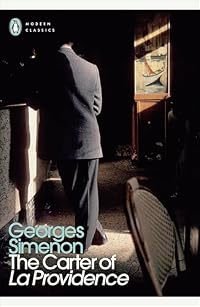
A new translation of a twisting detective novel. Hector Loursat, a lawyer in the small town of Moulins, has lived as a drunken recluse since his wife left him eighteen years previously. Unmoored from society and estranged from his daughter, he shuts himself away, numbed by endless bottles of burgundy. But when a dead man is found in his house one night, the resulting police investigation unearths secrets that shake the town - and Loursat's isolation - to the core. No longer able to ignore show more the world, he emerges to take on the murder case himself and confront the lives of Moulins' by-ways and back streets. In the progressive break-down of Loursat's self-imposed isolation, Simenon brilliantly depicts the psychology of loneliness and a man's tortured re-engagement with humanity and its darkest acts. show lessTags
Recommendations



























Member Reviews
18 years ago Hector Loursat's wife left him and their young daughter Nicole (who he is not convinced is his) for a younger man. At the time he was one of the best lawyers - a bright young man who was making his name in the world. That betrayal shattered him and he hid in his house letting himself get fat, drunk and unkempt, making sure that his daughter is provided for what she needs materially but not much beyond that.
And one night he hears a shot and before long finds a dead man in one of the bedrooms of the house. The following scandal involves his daughter and the police soon finds someone to accuse - Nicole's boyfriend. Everyone is ready to close the books on the murder, preserve the dignity of everyone involved as much as possible show more (as it turns out, while Hector Loursat was hiding from the world, Nicole had her own company and entertained in the rest of the house) and move on with their lives. Except for the old lawyer - he meets the young man and instead of being mad with him for sleeping with Nicole (especially because socially Emile is below the family), he decides to believe that he is not a murderer and tells the police and the magistrate that he is Emile's lawyer.
Except that nothing is that easy. The police had found their murderer so it falls to the lawyer to discover what happened. And unlike Perry Mason, he does not have a detective agency next door and had not spent the last decades solving cases. All he has is Nicole, the daughter who despises him. And yet, the two of them find a way to work together and the man who hid for 18 years finds the truth - despite wanting to crawl back into his rooms and hide again.
The novel is both a crime novel and a psychological profile of a man who lost everything and gave up. The leaving of the house and the opening of his mind to the world work in parallel - the claustrophobic feeling of the first pages of the novel gradually recedes and Hector emerges from his cocoon. The past and the present finally merge and his acceptance of what happened 18 years ago finally bring him back into the world - just on time to show everyone that all the booze had not dulled all his senses.
The novel was published in 1940 but the war is barely there - there is a single action which reminds you of it (a man mentions that he is a volunteer stretcher carrier) but outside of that the life in the small town is almost hidden from the world. It almost feels like a bottle inside of a bottle - the mind of Hector Loursat inside of the house inside of the town, sheltered by the world. Which adds to that initial feeling of claustrophobia and remains one of the general feelings in the novel - everyone seems to be struggling to get out of something.
P. D. James provides a wonderful introduction to the edition I read - as long as you had read the novel before or read the introduction at the end. show less
And one night he hears a shot and before long finds a dead man in one of the bedrooms of the house. The following scandal involves his daughter and the police soon finds someone to accuse - Nicole's boyfriend. Everyone is ready to close the books on the murder, preserve the dignity of everyone involved as much as possible show more (as it turns out, while Hector Loursat was hiding from the world, Nicole had her own company and entertained in the rest of the house) and move on with their lives. Except for the old lawyer - he meets the young man and instead of being mad with him for sleeping with Nicole (especially because socially Emile is below the family), he decides to believe that he is not a murderer and tells the police and the magistrate that he is Emile's lawyer.
Except that nothing is that easy. The police had found their murderer so it falls to the lawyer to discover what happened. And unlike Perry Mason, he does not have a detective agency next door and had not spent the last decades solving cases. All he has is Nicole, the daughter who despises him. And yet, the two of them find a way to work together and the man who hid for 18 years finds the truth - despite wanting to crawl back into his rooms and hide again.
The novel is both a crime novel and a psychological profile of a man who lost everything and gave up. The leaving of the house and the opening of his mind to the world work in parallel - the claustrophobic feeling of the first pages of the novel gradually recedes and Hector emerges from his cocoon. The past and the present finally merge and his acceptance of what happened 18 years ago finally bring him back into the world - just on time to show everyone that all the booze had not dulled all his senses.
The novel was published in 1940 but the war is barely there - there is a single action which reminds you of it (a man mentions that he is a volunteer stretcher carrier) but outside of that the life in the small town is almost hidden from the world. It almost feels like a bottle inside of a bottle - the mind of Hector Loursat inside of the house inside of the town, sheltered by the world. Which adds to that initial feeling of claustrophobia and remains one of the general feelings in the novel - everyone seems to be struggling to get out of something.
P. D. James provides a wonderful introduction to the edition I read - as long as you had read the novel before or read the introduction at the end. show less
Simenon. 't was even geleden dat we hem nog lazen. We maakten ooit kennis via Maigret (natuurlijk, wie niet?), maar ontdekten via 'de bananentoerist' dat hij een heerlijk schrijver was en bovenal een sterk ontleder van de menselijk ziel.
Onbekenden in huis ligt middenin de policiers en de eerde psychologische romans die Simenon schreef. Het is in zijn pure vorm een who dunnit opgebouwd rond de moord op een onbekende in het huis van een vereenzaamd advocaat. Maar de uitwerking is dat allerminst.
Sinds zijn vrouw hem in de steek liet, leeft advocaat Hector Loursat als kluizenaar en heeft hij zelfs amper contact met zijn dochter, hoewel die bij hem woont. Maar de moord brengt daar stilaan verandering in.
Onbekenden in huis is dan ook eerder show more de morele en feitelijke heropstanding van een man die zich teruggetrokken had uit de samenleving dan een moordraadsel. Het is indrukwekkend hoe Simenon zijn hoofdpersoon voorzichtig, schichtig en onwennig weer laat openbloeien. Dat hij met de verwondering van een kind weer naar de wereld en de mensen om hem heen kijkt, zorgt ook voor een zinvolle blik op de moordzaak. Het pleidooi in de rechtbank is strak en fris uitgewerkt maar het is vooral heerlijk hoe Simenon je doodsimpel om de oren slaat met plotse zinnen zoals:
"Een verre claxon drong door de laag van stilte heen, hen eraan herinnerend dat er om hen heen een kleine stad bestond, waarvan elke bewoner dacht dat hij het leven kende."
Heerlijk leesvoer! show less
Onbekenden in huis ligt middenin de policiers en de eerde psychologische romans die Simenon schreef. Het is in zijn pure vorm een who dunnit opgebouwd rond de moord op een onbekende in het huis van een vereenzaamd advocaat. Maar de uitwerking is dat allerminst.
Sinds zijn vrouw hem in de steek liet, leeft advocaat Hector Loursat als kluizenaar en heeft hij zelfs amper contact met zijn dochter, hoewel die bij hem woont. Maar de moord brengt daar stilaan verandering in.
Onbekenden in huis is dan ook eerder show more de morele en feitelijke heropstanding van een man die zich teruggetrokken had uit de samenleving dan een moordraadsel. Het is indrukwekkend hoe Simenon zijn hoofdpersoon voorzichtig, schichtig en onwennig weer laat openbloeien. Dat hij met de verwondering van een kind weer naar de wereld en de mensen om hem heen kijkt, zorgt ook voor een zinvolle blik op de moordzaak. Het pleidooi in de rechtbank is strak en fris uitgewerkt maar het is vooral heerlijk hoe Simenon je doodsimpel om de oren slaat met plotse zinnen zoals:
"Een verre claxon drong door de laag van stilte heen, hen eraan herinnerend dat er om hen heen een kleine stad bestond, waarvan elke bewoner dacht dat hij het leven kende."
Heerlijk leesvoer! show less
So there’s this guy, like, and he’s a lawyer but rich so he doesn’t have to work, and he’s been in an alcoholic daze for like 18 years, since his wife left him for Bernard, whoever that is. So he lives in this big dilapidated house with his 20 year old daughter, a cook, and a revolving cast of maids. So other than going for a walk, the same walk, each day and going down to his cellar to get his red wine, all he does is drink burgundy wine, read books he forgets, sleeps and goes to the dining room to eat. Otherwise he sits in his study or sleeps in the attached bedroom. He never says anything to his daughter Nicole, even at meals, who lives upstairs.
One night, this lawyer guy, he hears a sound like a bullwhip that wakes him up show more and, out of character, decides to investigate. He stumbles around the house he barely remembers. Eventually he comes into a room where a man in bandages is dying of a gunshot wound..... Loursat, after 18 years, finally opens his eyes and starts to see what’s around him. And that’s just the first chapter.
I ain’t gonna reveal who the dead guy is or who kilt him. You gotta read it. But, oh, skip the introduction because Baroness James gives it all away. More than I did. Honestly.
Loursat is the Everyman who blunders through life without seeing, without living. The novel, technically a mystery, is really about a man becoming alive to the world again. Simenon is sneaky, making it a page turner all the while commenting on people that are dead to the world around them. Loursat not only starts living but also starts caring about something, including his self esteem. He begins to see the flaws in all those around him even as he is honest about himself.
Simenon also manages to include some commentary on privilege, class, and poverty.
A mighty good, fast, read.
These nyrb books rarely disappoint and are always thought provoking. show less
One night, this lawyer guy, he hears a sound like a bullwhip that wakes him up show more and, out of character, decides to investigate. He stumbles around the house he barely remembers. Eventually he comes into a room where a man in bandages is dying of a gunshot wound..... Loursat, after 18 years, finally opens his eyes and starts to see what’s around him. And that’s just the first chapter.
I ain’t gonna reveal who the dead guy is or who kilt him. You gotta read it. But, oh, skip the introduction because Baroness James gives it all away. More than I did. Honestly.
Loursat is the Everyman who blunders through life without seeing, without living. The novel, technically a mystery, is really about a man becoming alive to the world again. Simenon is sneaky, making it a page turner all the while commenting on people that are dead to the world around them. Loursat not only starts living but also starts caring about something, including his self esteem. He begins to see the flaws in all those around him even as he is honest about himself.
Simenon also manages to include some commentary on privilege, class, and poverty.
A mighty good, fast, read.
These nyrb books rarely disappoint and are always thought provoking. show less
First published in 1940, a Georges Simenon non-Maigret roman durs or “hard novel,” a penetrating psychological study of Hector Loursat, a man who was a brilliant attorney in his younger days, awakened from his eighteen-year hermit-like existence by a murder committed in his own house. And why had Hector Loursat been living like a hermit all those years? For one very simple reason: without any explanation, Hector’s wife suddenly vanished, leaving him for another man, abandoned him and their two-year old daughter Nicole, left them both and the city of Moulins for good.
Moulins. Located on the banks of the Allier River in central France, the atmosphere of this rainy French city with its cold air and wet streets, drab storefronts and show more even drabber courthouse, makes its presence felt on every page. "That evening Loursat stoked up his stove with special care, as the cold and the wet outside made the misty atmosphere indoors all the more luxurious. He could hear the patter of the rain and now and again the creaking hinge of a shutter that hadn't been properly closed and was caught by one of the sudden gusts of wind that swept along the street."
And its on this cold, rainy autumn evening the story's drama begins: like a crack of a whip but with more weight, more percussion, a sound not from outside but definitely inside, a sound prompts Hector Loursat, after draining yet another glass of Burgundy and putting his cigarette back in his mouth, to rouse himself from his comfortable den chair and venture through hallways, stairways and rooms he hadn't set eyes on in years.
Convinced the sound he heard was, in fact, the shot of a gun, Loursat makes his way to the other end of the house and knocks on Nicole’s bedroom door. Just then he catches the briefest glimpse of a disappearing figure, probably a man, stepping briskly down a set of stairs. Nicole, who is now a twenty-year old young lady, opens the door and asks her father what he wants. Without question, one of the most appealing and tender parts of the novel’s unfolding drama is how father and daughter come together to form a legal team in their efforts to solve the murder mystery.
Detecting the scent of gunpowder, Loursat climbs stairs, Nicole trailing behind, and searches the third floor until he switches a light on in one of the rooms and discovers two eyes staring at him. A man, a large man, in bed, half covered in bedclothes gurgles, no wails, and then slumps over dead. Nicole gazes at her father, as if the most shocking thing in the room isn’t the dead man but her father standing before her, calm and weighty.
A stranger in the house, shot dead, the event that shakes Loursat out of his routine of walling himself in his den day and night, drinking, smoking, reading poetry and philosophy, a routine only punctuated by meals with Nicole (eating only; in all those years he never really exchanged words with his daughter) and a daily walk, “the sort of walk you take to exercise a small dog, in fact he almost gave the impression of holding himself on a leash. The walk consisted of going around four blocks of houses, never more, never less.”
For me, in addition to all the vintage Simenon laser-sharp character studies, a fascinating read on two counts: First, the novel’s structure – Part One, Hunting down the clues and reconstructing the facts in the aftermath of the murder; Part Two, the court case itself. In the hands of Georges Simenon, this tried and true lawyer fiction formula packs a punch. Second, how his eighteen years as a recluse puts Hector Loursant in touch with his own teenage years, a loner studying poetry and philosophy, thus giving him great insight and feeling for the emotions of the young adults that formed the city’s gang associated with Big Louie, the murder victim. Turns out, Loursant's insights and feelings serve him well in his reentry into the world of action and his role as lawyer. A probing existential novel that will keep you turning the pages.
P. D. James in her Introduction to this New York Review Books (NYRB) edition of The Strangers in the House: "Simenon is brilliant at selecting the salient facts which bring alive a character or a place, inducing the reader to contribute his own imagination to that of the writer so that more is conveyed than is written." show less
First published in 1940, a Georges Simenon non-Maigret roman durs or “hard novel,” a penetrating psychological study of Hector Loursat, a man who was a brilliant attorney in his younger days, awakened from his eighteen-year hermit-like existence by a murder committed in his own house. And why had Hector Loursat been living like a hermit all those years? For one very simple reason: without any explanation, Hector’s wife suddenly vanished, leaving him for another man, abandoned him and their two-year old daughter Nicole, left them both and the city of Moulins for good.
Moulins. Located on the banks of the Allier River in central France, the atmosphere of this rainy French city with its cold air and wet streets, drab storefronts and show more even drabber courthouse, makes its presence felt on every page. "That evening Loursat stoked up his stove with special care, as the cold and the wet outside made the misty atmosphere indoors all the more luxurious. He could hear the patter of the rain and now and again the creaking hinge of a shutter that hadn't been properly closed and was caught by one of the sudden gusts of wind that swept along the street."
And its on this cold, rainy autumn evening the story's drama begins: like a crack of a whip but with more weight, more percussion, a sound not from outside but definitely inside, a sound prompts Hector Loursat, after draining yet another glass of Burgundy and putting his cigarette back in his mouth, to rouse himself from his comfortable den chair and venture through hallways, stairways and rooms he hadn't set eyes on in years.
Convinced the sound he heard was, in fact, the shot of a gun, Loursat makes his way to the other end of the house and knocks on Nicole’s bedroom door. Just then he catches the briefest glimpse of a disappearing figure, probably a man, stepping briskly down a set of stairs. Nicole, who is now a twenty-year old young lady, opens the door and asks her father what he wants. Without question, one of the most appealing and tender parts of the novel’s unfolding drama is how father and daughter come together to form a legal team in their efforts to solve the murder mystery.
Detecting the scent of gunpowder, Loursat climbs stairs, Nicole trailing behind, and searches the third floor until he switches a light on in one of the rooms and discovers two eyes staring at him. A man, a large man, in bed, half covered in bedclothes gurgles, no wails, and then slumps over dead. Nicole gazes at her father, as if the most shocking thing in the room isn’t the dead man but her father standing before her, calm and weighty.
A stranger in the house, shot dead, the event that shakes Loursat out of his routine of walling himself in his den day and night, drinking, smoking, reading poetry and philosophy, a routine only punctuated by meals with Nicole (eating only; in all those years he never really exchanged words with his daughter) and a daily walk, “the sort of walk you take to exercise a small dog, in fact he almost gave the impression of holding himself on a leash. The walk consisted of going around four blocks of houses, never more, never less.”
For me, in addition to all the vintage Simenon laser-sharp character studies, a fascinating read on two counts: First, the novel’s structure – Part One, Hunting down the clues and reconstructing the facts in the aftermath of the murder; Part Two, the court case itself. In the hands of Georges Simenon, this tried and true lawyer fiction formula packs a punch. Second, how his eighteen years as a recluse puts Hector Loursant in touch with his own teenage years, a loner studying poetry and philosophy, thus giving him great insight and feeling for the emotions of the young adults that formed the city’s gang associated with Big Louie, the murder victim. Turns out, Loursant's insights and feelings serve him well in his reentry into the world of action and his role as lawyer. A probing existential novel that will keep you turning the pages. show less
Moulins. Located on the banks of the Allier River in central France, the atmosphere of this rainy French city with its cold air and wet streets, drab storefronts and show more even drabber courthouse, makes its presence felt on every page. "That evening Loursat stoked up his stove with special care, as the cold and the wet outside made the misty atmosphere indoors all the more luxurious. He could hear the patter of the rain and now and again the creaking hinge of a shutter that hadn't been properly closed and was caught by one of the sudden gusts of wind that swept along the street."
And its on this cold, rainy autumn evening the story's drama begins: like a crack of a whip but with more weight, more percussion, a sound not from outside but definitely inside, a sound prompts Hector Loursat, after draining yet another glass of Burgundy and putting his cigarette back in his mouth, to rouse himself from his comfortable den chair and venture through hallways, stairways and rooms he hadn't set eyes on in years.
Convinced the sound he heard was, in fact, the shot of a gun, Loursat makes his way to the other end of the house and knocks on Nicole’s bedroom door. Just then he catches the briefest glimpse of a disappearing figure, probably a man, stepping briskly down a set of stairs. Nicole, who is now a twenty-year old young lady, opens the door and asks her father what he wants. Without question, one of the most appealing and tender parts of the novel’s unfolding drama is how father and daughter come together to form a legal team in their efforts to solve the murder mystery.
Detecting the scent of gunpowder, Loursat climbs stairs, Nicole trailing behind, and searches the third floor until he switches a light on in one of the rooms and discovers two eyes staring at him. A man, a large man, in bed, half covered in bedclothes gurgles, no wails, and then slumps over dead. Nicole gazes at her father, as if the most shocking thing in the room isn’t the dead man but her father standing before her, calm and weighty.
A stranger in the house, shot dead, the event that shakes Loursat out of his routine of walling himself in his den day and night, drinking, smoking, reading poetry and philosophy, a routine only punctuated by meals with Nicole (eating only; in all those years he never really exchanged words with his daughter) and a daily walk, “the sort of walk you take to exercise a small dog, in fact he almost gave the impression of holding himself on a leash. The walk consisted of going around four blocks of houses, never more, never less.”
For me, in addition to all the vintage Simenon laser-sharp character studies, a fascinating read on two counts: First, the novel’s structure – Part One, Hunting down the clues and reconstructing the facts in the aftermath of the murder; Part Two, the court case itself. In the hands of Georges Simenon, this tried and true lawyer fiction formula packs a punch. Second, how his eighteen years as a recluse puts Hector Loursant in touch with his own teenage years, a loner studying poetry and philosophy, thus giving him great insight and feeling for the emotions of the young adults that formed the city’s gang associated with Big Louie, the murder victim. Turns out, Loursant's insights and feelings serve him well in his reentry into the world of action and his role as lawyer. A probing existential novel that will keep you turning the pages. show less
Of the five or six Simenons I've read, The Strangers In the House strikes me as most pleasurable. The plotline would tell you little about the pleasures of this volume, they're all in the actual writing, so I will limit myself to the following. At the core of the novel is a man, Loursat, a lawyer, who has lived a deadened life since his wife left him for another man eighteen years ago. Now, however -- ironically -- with the commission of a murder that takes place in his own home he returns to life. He is awakened when he undertakes the defense of an innocent young man and is driven to stands of principle he had previously thought beyond his burgundy-numbed mind. I found the book an emotionally powerful marvel. The final trial scene is show more handled in a way that seems fresh and appealing even today, seventy-two years after publication (1940). Instead of hauling each witness through the dock, Simenon let's us know of all the preparation that has gone into the defense and, while the prosecutor is prattling on and everyone listens, Loursat mentally makes his argument, mostly by recalling bits of deposed testimony. I don't say this is a striking innovation on Simenon's part, but it is, again, so perfectly executed. The book's considerable pleasures lie in its compression, in the author's ability to emphasize only the most salient aspects of the story. No word, as they say, is wasted. One last note, I have never been so gripped by the simple description of a physical structure since Bleak House, though Dickens had the luxury of length. Simenon does not; he merely possesses a model economy. Many thanks to New York Review Books for winnowing this one from the Andean heap. show less
At once an existential meditation on solitude, a crime story and a psychological portrait, Simenon's book (one of the 400+ he wrote, the prolific bugger!) is a delight to read. Having lived in France for a decade or so, I can attest to the authenticity of both the characterizations and the sentiments. Nary a word is wasted and his ability to create a thoroughly believable, utterly human, gently humorous character is a marvel. Some readers may not be entirely satisfied by the ending, and its Chekhov-like unresolved note, but I wasn't bothered. I do recommend, however, that you DON'T read the introduction by PD James in this edition until after you've read the book, since she gives away FAR too much. Read it after, for the insights.
Members
- Recently Added By
Lists

Best of French Literature
138 works; 27 members

100 Mysteries and Thrillers to Read in a Lifetime
99 works; 22 members

1940s
221 works; 25 members

Survey of Classic Crime
39 works; 7 members

Books Read in 2014
2,341 works; 89 members

Favorite Books from the 1940s
38 works; 3 members

Novels featuring Fathers
56 works; 7 members

Books Read in 2022
5,164 works; 113 members

Global Reads: Books Set in Western Europe
186 works; 10 members

Reading LIst
648 works; 1 member
Author Information

1,313+ Works 62,658 Members
The prolific Belgian-born writer Georges Simenon produced hundreds of fictional works under his own name and 17 pseudonyms, in addition to more than 70 books about Inspector Maigret, long "the favorite sleuth of highbrow detective-story readers" (SR). More than 50 "Simenons" have been made into films. In addition to his mystery stories, he wrote show more what he called "hard" books, the serious psychological novels numbering well over 100. The autobiographical Pedigree, set in his native town of Liege, is perhaps his finest work. The publication of Simenon's intimate memoirs also attracted considerable attention. Simenon himself once said that he would never write a "great novel." Yet Gide called him "a great novelist, perhaps the greatest and truest novelist we have in French literature today," and Thornton Wilder (see Vol. 1) found that Simenon's narrative gift extends "to the tips of his fingers." The following are some of Simenon's novels, exclusive of the Maigret detective stories, that are in print. (Bowker Author Biography) Georges Simenon was born on February 13, 1903 in Liege, Belgium. He wrote more than 200 fiction works under 16 different pseudonyms. His first book, The Case of Peter the Lent led to 80 more of the like including the main character, Inspector Maigret. He published over 400 books that were translated into 50 different languages and sold by the millions. He also wrote psychological novels, including The Man Who Watched the Train Go By. He died on September 4, 1989 in Lausanne. (Bowker Author Biography) show less
Some Editions
Series

Belongs to Publisher Series
Work Relationships
Is contained in
Has the adaptation
Common Knowledge
- Canonical title
- The Strangers in the House
- Original title
- Les inconnus dans la maison
- Original publication date
- 1940 (original French) (original French); 1951 (English: Sainsbury) (English: Sainsbury); 2021 (English: Curtis) (English: Curtis)
- People/Characters
- Hector Loursat; Gérard Rogissart; Laurence Rogissart; Nicole Loursat; Joséphine; Émile Manu (show all 21); Edmond Dossin; Marthe Dossin; Charles Dossin; Chief Inspector Binet; Examining Magistrate Ducup; Jules Daillat; Jean Destrivaux; Ephraim Luska; Jo the Boxer; Louis Cagalin (Big Louis); Sophie Stüff; Eva Stüff; Clara Stüff; Adèle Pigasse; Judge Niquet
- Important places
- Moulins, Auvergne-Rhône-Alpes, France
- Related movies
- Les inconnus dans la maison (1942 | IMDb)
- First words
- "Hello! Is that Rogissart?"
Hello? Rogissart?
(Curtis translation) - Last words
- (Click to show. Warning: May contain spoilers.)And Loursat, still dignified if somewhat the worse for wear, sitting all alone in a bar, in front of a glass of red wine.
- Original language
- French
- Disambiguation notice
- Original title: Les Inconnus dans la maison
Classifications
- Genres
- Fiction and Literature, Mystery, General Fiction
- DDC/MDS
- 843.912 — Literature & rhetoric French & related literatures French fiction 1900- 20th Century 1900-1945
- LCC
- PQ2637 .I53 .I513 — Language and Literature French, Italian, Spanish and Portuguese literatures French literature Modern literature 1900-1960
- BISAC
Statistics
- Members
- 485
- Popularity
- 62,251
- Reviews
- 16
- Rating
- (3.73)
- Languages
- 10 — Dutch, English, Finnish, French, German, Italian, Polish, Portuguese, Russian, Spanish
- Media
- Paper, Audiobook, Ebook
- ISBNs
- 22
- ASINs
- 10