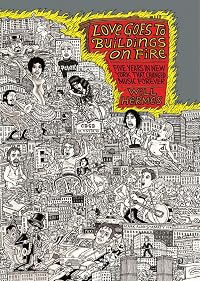
Love Goes to Buildings on Fire: Five Years in New York That Changed Music Forever
by Will Hermes
On This Page
Description
Chronicles five epochal years of music in the Big Apple against a backdrop of the high crime and low rents of the mid-1970s, tracing the formations of key sounds while evaluating the contributions of influential artists.Tags
Recommendations






Member Reviews
lovely book on music produced in New York City 1972-1977. dense with information, and encyclopedic in scope, it moves from one stream of music to another constantly as they ebb and flow and mingle. meticulous with its extensive notes and index, it's a reference point for anyone at all interested in the music of this place or period, how and why it was born and made and in what company, until the disparate influences combine to inevitably create something new. it's also a generous through-line narrative about, as the author says in the acknowledgments, "the way in which creative work is a shared chain-reaction of inspirations", and pulling that off is a major reason why i love this very readable book.
An archaeology of urban American musics, presented as a series of vignettes from mid-1970s New York City: punk, salsa, jazz, minimalist, dance; traditional forms stretched to new limits, the repurposing of rhythms and textures; magnetic tape, turntables, impromptu performance spaces. It was supposed to be the decade of malaise and urban decay, but the story told so well here is of something different and unexpected. It’s hard to imagine a period of such innovation and street-level cultural exchange ever happening again.
An amazing year for books about music history. This book stands out for me as being the first one offering equal levels of respect and perspective to all of the music that was going on in NYC in the 70s. No matter how much you know about music, you will learn something, and you will find yourself making notes about songs to track down. Even if you have an above-average knowledge of one particular scene, you will appreciate being able to compare it to everything else - punk vs hip hop, disco vs jazz, even the growth of latino music. I'm downloading Celia Cruz and Steve Reich and digging out Talking Heads.
Dork alert: no, the E Street Band were not named after a commercial strip in Asbury Park.
Dork alert: no, the E Street Band were not named after a commercial strip in Asbury Park.
Researched to the max, this takes '73 to '77 New York music scene and mashes it like nothing else I've read about this defining era in music. I'm completely flipped out by its densely packed info and meticulous attention to detail, Hermes throwing in his own personal stories for good measure. It takes almost an anthropological slant, reconstructing those five years into a forward moving and always engaging panorama of personalities, politics and places, recreating song lines of a true melting pot of creativity. Will Hermes' real talent is the way he rushes you around, you become a voyeur of many many musical corridors. The sealant for me is that you are given exact dates, exact times, exact places--each page is a smorgasbord of info, show more bound & blended together by the author's skill in juxtaposing historical fact with culture in a way that gives those 5 years the blowtorch treatment. Hermes' ear to the ground approach is for the prototype of how to write a book about music properly. show less
This book covers a period of amazing musical experimentation in NYC - punk, jazz, disco, "latin" - a lot was going on, and there was a good deal of cross-pollination between these genres.
Hermes tells a lot of stories -- many I knew, some that I didn't. The ones that were new to me were valuable and provocative.
I think the most valuable part is the account of the rise of Latin / Cuban music, though it gets repetitive towards the end.
Having said all that, I really can't recommend the book. The problem is that there is very little organization aside from grouping the chapters by year. It's hard to tell what's important. Hermes plays an annoying game in places where he will introduce a relatively unknown character that music zealots know show more is important (example: Arthur Russell) but never sum up the character's importance until the very end. Unless you're paying attention, I'm not sure how an ordinary reader would really pick up on the importance of Arthur Russell.
Another thing that is lacking is a selected discography. There's a discography, to be sure, but it's everything that is discussed. Hermes clearly has claims about importance based on facts and contemporary opinion - I think he should sum it up.
So: For the general reader: I just don't see it. If you're interested in NYC music in the mid-/late-70s, or are interested in Latin/Cuban music, or are interested in this period of jazz experimentation (largely ignored by official histories which have privileged the Marsalis / Crouch reorganization of jazz history), try it. show less
Hermes tells a lot of stories -- many I knew, some that I didn't. The ones that were new to me were valuable and provocative.
I think the most valuable part is the account of the rise of Latin / Cuban music, though it gets repetitive towards the end.
Having said all that, I really can't recommend the book. The problem is that there is very little organization aside from grouping the chapters by year. It's hard to tell what's important. Hermes plays an annoying game in places where he will introduce a relatively unknown character that music zealots know show more is important (example: Arthur Russell) but never sum up the character's importance until the very end. Unless you're paying attention, I'm not sure how an ordinary reader would really pick up on the importance of Arthur Russell.
Another thing that is lacking is a selected discography. There's a discography, to be sure, but it's everything that is discussed. Hermes clearly has claims about importance based on facts and contemporary opinion - I think he should sum it up.
So: For the general reader: I just don't see it. If you're interested in NYC music in the mid-/late-70s, or are interested in Latin/Cuban music, or are interested in this period of jazz experimentation (largely ignored by official histories which have privileged the Marsalis / Crouch reorganization of jazz history), try it. show less
Really interesting content: author covers NYC music of 1973-78 from punk, rock, salsa, hip hop, disco, avant, jazz, etc. and ties it loosely into NYC history. Hermes' writing is serviceable and clear and he refrains from the usual cliches and gushy language that some music journalists use.
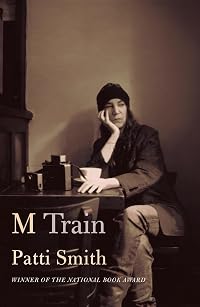
Will Hermes provides an insider history of New York’s music scene from 1973 to 1977. He captures a pivotal time when rock music was evolving and changing in New York. If there is a character that the narrative revolves around it’s Patti Smith . Sometimes though a little hard to follow it seems like lots of notes strung together and occasionally it makes shifts from third person sweeping narratives to first person direct experiences which can be a bit hard to follow.
Members
- Recently Added By
Author Information
4 Works 361 Members
Some Editions
Awards and Honors
Distinctions
Common Knowledge
- Original publication date
- 2011
- Dedication
- For Anne and Gia
- Publisher's editor
- Elie, Paul
Classifications
- Genres
- Music, Nonfiction, General Nonfiction, History
- DDC/MDS
- 781.6409747 — Arts & recreation Music General principles and musical forms Traditions of music Western popular music {equally instrumental and vocal} Biography And History North America
- LCC
- ML3477.8 .N48 .H47 — Music Literature on music Literature on music History and criticism Popular music
- BISAC
Statistics
- Members
- 263
- Popularity
- 123,155
- Reviews
- 9
- Rating
- (3.82)
- Languages
- English
- Media
- Paper, Audiobook, Ebook
- ISBNs
- 11
- ASINs
- 2