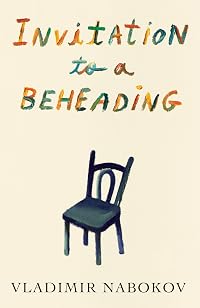
Invitation to a Beheading
by Vladimir Nabokov
On This Page
Description
"In an unnamed dream country, the young man Cincinnatus C. is condemned to death by beheading for "gnostical turpitude," an imaginary crime that defies definition. Cincinnatus spends his last days in an absurd jail, where he is visited by chimerical jailers, an executioner who masquerades as a fellow prisoner, and by his in-laws, who lug their furniture with them into his cell. When Cincinnatus is led out to be executed, he simply wills his executioners out of existence: they disappear, show more along with the whole world they inhabit" -- p. [4] of cover. show lessTags
Recommendations

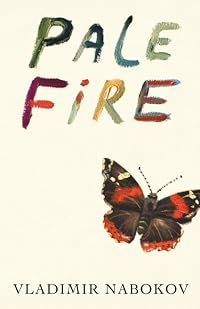
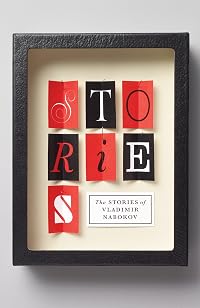
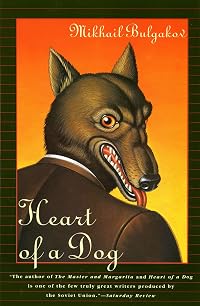
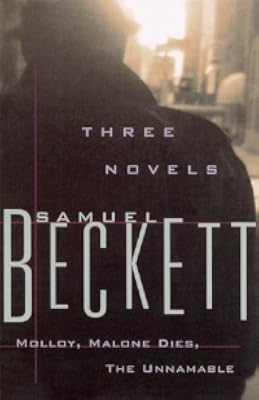




Member Recommendations
Member Reviews
When I read Modernist literature, I feel more empowered than usual to interpret it in exactly the way I want to regardless of the author's intention. I don't pretend to know what Nabokov means with this novel, but I see the many ways in which we are complicit in incarcerating ourselves in a false mode of existence. We are more than advertisers, corporations, and those seeking our votes think, but recognizing this takes awareness and courage. This is like reading Kafka but with hope.
Forget anticipointment. I was so engrossed in this novel that I managed to finish reading through it all in less than 18 hours (including 8 hours of sleep).
Like Cincinnatus's bizarre world, it's an all-consuming work, one that makes sense in only the most tenuous ways but, in its absurdity, becomes by turns heartbreaking and hilarious.
Nabokov, as usual, is positively brilliant here, inhabiting his text with a set of characters so outlandish and absurd that you almost wish the story went on longer. Our hero is less-than-perfectly developed, but the finale (the height of the novel's absurdity) explains it all succinctly: we've been learning about it all along. And we, as readers, have been learning about the power and, yes, absurdity of show more the written word and the depths of the imagination.
A vision that could only come from the incomparable imagination of Nabokov. Very highly recommended. show less
Like Cincinnatus's bizarre world, it's an all-consuming work, one that makes sense in only the most tenuous ways but, in its absurdity, becomes by turns heartbreaking and hilarious.
Nabokov, as usual, is positively brilliant here, inhabiting his text with a set of characters so outlandish and absurd that you almost wish the story went on longer. Our hero is less-than-perfectly developed, but the finale (the height of the novel's absurdity) explains it all succinctly: we've been learning about it all along. And we, as readers, have been learning about the power and, yes, absurdity of show more the written word and the depths of the imagination.
A vision that could only come from the incomparable imagination of Nabokov. Very highly recommended. show less
The best description I’ve come up with for Nabokov’s work is poisonous. His writing is extraordinary, beautiful, and sometimes breath-taking. Also disturbing, frightening, and liable to give a strange slant to your dreams after reading him. ‘Invitation to a Beheading’ is also extremely bleak, as befits a novel originally written in Russian I suppose. It could be described as science fiction, as it is set in a decayed future world. In the foreword, Nabokov protests that the novel is constantly compared to Kafka, particularly [b:The Trial|17690|The Trial|Franz Kafka|https://images.gr-assets.com/books/1320399438s/17690.jpg|2965832]. I haven’t read that yet, but was reminded somewhat of the characters in show more [b:Amerika|22911|Amerika|Franz Kafka|https://images.gr-assets.com/books/1327894257s/22911.jpg|935000]. What it really brought to mind, though, was [b:Gormenghast|258392|Gormenghast (Gormenghast, #2)|Mervyn Peake|https://images.gr-assets.com/books/1328001220s/258392.jpg|3599885]. The world evoked by Nabokov appears caught up in proscribed patterns of ritual, the meaning of which has been forgotten.
This novel terrified me as it is essentially about the part of our mind that is always aware of our impending death, whenever it might arrive. Page 1 begins with the words, ‘In accordance with the law the death sentence was announced to Cincinnatus...’ Our protagonist knows that he has been condemned to death merely for being what he is (as is the case for any mortal), but is not told when the sentence will be carried out, nor at whose hand. His interactions with jail staff, his family, and others are baffling, macabre, and unsettling. Details concerning a spider, a cat, and a moth add to this atmosphere. On page 104-5 there is an especially notable anecdote, too long to quote, concerning objects called ‘nonnons’.
Nabokov’s prose gets under your skin in a way that can be powerfully felt but isn’t pleasant at all. This novel will linger in my mind, more so than either [b:Despair|418209|Despair|Vladimir Nabokov|https://images.gr-assets.com/books/1362286012s/418209.jpg|1258927] or [b:Bend Sinister|142529|Bend Sinister|Vladimir Nabokov|https://images.gr-assets.com/books/1327537181s/142529.jpg|2777318] managed, as the imagery here is more vivid and ending much more memorable. When reading [b:Lolita|7604|Lolita|Vladimir Nabokov|https://images.gr-assets.com/books/1377756377s/7604.jpg|1268631] and ‘Invitation to a Beheading’ I felt as though I was being contaminated by the insidious power of Nabokov’s words. That may not sound like a recommendation, but it is. show less
This novel terrified me as it is essentially about the part of our mind that is always aware of our impending death, whenever it might arrive. Page 1 begins with the words, ‘In accordance with the law the death sentence was announced to Cincinnatus...’ Our protagonist knows that he has been condemned to death merely for being what he is (as is the case for any mortal), but is not told when the sentence will be carried out, nor at whose hand. His interactions with jail staff, his family, and others are baffling, macabre, and unsettling. Details concerning a spider, a cat, and a moth add to this atmosphere. On page 104-5 there is an especially notable anecdote, too long to quote, concerning objects called ‘nonnons’.
Nabokov’s prose gets under your skin in a way that can be powerfully felt but isn’t pleasant at all. This novel will linger in my mind, more so than either [b:Despair|418209|Despair|Vladimir Nabokov|https://images.gr-assets.com/books/1362286012s/418209.jpg|1258927] or [b:Bend Sinister|142529|Bend Sinister|Vladimir Nabokov|https://images.gr-assets.com/books/1327537181s/142529.jpg|2777318] managed, as the imagery here is more vivid and ending much more memorable. When reading [b:Lolita|7604|Lolita|Vladimir Nabokov|https://images.gr-assets.com/books/1377756377s/7604.jpg|1268631] and ‘Invitation to a Beheading’ I felt as though I was being contaminated by the insidious power of Nabokov’s words. That may not sound like a recommendation, but it is. show less
As much as I was prepared to be disappointed with this book (the ending is blown on the back cover! If you don't like spoilers, don't read the blurb on the back of this book!) I was enchanted all the way through. I completely fell in love with Cincinnatus C, and ended up hating most of the rest of the characters for his sake. Well hating is probably too strong a word, but most of them were either very dumb or very self-centered, probably both. But all very real, in a surreal way. ;) One of the few books that engages in "magical realism" where I willingly went along with and bought wholesale all of the lapses from the ordinary world. I loved this book. Another hearty recommendation from me.
56. Invitation to a Beheading by Vladimir Vladimirovich
translation: 1959 from Russian by Dmitri Nabokov with the author
published: 1936
format: 223-page Vintage paperback
acquired: June
read: Nov 14-19
time reading: 6 hr 41 min, 1.8 min/page
rating: 5
locations: unspecified prison
about the author: 1899 – 1977. Russia born, educated at Trinity College in Cambridge, 1922. Lived in Berlin (1922-1937), Paris, the US (1941-1961) and Montreux, Switzerland (1961-1977).
We open as Cincinnatus is condemned to death and brought weak-kneed to his prison cell where he looks around. It took me a moment to realize that when he went waltzing with the guard I wasn't supposed to accept this at face value as actually happening. Cincinnatus, both respected and show more criticized by this guards, spends his last days in and out of reality, craning to see outside his prison fortress, desperate to see and embrace his comically unfaithful wife, reading voraciously but unable to write as he doesn't know his execution date and doesn't know how long he has. Alas, how to manage? Is there a Soviet commentary here?
I‘m really enjoying working through Nabokov‘s novels, even if I‘m behind my planned schedule. This goes down as the best and most beautiful so far and one of my favorite books of the year. Nabokov plays with fabric of reality while barely leaving a prison cell inside a fortress, and it works wonderfully.
2020
https://www.librarything.com/topic/322920#7326628 show less
translation: 1959 from Russian by Dmitri Nabokov with the author
published: 1936
format: 223-page Vintage paperback
acquired: June
read: Nov 14-19
time reading: 6 hr 41 min, 1.8 min/page
rating: 5
locations: unspecified prison
about the author: 1899 – 1977. Russia born, educated at Trinity College in Cambridge, 1922. Lived in Berlin (1922-1937), Paris, the US (1941-1961) and Montreux, Switzerland (1961-1977).
We open as Cincinnatus is condemned to death and brought weak-kneed to his prison cell where he looks around. It took me a moment to realize that when he went waltzing with the guard I wasn't supposed to accept this at face value as actually happening. Cincinnatus, both respected and show more criticized by this guards, spends his last days in and out of reality, craning to see outside his prison fortress, desperate to see and embrace his comically unfaithful wife, reading voraciously but unable to write as he doesn't know his execution date and doesn't know how long he has. Alas, how to manage? Is there a Soviet commentary here?
I‘m really enjoying working through Nabokov‘s novels, even if I‘m behind my planned schedule. This goes down as the best and most beautiful so far and one of my favorite books of the year. Nabokov plays with fabric of reality while barely leaving a prison cell inside a fortress, and it works wonderfully.
2020
https://www.librarything.com/topic/322920#7326628 show less
In an unknown and abstract country, a man named Cincinnatus C. awaits death be beheading, convicted for the crime of gnostic turpitude. Spending his days confined to his cell, his jailers try everything in their power to convince Cincinnatus to be like everyone else. The director Rodrig Ivanovich wants him to play the part of the repentant prisoner. Rodion the jailer's feelings are hurt when Cincinnatus doesn't like the food he prepares. Even M'sieur Pierre, who pretends to be a fellow prisoner in the next cell while in fact serves as the executioner, determines to make friends with Cincinnatus and to have him follow the established rules of society. But poor Cincinnatus, he wants only two things: 1) a visit from his wife Marthe to show more explain his situation so that she can grieve and move on with her life, and 2) to know the date and time at which the execution is to take place because, after all, he is allowed that knowledge by law. While he waits, he begins to understand that the world around him is nothing more than pretense, a circus act to appease the masses, and that his rejection of what is expected and routine can b even more freeing than he thought possible.
At first, I was put off by the story's setting. It's very absurdist, with jailers asking prisoners to waltz with them about their cells or Cincinnatus' visiting in-laws bringing all their furniture with them to his cell. But I'm glad I stuck with it to the end. Cincinnatus views his own world in a different way than his fellow countrymen, and that makes him dangerous. Their bizarre actions, instead of convincing Cincinnatus of the error of his ways, re-inforce his determination to be himself regardless of the consequences. As the hour of his execution approaches, his belief begins to punch through the artifice of the world around him, and he can see things as they truly are.
To me, "Invitation to a Beheading" comes across as a statement of individuality: think your own thoughts and forge your own path in the world, even if that doesn't conform to society at large. After all, where would we be if those people didn't take a chance and stray outside the lines? The world would be a more boring place, indeed. show less
At first, I was put off by the story's setting. It's very absurdist, with jailers asking prisoners to waltz with them about their cells or Cincinnatus' visiting in-laws bringing all their furniture with them to his cell. But I'm glad I stuck with it to the end. Cincinnatus views his own world in a different way than his fellow countrymen, and that makes him dangerous. Their bizarre actions, instead of convincing Cincinnatus of the error of his ways, re-inforce his determination to be himself regardless of the consequences. As the hour of his execution approaches, his belief begins to punch through the artifice of the world around him, and he can see things as they truly are.
To me, "Invitation to a Beheading" comes across as a statement of individuality: think your own thoughts and forge your own path in the world, even if that doesn't conform to society at large. After all, where would we be if those people didn't take a chance and stray outside the lines? The world would be a more boring place, indeed. show less
Members
- Recently Added By
Lists

20th Century Literature
1,161 works; 54 members

Amanda's Guaranteed Books
110 works; 5 members

1930s
262 works; 5 members

2015 Reading challenge
18 works; 1 member

SHOULD Read Books!
354 works; 9 members

Books Read in 2022
5,226 works; 112 members

Books We Discovered On LibraryThing
530 works; 130 members

Books Read in 2025
4,128 works; 98 members

Best Dystopias
280 works; 277 members
Author Information

433+ Works 96,405 Members
Vladimir Vladimirovich Nobokov was born April 22, 1899 in St. Petersburg, Russia to a wealthy family. He attended Trinity College, Cambridge. When he left Russia, he moved to Paris and eventually to the United States in 1940. He taught at Wellesley College and Cornell University. Nobokov is revered as one of the great American novelists of the show more 20th Century. Before he moved to the United States, he wrote under the pseudonym Vladimir Serin. Among those titles, were Mashenka, his first novel and Invitation to a Beheading. The first book he wrote in English was The Real Life of Sebastian Knight. He is best know for his work Lolita which was made into a movie in 1962. In addition to novels, he also wrote poetry and short stories. He was a finalist for the National Book Award for Fiction seven times, but never won it. Nabokov died July 2, 1977. show less
Some Editions
Awards and Honors
Series
Belongs to Publisher Series
Work Relationships
Is contained in
Common Knowledge
- Canonical title*
- Uitnodiging voor een onthoofding
- Original title
- Приглашение на казнь
- Alternate titles*
- Priglašenie na kazn
- Original publication date
- 1936
- People/Characters
- Cincinnatus C.; Rodion; Rodrig Ivanovich; Roman Vissarionovich; Emmie; Marthe (show all 11); Monsieur Pierre; Diomedon; Pauline; Cecilia C.; Nikita Lukich
- Important places*
- Rusland
- Epigraph
- Comme un fou se croit Dieu, nous nous croyons mortels. - Delaland: Discours sur les ombres
- Dedication
- To Véra
- First words
- In accordance with the law the death sentence was announced to Cincinnatus C. in a whisper.
- Quotations*
- Così ci stiamo avvicinando alla fine. Il lato destro, la parte non ancora gustata del romanzo, che durante la deliziosa lettura tastavamo con delicatezza, verificandone in modo meccanico la consistenza (e le nostre dita eran... (show all)o sempre allietate dal placido, rassicurante spessore), improvvisamente, senza ragione alcuna, è diventato smilzo, qualche minuto di rapida lettura e già eccoci a valle...
- Last words
- (Click to show. Warning: May contain spoilers.)A spinning wind was picking up and whirling: dust, rags, chips of painted wood, bits of gilded plaster, pasteboard bricks, posters; an arid gloom fleeted; and amidst the dust, and the falling things, and the flapping scenery, Cincinnatus made his way in that direction where, to judge by the voices, stood beings akin to him.
- Original language
- Russian
*Some information comes from Common Knowledge in other languages. Click "Edit" for more information.
Classifications
- Genres
- Fiction and Literature, General Fiction
- DDC/MDS
- 891.7342 — Literature & rhetoric Literatures of other languages East Indo-European and Celtic literatures Russian and East Slavic languages Russian fiction USSR 1917–1991 Early 20th century 1917–1945
- LCC
- PG3476 .N3 .P7313 — Language and Literature Slavic languages and literatures. Baltic languages. Albanian language Slavic. Baltic. Albanian Russian literature Individual authors and works 1917-1960
- BISAC
Statistics
- Members
- 3,252
- Popularity
- 5,304
- Reviews
- 55
- Rating
- (3.90)
- Languages
- 23 — Czech, Danish, Dutch, English, Estonian, Finnish, French, German, Greek, Hebrew, Hungarian, Italian, Norwegian (Bokmål), Polish, Portuguese, Romanian, Russian, Serbian, Croatian, Slovak, Slovenian, Spanish, Swedish
- Media
- Paper, Audiobook, Ebook
- ISBNs
- 60
- UPCs
- 1
- ASINs
- 36