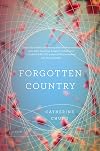
Forgotten Country
by Catherine Chung
On This Page
Description
On the night Janie waits for her sister Hannah to be born, her grandmother tells her a story: Since the Japanese occupation of Korea, their family has lost a daughter in every generation, so Janie is charged with keeping Hannah safe. As time passes, Janie hears more stories, while facts remain unspoken. Her father tells tales about numbers, and in his stories everything works out. In her mother's, deer explode in fields, frogs bury their loved ones in the ocean, and girls jump from cliffs show more and fall like flowers into the sea. Within all these stories are warnings.Years later, when Hannah inexplicably cuts all ties and disappears, Janie embarks on a mission to find her sister and finally uncover the truth beneath her family's silence. To do so, she must confront their history, the reason for her parents' sudden move to America twenty years earlier, and ultimately her conflicted feelings toward her sister and her own role in the betrayal behind their estrangement.
Weaving Korean folklore within a modern narrative of immigration and identity, Forgotten Country is a fierce exploration of the inevitability of loss, the conflict between obligation and freedom, and a family struggling to find its way out of silence and back to one another.
. show less
Tags
Recommendations





Member Reviews
After almost 8 years living in Korea and 26 years of marriage to a Korean (now Korean-American) spouse, I can still find myself surprised when I find some tidbit of Korean culture I did not know or did not fully understand. I found several instances of this while reading Forgotten Country, where I had to stop for an "aha" moment when I thought back to some past incident, family moment or activity that, I realize now, I didn't fully understand at the time.
I have to wonder, however, whether a non-Korean or, more broadly, a non-Asian audience will appreciate all the subtleties of the cultural dynamics going on between the characters described in this book. How many readers will get the references to Korean mythology or the dynamics of show more multi-generational relationships, fathers and daughters, mothers and daughters, brothers and sisters and, of course, sisters and sisters which is what a lot of this book is about.
Which is not to say that it is not well written and enjoyable...it is. In fact, I put it on my favorites shelf because it echoes so much of my own experience with my extended Korean family or, more accurately, my wife's experience of family, and family history. The book draws on Korean history...the Japanese colonial period, the student uprising and massacre in Kwangju and the politics of a Korea that was still wavering between dictatorship and democracy.
My wife's father's family was once part of the local government in Cholla province and lost their positions to Japanese administrators. Later, during the Korean war, in order to avoid being drafted into the ROK military (this was as much of a death sentence at the time as fighting in the war), my mother-in-law helped her husband hide in mountain caves and secretly brought food to him and others. So much of what has happened since then to my wife's family was dependent on what happened during these historical events which is what this book also conveys.
So much has changed since we left Korea in 1997 and every time we go back we have to navigate a culture and family traditions that we no longer participate in or, have changed so much that even my wife feels out of place. This is much like Janie and Hannah in the book, and I found myself empathizing with Hannah especially, because I see my wife's growing distance and, at times, anger with the way she is treated as the youngest member of what would be considered a very large family here in the US. Hannah is straightforward and says exactly how she feels, even at the risk of offending family members, my wife holds her tongue and keeps the anger and frustration inside.
I am already reading Catherine Chung's second novel, The Tenth Muse, and, I am already thinking it will be as good as Forgotten Country. show less
I have to wonder, however, whether a non-Korean or, more broadly, a non-Asian audience will appreciate all the subtleties of the cultural dynamics going on between the characters described in this book. How many readers will get the references to Korean mythology or the dynamics of show more multi-generational relationships, fathers and daughters, mothers and daughters, brothers and sisters and, of course, sisters and sisters which is what a lot of this book is about.
Which is not to say that it is not well written and enjoyable...it is. In fact, I put it on my favorites shelf because it echoes so much of my own experience with my extended Korean family or, more accurately, my wife's experience of family, and family history. The book draws on Korean history...the Japanese colonial period, the student uprising and massacre in Kwangju and the politics of a Korea that was still wavering between dictatorship and democracy.
My wife's father's family was once part of the local government in Cholla province and lost their positions to Japanese administrators. Later, during the Korean war, in order to avoid being drafted into the ROK military (this was as much of a death sentence at the time as fighting in the war), my mother-in-law helped her husband hide in mountain caves and secretly brought food to him and others. So much of what has happened since then to my wife's family was dependent on what happened during these historical events which is what this book also conveys.
So much has changed since we left Korea in 1997 and every time we go back we have to navigate a culture and family traditions that we no longer participate in or, have changed so much that even my wife feels out of place. This is much like Janie and Hannah in the book, and I found myself empathizing with Hannah especially, because I see my wife's growing distance and, at times, anger with the way she is treated as the youngest member of what would be considered a very large family here in the US. Hannah is straightforward and says exactly how she feels, even at the risk of offending family members, my wife holds her tongue and keeps the anger and frustration inside.
I am already reading Catherine Chung's second novel, The Tenth Muse, and, I am already thinking it will be as good as Forgotten Country. show less
For all that I grew up surrounded by those who can trace their lineage back to the so called East, a geographic hilarity when considering which side of the Pacific the United States finds itself on, I very rarely read their literature. Lahiri, Tsukiyama, Ozeki, a pitiful number when considering the hoops I've gone through to read those from other continents, some of them even translated to boot. Maybe it is a subconscious 'Oh, I've immersed myself in that type already', but when considering the number of white authors I've indulged in and have yet to fill my plate with, I have to dwell on the canon, the contemporary, what is it that minimizes the amount of time my mind spends on those writers with such multifarious countries in their show more blood; what is it that makes me content to while away the days with my Taiwan-born American-bred best friend, but hesitate to seek out the narratives of others like her.
I couldn't even get it right this time, for Korea is not Taiwan is not China is not Japan, the last of the latter playing such a horrible part in the first of the former's history that those of us who play the "Guess the Country" shit should stop. Just stop. My friend has talked about how many times she's been thought to be Japanese, just one category of the many misconstruals people feel the need to impose up on her: "Where are you from? No, where are you really from." "Can you fight?" "Say something in your native language!" And then there's the "yellow fever", but only along the lines of straight white men and whomever they happen to choose. Of course.
This book has a lot of that, along with family dynamics I'd interpret along the lines of [Battle Hymn of the Tiger Mother] if I didn't know any better. The authority here is an attentive one, one that demands and obliges, a close unit of ties that are a mix of loving adherence and gasping flight as anything else that exists between human beings, as usable and abusable as those of a white family and their distance. Certain patriarchal tendencies are more explicit, the same breed that would have made my friend an only child had she been a son, but I'm reading [Kristin Lavransdatter] right now, and I have to wonder how much European derived civilizations have changed in the last six centuries in regards to preferred gender. I no longer need to come with a dowry, but I would still have to lose my name.
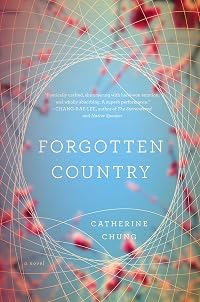
As gorgeous as the cover is, I am glad that the content does not follow in its spidery pink steps. Power plays are everywhere and it does not take much for violence to follow, between soldier and civilian, between child and child, individual and family and death and life. If you have ever hated how much you have loved a family member, if you have ever tested the limits of freedom and found worse things than what has been inflicted on you by your kin, if you would kill them and be killed for them in the space of a heartbeat, acting beyond all thought of propriety and social heritage, this one is for you.
I couldn't even get it right this time, for Korea is not Taiwan is not China is not Japan, the last of the latter playing such a horrible part in the first of the former's history that those of us who play the "Guess the Country" shit should stop. Just stop. My friend has talked about how many times she's been thought to be Japanese, just one category of the many misconstruals people feel the need to impose up on her: "Where are you from? No, where are you really from." "Can you fight?" "Say something in your native language!" And then there's the "yellow fever", but only along the lines of straight white men and whomever they happen to choose. Of course.
She watched the deer skim over land no human foot had ventured to cross in twenty years.
This book has a lot of that, along with family dynamics I'd interpret along the lines of [Battle Hymn of the Tiger Mother] if I didn't know any better. The authority here is an attentive one, one that demands and obliges, a close unit of ties that are a mix of loving adherence and gasping flight as anything else that exists between human beings, as usable and abusable as those of a white family and their distance. Certain patriarchal tendencies are more explicit, the same breed that would have made my friend an only child had she been a son, but I'm reading [Kristin Lavransdatter] right now, and I have to wonder how much European derived civilizations have changed in the last six centuries in regards to preferred gender. I no longer need to come with a dowry, but I would still have to lose my name.
If I didn't know it was math, I'd think it was art.
As gorgeous as the cover is, I am glad that the content does not follow in its spidery pink steps. Power plays are everywhere and it does not take much for violence to follow, between soldier and civilian, between child and child, individual and family and death and life. If you have ever hated how much you have loved a family member, if you have ever tested the limits of freedom and found worse things than what has been inflicted on you by your kin, if you would kill them and be killed for them in the space of a heartbeat, acting beyond all thought of propriety and social heritage, this one is for you.
There is no reason to be proud that there is nothing you can do for him. It does not put you above us. One day you will be here, too.show less
I found this book extremely well-written, but I never really connected with it except on a very superficial level. Janie, the narrator, was very sympathetic but not very empathetic. She was very... flat. Her emotions and motivations never shone through the story. Hannah, her sister, was this great mysterious void, but once she showed up in the plot again shrank into the background.
Throughout the book, I wanted more. More emotion, more background, more explanation, more exposition. For a first person narrative, I didn't find out too much about Janie as a person, especially since this is a coming of age story of sorts, despite Janie already being an adult. She had allowed herself to be subsumed by her parents' expectations for her, and in show more the story she slowly begins to exert her own own authority over her life. At the same time, Hannah had the opposite journey where she had completely renounced her parents and then started coming back to them.
This was a theme that I wish had been explored more, rather than the soap opera reasons for the two sisters to pull away from each other and from their parents (physically for one, and emotionally for the other). Instead, the story focused on Janie's relationship with her father in a meandering and not always satisfying fashion.
Review copy courtesy of the publisher via LibraryThing's Early Reviewer Program show less
Throughout the book, I wanted more. More emotion, more background, more explanation, more exposition. For a first person narrative, I didn't find out too much about Janie as a person, especially since this is a coming of age story of sorts, despite Janie already being an adult. She had allowed herself to be subsumed by her parents' expectations for her, and in show more the story she slowly begins to exert her own own authority over her life. At the same time, Hannah had the opposite journey where she had completely renounced her parents and then started coming back to them.
This was a theme that I wish had been explored more, rather than the soap opera reasons for the two sisters to pull away from each other and from their parents (physically for one, and emotionally for the other). Instead, the story focused on Janie's relationship with her father in a meandering and not always satisfying fashion.
Review copy courtesy of the publisher via LibraryThing's Early Reviewer Program show less
 This review was written for LibraryThing Early Reviewers.
In Forgotten Country Catherine Chung tells a story that is both utterly specific to a particular family, and viscerally recognizable as common to all families. The common elements are, well, common. The mysteries of the adult world – and the past – as seen by children; the bonds and competition between siblings; the ties between generations and the rebellion against those attachments; betrayal and devotion; reversals and constancy; and finally, the inevitability of death and the compulsion to carry on.
The specifics hinge both on the personalities of this individual family and the twists of Korean history -- from the 1919 rebellion against Japanese rule, to the division of Korea into two separate countries in 1948, to today when show more South Korea has industrialized and become a global economic power.
The narrative takes place largely in the modern day, in both the U.S. and South Korea, but the past is ever present. Destiny, and the desire (or necessity) to break with it, infuses every page.
Chung’s story could have dissolved into cliché or histrionic drama, and it skirts that edge a few times. But her beautiful writing and delicately entwined shifts in chronology make Forgotten Country an exceptional first novel. I highly recommend it to anyone who enjoys fiction that explores characters’ interior lives or has a taste for compelling story telling. show less
The specifics hinge both on the personalities of this individual family and the twists of Korean history -- from the 1919 rebellion against Japanese rule, to the division of Korea into two separate countries in 1948, to today when show more South Korea has industrialized and become a global economic power.
The narrative takes place largely in the modern day, in both the U.S. and South Korea, but the past is ever present. Destiny, and the desire (or necessity) to break with it, infuses every page.
Chung’s story could have dissolved into cliché or histrionic drama, and it skirts that edge a few times. But her beautiful writing and delicately entwined shifts in chronology make Forgotten Country an exceptional first novel. I highly recommend it to anyone who enjoys fiction that explores characters’ interior lives or has a taste for compelling story telling. show less
This review was written for LibraryThing Early Reviewers.This is a touching family story of separation (both from country and family) and of connection. Janie is the Korean/American daughter who always tries to do the right thing and who tortures herself for mistakes made. Her younger sister Hannah leaves the family without notice. The family is reunited and back in their homeland of Korea to await the father's death. We are gently led back in time to know the family's history in Korea and of their move to Michigan.
I enjoyed this book and getting to know this family. I did feel that Hannah could have been developed better; she remained somewhat of a mystery to me. Otherwise, I thought the characters were wonderfully well developed, including some of the less major family members.
Generally, show more he writing is straightforward and clear. At several points, I found it sensitive and poetic. Though it is generally a sad story, I'd recommend it as a well-developed and sincerely felt tale of real people living a real life. show less
I enjoyed this book and getting to know this family. I did feel that Hannah could have been developed better; she remained somewhat of a mystery to me. Otherwise, I thought the characters were wonderfully well developed, including some of the less major family members.
Generally, show more he writing is straightforward and clear. At several points, I found it sensitive and poetic. Though it is generally a sad story, I'd recommend it as a well-developed and sincerely felt tale of real people living a real life. show less
This review was written for LibraryThing Early Reviewers.This is a deep, beautifully written novel about a daughter caught between worlds: childhood and adulthood, the Korea where she was born and the America where she grew up. It is not a light-hearted novel, but it is incredibly engaging and difficult to put down even in its darkest moments.
The novel centers around Janie's attempt to bring her younger sister, Hannah, back into the fold of their family. That storyline merges with snippets of Janie and Hannah's childhood, as well as family stories from earlier generations and Korean folklore. It's a beautifully woven tapestry that at its heart explores the meaning of home and identity and how it feels to be caught between worlds. It is a touching and thought provoking story, and would be a show more great read for a book club as it could generate a lot of discussion. Highly recommended. show less
The novel centers around Janie's attempt to bring her younger sister, Hannah, back into the fold of their family. That storyline merges with snippets of Janie and Hannah's childhood, as well as family stories from earlier generations and Korean folklore. It's a beautifully woven tapestry that at its heart explores the meaning of home and identity and how it feels to be caught between worlds. It is a touching and thought provoking story, and would be a show more great read for a book club as it could generate a lot of discussion. Highly recommended. show less
This review was written for LibraryThing Early Reviewers.Having read the blurb and back cover, I expected this book to be about Janie's search for her sister, Hannah, and the unraveling of the curse that causes their family to "lose a sister in every generation since the Japanese occupation" of Korea. However, the book was much more about the family relationships and the father's cancer diagnosis and gradual decline. This is unfortunately the second book I have read this week about which the advance information implied a mystery to solve that was not delivered by the novel. On a related note, I wish publishers would just be honest about what the book is about. Most of us would read it anyway and for those who would not, I would think you'd prefer they skip it than have a negative feeling show more about your house or your author. /rant
What this book did deliver was a touching and poignant relationship between father and daughter and between the two sisters. Both sisters had notions about each other, who was more loved, who was more free to be themselves, who had it better growing up, that turned out to not necessarily be the case. Their father's illness caused them to become closer and face some things about their relationship and also about themselves that they had been hiding from. I found Janie, the first person narrator to be genuine and relatable with actual flaws and a dynamic arc.
The writing is beautiful and elegant, elevating the miserable and depressing parts about the father's illness and the sisters' ugly arguments. It also lends the anecdotes of past events (which there are many) a dreamlike and parable-like quality, which I would characterize as very Eastern.
One other mildly irritating thing was the lack of proper names. Mother, Father, Grandmother, Uncle, "Big Cousin"...we never learn their real names. The narrator tells long anecdotes about her family referring to them only by their relationship to herself. At times this is awkward and confusing, particularly when telling a story that involves "my mother's grandmother" and "my grandmother's mother", who are, of course, the same person, as well as "my mother's grandmother's sister." Had the author given these people names, it would be more clear to the reader whom was being spoken of. We never even learn the narrator's last name. NOTE: I have recently been informed that in Korean culture, one refers to relatives by his/her relationship to oneself. As a western reader, I found it difficult to follow, but one more familiar with that aspect of the culture might not have as much trouble. I mean no disrespect for the Korean cultural norm.
Besides this and the fact that there isn't really any resolution to the curse of the multiple lost sisters, I enjoyed reading about Janie and Hannah and their family. I was thrilled to learn more about Korea and the Korean way of life, which I don't know much about. My favorite parts were when Janie related some fable her parents or grandmother had told her when she was a child.
I would recommend this book to fans of novels about family relationships, but not those who are expecting a good mystery. show less
What this book did deliver was a touching and poignant relationship between father and daughter and between the two sisters. Both sisters had notions about each other, who was more loved, who was more free to be themselves, who had it better growing up, that turned out to not necessarily be the case. Their father's illness caused them to become closer and face some things about their relationship and also about themselves that they had been hiding from. I found Janie, the first person narrator to be genuine and relatable with actual flaws and a dynamic arc.
The writing is beautiful and elegant, elevating the miserable and depressing parts about the father's illness and the sisters' ugly arguments. It also lends the anecdotes of past events (which there are many) a dreamlike and parable-like quality, which I would characterize as very Eastern.
One other mildly irritating thing was the lack of proper names. Mother, Father, Grandmother, Uncle, "Big Cousin"...we never learn their real names. The narrator tells long anecdotes about her family referring to them only by their relationship to herself. At times this is awkward and confusing, particularly when telling a story that involves "my mother's grandmother" and "my grandmother's mother", who are, of course, the same person, as well as "my mother's grandmother's sister." Had the author given these people names, it would be more clear to the reader whom was being spoken of. We never even learn the narrator's last name. NOTE: I have recently been informed that in Korean culture, one refers to relatives by his/her relationship to oneself. As a western reader, I found it difficult to follow, but one more familiar with that aspect of the culture might not have as much trouble. I mean no disrespect for the Korean cultural norm.
Besides this and the fact that there isn't really any resolution to the curse of the multiple lost sisters, I enjoyed reading about Janie and Hannah and their family. I was thrilled to learn more about Korea and the Korean way of life, which I don't know much about. My favorite parts were when Janie related some fable her parents or grandmother had told her when she was a child.
I would recommend this book to fans of novels about family relationships, but not those who are expecting a good mystery. show less
This review was written for LibraryThing Early Reviewers.Members
- Recently Added By
Author Information

3+ Works 727 Members
Awards and Honors
Awards
Distinctions
Common Knowledge
- Original publication date
- 2012-03-01
- Important places
- Korea
- Epigraph
- But this is the only world. - Pilar Gomez-Ibanez
My birthplace vanished, my citizenship earned, in league with stones of the earth, I re-enter the city in which I love you. And I never believed that the multitude of dreams and many words were vain. - Li-Young Lee - Dedication
- For my mother and father
- First words
- The year that Hannah disappeared, the first frost came early, killing everything in the garden.
- Last words
- (Click to show. Warning: May contain spoilers.)How quickly it rose. How quickly it filled the sky with light.
- Blurbers
- Lee, Chang-Rae; Otsuka, Julie; Torres, Justin; Strayed, Cheryl; Lurie, Alison; Chee, Alexander (show all 7); Walbert, Kate
Classifications
Statistics
- Members
- 345
- Popularity
- 91,520
- Reviews
- 42
- Rating
- (3.60)
- Languages
- English, Norwegian (Bokmål)
- Media
- Paper, Audiobook, Ebook
- ISBNs
- 12
- ASINs
- 4