
Suzanne Rindell
Author of The Other Typist
About the Author
Works by Suzanne Rindell
Tagged
Common Knowledge
- Gender
- female
- Education
- Rice University
- Nationality
- USA
- Places of residence
- New York, New York, USA
- Associated Place (for map)
- New York, USA
Members
Reviews
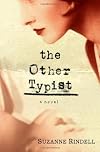
The backstory: The Other Typist is one of my book club's March picks (we meet every other month and read two books.)
The basics: Rose Baker is an orphan who works as a typist at a Lower East Side police precinct in the 1920's. When Odalie joins the precinct as the titular other typist, she and Rose develop a friendship, but their lives seem fraught with peril and obsession.
Warning: this review contains some vague spoilers.
My thoughts: Rose narrates from the future, and it's clear from the show more beginning that she isn't always telling the reader everything. Her narration is concerned with what to tell and when. I don't think it's a stretch to say there are many clues she is not the most reliable narrator. I'm a huge fan of unreliable narrators, and as I read I savored the clues Rose doles out. I wouldn't go so far as to say the novel reads like a thriller, but I expected a big reveal of some sort for the reader to finally piece together the validity of Rose's story. Instead, the end of the novel raises many more questions than it answers.
As a reader, I don't need every element of a story tied up in a neat little package for me at the end of the novel. After all, life is rarely so neat, and I like some ambiguity. The Other Typist reminds me that there is definitely such a thing as too much ambiguity. I was enchanted with this book as I read. I thoroughly enjoyed my suspicions of Rose throughout the novel. I'm drawn to characters who are interesting, regardless of whether or not they're likeable (and Rose is definitely not always likeable.) She is, however, interesting and usually understandable.
When I turned the last page, I had one of those moments where I had to ask "that's it?" Initially, I hoped that although the ending wasn't what I expected, I could come to understand it. I didn't. I'm of two minds about this novel. I had a delightful reading experience with this novel, but I really disliked the ending. Does the ending taint my enjoyment of the novel? No. It does, however, tinge the reading experience with some sadness for the unfulfilled promise of this novel. I'm very much looking forward to our discussion of this novel tonight!
Favorite passage: "The typewriter is indeed my passport into a world otherwise barred to me and my kind."
The verdict: While I loved the experience of reading The Other Typist and trying to figure out Rose and her story, the ending was too ambiguous to be satisfying. show less
The basics: Rose Baker is an orphan who works as a typist at a Lower East Side police precinct in the 1920's. When Odalie joins the precinct as the titular other typist, she and Rose develop a friendship, but their lives seem fraught with peril and obsession.
Warning: this review contains some vague spoilers.
My thoughts: Rose narrates from the future, and it's clear from the show more beginning that she isn't always telling the reader everything. Her narration is concerned with what to tell and when. I don't think it's a stretch to say there are many clues she is not the most reliable narrator. I'm a huge fan of unreliable narrators, and as I read I savored the clues Rose doles out. I wouldn't go so far as to say the novel reads like a thriller, but I expected a big reveal of some sort for the reader to finally piece together the validity of Rose's story. Instead, the end of the novel raises many more questions than it answers.
As a reader, I don't need every element of a story tied up in a neat little package for me at the end of the novel. After all, life is rarely so neat, and I like some ambiguity. The Other Typist reminds me that there is definitely such a thing as too much ambiguity. I was enchanted with this book as I read. I thoroughly enjoyed my suspicions of Rose throughout the novel. I'm drawn to characters who are interesting, regardless of whether or not they're likeable (and Rose is definitely not always likeable.) She is, however, interesting and usually understandable.
When I turned the last page, I had one of those moments where I had to ask "that's it?" Initially, I hoped that although the ending wasn't what I expected, I could come to understand it. I didn't. I'm of two minds about this novel. I had a delightful reading experience with this novel, but I really disliked the ending. Does the ending taint my enjoyment of the novel? No. It does, however, tinge the reading experience with some sadness for the unfulfilled promise of this novel. I'm very much looking forward to our discussion of this novel tonight!
Favorite passage: "The typewriter is indeed my passport into a world otherwise barred to me and my kind."
The verdict: While I loved the experience of reading The Other Typist and trying to figure out Rose and her story, the ending was too ambiguous to be satisfying. show less
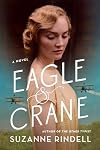
Wow. A very accomplished, well organized and paced novel. While it is emotional it doesn’t try to blackmail the reader with extended scenes of racial cruelty or violence. There is just enough detail to wring empathy from the reader though - that executive order was unjust and a product of willfully ignoring facts and racism. While I am still baffled at why Japan decided to bomb the crap out of the Pacific, I don’t think people here needed to be treated that way. But that’s not what’s show more at the heart of the story; that’s just a fact, a thing that happened. In total it’s a little uneven, but I liked the book a lot.
The set up is a good one. I like Bonner’s obfuscated connection to the Thorns. I didn’t make the Lindy/Rosalind connection right away, but when I did, and by then I knew of her relationship to Louis’s brother, Guy and so could fill in the story. Another bit of heartache to go around.
The backstory about the Yamadas and the Thorns was good. She drew out the land “swindle” just to the point of my being tired of it before telling the whole story, which of course wasn’t a swindle at all. I didn’t understand Cleo and why the hell she fell for Earl Shaw and was saddened, but not surprised when he took off on them and turned out not to be who he said he was. They bounced back nicely and even though it was short-lived, I’m glad Harry and Louis had success with the reformulated Eagle & Crane show. It only made sense that it wouldn’t really have been Harry in that plane. His interest in magic as well as his slow, secret lessons with Ava foreshadowed their ultimate trick quite nicely. I like Harry’s assumption that Louis would do his best and was in fact trying very hard to be a better man - to honor his agreement and not keep the Yamada land. I think he will, but Harry and Ava’s future are anything but assured. show less
The backstory about the Yamadas and the Thorns was good. She drew out the land “swindle” just to the point of my being tired of it before telling the whole story, which of course wasn’t a swindle at all. I didn’t understand Cleo and why the hell she fell for Earl Shaw and was saddened, but not surprised when he took off on them and turned out not to be who he said he was. They bounced back nicely and even though it was short-lived, I’m glad Harry and Louis had success with the reformulated Eagle & Crane show. It only made sense that it wouldn’t really have been Harry in that plane. His interest in magic as well as his slow, secret lessons with Ava foreshadowed their ultimate trick quite nicely. I like Harry’s assumption that Louis would do his best and was in fact trying very hard to be a better man - to honor his agreement and not keep the Yamada land. I think he will, but Harry and Ava’s future are anything but assured.

This story of an unassuming young woman in Jazz Age New York City started off well enough. It's a time period and setting I love to read about, and Rose's life as a working woman (a typist at a police precinct) was interesting. When a new woman joins the typing pool, Rose quickly falls under her spell, desperate for friendship and connection. The relationship upends Rose's carefully constructed, quiet life.
Ultimately, this novel didn't hang together well for me. It got a bit more ludicrous show more with every chapter and the denouement beggared belief. My experience was not helped by a very pedestrian narration of the audio book by the actress Gretchen Mol.
3 stars show less
Ultimately, this novel didn't hang together well for me. It got a bit more ludicrous show more with every chapter and the denouement beggared belief. My experience was not helped by a very pedestrian narration of the audio book by the actress Gretchen Mol.
3 stars show less

This second novel by Rindell takes a more straightforward approach to storytelling. We have three narrators each using the first person; a tough task for any writer to make each voice distinctive, but Rindell pulls it off. From the start the three know each other and the relationships get closer and more dangerous as the book progresses.
Things start with Cliff Nelson narrating. Cliff is a laughingly delusional poseur. He thinks because he wants to be a writer he must be brilliant and his show more brilliance will be recognized at any moment. This is despite not writing a single thing. He drinks and talks and insists that this behavior will give him inspiration because experience is everything and you have to write what you know. Hemingway looms large in his ideas about writing. Cliff personifies the privileged white male who thinks the world owes him something.
Next is Eden Katz a nice Jewish girl from the midwest who comes to New York clutching a couple of letters of introduction from a teacher back home. She lands at a middling publisher and thinks she’s made a friend, but finds out soon enough that she can’t trust anyone. She does other people’s scut work hoping for her big break into editorial. Overall she symbolizes women’s struggle to be recognized as capable, smart and worthy of careers. She doesn’t bash you over the head with it, but that’s basically her role.
Then we meet Miles Tillman who is about to graduate from Columbia, but doesn’t know what comes next other than a quest to find his dead father’s lost war journal. Unlike Cliff, Miles writes a lot, but has no delusions that he will make it at all, what with being a Negro and all (the accepted term in the novel’s time of the late 1950s). After a few incidents I wondered if Miles was doomed to be everyone’s victim. Underdog through and through and you can’t help but root for him.
So our cast is set on some rough courses and there are some rude awakenings, bad decisions and a lot of sex and late nights. Some things are predictable others are not. At first I thought Rusty would be the villain of the piece, but he’s a facilitator only. Cliff is the real baddie and the very little sympathy I had for him at the outset rapidly ran dry. Eden pays her price for her career willingly enough, but still pays. Miles pays the most though, but not in ways that you would expect and I liked the little ruffle of originality in his story.
Some reviews complain that the characters don’t grow or change much and I disagree. They do, but only to solidify into what they already are. The timeframe of the novel isn’t very long and so I didn’t expect a big arc given that limitation. It wouldn’t be realistic and that’s mostly how this novel feels. There aren’t any big dramatic events, nothing hyperbolic or romantic. Well done. show less
Things start with Cliff Nelson narrating. Cliff is a laughingly delusional poseur. He thinks because he wants to be a writer he must be brilliant and his show more brilliance will be recognized at any moment. This is despite not writing a single thing. He drinks and talks and insists that this behavior will give him inspiration because experience is everything and you have to write what you know. Hemingway looms large in his ideas about writing. Cliff personifies the privileged white male who thinks the world owes him something.
Next is Eden Katz a nice Jewish girl from the midwest who comes to New York clutching a couple of letters of introduction from a teacher back home. She lands at a middling publisher and thinks she’s made a friend, but finds out soon enough that she can’t trust anyone. She does other people’s scut work hoping for her big break into editorial. Overall she symbolizes women’s struggle to be recognized as capable, smart and worthy of careers. She doesn’t bash you over the head with it, but that’s basically her role.
Then we meet Miles Tillman who is about to graduate from Columbia, but doesn’t know what comes next other than a quest to find his dead father’s lost war journal. Unlike Cliff, Miles writes a lot, but has no delusions that he will make it at all, what with being a Negro and all (the accepted term in the novel’s time of the late 1950s). After a few incidents I wondered if Miles was doomed to be everyone’s victim. Underdog through and through and you can’t help but root for him.
So our cast is set on some rough courses and there are some rude awakenings, bad decisions and a lot of sex and late nights. Some things are predictable others are not. At first I thought Rusty would be the villain of the piece, but he’s a facilitator only. Cliff is the real baddie and the very little sympathy I had for him at the outset rapidly ran dry. Eden pays her price for her career willingly enough, but still pays. Miles pays the most though, but not in ways that you would expect and I liked the little ruffle of originality in his story.
Some reviews complain that the characters don’t grow or change much and I disagree. They do, but only to solidify into what they already are. The timeframe of the novel isn’t very long and so I didn’t expect a big arc given that limitation. It wouldn’t be realistic and that’s mostly how this novel feels. There aren’t any big dramatic events, nothing hyperbolic or romantic. Well done. show less
Lists
Awards


You May Also Like


Statistics
- Works
- 6
- Members
- 1,679
- Popularity
- #15,311
- Rating
- 3.6
- Reviews
- 131
- ISBNs
- 67
- Languages
- 9