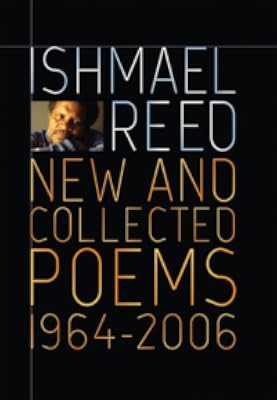
New and Collected Poems, 1964-2006
by Ishmael Reed
On This Page
Description
"One of the founding fathers of multicultural studies, Ishmael Reed first came to the attention of the literary world as a poet. Despite success as a novelist, playwright, essayist, and recording artist, he has never ceased to write poetry, delving into waters spiritual and political with his own unexpected and uniquely powerful voice. New and Collected Poems, 1964-2006 captures four decades of Reed's inimitable vision, an ongoing journey from New York and Chattanooga to Africa, Oakland, and show more Japan." "New and Collected Poems, 1964-2006 also includes Reed's libretto, Gethsemane Park (a contemporary Yoruban interpretation of the New Testament), and his translation of an excerpt of Fungawa's Igbo Olodumare (The Forest of God), as well as several lyrics which have been recorded by artists ranging from Taj Majal to Bobby Womack and Little Jimmy Scott." "In this volume, one of America's most esteemed and intrepid poets, whose "Beware Do Not Read This Poem" has been cited by Gale Research as one of about twenty poems most frequently studied in literature courses, shows why he has helped expand our cultural forefront from the 1960s to today."--BOOK JACKET. show lessTags
Recommendations








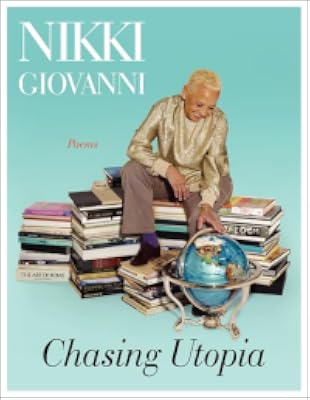
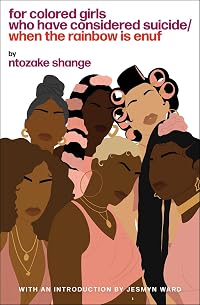
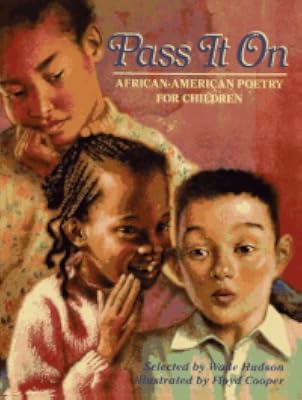

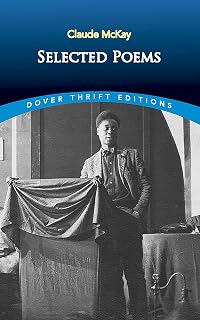


Member Recommendations

Member Reviews
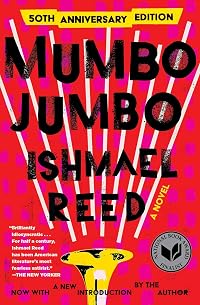
When I was in high school, a critical aside comparing Shea and Wilson's Illuminatus to Ishmael Reed's novel Mumbo Jumbo brought me haphazardly to a public library copy of Reed's first poetry collection Conjure, which excited me to the point of photocopying nearly a third of it -- after resisting the temptation to steal it outright. For about twenty years thereafter, Reed's work motivated myriad unrewarded searches on my part among the poetry shelves in used bookshops across the country. In 2006, the volume of Reed's New and Collected Poems 1964-2006 supplied me with the full contents of Conjure, as well as the interim volumes Chattanooga, A Secretary to the Spirits, and Points of View, and a further collection of poetry more extensive show more than any two of the earlier books combined.
Conjure still includes several of my all-time-favorite short poems: "There's a Whale in my Thigh," "The Piping Down of God," and "Dragon's Blood." According to the author's micro-vita appended to this volume, "Beware: Do Not Read This Poem" is also an all-time-favorite of literature instructors. Perhaps the best and most representative poem of this earliest set is the exquisite "I am a Cowboy in the Boat of Ra," a houngan's brag rebuking Christian tyranny with a mixture of Wild West and ancient Egyptian imagery.
The later materials continue in the same vein, with a tiny bit less anger and a little more sorrow, but Reed's sense of humor is undiminished. Although he no longer foregrounds the blazon of his school of Neo HooDooism, his methods and aims seem quite consistent with what came before. In the later work, his awareness of the (already much-realized) possibility that his poems would serve as musical lyrics more often leads Reed to use repetitive chorus forms and traditional structures, but even in the early pieces, there is a vivid aural sensibility that constantly tempts to reader to declaim them aloud for the benefit of their full force.
Reed insists that his poetry is not theological in its aims, despite its use of various non-Christian and counter-Christian tropes and images: "The key lesson that I do take from Yoruba religion is from the parable in which a traveler finds himself in a strange country, away from his gods, and the only god that he can depend upon is his own mind" (xix). But he makes no such disclaimers regarding politics. A political piece among the more recent work that I found especially striking as an expression of its own time was the 2001 "America United" (362-372). And one that read with eerie irony in the light of current events (police violence in late October 2011) was "Let Oakland Be a City of Civility" from 1999 (341-345).
After the recent poems, the book concludes with an opera libretto Gethsemane Park, and a prose narrative "Snake War" based on a translation of an excerpt from Fungawa's Igbo Olodumare (The Forest of God). The former is a sort of Godspell-like displacement of gospel events into the modern American city, in which Jesus is not a human hero but a discorporate orisha.
In an untitled verse from 1992, Reed wrote: "Ever get the / Feeling that your past / Is a hunter who knows the / Woods better than you" (327). In fact I do, and this four-decades-plus collection goes a way toward demonstrating why Reed might as well. show less
Conjure still includes several of my all-time-favorite short poems: "There's a Whale in my Thigh," "The Piping Down of God," and "Dragon's Blood." According to the author's micro-vita appended to this volume, "Beware: Do Not Read This Poem" is also an all-time-favorite of literature instructors. Perhaps the best and most representative poem of this earliest set is the exquisite "I am a Cowboy in the Boat of Ra," a houngan's brag rebuking Christian tyranny with a mixture of Wild West and ancient Egyptian imagery.
The later materials continue in the same vein, with a tiny bit less anger and a little more sorrow, but Reed's sense of humor is undiminished. Although he no longer foregrounds the blazon of his school of Neo HooDooism, his methods and aims seem quite consistent with what came before. In the later work, his awareness of the (already much-realized) possibility that his poems would serve as musical lyrics more often leads Reed to use repetitive chorus forms and traditional structures, but even in the early pieces, there is a vivid aural sensibility that constantly tempts to reader to declaim them aloud for the benefit of their full force.
Reed insists that his poetry is not theological in its aims, despite its use of various non-Christian and counter-Christian tropes and images: "The key lesson that I do take from Yoruba religion is from the parable in which a traveler finds himself in a strange country, away from his gods, and the only god that he can depend upon is his own mind" (xix). But he makes no such disclaimers regarding politics. A political piece among the more recent work that I found especially striking as an expression of its own time was the 2001 "America United" (362-372). And one that read with eerie irony in the light of current events (police violence in late October 2011) was "Let Oakland Be a City of Civility" from 1999 (341-345).
After the recent poems, the book concludes with an opera libretto Gethsemane Park, and a prose narrative "Snake War" based on a translation of an excerpt from Fungawa's Igbo Olodumare (The Forest of God). The former is a sort of Godspell-like displacement of gospel events into the modern American city, in which Jesus is not a human hero but a discorporate orisha.
In an untitled verse from 1992, Reed wrote: "Ever get the / Feeling that your past / Is a hunter who knows the / Woods better than you" (327). In fact I do, and this four-decades-plus collection goes a way toward demonstrating why Reed might as well. show less
Ratings
Members
- Recently Added By
Author Information

68+ Works 3,962 Members
Poet and novelist Ismael Reed was born in Chattanooga, Tennessee, on February 22, 1938 and grew up in Buffalo, New York. After attending the State University of New York at Buffalo, he moved to New York City, where he became a co-founder of the East Village Other, a journal of experimental writing. From New York, he moved to Berkeley, California, show more and started the Yardbird Publishing Company. Reed's fiction draws upon myth, magic, and ritual to produce a literature that attempts to be larger than life. He has been called an ironist, whose explorations of United States history in general and African American history in particular reveal deep scars in the culture that no amount of technology can heal. Reed tries to incorporate multimedia and nonlinear techniques into his writing style. He has defended his eclectic techniques with spirit, however: "Many people call my fiction muddled, crazy, incoherent because I've attempted in fiction the techniques and forms painters, dancers, film makers, musicians in the West have taken for granted for at least 50 years, and the artists of many other cultures, for thousands of years." His other published books include: six collections of poetry, including: New and Collected Poems, 1964-2007; eight collections of essays, most recently Barack Obama and the Jim Crow Media: The Return of the Nigger Breakers (2010); Gethsemane Park; The Reed Reader (2000); Blues City: A Walk in Oakland (2003); and six plays, collected by Dalkey Archive Press as Ishmael Reed, The Plays (2009). (Bowker Author Biography) show less
Awards and Honors
Distinctions
Work Relationships
Contains
Classifications
Statistics
- Members
- 30
- Popularity
- 929,592
- Reviews
- 1
- Rating
- (4.50)
- Languages
- English
- Media
- Paper
- ISBNs
- 2