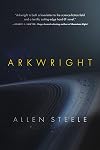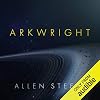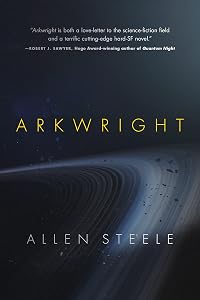
Arkwright
by Allen Steele
On This Page
Description
"A contemporary of science fiction masters Robert Heinlein, Isaac Asimov, and Arthur C. Clarke, Nathan Arkwright was a seminal science fiction author of the twentieth century. At the end of his life he becomes reclusive and cantankerous, refusing to appear before or interact with his legion of fans. Little did anyone know, Nathan was putting into motion his true, timeless legacy. Convinced that humanity cannot survive on Earth, his Arkwright Foundation dedicates itself to creating a colony show more on an Earth-like planet several light years distant. Fueled by Nathan's legacy, generations of Arkwrights are drawn together, and pulled apart, by the enormity of the task and weight of their name."--Provided by publisher. show lessTags
Recommendations




Member Reviews
Nathan Arkwright is an aging science fiction writer with a dream.
One of the Big Four of the Golden Age of science fiction (along with Isaac Asimov, Robert Heinlein, and Arthur C. Clarke), Arkwright wrote the Galaxy Patrol series, which became a tv show and a movie franchise. In his waning years, he wants what he's always wanted: real, manned space exploration.
He's also worried that an asteroid collision could cause another mass extinction, this time wiping out humans.
During the first World Science Fiction Convention in 1939, Nathan and three friends formed a club they called The League of Tomorrow. In the early 2000s, it becomes the Arkwright Foundation, Estranged from his daughter and other remaining family, he leaves his wealth to the show more Foundation, along with an ambitious plan for human colonization of the stars.
The story is told episodically--Nathan's granddaughter Kate, and her descendants, tell the story of the rising and falling fortunes of the Arkwright Foundation and its ambitious plans. There's family conflict as well as the building and launching of the ship, and the struggle to maintain contact with it on its journey. And the last part of the story takes place on Eos, an super-Earth lit by three red dwarf stars.
All of this could be very dry. It's not. I connected with the characters and their stories in each section. They're human and relatable, and, heck, Nathan and his friends are fans! There are some very familiar names in Nathan's section of the book.
There's also a great, big, huge, hand-wave in the Arkwright project, which is never really addressed, possibly because it can't be. That's all right. Steele is a fine storyteller, and I'm willing to grant him his hand-wave, but honestly, I had to give it some thought before I did. Some people may find it a bridge too far.
Recommended, with that caveat.
I bought this audiobook. show less
One of the Big Four of the Golden Age of science fiction (along with Isaac Asimov, Robert Heinlein, and Arthur C. Clarke), Arkwright wrote the Galaxy Patrol series, which became a tv show and a movie franchise. In his waning years, he wants what he's always wanted: real, manned space exploration.
He's also worried that an asteroid collision could cause another mass extinction, this time wiping out humans.
During the first World Science Fiction Convention in 1939, Nathan and three friends formed a club they called The League of Tomorrow. In the early 2000s, it becomes the Arkwright Foundation, Estranged from his daughter and other remaining family, he leaves his wealth to the show more Foundation, along with an ambitious plan for human colonization of the stars.
The story is told episodically--Nathan's granddaughter Kate, and her descendants, tell the story of the rising and falling fortunes of the Arkwright Foundation and its ambitious plans. There's family conflict as well as the building and launching of the ship, and the struggle to maintain contact with it on its journey. And the last part of the story takes place on Eos, an super-Earth lit by three red dwarf stars.
All of this could be very dry. It's not. I connected with the characters and their stories in each section. They're human and relatable, and, heck, Nathan and his friends are fans! There are some very familiar names in Nathan's section of the book.
There's also a great, big, huge, hand-wave in the Arkwright project, which is never really addressed, possibly because it can't be. That's all right. Steele is a fine storyteller, and I'm willing to grant him his hand-wave, but honestly, I had to give it some thought before I did. Some people may find it a bridge too far.
Recommended, with that caveat.
I bought this audiobook. show less
I had high hopes for Arkwright by Allen Steele because the premise sounded so promising. A sci-fi book about a sci-fi author (touted as being a contemporary of Isaac Asimov) that bankrolled a gargantuan scientific project that could only be cooked up by a sci-fi enthusiast? Yes, please! The basic outline of this book is that through multiple generations of one family, the Arkwright clan, an interstellar space craft would be created and launched into the vast reaches of space in the hopes of colonizing a distant planet for future human inhabitation. Each section of the book focused on a different descendant of the original creator, Nathan Arkwright. The major problem for me was that I didn't especially like any of these characters. It show more isn't a necessity to like the characters you read about of course but it helps if you feel invested in them because otherwise their actions make no difference to you one way or the other...which is what happened to me. Halfway through, I almost gave this book up as a lost cause but I decided to soldier through in the hopes that the ending would knock my socks off. It did and it didn't. You can probably guess what the last chapter of a book about interstellar travel will contain but if you're looking for a huge crescendo then you're going to be disappointed. When I was contemplating giving this one up I looked up other reviews and someone mentioned how it would have been better if the ending had been expanded further. I agree. By focusing on the management of the company, the fiscal pitfalls, the construction of the ship, and the foibles of each of the family members Steele missed an opportunity to really knock it out of the park. If you're a huge sci-fi nerd (as I am) then you most likely won't fall in love with this book but if you're new to the genre or a fan of the generation ship trope then maybe this one will be a win for you. 4/10 for a great concept that didn't really deliver. show less
This SF was pretty much awesome, and more, it was awesome for entirely different reasons as the book progressed.
I've never read Allen Steele before now, but he's just made a fan of me. It's obvious he's well read and respectful of the entire genre from the get-go, and reading about the early days of SF was a huge treat. Nathaniel Arkwright was a fictional author, sliding into one of the Big Four Golden Age SF masters, ranking up there with Heinlein, Clarke, Asimov, Anderson, Pohl, Williamson and so many other great names that I, too, have read and loved, and we read about hob-nobbing and the sheer wonder and the excitement that they all felt about a singular dream of imagination, hope, and, in a few very specific cases, SPACE.
Is this show more all it's about, though? Of course not. I grew to love Arkwright's granddaughter as she discovered what her estranged grandfather was up to with his colleagues, how he wanted his legacy to continue after his death, and beyond all the damn cool nostalgia aspects, we then get into some very nice riffs with other classic SF tales, such as Sagan's Contact as a plot device, then Anderson's Boat of a Million Years, then Asimov's Robot series about not putting all our eggs in one basket, and then we're suddenly in space, for real, and it's all about Real Science, Real Hope, and then we've even got a taste of dystopia and a classic Big Save for the planet, and if that wasn't enough, we even get a full world-building plot and a classic Save From Ignorance plot, and I was absolutely delighted.
Why? Because the author not only made all my favorite Golden Age SF authors into walk-on characters involved in their own schemes of greatness, but we also changed the whole world into some of the greatest SF ideas and explored so many of the most wonderful plots and hard-science beauties to ever grace the page, as well.
What could make such an SF novel better? Good writing, clear characters, and the love of the genre that just oozes across the page, and here's the beauty... Allen Steele has it. :)
I am FANBOY! :) And this is even better if you're conversant with the old field, too. :) show less
I've never read Allen Steele before now, but he's just made a fan of me. It's obvious he's well read and respectful of the entire genre from the get-go, and reading about the early days of SF was a huge treat. Nathaniel Arkwright was a fictional author, sliding into one of the Big Four Golden Age SF masters, ranking up there with Heinlein, Clarke, Asimov, Anderson, Pohl, Williamson and so many other great names that I, too, have read and loved, and we read about hob-nobbing and the sheer wonder and the excitement that they all felt about a singular dream of imagination, hope, and, in a few very specific cases, SPACE.
Is this show more all it's about, though? Of course not. I grew to love Arkwright's granddaughter as she discovered what her estranged grandfather was up to with his colleagues, how he wanted his legacy to continue after his death, and beyond all the damn cool nostalgia aspects, we then get into some very nice riffs with other classic SF tales, such as Sagan's Contact as a plot device, then Anderson's Boat of a Million Years, then Asimov's Robot series about not putting all our eggs in one basket, and then we're suddenly in space, for real, and it's all about Real Science, Real Hope, and then we've even got a taste of dystopia and a classic Big Save for the planet, and if that wasn't enough, we even get a full world-building plot and a classic Save From Ignorance plot, and I was absolutely delighted.
Why? Because the author not only made all my favorite Golden Age SF authors into walk-on characters involved in their own schemes of greatness, but we also changed the whole world into some of the greatest SF ideas and explored so many of the most wonderful plots and hard-science beauties to ever grace the page, as well.
What could make such an SF novel better? Good writing, clear characters, and the love of the genre that just oozes across the page, and here's the beauty... Allen Steele has it. :)
I am FANBOY! :) And this is even better if you're conversant with the old field, too. :) show less
An ambitious story that pays homage to all the giants of SF that came before, while still looking ahead.
Unfortunately, in my limited view (I really don't read a lot of SF anymore, but I've read damn near every one of the authors namechecked in this book), this story suffers the fate of almost every multi-generational SF story I've ever read: that is, it almost has to work in shorthand, or summary. Characters need to meet and fall immediately in love for the plot to progress to their grandkids. So we get scenes where someone goes to interview an Arkwright Foundation member and, within pages, they've fallen in love and she becomes a member of Arkwright, both the family and the foundation, on the basis of being attractive. Or another scene show more where a young family member who's completely directionless until he meets a lovely woman finds everything he needs all in one package. But then, for the plot to progress, when we skip ahead ten years, he's done yet another abrupt about-face.
In perfect Asimov fashion, any person with a problem immediately meets someone else who will solve that problem.
My other concern is, there's no conflict here. Things all come relatively easy. The only disagreements come from belief - belief in technology or religion. When a disaster happens, it's not even remotely engaging because the solution is there.
Finally, when we get to the last bit of the book (which, truth be told, I thought was going to make up the bulk of the novel), we're fed yet another faith vs. science question. I don't think I spoil a damn thing when I say I wasn't shocked that science wins. Don't get me wrong, I'm no believer in religion, and have a lot of faith in science overall, but did it need to be so damn one-sided and heavy-handed? Every outcome in this novel is a foregone conclusion.
I know they're out there, but I wish I could find a hard-SF author who pays the same amount of attention to their characters as they do to their tech. And I wish they could be a little less biased.
Not a horrible book, but yet again, not one I'd hold up as a solid example of the genre. show less
Unfortunately, in my limited view (I really don't read a lot of SF anymore, but I've read damn near every one of the authors namechecked in this book), this story suffers the fate of almost every multi-generational SF story I've ever read: that is, it almost has to work in shorthand, or summary. Characters need to meet and fall immediately in love for the plot to progress to their grandkids. So we get scenes where someone goes to interview an Arkwright Foundation member and, within pages, they've fallen in love and she becomes a member of Arkwright, both the family and the foundation, on the basis of being attractive. Or another scene show more where a young family member who's completely directionless until he meets a lovely woman finds everything he needs all in one package. But then, for the plot to progress, when we skip ahead ten years, he's done yet another abrupt about-face.
In perfect Asimov fashion, any person with a problem immediately meets someone else who will solve that problem.
My other concern is, there's no conflict here. Things all come relatively easy. The only disagreements come from belief - belief in technology or religion. When a disaster happens, it's not even remotely engaging because the solution is there.
Finally, when we get to the last bit of the book (which, truth be told, I thought was going to make up the bulk of the novel), we're fed yet another faith vs. science question. I don't think I spoil a damn thing when I say I wasn't shocked that science wins. Don't get me wrong, I'm no believer in religion, and have a lot of faith in science overall, but did it need to be so damn one-sided and heavy-handed? Every outcome in this novel is a foregone conclusion.
I know they're out there, but I wish I could find a hard-SF author who pays the same amount of attention to their characters as they do to their tech. And I wish they could be a little less biased.
Not a horrible book, but yet again, not one I'd hold up as a solid example of the genre. show less
I LIKE LOTS OF THINGS ABOUT THIS BOOK, OK?
- Multi-generational story with characters that I actually felt attached to in each generation
- Multi-racial families
- Women leaders!
- The idea of science compared to religion vs. the idea of science compared to faith
- Budget cuts for space exploration are all well and good until an asteroid heads your way
- What would humans look like if genetically engineered for another planet
- The fallibility of oral tradition
- The way the story loops around at the end
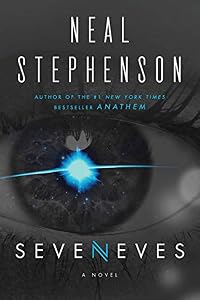
Another reviewer referred to this as "Seveneves" light, which reminds me that I need to pick that up sometime.
- Multi-generational story with characters that I actually felt attached to in each generation
- Multi-racial families
- Women leaders!
- The idea of science compared to religion vs. the idea of science compared to faith
- Budget cuts for space exploration are all well and good until an asteroid heads your way
- What would humans look like if genetically engineered for another planet
- The fallibility of oral tradition
- The way the story loops around at the end
Another reviewer referred to this as "Seveneves" light, which reminds me that I need to pick that up sometime.
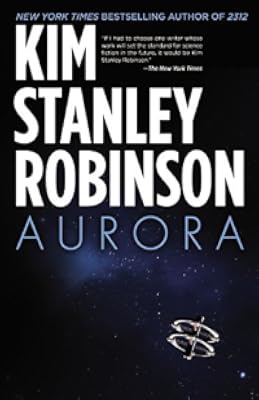
Enjoyed Seveneves, but wish it was shorter? Enjoyed Aurora, but wish it was more optimistic? Enjoyed Among Others, but wish it was less fantasy and more science fiction? Well, then Arkwright might just be the book you're looking for -- a celebration of the history of science fiction as a genre and community, and a tale of humanity's expansion across the galaxy, spanning generations , but coming in at just over 300 pages.
This was disappointing. From the premise I thought I was going to love this book. It promised "classic, epic science fiction and engaging character-driven storytelling" (from the Amazon blurb). It was also promoted as being a paean to the genre of science fiction, especially the golden age of science fiction. I didn't find that it achieved either of those purposes. Add in the fact that there were numerous instances where words, usually small prepositions, were left out of sentences and I couldn't give this book any more than 3 stars.
Nathan Arkwright reached adulthood just before World War II. Like many youths of that time he was a devoted reader of the science fiction pulp magazines of the time. In the back of one he read about a show more convention taking place near to where he lived and he decided to go. There he met three other fans who would remain lifelong friends. He and one other wrote science fiction for a living. The sole female became a literary agent for both of them. The other person was a gifted scientist who helped the two authors write fiction that was grounded in scientific knowledge. Nathan became very wealthy and he decided to use his wealth to promote interstellar space travel. Just before his death he set up a foundation to achieve that goal. His three friends and his granddaughter started the process running. Successive generations worked to achieve the goal. In time a ship carrying genetic material to colonize a new world including the genes of the people involved with building the space ship took off for a distant planet.
I admit that the idea of using a science fiction premise to achieve scientific aims is unique. However, there was so much about the circumstances surrounding the time period that was glossed over that I just felt it was operating in a vacuum. I would have like to know, for example, how the ravages of climate change were dealt with and reversed because they certainly seem to have been. There are mentions of sea levels rising to flood coastal cities and towns but no discussion of the devastation that must have caused. As I said at the beginning it was disappointing. show less
Nathan Arkwright reached adulthood just before World War II. Like many youths of that time he was a devoted reader of the science fiction pulp magazines of the time. In the back of one he read about a show more convention taking place near to where he lived and he decided to go. There he met three other fans who would remain lifelong friends. He and one other wrote science fiction for a living. The sole female became a literary agent for both of them. The other person was a gifted scientist who helped the two authors write fiction that was grounded in scientific knowledge. Nathan became very wealthy and he decided to use his wealth to promote interstellar space travel. Just before his death he set up a foundation to achieve that goal. His three friends and his granddaughter started the process running. Successive generations worked to achieve the goal. In time a ship carrying genetic material to colonize a new world including the genes of the people involved with building the space ship took off for a distant planet.
I admit that the idea of using a science fiction premise to achieve scientific aims is unique. However, there was so much about the circumstances surrounding the time period that was glossed over that I just felt it was operating in a vacuum. I would have like to know, for example, how the ravages of climate change were dealt with and reversed because they certainly seem to have been. There are mentions of sea levels rising to flood coastal cities and towns but no discussion of the devastation that must have caused. As I said at the beginning it was disappointing. show less
Members
- Recently Added By
Lists

2017 Hugo Eligible Novels
145 works; 14 members

Books Read in 2016
4,666 works; 197 members

hypatian_kat to-read
429 works; 3 members

ALA The Reading List
490 works; 28 members
Author Information

151+ Works 7,160 Members
Awards and Honors
Common Knowledge
- Original publication date
- 2016-03
Classifications
Statistics
- Members
- 310
- Popularity
- 103,029
- Reviews
- 23
- Rating
- (3.30)
- Languages
- English
- Media
- Paper, Audiobook, Ebook
- ISBNs
- 5
- UPCs
- 1
- ASINs
- 3