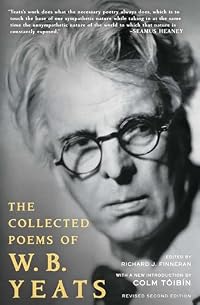
Collected Poems
by W. B. Yeats
On This Page
Description
Born and educated in Dublin, Ireland, William Butler Yeats discovered early in his literary career a fascination with Irish folklore and the occult. Later awarded the Nobel Prize for Literature in 1923, Yeats produced a vast collection of stories, songs, and poetry of Ireland's historical and legendary past. This compilation includes a vast number of works, pieces that have earned Yeats the recognition as one of the greatest poet of his time. The Collected Poetry of William Butler Yeats show more includes the following collections: "Crossways"," The Rose", "The Wind Among The Reeds", "In The Seven Woods", "The Green Helmet and Other Poems", "Responsibilities", "The Wild Swans at Coole", "Michael Robartes and the Dancer", and several other narrative and dramatic poems. This edition includes a biographical afterword. show lessTags
Recommendations









Member Recommendations

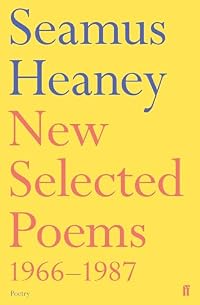
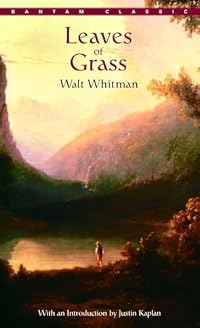
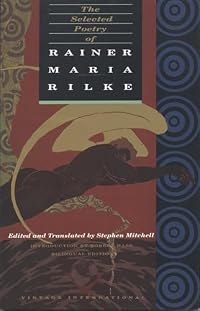
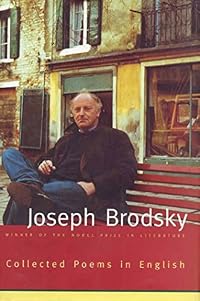
DromJohn Two chapters in Praises puts Yeats work in context with Irish politics and the bardic tradition: Yeats and the Rat-Rhymers; and Yeats and Hysterica Passio.
Member Reviews
The Collected Poems of W. B. Yeats is a collection that at times lifted my spirits, at times frustrated me, and at times saddened me. Yeats is sometimes clear and straightforward in his writing and other times oblique. I read a few poems each night and sometimes found myself rereading one or the other either because I loved the wording or because the wording felt awkward to me. The poems sometimes reminded me that writing done in a time and place is tied to that time and place and might not always hold up over time. Many of Yeats poems still hold meaning and are even transcendent of time and place but not all. And that's okay. The Collected Poems of W. B. Yeats tells a story of the connections and detachments we experience in life show more through language that manages to be both lyrical and grounded. show less
I propose a little extra bit of poetry memorization, in honor of St. Patrick's honorable role in teaching the Irish to write. This fragment is the first poetry I ever remember reacting to with (to quote the author) passionate intensity; I have loved it ever since I could react to the pleasing juxtaposition of words together:
"These masterful images because complete
Grew pure in mind but out of what began?
A mound of refuse or the sweepings of a street,
Old kettles, old bottles, and a broken can,
Old iron, old bones, old rags, that raving slut
Who keeps the till. Now that my ladder's gone
I must lie down where all the ladders start
In the foul rag and bone shop of the heart."
Even though W.B. Yeats wrote his own long lyrical drama cursing St. show more Patrick (The Wanderings of Oisin), the monk's gift of writing was certainly well used by him. This third part of "The Circus Animals' Desertion" is one of those rare verses that is equally appealing on a surface level of pleasing lingual combinations (the only level on which I was drawn to poetry when I first discovered it) AND on a level of intellectual thought and emotion now that I have grown up a little bit. At age 10, I thought the phrase "the foul rag and bone shop of the heart" was about the coolest-sounding thing I'd ever heard. Now I think it's just about the truest idea that all grand human ideas and conceits come out of the unglamorous ephemera of our existence. Sometimes we feel like we've elevated ourselves above all that, but then we have to get humble and return to our beginnings. Not often pretty, but there it is.
I love the idea of this causal connection between the refuse of a society or an individual and its grandest self-conceptions. Both categories speak to one another, are one another in some ways. It's what makes encountering a discarded Burger King wrapper while out on a hike not only disgusting but sort of melancholic as well. The grand American vista of natural beauty is all bound up with the sweeping American bent toward self-destruction and blind disregard for the world around us, often mythologized as "individualism."
Within a given person, as Spaulding Gray has pointed out, the same applies. Gray has analyzed how our demons and neuroses are inextricably bound with our best qualities, but Yeats goes even further: our grand self-conceptions and beautiful images take their nourishment and impetus from our demons and the dirty realities of our everyday hearts, combined with our desire to make something useful, lovely or complete out of the pre-existing fragments or "garbage" that's left over after we live our quotidian lives. I love how the progression of trash in the poem steadily builds in value, causing the reader to question the worthlessness of any item listed: "old kettles, old bottles, and a broken can" (well, none of that is very valuable, the reader thinks), "old iron, old bones, old rags" (bones were once a living creature, and iron and rags items of utility), "that raving slut / Who keeps the till" (surely a living person is full of value; maybe we should take another look at that broken can). And "taking another look at that broken can" is just a less graceful way of expressing the need to "lie down where all the ladders start / In the foul rag and bone shop of the heart." Personally, I feel lucky that Yeats did just that, and wrote this fitting initiation into the poetic world. I have a feeling that as I continue growing up, it will only develop new shades of beauty and meaning. show less
"These masterful images because complete
Grew pure in mind but out of what began?
A mound of refuse or the sweepings of a street,
Old kettles, old bottles, and a broken can,
Old iron, old bones, old rags, that raving slut
Who keeps the till. Now that my ladder's gone
I must lie down where all the ladders start
In the foul rag and bone shop of the heart."
Even though W.B. Yeats wrote his own long lyrical drama cursing St. show more Patrick (The Wanderings of Oisin), the monk's gift of writing was certainly well used by him. This third part of "The Circus Animals' Desertion" is one of those rare verses that is equally appealing on a surface level of pleasing lingual combinations (the only level on which I was drawn to poetry when I first discovered it) AND on a level of intellectual thought and emotion now that I have grown up a little bit. At age 10, I thought the phrase "the foul rag and bone shop of the heart" was about the coolest-sounding thing I'd ever heard. Now I think it's just about the truest idea that all grand human ideas and conceits come out of the unglamorous ephemera of our existence. Sometimes we feel like we've elevated ourselves above all that, but then we have to get humble and return to our beginnings. Not often pretty, but there it is.
I love the idea of this causal connection between the refuse of a society or an individual and its grandest self-conceptions. Both categories speak to one another, are one another in some ways. It's what makes encountering a discarded Burger King wrapper while out on a hike not only disgusting but sort of melancholic as well. The grand American vista of natural beauty is all bound up with the sweeping American bent toward self-destruction and blind disregard for the world around us, often mythologized as "individualism."
Within a given person, as Spaulding Gray has pointed out, the same applies. Gray has analyzed how our demons and neuroses are inextricably bound with our best qualities, but Yeats goes even further: our grand self-conceptions and beautiful images take their nourishment and impetus from our demons and the dirty realities of our everyday hearts, combined with our desire to make something useful, lovely or complete out of the pre-existing fragments or "garbage" that's left over after we live our quotidian lives. I love how the progression of trash in the poem steadily builds in value, causing the reader to question the worthlessness of any item listed: "old kettles, old bottles, and a broken can" (well, none of that is very valuable, the reader thinks), "old iron, old bones, old rags" (bones were once a living creature, and iron and rags items of utility), "that raving slut / Who keeps the till" (surely a living person is full of value; maybe we should take another look at that broken can). And "taking another look at that broken can" is just a less graceful way of expressing the need to "lie down where all the ladders start / In the foul rag and bone shop of the heart." Personally, I feel lucky that Yeats did just that, and wrote this fitting initiation into the poetic world. I have a feeling that as I continue growing up, it will only develop new shades of beauty and meaning. show less
I have enjoyed the poetry of William Butler Yeats for many years as evidenced by my well-worn copy of his Complete Poems. But there is more to enjoy when considering this protean author for throughout his long life, William Butler Yeats produced important works in every literary genre, works of astonishing range, energy, erudition, beauty, and skill. His early poetry is memorable and moving. His poems and plays of middle age address the human condition with language that has entered our vocabulary for cataclysmic personal and world events.
"O body swayed to music, O brightening glance,
How can we know the dancer from the dance?"
("Among School Children", p 105)
The writings of his final years offer wisdom, courage, humor, and sheer show more technical virtuosity. T. S. Eliot pronounced Yeats "the greatest poet of our time -- certainly the greatest in this language, and so far as I am able to judge, in any language" and "one of the few whose history is the history of their own time, who are a part of the consciousness of an age which cannot be understood without them."
There are always new things to be learned when reading and meditating on the poetry of this masterful author. show less
"O body swayed to music, O brightening glance,
How can we know the dancer from the dance?"
("Among School Children", p 105)
The writings of his final years offer wisdom, courage, humor, and sheer show more technical virtuosity. T. S. Eliot pronounced Yeats "the greatest poet of our time -- certainly the greatest in this language, and so far as I am able to judge, in any language" and "one of the few whose history is the history of their own time, who are a part of the consciousness of an age which cannot be understood without them."
There are always new things to be learned when reading and meditating on the poetry of this masterful author. show less
Yeats moves in my thoughts and in my life everyday. I have two battered collections of his poems, the first given me by a now dead friend. Who else has such music, or such passion?
Three stars, Laurel?? I'll be the heretic with the Irish last name who docks Yeats for the weight of his pre-Easter Rebellion poetry--mostly dreary folkloric stuff. (Yes, still so much better than I can write myself:) I would rather read a slimmer volume of just the really really good stuff, which is, of course, astounding.
Yeats has a knack for approaching emotions and situations obliquely and obscurely at first, and yet somehow hitting them right on by the time he's through. A perfect subtlety, dancing on the thin line between pathos and authenticity.
I have given hourlong recitations of Yeats's poems, among the easiest to recall in English; for example, his tetrameters in the late "Under Ben Bulben" which contains his epitaph. I defy you to say this aloud three times without knowing most of it by heart: "Whether man die in his bed,/ Or the rifle knocks him dead,/ A brief parting from those dear/ Is the worst man has to fear." And his own epitaph is memorable, "Cast a cold eye/ On life, on death/ Horseman, pass by!" It is anti-conventional, since most epitaphs were written by clergy to scare the readers back to church, like this one in Pittsfield, MA: "Corruption, earth and worms/ Shall but refine this flesh..." etc. I seriously doubt the interred was consulted about that one. Yeats show more counters, look at this grave, and fogggetaboutit, Pass by!
By memory I still have "When you are old," his adaptation of Ronsard, "Lake Isle of Innisfree," so imitative of the water lapping the shores, in its medial caesuras, "I hear lake water lapping...Though I stand on the roadway..I shall arise and go now..." And so interesting that WBY first had a truism, "There noon is all a glimmer, and midnight a purple glow," which he reversed to the memorable, "There midnight's all a glimmer, and noon has a purple glow..." Ahh... a useful trick for writers. (My Ph.D. advisor Leonard Unger noted the influence of Meredith on Innisfree.) "The Second Coming," whose opening I said in my flight fears of landing. The problem in reciting that poem is "The worst are full of passionate intensity." I had to reduce the intensity of my aloudreading. "Sailing to Byzantium," and ohers.
I have also set to music seven of Yeats' poems, including "Brown Penny," "Lullaby," "Her Anxiety," and even "Crazy Jane talks to the Bishop." Some of these tunes, played decades ago, can be heard on my google+ page, no middle initial.
Yeats's son Michael, fathered in his late fifties, toured the US in the 70s. A friend in the Berkshires heard him recall his father mainly shooing him from the room to write or recite. Sounds accurate. (Maybe that's why Shakespeare lived in London, his kids in Stratford!)
I mentioned learning Yeats at Leonard Unger's knee, but also from Chester Anderson, Joycean and Irish specialist show less
By memory I still have "When you are old," his adaptation of Ronsard, "Lake Isle of Innisfree," so imitative of the water lapping the shores, in its medial caesuras, "I hear lake water lapping...Though I stand on the roadway..I shall arise and go now..." And so interesting that WBY first had a truism, "There noon is all a glimmer, and midnight a purple glow," which he reversed to the memorable, "There midnight's all a glimmer, and noon has a purple glow..." Ahh... a useful trick for writers. (My Ph.D. advisor Leonard Unger noted the influence of Meredith on Innisfree.) "The Second Coming," whose opening I said in my flight fears of landing. The problem in reciting that poem is "The worst are full of passionate intensity." I had to reduce the intensity of my aloudreading. "Sailing to Byzantium," and ohers.
I have also set to music seven of Yeats' poems, including "Brown Penny," "Lullaby," "Her Anxiety," and even "Crazy Jane talks to the Bishop." Some of these tunes, played decades ago, can be heard on my google+ page, no middle initial.
Yeats's son Michael, fathered in his late fifties, toured the US in the 70s. A friend in the Berkshires heard him recall his father mainly shooing him from the room to write or recite. Sounds accurate. (Maybe that's why Shakespeare lived in London, his kids in Stratford!)
I mentioned learning Yeats at Leonard Unger's knee, but also from Chester Anderson, Joycean and Irish specialist show less
Members
- Recently Added By
Lists

Irish writers
87 works; 17 members

http://thegreatestbooks.org's Greatest Fiction Books
59 works; 1 member

.
194 works; 2 members

The Well-Educated Mind, Susan Wise Bauer, 2016
179 works; 3 members

Books Read in 2024
4,623 works; 126 members

Books You Read For University
184 works; 3 members

Books We'd Want on a Desert Island
203 works; 131 members

New Lifetime Reading Plan by Fadiman and Major
225 works; 5 members

Greatest Books, allegedly
484 works; 9 members

LibraryThingers' 1001 Books You Must Read Before You Die
442 works; 30 members

Best Books of 1926-1935
403 works; 10 members
Harold Bloom - The Western Canon: D. The Chaotic Age
833 works; 24 members

Classics you know you should have read but probably haven't
421 works; 407 members

Nobel Price Winners
222 works; 20 members

Modernism
140 works; 8 members

Literary Works Read in College
316 works; 15 members

Poetry Corner
187 works; 15 members
Top-Rated Books on LibraryThing
272 works; 117 members

Philip Ward's Lifetime Reading Plan
592 works; 22 members

20th Century Literature
1,161 works; 55 members

Poetry Collections
79 works; 6 members
Folio Society
831 works; 48 members
.
396 works; 1 member
Author Information

838+ Works 25,251 Members
William Butler Yeats was born in Dublin, Ireland on June 13, 1865. He was a driving force behind the Irish Literary Revival and, along with Lady Gregory, Edward Martyn, and others, founded the Abbey Theatre, where he served as its chief playwright until the movement was joined by John Synge. Yeats' plays included The Countess Cathleen, The Land of show more Heart's Desire, Cathleen ni Houlihan, The King's Threshold, and Deirdre. Although a convinced patriot, Yeats deplored the hatred and the bigotry of the Nationalist movement, and his poetry is full of moving protests against it. He was appointed to the Irish Senate in 1922. He was awarded the Nobel Prize in Literature in 1923 for what the Nobel Committee described as "inspired poetry, which in a highly artistic form gives expression to the spirit of a whole nation." He is one of the few writers who completed their greatest works after being awarded the Nobel Prize. His poetry collections include The Wild Swans at Coole, Michael Robartes and the Dancer, The Tower, The Winding Stair and Other Poems, and Last Poems and Plays. He died on January 28, 1939 at the age of 73. (Bowker Author Biography) show less

William Butler Yeats has a Legacy Library. Legacy libraries are the personal libraries of famous readers, entered by LibraryThing members from the Legacy Libraries group.
Some Editions
Awards and Honors
Work Relationships
Has as a student's study guide
Common Knowledge
- Canonical title
- Collected Poems
- Original publication date
- 1974
- Dedication
- To A.E.
- First words
- The woods of Arcady are dead, And over is there antique joy
- Quotations
- Things fall apart, The centre cannot hold
- Last words
- (Click to show. Warning: May contain spoilers.)A woman's beauty is a storm-tossed banner;
Under it wisdom stands, and I alone --
Of all Arabia's lovers I alone --
Nor dazzled by the embroidery, nor lost
In the confusion of its night-dark folds,
Can hear the armed man speak. - Disambiguation notice
- The classifying of Yeats' "Collected Poems" in its various editions is not an easy job, but mainly they can be divided into three groups.
1. Collected Poems, 1933. There were earlier collected editions called si... (show all)mply "Poems" (1895, 1905, 1910) but this one near the end of his life was the first intended as a career collection. However, it is not complete, as Yeats lived until 1939, publishing three more volumes of poetry; in addition "Last Poems" (which he had prepared) was published shortly after his death ("the day of his death was a cold, dark day"). Nonetheless, the incomplete 1933 Collected Poems is still with us -- the Wordsworth Poetry Series editions, usually issued as "Poetical Works" but sometimes called "Works of W.B. Yeats" or just "Collected Poems" -- but all bearing the same ISBN 1853264032, do not contain the full Collected Poems through 1939 but only the contents of the 1933 volume. These have been separated into their own entry with a clarifying if somewhat clunky title.
2. Collected Poems (1940 - ). This is the 'normal' Collected Poems, containing all the volumes of Yeats' poetry through 1939. From 1940 through the early 1980s (with very minor corrections, revisions and additions) this was the standard hardback Collected Poems of Yeats, and it continues to be standard paperback edition. These are generally called just "Collected Poems of W. B. Yeats"
3. Then in 1983 was issued the inaugural volume of "The Collected Works of W. B. Yeats" -- "Volume I: The Poems". This added to the 'normal' Collected Poems text 137 pages of previously uncollected poems, from magazines, letters, embedded in prose works, etc etc. When you buy the hardback Collected Poems of Yeats now, this is what you get (as noted above the paperback edition continues tp offer the 1940-1982 text). So, this greatly expanded edition has also been separated out and is entitled The Collected Works of W. B. Yeats: Volume I, The Poems.. It can be identified by the US isbn 0684839350 (9780684839356) or the UK isbn 0333353617.
Please try to place or combine your Collected Poems of Yeats with the proper edition.
Classifications
Statistics
- Members
- 4,015
- Popularity
- 3,859
- Reviews
- 28
- Rating
- (4.34)
- Languages
- 8 — Czech, Danish, Dutch, English, Finnish, German, Italian, Portuguese
- Media
- Paper, Audiobook, Ebook
- ISBNs
- 48
- UPCs
- 2
- ASINs
- 66