On This Page
Description
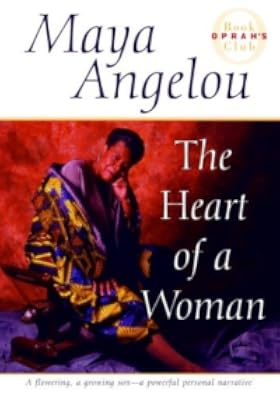
This fourth autobiographical work by Maya Angelou tells of her entry into New York's circle of black artists and writers, her involvement in the civil rights movement, and changes in her personal life.Tags
Recommendations
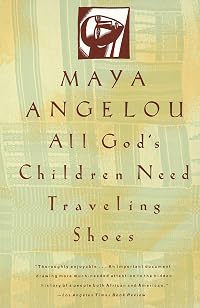
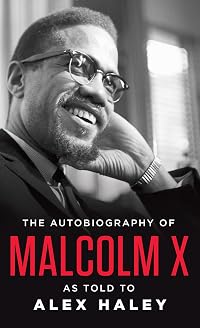
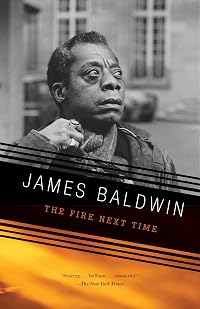
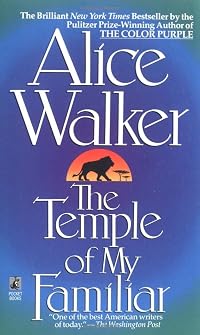




Member Reviews
The fourth volume of Maya Angelou's autobiography covers about a decade, starting from 1957. It was a tumultuous period, for her and for America. She recounts her move to New York and involvement in the civil rights struggle, including working with Martin Luther King Jr. Her account of the struggle against racism in the US is electrifying and moving. The narrative is compelling on both on a personal and a historical level. Angelou has a distinctive and powerful voice in her writing, conveying the emotion and the specifics of events very effectively.
Over the years covered by [b:The Heart of a Woman|5160|The Heart of a Woman|Maya show more Angelou|https://i.gr-assets.com/images/S/compressed.photo.goodreads.com/books/1417404078l/5160._SY75_.jpg|2775653], Angelou's romantic life repeatedly tangled with her political life. She had two serious relationships and in both cases the man would not let her have the level of freedom (to work, in particular) that she wanted. Thus her writing reflects on the intersections of racism and sexism that she experienced. She moved countries several times for the sake of a relationship, living for quite a while in Egypt.
One part that really struck me was her experience in the cast of a Jean Genet play titled 'The Blacks', which bleakly parodied racism. Angelou initially disliked it for its message that if given power over whites, black people would just as cruel as white people have been. She then decided to act in it nonetheless:
She was surprised and puzzled by the positive audience reaction to the play, after expecting that white people would not want to watch it. A month into the play's run, she got an understanding of why they did when a white woman came up to her after the performance crying:
That short incident conveys so much. I continue to be deeply impressed at the quality of Angelou's memory and the vividness of her writing. This is a particularly striking volume of her autobiography, with many memorable sequences and a dramatic ending. show less
Over the years covered by [b:The Heart of a Woman|5160|The Heart of a Woman|Maya show more Angelou|https://i.gr-assets.com/images/S/compressed.photo.goodreads.com/books/1417404078l/5160._SY75_.jpg|2775653], Angelou's romantic life repeatedly tangled with her political life. She had two serious relationships and in both cases the man would not let her have the level of freedom (to work, in particular) that she wanted. Thus her writing reflects on the intersections of racism and sexism that she experienced. She moved countries several times for the sake of a relationship, living for quite a while in Egypt.
One part that really struck me was her experience in the cast of a Jean Genet play titled 'The Blacks', which bleakly parodied racism. Angelou initially disliked it for its message that if given power over whites, black people would just as cruel as white people have been. She then decided to act in it nonetheless:
Genet had been right at least about one thing. Blacks should be used to play whites. For centuries we had probed their faces, the angles of their bodies, the sounds of their voices and even their odours. Often our survival had depended upon an accurate reading of a white man's chuckle or the distainful wave of a white woman's hand. Whites, on the other hand, always knew that no serious penalty threatened them if they misunderstood blacks. Whites were safely isolated from our concerns. When they chose, they could lift the racial curtain which separated us. They could indulge in sexual escapades, increase our families with mulatto bastards, make fortunes out of our music and eunuchs out of our men, then in seconds they could step away, and return unscarred to their pristine security. The cliche of whites being ignorant of blacks was not only true, but understandable. Oh, but we knew them with the intimacy of a surgeon's scalpel.
I dressed myself in the hated gestures and made the White Queen gaze down in loathing at the rotten stinking stupid blacks who, though innocent, like beasts were loathsome nonetheless.
She was surprised and puzzled by the positive audience reaction to the play, after expecting that white people would not want to watch it. A month into the play's run, she got an understanding of why they did when a white woman came up to her after the performance crying:
"I just wanted you to know... I just wanted to say that I've seen the play five times." She waited.
"Five times? We've only been playing four weeks."
"Yes, but a lot of my friends..." - now she was in control of herself again - "a lot of us have seen the play more than once. A woman in my building comes twice a week."
"Why? Why do you come back?"
"Well," - she drew herself up - "well, we support you. I mean, we understand what you are saying."
The blur of noise drifted around us, but we were an isolated inset, a picture of American society. White and black talking at each other.
"How many blacks live in your building?"
"Why, none. But that doesn't mean..."
"How many black friends do you have? I mean, not counting your maid?"
"Oh," she took a couple of steps backward. "You're trying to insult me."
I followed her. "You can accept the insults if I am a character on stage, but not in person, is that it?"
She looked at me with enough hate to shrivel my heart. I put my hand out.
"Don't touch me." Her voice was so sharp it caught the attention of some bystanders. Roscoe appeared abruptly. Still in character, giving a little bow, "Hello, Queen."
The woman turned to leave, but I caught her sleeve. "Would you take me home with you? Would you become my friend?"
She snatched her arm away, and spat out, "You people. You people." And walked away.
Roscoe asked, "And pray, what was that?"
"She's one of our fans. She comes to the theatre and allows us to curse and berate her, and that's her contrbution to our struggle."
Roscoe shook his head slowly. "Oh dear. One of those."
The subject was closed.
That short incident conveys so much. I continue to be deeply impressed at the quality of Angelou's memory and the vividness of her writing. This is a particularly striking volume of her autobiography, with many memorable sequences and a dramatic ending. show less
This book was very engaging. It's an autobiographical account of Maya Angelou's life from late adolescence through her early 30's (the time her son was growing up). She has led a very interesting life and it made for some exciting and gripping reading. Also, because she is a poet she tends to choose her words very carefully and mindfully.
This is the fourth book in Maya Angelou’s autobiographical series and starts with Billie Holliday as a house guest and goes on to describe her involvement in the Civil Rights Movement and meetings with Martin Luther King and Malcolm X. She organised the Cabaret for Freedom in support of Martin Luther Kings Southern Christian Leadership Conference and acted in Jean Genet’s play The Blacks with Abbey Lincoln, Roscoe Lee Brown, James Earl Jones, Louis Gossett, Godfrey Cambridge, and Cicely Tyson. The final part of the book sees her married to South African Freedom Fighter Vusumzi Make and living in Cairo. An eventful period in her life and she certainly adds plenty of drama to her story.
This period sees her looking at the world from show more her position within the Black civil rights movement and it is a hostile vision of the white society that controls America. All white’s are ‘Crackers’ never to be trusted and she willingly goes to Africa to escape from the oppression that is part of a black persons lot in 1960’s America. Maya Angelou captures the feelings of those people involved in the struggle as she catapults around in a sphere of now famous people from the movement. Her writing hasn’t lost its edge in this fourth volume and so another four star read. show less
This period sees her looking at the world from show more her position within the Black civil rights movement and it is a hostile vision of the white society that controls America. All white’s are ‘Crackers’ never to be trusted and she willingly goes to Africa to escape from the oppression that is part of a black persons lot in 1960’s America. Maya Angelou captures the feelings of those people involved in the struggle as she catapults around in a sphere of now famous people from the movement. Her writing hasn’t lost its edge in this fourth volume and so another four star read. show less
A more contained (really, the story of her son's teenage years. World events play a supporting role), less event-filled phase of Dr. Angelou's earlier life. She overreaches a few times and yells rather than speaks the significance of a moment. Largely though, this is a remarkable achievement in how much it takes into its arms so effortlessly. It's great fun to read and feels like the events of almost 70 years ago happened yesterday.
The Heart of a Woman is the fourth in a series of seven autobiographies penned by Maya Angelou. It begins with her decision to move from California to New York City, because she was invited to participate in the Harlem Writers Guild. Finally we see when and where her writing has started to bud. However, the real focus in this installment is Angelou's time as a civil rights activist -- yet another item to add to her very long resume, even though at this time she was still in her early 30s.
Angelou shares with us her involvement in a long-running show "Cabaret for Freedom" that provided funds for SCLC, the organization founded by Martin Luther King, and in which she had heavy involvement. She replaced Bayard Rustin (at Rustin's request) as show more the SCLC's Northern Coordinator.
After some time, she met and married (though in name only, apparently) the African anti-apartheid leader, Vusumzi Make and moved to Africa with him.
All fascinating, but at the same time, I was amazed at how she just continues on moving her son, a teenager during this time, all over the place. They lived in several apartments in New York City and Harlem, for instance.
At the very end of this volume, Angelou becomes separated from Make and her son goes off to college in Ghana. As I understand it, the next autobiography covers her time in Ghana. Should continue to be interesting reading. show less
Angelou shares with us her involvement in a long-running show "Cabaret for Freedom" that provided funds for SCLC, the organization founded by Martin Luther King, and in which she had heavy involvement. She replaced Bayard Rustin (at Rustin's request) as show more the SCLC's Northern Coordinator.
After some time, she met and married (though in name only, apparently) the African anti-apartheid leader, Vusumzi Make and moved to Africa with him.
All fascinating, but at the same time, I was amazed at how she just continues on moving her son, a teenager during this time, all over the place. They lived in several apartments in New York City and Harlem, for instance.
At the very end of this volume, Angelou becomes separated from Make and her son goes off to college in Ghana. As I understand it, the next autobiography covers her time in Ghana. Should continue to be interesting reading. show less
Absolutely loved this book! It was so real, interesting, and down-to-earth, yet scholarly, hilarious, challenging while driving a thrill of inspiration like a locomotive without brakes. This was my first Maya Angelou reading, and I'm already looking into purchasing more of her books. I could not put this book down. I skipped plans and invitations just to be at home drinking every word she wove into these pages.
I've loved Maya Angelous's previous autobiographies. I enjoy her poetry and greatly admire her achievements. This book I did not enjoy as much because I found that one of my heroines has warts...an element of racism that is truly unfortunate, though, perhaps, understandable.
Members
- Recently Added By
Lists

Black Authors
384 works; 28 members

Oprah's Book Club (original and 2.0)
91 works; 21 members

Zora Canon
100 works; 6 members

The Zora Canon
98 works; 4 members
Author Information

129+ Works 40,709 Members
Maya Angelou was born Marguerite Annie Johnson on April 4, 1928 in Saint Louis, Missouri. At the age of 16, she became not only the first black streetcar conductor in San Francisco but the first woman conductor. In the mid-1950s, she toured Europe with a production of the opera Porgy and Bess. In 1957, she recorded her first album, Calypso Lady. show more In 1958, she became a part of the Harlem Writers Guild in New York and played a queen in The Blacks, an off-Broadway production by French dramatist Jean Genet. In 1960, she moved to Cairo, where she edited The Arab Observer, an English-language weekly newspaper. The following year, she went to Ghana where she was features editor of The African Review and taught music and drama at the University of Ghana. In 1964, she moved back to the U.S. to become a civil rights activist by helping Malcolm X build his new coalition, the Organization of African American Unity, and became the northern coordinator of the Southern Christian Leadership Conference. Even though she never went to college, she taught American studies for years at Wake Forest University in Winston-Salem. In 1993, she became only the second poet in United States history to write and recite an original poem at a Presidential Inauguration when she read On the Pulse of Morning at President Bill Clinton's Inauguration Ceremony. She wrote numerous books during her lifetime including: I Know Why the Caged Bird Sings, Just Give Me a Cool Drink of Water 'Fore I Die, All God's Children Need Traveling Shoes, Wouldn't Take Nothing for My Journey Now, and Mom and Me and Mom. In 2011, President Barack Obama gave her the Medal of Freedom, the country's highest civilian honor, for her collected works of poetry, fiction and nonfiction. She appeared in the movie Roots and was nominated for Best Supporting Actress in 1977 for her role in the movie. She also played a part in the movie, How to Make an American Quilt and wrote and produced Afro-Americans in the Arts, a PBS special for which she received a Golden Eagle Award. She was a three-time Grammy winner. She died on May 28, 2014 at the age of 86. (Bowker Author Biography) show less
Some Editions
Awards and Honors
Awards
Distinctions
Series

Belongs to Publisher Series
Geuzenpocket (30)
Virago Modern Classics (733)
Work Relationships
Is contained in
Common Knowledge
- Canonical title
- The Heart of a Woman
- Original title
- The Heart of a Woman
- Original publication date
- 1981
- People/Characters
- Maya Angelou; Billie Holiday; Martin Luther King, Jr.; Sidney Poitier; Guy Angelou
- Important places
- Los Angeles, California, USA; New York, New York, USA
- Dedication
- I dedicate this book to my grandson, Colin Ashanti Murphy-Johnson
- First words
- "The ole ark's a-moverin', a moverin', a-moverin', the ole arke's a-moverin' along"
That ancient spiritual could have been the theme song of the United States in 1957. - Last words
- (Click to show. Warning: May contain spoilers.)The first thought that came to me, perfectly formed and promising, was "At last, I'll be able to eat the whole breast of a roast chicken by myself."
Classifications
Statistics
- Members
- 2,847
- Popularity
- 6,357
- Reviews
- 17
- Rating
- (3.86)
- Languages
- Dutch, English, French, Swedish
- Media
- Paper, Audiobook, Ebook
- ISBNs
- 31
- UPCs
- 1
- ASINs
- 20