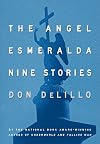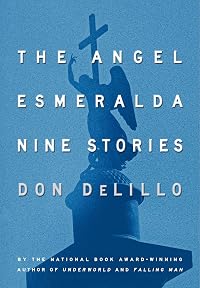
The Angel Esmeralda
by Don DeLillo
On This Page
Description
Collects nine stories written between 1979 and 2011 that chronicle three decades of American life from the perspective of a range of characters, including a pair of nuns in the South Bronx and two astronauts orbiting the Earth.Tags
Recommendations








Member Reviews
Each story in this collection justifies the purchase of the whole. Yes, they’re that good. Each is quintessentially DeLillo — his distracted, sometimes muffled, realism creating an almost deadpan delivery. Yet the range is astonishing. Perhaps not, given that these stories where originally published over the course of more than thirty years. But compare the Hemingwayesque style of an early work like “Creation” (1979) with the almost absurdist technique of “Hammer and Sickle” (2010). DeLillo never surrenders to his own competence. He always challenges himself.
It would not be playing favourites to find “The Angel Esmeralda” to be the best of the bunch. Presumably DeLillo thought so too, choosing it as the title for the show more collection. It presents a harsh cityscape in which the nuns, the elderly Sister Edgar and the younger Grace, perform their acts of charity. Sister Edgar is old school, grammatical in her adherence to the metaphysics of indulgence. Grace is more demanding that what she sees in front of her is real. The tension between them is visceral but it is Edgar who succumbs to the very possibility of angelic visitation, convinced that the image appearing sporadically on an advertisement hoarding is none other than the little girl, Esmeralda, so recently murdered in the Bird (a desolate no man’s land of building ruins and despoiled autos).
I also especially enjoyed “Midnight in Dostoevsky” in which two undergraduates at a liberal arts college embellish their drab days with a kind of competitive fictionalization. And the conflict, when it comes, turns inevitably on whether the world is all that is the case. Brilliant!
Highly recommended. show less
It would not be playing favourites to find “The Angel Esmeralda” to be the best of the bunch. Presumably DeLillo thought so too, choosing it as the title for the show more collection. It presents a harsh cityscape in which the nuns, the elderly Sister Edgar and the younger Grace, perform their acts of charity. Sister Edgar is old school, grammatical in her adherence to the metaphysics of indulgence. Grace is more demanding that what she sees in front of her is real. The tension between them is visceral but it is Edgar who succumbs to the very possibility of angelic visitation, convinced that the image appearing sporadically on an advertisement hoarding is none other than the little girl, Esmeralda, so recently murdered in the Bird (a desolate no man’s land of building ruins and despoiled autos).
I also especially enjoyed “Midnight in Dostoevsky” in which two undergraduates at a liberal arts college embellish their drab days with a kind of competitive fictionalization. And the conflict, when it comes, turns inevitably on whether the world is all that is the case. Brilliant!
Highly recommended. show less
This is Delillo's first collection of short stories. Underworld was a great book, a big book with big themes and long storylines. This brings him back to scale -- stories that allow him to focus on small, well-contained themes that you can take in and toss around in your mind without a lot of strain.
There are numerous themes in these stories, but the one that grabbed me most was a recurring one-sided way in which characters in the stories bridge the gulf between their own inner lives and those of other people, where they have only the external marks as evidence -- the way they walk, the expressions on their faces, the clothes they wear.
Delillo's characters often encounter each other through this kind of opaque externality, never show more directly interacting in conversation but constructing whole narratives of familiarity from the barest hints and great leaps of surmise. Leo Zhelezniak in The Starveling, follows, even stalks, a woman who seems to share his own alienated lifestyle, spending their days going from theatre to theatre in New York, watching movies in sequences coordinated with travel times and subway routes. He comes to "know" so much about her without ever talking to her, that he can cross the gulf between them on this bridge he's built entirely on his own, as if the familiarity and shared experience of life he has constructed is really there.
It's something we all do, just not so starkly as Zhelezniak, or the characters in Midnight in Dostoevsky who construct the life of "the man in the hooded coat". We have our daily encounters with one another, and we build our understandings of each other on what, in the full scope of our lives, are really only glimpses. But it is how we understand each other.
It's all a fragility that miraculously holds together, like the highway traffic Jerold Bradway watches in Hammer and Sickle. "Why don't they crash all the time?" he asks, watching cars speeding by under the separate control of distracted drivers, with little actual communication or coordination between them. Like Zhelezniak and other characters in these stories, Bradway looks at the drivers, wondering who they are and where they are going. And at the same time he thinks at least some of them are looking at him, wondering the same things.
When I read White Noise a long time ago, I thought it was one of the best novels I'd ever read. Since then I've made a point of reading everything I could get my hands on by Don Delillo. This is very different, but one of his best, I think. show less
There are numerous themes in these stories, but the one that grabbed me most was a recurring one-sided way in which characters in the stories bridge the gulf between their own inner lives and those of other people, where they have only the external marks as evidence -- the way they walk, the expressions on their faces, the clothes they wear.
Delillo's characters often encounter each other through this kind of opaque externality, never show more directly interacting in conversation but constructing whole narratives of familiarity from the barest hints and great leaps of surmise. Leo Zhelezniak in The Starveling, follows, even stalks, a woman who seems to share his own alienated lifestyle, spending their days going from theatre to theatre in New York, watching movies in sequences coordinated with travel times and subway routes. He comes to "know" so much about her without ever talking to her, that he can cross the gulf between them on this bridge he's built entirely on his own, as if the familiarity and shared experience of life he has constructed is really there.
It's something we all do, just not so starkly as Zhelezniak, or the characters in Midnight in Dostoevsky who construct the life of "the man in the hooded coat". We have our daily encounters with one another, and we build our understandings of each other on what, in the full scope of our lives, are really only glimpses. But it is how we understand each other.
It's all a fragility that miraculously holds together, like the highway traffic Jerold Bradway watches in Hammer and Sickle. "Why don't they crash all the time?" he asks, watching cars speeding by under the separate control of distracted drivers, with little actual communication or coordination between them. Like Zhelezniak and other characters in these stories, Bradway looks at the drivers, wondering who they are and where they are going. And at the same time he thinks at least some of them are looking at him, wondering the same things.
When I read White Noise a long time ago, I thought it was one of the best novels I'd ever read. Since then I've made a point of reading everything I could get my hands on by Don Delillo. This is very different, but one of his best, I think. show less
The Angel Esmerelda
By the time I was nearly finished reading The Starveling, the last piece in Don DeLillo’s first collection of short stories I had come to two conclusions:
1. For a book of stories that prominently feature NYC as its backdrop there’s not a hint, nay, a sliver of pop culture.
2. His stories tend to feature characters who are perpetually guessing at the lives of others, yet not so great with figuring out themselves (pieces like Baader-Meinof, Midnight in Dostoyevsky, and The Starveling).
If you’ve ever read a DeLillo book then you already know what to expect. Long passages full of prose that can frustrate as much as tantalize. Sometimes the reader is yielded to an almost exalted kind of literary enjoyment, as if show more DeLillo’s pulling the sentences straight from your brain. Other times can be maddening, like when you’re pages deep in the same paragraph trying to decipher a cohesive meaning.
The nine pieces that make up this collection aren’t as maddening as say Underworld or most of Mao II or The Names. Language is still a prominent feature is DeLillo’s writing, characters trying to figure out what it means in their own context and how they relate to others. That’s because DeLillo tends to write in brush strokes. He’s good at using his talents to create and evoke an image in the mind. Like the images that partition the three groupings of stories he’s good at creating a situation and letting the characters think their way out of them.
The opening story, Creation, centers on a couple desperately trying to get out of a tropical paradise near the West Indies, yet perpetually run into roadblocks by a poorly managed airport, leading to separation and infidelity. The Angel Esmeralda, meanwhile, focuses on a group of nuns that take regular trips to the South Bronx to help disadvantaged youths, coming into contact with a small girl who may or may not have Jesus like apparitions over an orange juice ad.
When compared to an NYC author like Arthur Nersesian what’s the fundamental difference between him and DeLillo? Both write extensively about New York life (with DeLillo taking time to hop islands and locals). Yet, where Nersesian infuses his prose with pop culture like signposts for the reader to hang their familiarity on, DeLillo works his way into a situation without letting hype catch him. In The Starveling a man named Leo Z. spends nearly every waking hour going to various cinemas in Manhattan. Yet, despite getting into how Leo catalogs directors, running times, productions companies, etc. we never come to know what Leo sees (in fact, there’s only a scant reference to what theaters he’s come across).
Still, I think DeLillo is at top form when he veers toward the maniacal, like the appropriately titled Hammer & Sickle. In a minimum correctional facility for financial misfits, Jerrod Bradway is currently doing six years for crimes related to his father’s company where we worked. Separated from his family he winds up becoming the prime audience for a financial news show narrated by his two pre-teen daughters as it’s shown in the prison facility for entertainment. What once seemed like a passing ideal within a family seems to take on another meaning of revenge as each telecast becomes more erratic.
One of these days DeLillo should publish a complete book of his short stories. Surprisingly missing from this collection is Take the ‘A’ Train, one of his first shorts, about a man down on his luck, escaping his debtors in the NYC subway system. I’d also appreciate some context surrounding these smaller works. What sort of frame of mind was he in when crafting Human Moments in World War III or Baader-Meinof. It’s clear that terror as a theme has been on his mind from the beginning. But what terrorizes DeLillo? show less
By the time I was nearly finished reading The Starveling, the last piece in Don DeLillo’s first collection of short stories I had come to two conclusions:
1. For a book of stories that prominently feature NYC as its backdrop there’s not a hint, nay, a sliver of pop culture.
2. His stories tend to feature characters who are perpetually guessing at the lives of others, yet not so great with figuring out themselves (pieces like Baader-Meinof, Midnight in Dostoyevsky, and The Starveling).
If you’ve ever read a DeLillo book then you already know what to expect. Long passages full of prose that can frustrate as much as tantalize. Sometimes the reader is yielded to an almost exalted kind of literary enjoyment, as if show more DeLillo’s pulling the sentences straight from your brain. Other times can be maddening, like when you’re pages deep in the same paragraph trying to decipher a cohesive meaning.
The nine pieces that make up this collection aren’t as maddening as say Underworld or most of Mao II or The Names. Language is still a prominent feature is DeLillo’s writing, characters trying to figure out what it means in their own context and how they relate to others. That’s because DeLillo tends to write in brush strokes. He’s good at using his talents to create and evoke an image in the mind. Like the images that partition the three groupings of stories he’s good at creating a situation and letting the characters think their way out of them.
The opening story, Creation, centers on a couple desperately trying to get out of a tropical paradise near the West Indies, yet perpetually run into roadblocks by a poorly managed airport, leading to separation and infidelity. The Angel Esmeralda, meanwhile, focuses on a group of nuns that take regular trips to the South Bronx to help disadvantaged youths, coming into contact with a small girl who may or may not have Jesus like apparitions over an orange juice ad.
When compared to an NYC author like Arthur Nersesian what’s the fundamental difference between him and DeLillo? Both write extensively about New York life (with DeLillo taking time to hop islands and locals). Yet, where Nersesian infuses his prose with pop culture like signposts for the reader to hang their familiarity on, DeLillo works his way into a situation without letting hype catch him. In The Starveling a man named Leo Z. spends nearly every waking hour going to various cinemas in Manhattan. Yet, despite getting into how Leo catalogs directors, running times, productions companies, etc. we never come to know what Leo sees (in fact, there’s only a scant reference to what theaters he’s come across).
Still, I think DeLillo is at top form when he veers toward the maniacal, like the appropriately titled Hammer & Sickle. In a minimum correctional facility for financial misfits, Jerrod Bradway is currently doing six years for crimes related to his father’s company where we worked. Separated from his family he winds up becoming the prime audience for a financial news show narrated by his two pre-teen daughters as it’s shown in the prison facility for entertainment. What once seemed like a passing ideal within a family seems to take on another meaning of revenge as each telecast becomes more erratic.
One of these days DeLillo should publish a complete book of his short stories. Surprisingly missing from this collection is Take the ‘A’ Train, one of his first shorts, about a man down on his luck, escaping his debtors in the NYC subway system. I’d also appreciate some context surrounding these smaller works. What sort of frame of mind was he in when crafting Human Moments in World War III or Baader-Meinof. It’s clear that terror as a theme has been on his mind from the beginning. But what terrorizes DeLillo? show less
I think this is terrific. I have long read DeLillo, and admired his talent, but some of his long, long fictions have frustrated me as they wander off. But his attraction to conspiracies, repetition and obsessions, not to mention his unique storytelling voice, actually adapt nicely to a shorter form. Indeed for me the constrictions of the short story give the work a great concision and focus. Plus, there are just some amazing stories in here. It's well-told and imaginative work, and I couldn't wait to read each story.
You know how in high school or college English classes, you unpack every single line of whatever text you're studying at the time. The class looks deeply into the work for symbolism, metaphor, syntax, diction, and deeper meaning. To be honest, much as I can enjoy doing it, I think a lot of that's bullshit. Sometimes a spade is just a spade, you know. Sometimes, the color of the wallpaper in the room wasn't the author subtly trying to send the reader a message about the hero's emotional state.
Why am I going into all of this? Well, DeLillo's stories feel like he wrote them with these sorts of classes in mind. They're full of symbolism and deeper meanings, all intended to show how clever he is. Were I reading these with a class and taking show more the time to analyze them word by word, I might be impressed. However, as pleasure reading, they kind of sucked.
Here's the thing: these stories were just so boring. I wanted to like DeLillo; actually, I still do, since I own two of his novels. They were mostly the sort of thing where nothing really happens and what does happen doesn't make sense, but probably because they were about something else altogether. A couple of them had awesome premises, but failed to focus on the cool parts. For example, one was set in Athens, Ohio, which was being beset by an endless stream of earthquakes. It focused not on that, but on a broken statue, obviously a metaphor, but for what I just don't care. Yes, I know much of this is my laziness, but I have a day job, y'all, and I don't want to do too much heavy lifting when I get home.
The characters lacked development, I felt. Again, this just seemed to be much more about his ideas and getting his literariness across. Also, they were repetitive. In most of the stories, there was a refrain that would repeat several times, which is generally not my favorite literary technique, and didn't work for me here.
I fully acknowledge that I didn't read these the way I think DeLillo intended them to be read, but, dammit, I'll read however I want to. Anyway, for the scholarly types that want to study sentences in detail, go right ahead; this is for you. I'm sure these are marvelous and critically praised and whatever, but I guess I'm not smart enough to appreciate them. Fine by me.
Narration:
The narrators match their style to the stories pretty perfectly. Of course, I didn't like the stories, so I didn't care for most of the narration either. For the most part, they affect (or always read with) a monotonous tone. These people don't give a fuck and they want the world to know it. This plays perfectly into the scholarly "too good for an interesting story line" business. It does not, however, make paying attention to the audiobook an easy task. If you like this style, then go for it, but it's not for me. show less
Why am I going into all of this? Well, DeLillo's stories feel like he wrote them with these sorts of classes in mind. They're full of symbolism and deeper meanings, all intended to show how clever he is. Were I reading these with a class and taking show more the time to analyze them word by word, I might be impressed. However, as pleasure reading, they kind of sucked.
Here's the thing: these stories were just so boring. I wanted to like DeLillo; actually, I still do, since I own two of his novels. They were mostly the sort of thing where nothing really happens and what does happen doesn't make sense, but probably because they were about something else altogether. A couple of them had awesome premises, but failed to focus on the cool parts. For example, one was set in Athens, Ohio, which was being beset by an endless stream of earthquakes. It focused not on that, but on a broken statue, obviously a metaphor, but for what I just don't care. Yes, I know much of this is my laziness, but I have a day job, y'all, and I don't want to do too much heavy lifting when I get home.
The characters lacked development, I felt. Again, this just seemed to be much more about his ideas and getting his literariness across. Also, they were repetitive. In most of the stories, there was a refrain that would repeat several times, which is generally not my favorite literary technique, and didn't work for me here.
I fully acknowledge that I didn't read these the way I think DeLillo intended them to be read, but, dammit, I'll read however I want to. Anyway, for the scholarly types that want to study sentences in detail, go right ahead; this is for you. I'm sure these are marvelous and critically praised and whatever, but I guess I'm not smart enough to appreciate them. Fine by me.
Narration:
The narrators match their style to the stories pretty perfectly. Of course, I didn't like the stories, so I didn't care for most of the narration either. For the most part, they affect (or always read with) a monotonous tone. These people don't give a fuck and they want the world to know it. This plays perfectly into the scholarly "too good for an interesting story line" business. It does not, however, make paying attention to the audiobook an easy task. If you like this style, then go for it, but it's not for me. show less
A series of short stories connected slightly thematically, well written and thought provoking.
DeLillo has become almost a literary icon. His remarks on the realness and unreality of modern life are distinctive and legendary, and this selection of stories spanning almost the entire length of his career are works to behold.
Ordinary, grimy, ephemeral things take on new meanings and become transcendent parables on the depths of souls and living.
My favorites are the title story, and "Human Moments in World War 3".
Ordinary, grimy, ephemeral things take on new meanings and become transcendent parables on the depths of souls and living.
My favorites are the title story, and "Human Moments in World War 3".
Members
- Recently Added By
Lists

Pen/Faulkner Winners and Finalists
178 works; 9 members

Indie Next Picks
196 works; 4 members

living room bookshelf
150 works; 1 member

Don DeLillo books
19 works; 1 member
Author Information

53+ Works 48,948 Members
Don DeLillo was born in the Bronx, New York on November 20, 1936. He received a bachelor's degree in communication arts from Fordham University in 1958. After graduation, he was a copywriter for an advertising company and wrote short stories on the side. His first story, The River Jordan, was published two years later in Epoch, the literary show more magazine of Cornell University. His first novel, Americana, was published in 1971. His other works include Ratner's Star, The Names, Libra, Underworld, The Body Artist, Cosmopolis, Falling Man, Point Omega, and The Angel Esmeralda, a collection of short stories. He won several awards including the National Book Award for fiction in 1985 for White Noise, the PEN/Faulkner Award in 1992 for Mao II, the PEN/Saul Bellow Award for Achievement in American Fiction in 2010, and the inaugural Library of Congress Prize for American Fiction in 2013. (Bowker Author Biography) show less
Awards and Honors
Series
Belongs to Publisher Series
Common Knowledge
- Canonical title
- The Angel Esmeralda
- Original publication date
- 2011
- Blurbers
- Franzen, Jonathan; Malcolm Jones; Michiko Kakutani; Vince Passaro
Classifications
Statistics
- Members
- 685
- Popularity
- 41,796
- Reviews
- 26
- Rating
- (3.68)
- Languages
- 11 — Danish, Dutch, English, French, German, Italian, Norwegian (Bokmål), Polish, Portuguese, Spanish, Swedish
- Media
- Paper, Audiobook, Ebook
- ISBNs
- 30
- ASINs
- 8