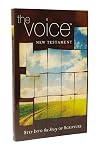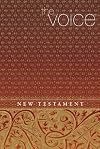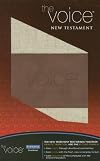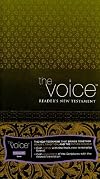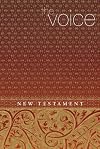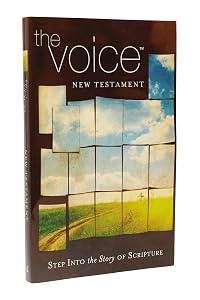
The Voice New Testament
by Ecclesia Bible Society
On This Page
Description
The Voice(tm) Bible translation is a faithful dynamic translation of the Scriptures done as a collage of compelling narratives, poetry, song, truth, and wisdom. The Voice calls the reader to step into the whole story of Scripture and experience the joy and wonder of God's revelation. Created for and by a church in great transition, The Voice uniquely represents collaboration among scholars, pastors, writers, musicians, poets, and other artists, giving great attention to the beauty of the show more narrative. The heart of The Voice is retelling the story of the Bible in a form as fluid as modern literary works yet remaining painstakingly true to the original manuscripts. This translation promotes the public reading of longer sections of Scripture--followed by thoughtful engagement with the biblical narrative in its richness and fullness and dramatic flow. This is an updated and revised version of the New Testament edition, now at an even more affordable price. Features include: Italicized information added to help contemporary readers understand what the original readers would have known intuitively In-text commentary notes include cultural, historical, theological, or devotional thoughts Screenplay format, ideal for public readings and group studies Book introductions 8.5-point type size show lessTags
Recommendations









Member Reviews
First I want to thank Thomas Nelson Publishing for sending me a copy of this work to review. I already had bought a copy from the band of the brother of the guy who started this project endeavor.
I am going to give this Bible paraphrase a rating of a solid two stars. I can't rate it as a solid four or five but let me be clear I would have loved to have done so if only it had not made one major error in its translation and interpretation philosophy. The issue I have with this work is not a translation issue per se but the underlying interpretation issue on how Jesus is viewed within the text. Before we get to the cons let us tackle the pros.Let's cover some basics first. I see this as a cross between a paraphrase and a show more translation/interpretation of the ancient manuscripts.
Pros: This interpretation/translation according to the VOICE website and preface attempts to create a translation that is holistic, beautiful, sensitive, and balanced. On these four goals I will judge this work.
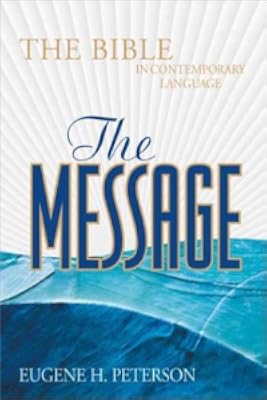
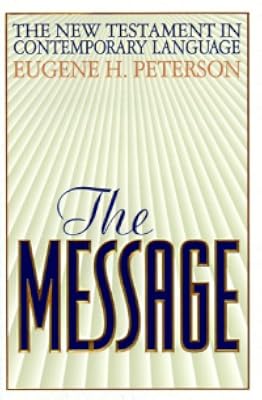
Think of the VOICE as a multi-contributor version of Eugene Peterson's the MESSAGE. It is elegant in that it reads like a personal letter in most of the books of the NT. It embraces the literary aspect of the NT and attempts to present the ancient scripture in a fresh way for contemporary audiences. It does not say so in either the preface or website much info about the translation/interpretation team assembled for this project. It does seem as if they where trying to communicate to a post modern audience. Very similar to the vein of Eugene Peterson's The MESSAGE (which I will review at another time), the VOICE offers those who have never read the Bible or have in the past had trouble reading the Bible a new way to read the Bible in a less than formal translation method. This is not an attempt to be a literal or essentially literal translation such as the KJV, NASB, NIV, or the ESV. It's goal is to present the text in a beautiful way.
Literally it accomplishes the goal of beauty. It really is pleasurable to read. I read through the book of Hebrews and was pleasantly surprised how well the book flows for both private and public reading. Hebrews use of OT themes and theological motifs were briefly explained in the VOICE with its "mini-commentary" which is boxed and flows with the text. The mini commentary explains a very brief background of cultural settings, a theological point, or something specific about the letter in a brief paragraph written in a way in which it could be read with the text to help the reader grasp something they may not have been able to understand without it.
The Cons: As I said earlier as much as I wish I could love this translation when I got to the gospels I really got depressed with how they treated the term Christ. This book was ranking up to a 4.5 or 5 until I realized that they translated (and I use that term in its loosest sense) the title Christ as Liberating King throughout the Gospels and New Testament. In my opinion they chose this term as a interpretative view of who Jesus is not what the Scripture proclaims about him. Nowhere in the footnotes, mini-commentary, or preface does it explain how they came up with using the phrase Liberating King over the term Christ.
Some may not see why this would be such a pivotal issue. The problem is objectively Christ does not mean Liberating King. This is not a simple semantics issue. This is a deep theological issue. It never has and it never will mean Liberating King. Christ is the English version of the Greek word for Messiah (the Jewish term for Jesus). Messiah does not objectively mean Liberating King. It means "the Anointed". It is a reference to Jesus as the Anointed One of God. Jesus is God's Anointed One who does several things for his people in that role. Primarily, He is the anointed Lamb of God that was sacrificed for his people. This is why the title Christ explains who Jesus is. The name Jesus explains that he is our King who saves. Yes, he is the liberator of his people but to reduce his title to simply to the liberating King can easily lead to theological misinterpretation of who Jesus is primarily meant to be understood as. He is the sacrificial Son that was foreshadowed to Abraham in the near sacrifice of Isaac. He is the final sacrificial lamb given by God for the sins of Israel as foreshadowed in the Law given to Moses. He is the long awaited great King of his people from the tribe of David. This is the fuller concept of Messiah. The mistranslating of Christ simply to the Liberating King misses the fullness of what the NT authors and I believe the Holy Spirit who inspired them in both the Old and New Testament to call him the Christ. The original audiences would have searched out what Christ meant to the Jews but even the Roman world have known that the term Christ used meant that which "is covered in oil." To interpret Christ as the Liberating King at best misses the richness of what was originally meant by God.
At worst it opens the door for liberation theology recasting Jesus primarily as the liberator of the oppressed peoples of the Earth. So in this regard the VOICE fails in its attempt to be holistic to the author's original intent. It is not sensitive to the author's world view. It fails also to be balanced to the theology presented in the original manuscripts in its re-interpretation of what it means for Jesus to be the Christ.
Summary: As literature it is a excellent read. As it fails on three out of four of its own goals I have to give it only a two. A person can read through this translation and the Spirit of God can speak to them. Yet I believe because it so misses the mark on who Jesus is meant to be understood through the biblical concept of Christ that this translation/interpretation of scripture fails. I suggest using the ESV, NKJV, or NASB as a NT Bible translation. In those translations of the Bible you will get a better view of Jesus as the Christ. If in a future revision they translate Christ as the Anointed One I think they will have made a wonderful new addition to the world of biblical literature. Until this issue of the Liberating King is addressed though I would steer towards another translation. show less
I am going to give this Bible paraphrase a rating of a solid two stars. I can't rate it as a solid four or five but let me be clear I would have loved to have done so if only it had not made one major error in its translation and interpretation philosophy. The issue I have with this work is not a translation issue per se but the underlying interpretation issue on how Jesus is viewed within the text. Before we get to the cons let us tackle the pros.Let's cover some basics first. I see this as a cross between a paraphrase and a show more translation/interpretation of the ancient manuscripts.
Pros: This interpretation/translation according to the VOICE website and preface attempts to create a translation that is holistic, beautiful, sensitive, and balanced. On these four goals I will judge this work.
Think of the VOICE as a multi-contributor version of Eugene Peterson's the MESSAGE. It is elegant in that it reads like a personal letter in most of the books of the NT. It embraces the literary aspect of the NT and attempts to present the ancient scripture in a fresh way for contemporary audiences. It does not say so in either the preface or website much info about the translation/interpretation team assembled for this project. It does seem as if they where trying to communicate to a post modern audience. Very similar to the vein of Eugene Peterson's The MESSAGE (which I will review at another time), the VOICE offers those who have never read the Bible or have in the past had trouble reading the Bible a new way to read the Bible in a less than formal translation method. This is not an attempt to be a literal or essentially literal translation such as the KJV, NASB, NIV, or the ESV. It's goal is to present the text in a beautiful way.
Literally it accomplishes the goal of beauty. It really is pleasurable to read. I read through the book of Hebrews and was pleasantly surprised how well the book flows for both private and public reading. Hebrews use of OT themes and theological motifs were briefly explained in the VOICE with its "mini-commentary" which is boxed and flows with the text. The mini commentary explains a very brief background of cultural settings, a theological point, or something specific about the letter in a brief paragraph written in a way in which it could be read with the text to help the reader grasp something they may not have been able to understand without it.
The Cons: As I said earlier as much as I wish I could love this translation when I got to the gospels I really got depressed with how they treated the term Christ. This book was ranking up to a 4.5 or 5 until I realized that they translated (and I use that term in its loosest sense) the title Christ as Liberating King throughout the Gospels and New Testament. In my opinion they chose this term as a interpretative view of who Jesus is not what the Scripture proclaims about him. Nowhere in the footnotes, mini-commentary, or preface does it explain how they came up with using the phrase Liberating King over the term Christ.
Some may not see why this would be such a pivotal issue. The problem is objectively Christ does not mean Liberating King. This is not a simple semantics issue. This is a deep theological issue. It never has and it never will mean Liberating King. Christ is the English version of the Greek word for Messiah (the Jewish term for Jesus). Messiah does not objectively mean Liberating King. It means "the Anointed". It is a reference to Jesus as the Anointed One of God. Jesus is God's Anointed One who does several things for his people in that role. Primarily, He is the anointed Lamb of God that was sacrificed for his people. This is why the title Christ explains who Jesus is. The name Jesus explains that he is our King who saves. Yes, he is the liberator of his people but to reduce his title to simply to the liberating King can easily lead to theological misinterpretation of who Jesus is primarily meant to be understood as. He is the sacrificial Son that was foreshadowed to Abraham in the near sacrifice of Isaac. He is the final sacrificial lamb given by God for the sins of Israel as foreshadowed in the Law given to Moses. He is the long awaited great King of his people from the tribe of David. This is the fuller concept of Messiah. The mistranslating of Christ simply to the Liberating King misses the fullness of what the NT authors and I believe the Holy Spirit who inspired them in both the Old and New Testament to call him the Christ. The original audiences would have searched out what Christ meant to the Jews but even the Roman world have known that the term Christ used meant that which "is covered in oil." To interpret Christ as the Liberating King at best misses the richness of what was originally meant by God.
At worst it opens the door for liberation theology recasting Jesus primarily as the liberator of the oppressed peoples of the Earth. So in this regard the VOICE fails in its attempt to be holistic to the author's original intent. It is not sensitive to the author's world view. It fails also to be balanced to the theology presented in the original manuscripts in its re-interpretation of what it means for Jesus to be the Christ.
Summary: As literature it is a excellent read. As it fails on three out of four of its own goals I have to give it only a two. A person can read through this translation and the Spirit of God can speak to them. Yet I believe because it so misses the mark on who Jesus is meant to be understood through the biblical concept of Christ that this translation/interpretation of scripture fails. I suggest using the ESV, NKJV, or NASB as a NT Bible translation. In those translations of the Bible you will get a better view of Jesus as the Christ. If in a future revision they translate Christ as the Anointed One I think they will have made a wonderful new addition to the world of biblical literature. Until this issue of the Liberating King is addressed though I would steer towards another translation. show less
Thank you to Thomas Nelson for my copy of this new version of the New Testament. I was interested in seeing how it would compare to the many already on the market. I must report that I like the way this is handled. The language is easy to understand and furthermore, there are little boxes of additional informational material inserted throughout the text that amplify. Background material on the writer and times that enable the reader to easily relate to the topic at hand. Dialog is perhaps the easiest to understand as it's laid out in script-type format, which makes it quite clear as to who is speaking.
However, the additional little boxes of informational material are what would make me hesitate to recommend this version to a new show more student of the Bible. He or she might become confused and think that what is not scripture is part of God's Word. Although, I think that most people would have no difficulty discerning the difference, I would hate to be a participant in muddying up God's Word. Therefore, I will give it a thumbs up to Bible scholars, but thumbs down as a "first" Bible for anyone else. show less
However, the additional little boxes of informational material are what would make me hesitate to recommend this version to a new show more student of the Bible. He or she might become confused and think that what is not scripture is part of God's Word. Although, I think that most people would have no difficulty discerning the difference, I would hate to be a participant in muddying up God's Word. Therefore, I will give it a thumbs up to Bible scholars, but thumbs down as a "first" Bible for anyone else. show less
Want a totally new experience with the bible??? Well here it is. This would be excellent for use in the Sunday School classroom or home school room, especially when teaching the parables. Students of the Word are invited to step into the bible story and act it out. This is a unique approach to presenting the Word in that it is set up almost like a play with a narrator and actors.
I would recommend this highly for a change in pace and to make the scriptures interactive for students.
Thanks to Thomas Nelson for this review copy.
I would recommend this highly for a change in pace and to make the scriptures interactive for students.
Thanks to Thomas Nelson for this review copy.
Starting from the beginning of this book, I am viewing the pdf file and would like to see links to each book of the New Testament that would jump to that page.
The list of contributors to this book is very impressive. I really like the Preface that describes why this book was written and uniqueness of this version, especially how different type sets mean different things. We then go into a list of reading for Christmas and another list for Lent and Easter. Want to read the New Testament in 24 weeks? There is a great list of what to read each day taking you right through the whole book. Why not include this inside the pages of the book so we don't have to flip back and forth to see what needs to be read during the 24 weeks?
I like how the show more book is arranged and the Book of the Bible is listed in large type on the top of every page so you know where you are at and can find passages easily. Page numbers are also listed in the top, center, easy to find. Chapter numbers are also nice and large. I also like that this book tells us who is talking with sub titles such as Jesus: when he is speaking and People: when it is the peoples thoughts.
I like the introductions to each Book of the Bible telling how this book was written and by whom.
I think this is very easy to read and I am going to make a huge effort to read this in the 24 weeks as outlined.
This book does give a different wordage to the familiar and would be appropriate for use as a supplemental reading. It would be a great version to use in Bible study for young people or people who are not familiar with NKJV or Bible language. It is similar to the Message.
I received this book free from the publisher for this review. I was not required to write a positive review. These opinions about this book are my own.
I am waiting for my print copy to be received in the mail. show less
The list of contributors to this book is very impressive. I really like the Preface that describes why this book was written and uniqueness of this version, especially how different type sets mean different things. We then go into a list of reading for Christmas and another list for Lent and Easter. Want to read the New Testament in 24 weeks? There is a great list of what to read each day taking you right through the whole book. Why not include this inside the pages of the book so we don't have to flip back and forth to see what needs to be read during the 24 weeks?
I like how the show more book is arranged and the Book of the Bible is listed in large type on the top of every page so you know where you are at and can find passages easily. Page numbers are also listed in the top, center, easy to find. Chapter numbers are also nice and large. I also like that this book tells us who is talking with sub titles such as Jesus: when he is speaking and People: when it is the peoples thoughts.
I like the introductions to each Book of the Bible telling how this book was written and by whom.
I think this is very easy to read and I am going to make a huge effort to read this in the 24 weeks as outlined.
This book does give a different wordage to the familiar and would be appropriate for use as a supplemental reading. It would be a great version to use in Bible study for young people or people who are not familiar with NKJV or Bible language. It is similar to the Message.
I received this book free from the publisher for this review. I was not required to write a positive review. These opinions about this book are my own.
I am waiting for my print copy to be received in the mail. show less
The Voice Bible translation is a fresh, so-called dynamic translation of the Scriptures. Ecclesia Bible Society and Thomas Nelson Publishers brought together a team of scholars, pastors, writers, musicians, poets and other artists to revive the language of the Bible to modern day standards. Second important goal was to respect the different styles in the books: poetry, laws, genealogy, parables, history, speeches, sermons and proverbs, to name a few.
Rather than a word-for-word translation or a pure thought-for-thought paraphrase (like The Book / Living Bible) the story of the Bible is retold in a form as fluid as modern literary works, yet remaining painstakingly true to the original Greek, Aramaic and Hebrew texts. To help the reader show more understand how the new rendering of a passage compares to the original texts, several indicators are embedded within the text. The text also has:
Italicized information added to help contemporary readers understand what the original readers would have known intuitively
In-text commentary notes include cultural, historical, theological, or devotional thoughts
Screenplay format, ideal for public readings and group studies
Book introductions
No attempt was made to make The Voice gender neutral or gender inclusive. The sense of the text is followed and translation is done with context in mind. So, adelphoi becomes “brothers and sisters” in 1 Corinthians 15:1-8, but the warnings against loose women in Proverbs 5-7 are clearly aimed at young men.
Another important choice was made in translating Christos, transliterating as Christ, but rendered as “God’s Anointed”, “The Anointed” or ‘The Anointed One”.
Four different reading plans are offered to step into the whole story of God: readings to celebrate Advent, readings for Lent and Easter, read the New Testament in 24 weeks and 40 days with God (daily reading for personal growth).
To give some impressions, I start with the last verses of Matthew 28: “Jesus: I am here speaking with all the authority of God, who has commanded Me to give you this commission: 19Go out and make disciples in all the nations. Ceremonially wash them through baptism in the name of the triune God: Father, Son, and Holy Spirit. 20Then disciple them. Form them in the practices and postures that I have taught you, and show them how to follow the commands I have laid down for you. And I will be with you, day after day, to the end of the age.”
Next, a part of the Christmas story in Luke 2: “8Nearby, in the fields outside of Bethlehem, a group of shepherds were guarding their flocks from predators in the darkness of night. 9Suddenly a messenger of the Lord stood in front of them, and the darkness was replaced by a glorious light—the shining light of God’s glory. They were terrified! Messenger: 10Don’t be afraid! Listen! I bring good news, news of great joy, news that will affect all people everywhere. 11Today, in the city of David, a Liberator has been born for you! He is the promised Anointed One, the Supreme Authority! 12You will know you have found Him when you see a baby, wrapped in a blanket, lying in a feeding trough. 13At that moment, the first heavenly messenger was joined by thousands of other messengers—a vast heavenly choir. They praised God.”
Lots more on the translation process can be found at hearthevoice.com. You can compare The Voice’s translation to other English translations as well online. To conclude: easy to read, screenplay format really helps and the in-text commentary makes Bible study even easier. show less
Rather than a word-for-word translation or a pure thought-for-thought paraphrase (like The Book / Living Bible) the story of the Bible is retold in a form as fluid as modern literary works, yet remaining painstakingly true to the original Greek, Aramaic and Hebrew texts. To help the reader show more understand how the new rendering of a passage compares to the original texts, several indicators are embedded within the text. The text also has:
Italicized information added to help contemporary readers understand what the original readers would have known intuitively
In-text commentary notes include cultural, historical, theological, or devotional thoughts
Screenplay format, ideal for public readings and group studies
Book introductions
No attempt was made to make The Voice gender neutral or gender inclusive. The sense of the text is followed and translation is done with context in mind. So, adelphoi becomes “brothers and sisters” in 1 Corinthians 15:1-8, but the warnings against loose women in Proverbs 5-7 are clearly aimed at young men.
Another important choice was made in translating Christos, transliterating as Christ, but rendered as “God’s Anointed”, “The Anointed” or ‘The Anointed One”.
Four different reading plans are offered to step into the whole story of God: readings to celebrate Advent, readings for Lent and Easter, read the New Testament in 24 weeks and 40 days with God (daily reading for personal growth).
To give some impressions, I start with the last verses of Matthew 28: “Jesus: I am here speaking with all the authority of God, who has commanded Me to give you this commission: 19Go out and make disciples in all the nations. Ceremonially wash them through baptism in the name of the triune God: Father, Son, and Holy Spirit. 20Then disciple them. Form them in the practices and postures that I have taught you, and show them how to follow the commands I have laid down for you. And I will be with you, day after day, to the end of the age.”
Next, a part of the Christmas story in Luke 2: “8Nearby, in the fields outside of Bethlehem, a group of shepherds were guarding their flocks from predators in the darkness of night. 9Suddenly a messenger of the Lord stood in front of them, and the darkness was replaced by a glorious light—the shining light of God’s glory. They were terrified! Messenger: 10Don’t be afraid! Listen! I bring good news, news of great joy, news that will affect all people everywhere. 11Today, in the city of David, a Liberator has been born for you! He is the promised Anointed One, the Supreme Authority! 12You will know you have found Him when you see a baby, wrapped in a blanket, lying in a feeding trough. 13At that moment, the first heavenly messenger was joined by thousands of other messengers—a vast heavenly choir. They praised God.”
Lots more on the translation process can be found at hearthevoice.com. You can compare The Voice’s translation to other English translations as well online. To conclude: easy to read, screenplay format really helps and the in-text commentary makes Bible study even easier. show less
Apr 2, 2012Dutch
Ratings
Members
- Recently Added By
Lists

Bible Translations: New Testaments
29 works; 1 member
Author Information

7 Works 500 Members
Work Relationships
Classifications
Statistics
- Members
- 230
- Popularity
- 139,870
- Reviews
- 5
- Rating
- (3.96)
- Languages
- English
- Media
- Paper, Ebook
- ISBNs
- 8
- ASINs
- 3