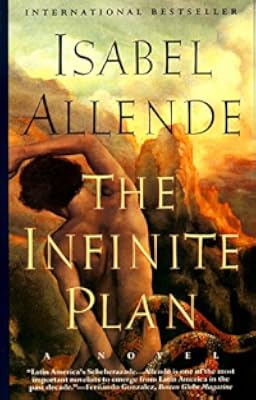
The Infinite Plan
by Isabel Allende
On This Page
Description
The story weaves a vivid and engrossing tale of one man's search for love and his struggle to come to terms with a childhood of poverty and neglect. As he journeys from the Hispanic barrio in Los Angeles to the killing fields of Vietnam to the frenetic life of a lawyer in San Francisco, Gregory Reeves loses himself in an illusory and wrongheaded quest. Only when he circles back to his roots does he find the love and acceptance he has been looking for.Tags
Recommendations
























Member Reviews
This is pure Allende. You hear her voice in every line, on every page. There's lots of Latinas, strong women, language difficulties, food, cults, holistic medicine, midwives, California, San Francisco, poverty, broken relationships, failed marriages, psychotherapy, jewelry, art, crafts, mysticism, charlatans, dashed expectations, vivid descriptions, time jumps, predictions, crystal balls, tarot cards, religions, priests, rituals, fortune telling, dropouts, addiction, wealth, lawyers, migrants, police, courts, hospitals, babies, kids, grandparents, husbands, wives, lovers, savants, adoption, abortion, doctors, drugs, painting, plants, unusual pets, sound familiar yet? One distinguishing feature is excessively long paragraphs, some show more extending over multiple pages. It feels like this has been dictated to someone who never knows when to end the thoughts, so they get pushed together. It feels spoken rather than written. Perhaps we should attribute that to this being translated from Spanish. Quien sabe? It also has some words which stick out, such as 'calvary'. Yes we know what it means but who says calvary rather than extreme burden. Perhaps Allende?
What distinguishes this story is the central character, a white male. But he grows up in a barrio of Los Angeles and is essentially adopted by a Mexican family so his basic outlook is Chicano. His biological family is pure California. His family is a bit cult like with a messianic preacher/charlatan father, a Bahai mother giving up her Jewish Russian roots, an auntie who becomes the midwife/fortune teller/elixir maker, sexual teacher etc, and the sister who tries to escape sexual abuse at the hands of the father through overeating. Complications from the very start. The Mexican family, while attracted to the father's Infinite Plan, provides the stability in the boy's life especially through a lifelong closeness with one of their daughters. Her story parallels his and is more Allende.
Another distinguishing aspect of this story is the attempt to portray society from the depression, WWII, Vietnam, hippies, civil rights, drugs, to the greed driven eighties and nineties. Much centers around San Francisco and Berkley. It tries to be an American story but has firm Latin roots. One message is you can take the boy out of the barrio but you can never take the barrio out of the boy. Even though he achieves wealth and success there's always the uncertainty and disbelief in being able to succeed. The scope of the plot leads to shallow character development with cartoonish characters throughout trying desperately to be emblematic.
It feels like Allende is consciously trying to not make this not about herself. In that sense this is a clear failure. It's not her best known work but it's definitely worth a read. show less
What distinguishes this story is the central character, a white male. But he grows up in a barrio of Los Angeles and is essentially adopted by a Mexican family so his basic outlook is Chicano. His biological family is pure California. His family is a bit cult like with a messianic preacher/charlatan father, a Bahai mother giving up her Jewish Russian roots, an auntie who becomes the midwife/fortune teller/elixir maker, sexual teacher etc, and the sister who tries to escape sexual abuse at the hands of the father through overeating. Complications from the very start. The Mexican family, while attracted to the father's Infinite Plan, provides the stability in the boy's life especially through a lifelong closeness with one of their daughters. Her story parallels his and is more Allende.
Another distinguishing aspect of this story is the attempt to portray society from the depression, WWII, Vietnam, hippies, civil rights, drugs, to the greed driven eighties and nineties. Much centers around San Francisco and Berkley. It tries to be an American story but has firm Latin roots. One message is you can take the boy out of the barrio but you can never take the barrio out of the boy. Even though he achieves wealth and success there's always the uncertainty and disbelief in being able to succeed. The scope of the plot leads to shallow character development with cartoonish characters throughout trying desperately to be emblematic.
It feels like Allende is consciously trying to not make this not about herself. In that sense this is a clear failure. It's not her best known work but it's definitely worth a read. show less
i think this is the best of her fiction that i've read (i've had mixed feelings about other works of hers). the language is beautiful, the writing superb, and the story pretty captivating. parts of it in particular seemed incredibly true (a handful of pages when gregory is in vietnam specifically stood out to me) and real and i think i just appreciated this book a lot as i read it. i really liked the character of carmen but don't want to give anything about the story away, so that's all i'll say. it probably deserves 4 stars but for some reason, probably unrelated to the book, i found myself pretty distracted when reading it, in spite of liking it as i was going along. so i really liked it, but found it too easy to put down. maybe not show more the book's fault, but that's not too typical, so 3.5 stars. show less
Since I first ran across her works have taken pleasure in her writings. This one, to me, is exceptional. A story of life's journey from the beginning of awareness through childhood to maturity; all the events that make a person who they are with no holds barred. This is far from a simple story and can draw one in when read as part of a life's journey that conveys us to the point where the protagonist reaches maturity; a transition from who he defined himself as to who he really is. When reading the story the complexity and depth is not evident until the conclusion which totally changes the prespective. It is a profound change and elevates it beyond a simple story. A great piece of writing.
I was expecting a book that was a kind of cross between Allende's usual subjects and a view of Americana and American culture (such as by Paul Auster). This did partially happen, but not as much as I hoped. On the plus side, much of the book has the kind of soaring prose and surrealism (if that is the right word) that one expects from Isabelle Allende, and the book succeeds in many ways. But there are a number of jarring moments where the narrative falters.
After reading the book, I discovered from the end matter that it is intended to be the true story of her husband. This explains a lot about the style and the plot. On one hand, the character does not follow the kind of development you expect from a fictionally planned character. More show more to the point, it seems awkward that a real life story is being shoehorned into a larger-than-life narrative. (Maybe this seems backwards, but this is the way I feel about it.) Also, the belated discovery that the story is based on real life characters has raised a lot of thoughts and issues for me. I have been thinking all day about how to reinterpret the entire plot, and the truthfulness and motivations of the characters. It also explains some mysteries, such as why Carmen and Tamar seems to be consist of two completely different personalities. (Answer: it is based on two people.)
I have only read three Allende books so far, and this one falls somewhere in the middle. Even with only a three star rating, I would recommend it to others to read. show less
After reading the book, I discovered from the end matter that it is intended to be the true story of her husband. This explains a lot about the style and the plot. On one hand, the character does not follow the kind of development you expect from a fictionally planned character. More show more to the point, it seems awkward that a real life story is being shoehorned into a larger-than-life narrative. (Maybe this seems backwards, but this is the way I feel about it.) Also, the belated discovery that the story is based on real life characters has raised a lot of thoughts and issues for me. I have been thinking all day about how to reinterpret the entire plot, and the truthfulness and motivations of the characters. It also explains some mysteries, such as why Carmen and Tamar seems to be consist of two completely different personalities. (Answer: it is based on two people.)
I have only read three Allende books so far, and this one falls somewhere in the middle. Even with only a three star rating, I would recommend it to others to read. show less
For me this was a book that escapes from the so peculiar style of Allende. The majority of her books has as scenario the beautiful landscapes of Chile, but this one is in America, California, more precisely. Although the place is different Allend arranged a way to give it an exotic atmosphere, with smells of Mexico, the oriental atmosphere in Vietnam with the War, ...
I liked this book, not only because I think it is a really good novel, but also it has essential questions about life and destiny, and, after all, what is the plan, the infinite plan that was designed for us?
For me the division of the book resembles our life, the beginning talks about the childhood of Gregory Reeves, the main character, it is all about good memories, the show more naive curiosity of the world, contact with the Nature. Albeit, there is a starting shadow that threatens that happiness that shadow grows with him as he understands better his surrounding.
From a childhood of travelling, esoteric reunions that his father commanded, he passed to a youth of suffering, running from problems, always working. The event that triggered this change was his father's disease and the establishing of the family in a Hispanic neighborhood.
Gregory succeeded in get out of that poor neighborhood with the help of his closest friends, Carmen Morales and Cyrus. He enters in college, in Berkeley, where his liberty principles grow strong.
The third part of the book is about his passage in Vietnam's war, when he defies death and acknowledge the brutality of men, and those principles of peace and equality are replaced for a desire for success, money and rise in the society.
The last part of this novel consists in the catharsis of all of his problems since his childhood. Gregory realizes that there is no infinite plan, you only survive, you have to make your own decisions.
Although the main character is Gregory Reeves, other characters as his mother, his sister, Carmen, his wives and children intensifies the script and complement the numerous issues that this book portrays. show less
I liked this book, not only because I think it is a really good novel, but also it has essential questions about life and destiny, and, after all, what is the plan, the infinite plan that was designed for us?
For me the division of the book resembles our life, the beginning talks about the childhood of Gregory Reeves, the main character, it is all about good memories, the show more naive curiosity of the world, contact with the Nature. Albeit, there is a starting shadow that threatens that happiness that shadow grows with him as he understands better his surrounding.
From a childhood of travelling, esoteric reunions that his father commanded, he passed to a youth of suffering, running from problems, always working. The event that triggered this change was his father's disease and the establishing of the family in a Hispanic neighborhood.
Gregory succeeded in get out of that poor neighborhood with the help of his closest friends, Carmen Morales and Cyrus. He enters in college, in Berkeley, where his liberty principles grow strong.
The third part of the book is about his passage in Vietnam's war, when he defies death and acknowledge the brutality of men, and those principles of peace and equality are replaced for a desire for success, money and rise in the society.
The last part of this novel consists in the catharsis of all of his problems since his childhood. Gregory realizes that there is no infinite plan, you only survive, you have to make your own decisions.
Although the main character is Gregory Reeves, other characters as his mother, his sister, Carmen, his wives and children intensifies the script and complement the numerous issues that this book portrays. show less
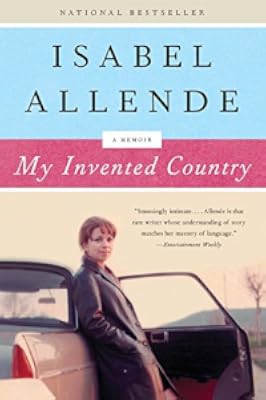
This book was written in 1991, a few years after Allende married her second husband, a San Francisco attorney. She mentioned in her memoir My Invented Country that The Infinite Plan was a story about her husband. There are some real life parallels: in this book, the main character, Gregory Reeves, fathers a daughter who later becomes a drug addict. In real life, Allende's husband's daughter dies from a drug overdose about the same time as Allende's daughter from her first marriage, Paula, dies from porphyria.
Greg attends Berkeley in the 60s, serves in Vietnam in the 70s, and becomes a successful lawyer in the 80s, and the novel reflects the excesses of these eras.
This was Allende’s first book set in the United States, and it is clear show more she did a lot of research on her new home. The weakest part are the events set in Vietnam; Greg’s ability to make friends with the villagers he is spying on does not ring true. I found her characterizations of the women in the book, particularly Carmen Morales, Greg’s childhood friend, and Olga, a part of his family from his itinerant childhood, to be stronger than any of the men. It’s an interesting book, but probably not one of Allende’s better ones. show less
Greg attends Berkeley in the 60s, serves in Vietnam in the 70s, and becomes a successful lawyer in the 80s, and the novel reflects the excesses of these eras.
This was Allende’s first book set in the United States, and it is clear show more she did a lot of research on her new home. The weakest part are the events set in Vietnam; Greg’s ability to make friends with the villagers he is spying on does not ring true. I found her characterizations of the women in the book, particularly Carmen Morales, Greg’s childhood friend, and Olga, a part of his family from his itinerant childhood, to be stronger than any of the men. It’s an interesting book, but probably not one of Allende’s better ones. show less
From the back:
"In her first novel set in the United States and portraying American characters, bestselling author Isabel Allende weaves a vivid and engrossing tale of one man's search for love, and his struggle to come to terms with a childhood of poverty and neglect. As he journeys from the Hispanic barrio in Los Angeles to the killing fields of Vietnam to the frenetic life of a lawyer in San Fransisco, Gregory Reeves loses himself in an illusory and wrongheaded quest. Only when he circles back to his roots does he find the love and acceptance he has been looking for."
My review:
Finding out that this has parallels to Allende's husband's life, informs this book and explains some odd style choices such as the very occasional first person show more chapters. Allende is one of my favorite authors, but like several others have posted, this one didn't grab me as much as I'd hoped. It's typical Allende character-driven fiction, but I wasn't pulled in by the characters; Gregory Reeves least of all. Some of her minor characters like Olga and Inmaculada were much more interesting. That said, I still find her writing lyrical and insights in to the human psyche enchanting. She also gives a nod to the helpfulness of therapy to those who are willing to do the work and make the changes that will improve their lives. show less
"In her first novel set in the United States and portraying American characters, bestselling author Isabel Allende weaves a vivid and engrossing tale of one man's search for love, and his struggle to come to terms with a childhood of poverty and neglect. As he journeys from the Hispanic barrio in Los Angeles to the killing fields of Vietnam to the frenetic life of a lawyer in San Fransisco, Gregory Reeves loses himself in an illusory and wrongheaded quest. Only when he circles back to his roots does he find the love and acceptance he has been looking for."
My review:
Finding out that this has parallels to Allende's husband's life, informs this book and explains some odd style choices such as the very occasional first person show more chapters. Allende is one of my favorite authors, but like several others have posted, this one didn't grab me as much as I'd hoped. It's typical Allende character-driven fiction, but I wasn't pulled in by the characters; Gregory Reeves least of all. Some of her minor characters like Olga and Inmaculada were much more interesting. That said, I still find her writing lyrical and insights in to the human psyche enchanting. She also gives a nod to the helpfulness of therapy to those who are willing to do the work and make the changes that will improve their lives. show less
Members
- Recently Added By
Author Information

89+ Works 84,899 Members
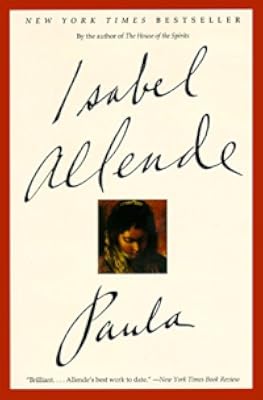
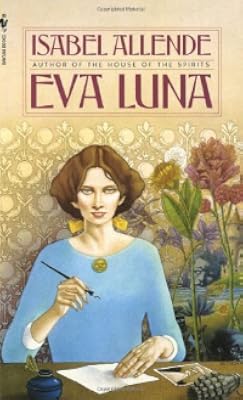
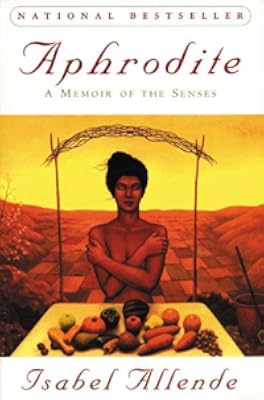
Isabel Allende was born in 1942 in Lima, Peru, the daughter of a Chilean diplomat. When her parents separated, young Isabel moved with her mother to Chile, where she spent the rest of her childhood. She married at the age of 19 and had two children, Paula and Nicolas. Her uncle was Salvador Allende, the president of Chile. When he was overthrown show more in the coup of 1973, she fled Chile, moving to Caracas, Venezuela. While living in Venezuela, Allende began writing her novels, many of them exploring the close family bonds between women. Her first novel, The House of the Spirits, has been translated into 27 languages, and was later made into a film. She then wrote Of Love and Shadows, Eva Luna, and The Stories of Eva Luna, all set in Latin America. The Infinite Plan was her first novel to take place in the United States. She explores the issues of human rights and the plight of immigrants and refugees in her novel, In The Midst of Winter. In Paula, Allende wrote her memoirs in connection with her daughter's illness and death. She delved into the erotic connections between food and love in Aphrodite: A Memoir of the Senses. In addition to writing books, Allende has worked as a TV interviewer, magazine writer, school administrator, and a secretary at a U.N. office in Chile. She received the 1996 Harold Washington Literacy Award. She lives in California. Her title Maya's Notebook made The New York Times Best Seller List in 2013. (Bowker Author Biography) show less
Some Editions
Awards and Honors
Awards
Series
Belongs to Publisher Series
Common Knowledge
- Canonical title
- The Infinite Plan
- Original title
- El plan infinito
- Original publication date
- 1991
- Important places
- Los Angeles, California, USA; San Francisco, California, USA
- Epigraph
- I am alone, at dawn, on the mountaintop, Below, through the
milky mist, I see the bodies of my friends. Some that have rolled
down the slopes lie like disjointed red dolls; others are ashen
statues surprise... (show all)d by the eternity of death. Stealthy shadows are climbing towards me. Silence. I wait. They Approach. I fire against dark silhouettes in black pajamas, faceless ghosts. I feel the
recoil of the machine gun; I grip it so tightly my hands burn as
incandescent lines of fire cross through the sky, but there is no
sound. The attackers have become transparent; they are not
stopped by the bullets that pass right through them, they continue
their implacable advance. I am surrounded ... Silence ...
My own scream wakes me, and I keep screaming, screaming ...
Gregory Reeves - Dedication
- My thanks to life, for all it has given,
for all the laughter and tears I have lived ...
Violeta Parra, Chile - First words
- They traveled the roads and byways of the west, unhurriedly and with no set itinerary, changing their route according to the whim of the moment, the premonitory sign of a flock of birds, the lure of an unknown name.
- Quotations*
- Le reventaba la falsa virtud de quienes se horrorizan por un delfín atrapado en una red para atunes, mientras pasaban indiferentes junto a los mendigos abandonados en las calles fingiendo no verlos
- Last words
- (Click to show. Warning: May contain spoilers.)That's all right, I have a lot of time, you said, not suspecting what you were getting into when you walked into this infinite plan.
- Original language
- Spanish
*Some information comes from Common Knowledge in other languages. Click "Edit" for more information.
Classifications
Statistics
- Members
- 2,651
- Popularity
- 7,068
- Reviews
- 47
- Rating
- (3.37)
- Languages
- 16 — Danish, Dutch, English, Finnish, French, German, Greek, Hebrew, Italian, Norwegian (Bokmål), Norwegian, Polish, Portuguese, Spanish, Swedish, Turkish
- Media
- Paper, Audiobook, Ebook
- ISBNs
- 97
- UPCs
- 1
- ASINs
- 30