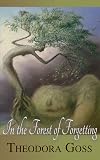
In the Forest of Forgetting
by Theodora Goss 
On This Page
Description
Fantasy. Fiction. Literature. Short Stories. Theodora Goss's first major short story collection showcases such stories as "The Rose in Twelve Petals," "The Rapid Advance of Sorrow," "Lily, With Clouds," "In the Forest of Forgetting," "Sleeping With Bears," and many more.Tags
Recommendations



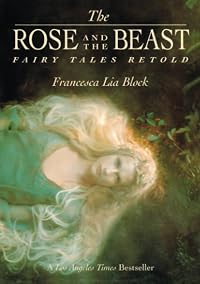

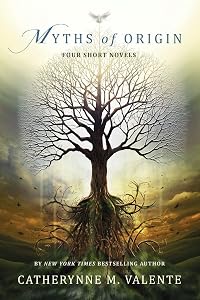
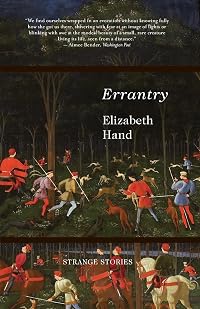
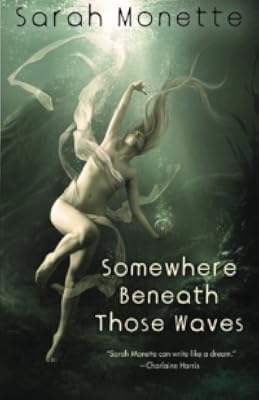

Member Reviews
The frustrated scholar in me wants to pin down exactly what “The New Weird” is, and where it comes from. The happy reader in me, though, wants only to read ever more of it. I may not be able to define The New Weird yet, but I know it when I see it. ‘In the Forest of Forgetting’ illustrates it vividly, and this weird and wonderful collection will give those who enjoy their fantasy mixed with a soupcon of horror that particular joy that comes from reading something utterly new.
My favorite story is “Miss Emily Gray.” It has a familiar theme – be careful what you wish for – but it plays out so malignantly, and yet with such an odd innocence, that it sneaks under your skin and haunts you for days after you read it. It makes show more a later story, “Lessons With Miss Gray” seem more haunting for our understanding of who Miss Gray is, and the lesson comes home: “You gain and you lose, with every choice you make.” In retrospect, those choices that seemed so easy then now seem like they should have been hard, and made with a lot more thought; but we were young then. Is that Miss Gray that we see again in “Conrad,” now a nurse? This time, she is a cause of good; perhaps she always is? Mysteries abide within mysteries in this collection.
Or maybe my favorite story is “Professor Berkowitz Stands on the Threshold.” This story, another one in which choice is key, reads the way Salvador Dali’s “The Persistence of Memory” looks. Indeed, the vignette headings in this story sound like the titles of surrealist paintings: “The Sea Is as Deep as Death, and as Filled with Whispers,” and “My Mind Crawls, Like a Snail, Around One Thought.” Goss writes in such a way that the surrealist images of her story vividly form in the mind’s eye: feathers instead of flowers growing on the bushes, a woman wearing a flamingo on her head. Professor Berkowitz’s quest for tenure by writing a monograph about a poet who wrote her lines on driftwood and sent them into the wind, his “real life,” is as otherworldly as the situation – dream or otherwise? – in which he finds himself in this story.
A number of the stories have an Eastern European edge to them, with a seemingly deliberate stiltedness in the language (that is, as if they were translated, or at least drawn from the style of Kafka) and the names of people and places. “Letters from Budapest,” for instance, is an epistolary story of a young man who has gone away from home to art school. Once there, he quickly learns that his teachers want nothing from him but art that glorifies the communist state, and that any other art is considered decadent and forbidden. But he discovers Les Fantaisistes, a group of artists who paint surrealist fantasies on their canvases, and he is captured, insisting that he will paint in no other manner. He particularly becomes infatuated with the art of Tamora Von Graff, not aware that it is a dangerous thing to seek out this woman, to be a part of her art, to live the type of art she paints.
“The Wings of Meister Wilhelm” is another story that remains in the mind long after it is read. A lonely child is sent to a lonely and penurious man – a man momentarily mysterious to the community, but soon to assume the status of a pariah – to take violin lessons. She swiftly learns of his special project: to hear the bells of Orillion, and to fly to that island in the sky where everyone is an artist. In a sideways rewriting of the legend of Daedalus and Icarus, Goss tells again the sad story of unreasoning prejudice and the only means to escape it.
Goss also dabbles in post-modernism in such stories as “The Rose in Twelve Petals,” a retelling of Sleeping Beauty in a dozen vignettes, and “Sleeping With Bears,” a story that does The Three Bears one better. “The Rapid Advance of Sorrow” is full of images of cold and white and Siberia. “The Belt,” which starts with the line, “My story has the contours of a fairy tale,” becomes a political disquisition.
As with most collections that gather together nearly everything that a young writer has written, there are a few tales here that do not resonate. But even those tales bear a telltale mark of distinction, and have an oddness that is characteristic of Goss’s writing. The reader is never quite sure of her footing while reading Goss; the ground tilts, the sky turns green and the world seems simply – off. One feels the enjoyable dizziness of a sip too much of wine, of a vintage unique and bold. This delicious book makes one hope for more Goss; one anticipates her first novel, if such is to be, with an urgent joy. show less
My favorite story is “Miss Emily Gray.” It has a familiar theme – be careful what you wish for – but it plays out so malignantly, and yet with such an odd innocence, that it sneaks under your skin and haunts you for days after you read it. It makes show more a later story, “Lessons With Miss Gray” seem more haunting for our understanding of who Miss Gray is, and the lesson comes home: “You gain and you lose, with every choice you make.” In retrospect, those choices that seemed so easy then now seem like they should have been hard, and made with a lot more thought; but we were young then. Is that Miss Gray that we see again in “Conrad,” now a nurse? This time, she is a cause of good; perhaps she always is? Mysteries abide within mysteries in this collection.
Or maybe my favorite story is “Professor Berkowitz Stands on the Threshold.” This story, another one in which choice is key, reads the way Salvador Dali’s “The Persistence of Memory” looks. Indeed, the vignette headings in this story sound like the titles of surrealist paintings: “The Sea Is as Deep as Death, and as Filled with Whispers,” and “My Mind Crawls, Like a Snail, Around One Thought.” Goss writes in such a way that the surrealist images of her story vividly form in the mind’s eye: feathers instead of flowers growing on the bushes, a woman wearing a flamingo on her head. Professor Berkowitz’s quest for tenure by writing a monograph about a poet who wrote her lines on driftwood and sent them into the wind, his “real life,” is as otherworldly as the situation – dream or otherwise? – in which he finds himself in this story.
A number of the stories have an Eastern European edge to them, with a seemingly deliberate stiltedness in the language (that is, as if they were translated, or at least drawn from the style of Kafka) and the names of people and places. “Letters from Budapest,” for instance, is an epistolary story of a young man who has gone away from home to art school. Once there, he quickly learns that his teachers want nothing from him but art that glorifies the communist state, and that any other art is considered decadent and forbidden. But he discovers Les Fantaisistes, a group of artists who paint surrealist fantasies on their canvases, and he is captured, insisting that he will paint in no other manner. He particularly becomes infatuated with the art of Tamora Von Graff, not aware that it is a dangerous thing to seek out this woman, to be a part of her art, to live the type of art she paints.
“The Wings of Meister Wilhelm” is another story that remains in the mind long after it is read. A lonely child is sent to a lonely and penurious man – a man momentarily mysterious to the community, but soon to assume the status of a pariah – to take violin lessons. She swiftly learns of his special project: to hear the bells of Orillion, and to fly to that island in the sky where everyone is an artist. In a sideways rewriting of the legend of Daedalus and Icarus, Goss tells again the sad story of unreasoning prejudice and the only means to escape it.
Goss also dabbles in post-modernism in such stories as “The Rose in Twelve Petals,” a retelling of Sleeping Beauty in a dozen vignettes, and “Sleeping With Bears,” a story that does The Three Bears one better. “The Rapid Advance of Sorrow” is full of images of cold and white and Siberia. “The Belt,” which starts with the line, “My story has the contours of a fairy tale,” becomes a political disquisition.
As with most collections that gather together nearly everything that a young writer has written, there are a few tales here that do not resonate. But even those tales bear a telltale mark of distinction, and have an oddness that is characteristic of Goss’s writing. The reader is never quite sure of her footing while reading Goss; the ground tilts, the sky turns green and the world seems simply – off. One feels the enjoyable dizziness of a sip too much of wine, of a vintage unique and bold. This delicious book makes one hope for more Goss; one anticipates her first novel, if such is to be, with an urgent joy. show less
This is the kind of mythopoeic fiction I like. A collection of quite short stories, but they pack a lot in to their brief length.
"The Rose in Twelve Petals"
A fractured retelling of 'Sleeping Beauty' (or, 'Briar Rose'), in a dozen brief vignettes, set in a more concrete version of Europe than the usual fairy-tale fare.
"Professor Berkowitz Stands on the Threshold"
A not-very-successful professor and a French poet, both with hidden talents, are summoned by a mysterious figure to an interstitial place-between-the-worlds, and offered a choice. Why does the professor make the choice he does? I'm still not sure.
"The Rapid Advance of Sorrow"
A poetic, surreal piece on the theme of trying to have a relationship with a revolutionary.
"Lily, With show more Clouds"
Two sisters, long estranged. One conventional, the other the lover of artists. The latter's terminal cancer brings them back together one last time. Closure or understanding may not be possible, but the meeting will leave its mark.
"Miss Emily Gray"
Emily Gray features in several of Goss' stories - and I want more of her! I LOVE this morally ambiguous Mary Poppins figure who, here, shows up as a young girl's governess - and grants wishes in a quite unexpected way.
"In the Forest of Forgetting"
This title story is actually probably my least favorite piece in the book. A fairy-tale allegory that is explicitly about a woman dying of cancer; I felt it would've been more effective if it were more subtle.
"Sleeping With Bears"
Another allegory, which compares men to bears - but this one is done with a deft touch, and wry humor.
"Letters from Budapest"
A spooky and lovely Hungarian vampire story about an undead artist who suck talented young men dry. Reminded me a bit of Tanith Lee.
"The Wings of Meister Wilhelm"
One of the more powerful pieces I've read about the tragedy of European anti-semitism, and a beautiful story of a young girl, her violin instructor, and his impossible dream.
"Conrad"
Another Emily Gray story! Here, as a nurse, she's a powerful if mysterious advocate for a young boy whose own family is trying to poison him.
"A Statement in the Case"
The 'case' is question is the possible arson of a pharmacy - and the witness in question admits that he was drunk and that he might not have seen exactly what he believes that he saw.
"Death Comes for Ervina"
An elderly former ballerina receives a visit from an old lover, and reminisces about her complicated past.
"The Belt"
"I will tell you... that every fairy tale has a moral. The moral of my story may be that love is a constraint, as strong as any belt. And this is certainly true, which makes it a good moral. Or it may be that we are all constrained in some way, either in our bodies, or in our hearts and minds... Or perhaps my moral is that a desire for freedom is stronger than love or pity. That is a wicked moral, or so the Church has taught us. But I do not know which moral is the correct one. And that is also the way of a fairy story." (And that is why I have realized that I love Theodora Goss.)
"Phalaenopsis"
A truly creepy and horrific story about a monastery where all the monks are blind. Or maybe it is an inspiring and uplifting story of spiritual triumph. I'm picking the former, but others will probably think the latter.
"Pip and the Fairies"
'Pip''s mother featured her as the title character in a series of books for children, which have made her a kind of minor celebrity, as the books have achieved a classic fame. But, thinking back, she wonders if the stories that she told her mother about her adventures with the magical folk were true...
"Lessons With Miss Gray"
Yay! Emily Gray again! Here, she offers three girls lessons in witchcraft. It's their obsession, for a summer... show less
"The Rose in Twelve Petals"
A fractured retelling of 'Sleeping Beauty' (or, 'Briar Rose'), in a dozen brief vignettes, set in a more concrete version of Europe than the usual fairy-tale fare.
"Professor Berkowitz Stands on the Threshold"
A not-very-successful professor and a French poet, both with hidden talents, are summoned by a mysterious figure to an interstitial place-between-the-worlds, and offered a choice. Why does the professor make the choice he does? I'm still not sure.
"The Rapid Advance of Sorrow"
A poetic, surreal piece on the theme of trying to have a relationship with a revolutionary.
"Lily, With show more Clouds"
Two sisters, long estranged. One conventional, the other the lover of artists. The latter's terminal cancer brings them back together one last time. Closure or understanding may not be possible, but the meeting will leave its mark.
"Miss Emily Gray"
Emily Gray features in several of Goss' stories - and I want more of her! I LOVE this morally ambiguous Mary Poppins figure who, here, shows up as a young girl's governess - and grants wishes in a quite unexpected way.
"In the Forest of Forgetting"
This title story is actually probably my least favorite piece in the book. A fairy-tale allegory that is explicitly about a woman dying of cancer; I felt it would've been more effective if it were more subtle.
"Sleeping With Bears"
Another allegory, which compares men to bears - but this one is done with a deft touch, and wry humor.
"Letters from Budapest"
A spooky and lovely Hungarian vampire story about an undead artist who suck talented young men dry. Reminded me a bit of Tanith Lee.
"The Wings of Meister Wilhelm"
One of the more powerful pieces I've read about the tragedy of European anti-semitism, and a beautiful story of a young girl, her violin instructor, and his impossible dream.
"Conrad"
Another Emily Gray story! Here, as a nurse, she's a powerful if mysterious advocate for a young boy whose own family is trying to poison him.
"A Statement in the Case"
The 'case' is question is the possible arson of a pharmacy - and the witness in question admits that he was drunk and that he might not have seen exactly what he believes that he saw.
"Death Comes for Ervina"
An elderly former ballerina receives a visit from an old lover, and reminisces about her complicated past.
"The Belt"
"I will tell you... that every fairy tale has a moral. The moral of my story may be that love is a constraint, as strong as any belt. And this is certainly true, which makes it a good moral. Or it may be that we are all constrained in some way, either in our bodies, or in our hearts and minds... Or perhaps my moral is that a desire for freedom is stronger than love or pity. That is a wicked moral, or so the Church has taught us. But I do not know which moral is the correct one. And that is also the way of a fairy story." (And that is why I have realized that I love Theodora Goss.)
"Phalaenopsis"
A truly creepy and horrific story about a monastery where all the monks are blind. Or maybe it is an inspiring and uplifting story of spiritual triumph. I'm picking the former, but others will probably think the latter.
"Pip and the Fairies"
'Pip''s mother featured her as the title character in a series of books for children, which have made her a kind of minor celebrity, as the books have achieved a classic fame. But, thinking back, she wonders if the stories that she told her mother about her adventures with the magical folk were true...
"Lessons With Miss Gray"
Yay! Emily Gray again! Here, she offers three girls lessons in witchcraft. It's their obsession, for a summer... show less
stories: The Rose in Twelve Petals / Professor Berkowitz Stands on the Threshold / The Rapid Advance of Sorrow / Lily, With Clouds / Miss Emily Gray / In the Forest of Forgetting / Sleeping with Bears / Letters from Budapest / The Wings of Meister Wilhelm / Conrad / A Statement in the Case / Death Comes for Ervina / The Belt / Phalaenopsis / Pip and the Fairies / Lessons with Miss Gray
Apparently, Goss's debut collection was The Rose in Twelve Petals and Other Stories, which contains some of the same stories as In the Forest of Forgetting, as well as a few poems, but seems to be out of print. (I may have to scrounge around for a copy.)
In any event, I loved In the Forest of Forgetting and really hope she publishes more -- maybe a novel show more about Miss Emily Gray (a recurring character, appearing in "Conrad" as well as the two titles bearing her name). I love Goss's voice, her characters, her subjects and themes. I love the stories that play off of classic fairy tales, the ones set in Hungary (where Goss was born), and all the rest. They feel classic but original and are beautifully written. show less
Apparently, Goss's debut collection was The Rose in Twelve Petals and Other Stories, which contains some of the same stories as In the Forest of Forgetting, as well as a few poems, but seems to be out of print. (I may have to scrounge around for a copy.)
In any event, I loved In the Forest of Forgetting and really hope she publishes more -- maybe a novel show more about Miss Emily Gray (a recurring character, appearing in "Conrad" as well as the two titles bearing her name). I love Goss's voice, her characters, her subjects and themes. I love the stories that play off of classic fairy tales, the ones set in Hungary (where Goss was born), and all the rest. They feel classic but original and are beautifully written. show less
I was really looking forward to reading this series of short stories by Theodora Goss. It ended up being a wonderful collection of stories; most of them are dark and have a European fairy tale feel to them. Many of the stories are incredibly ironic and a bit ambiguous.
I am not even sure how to start describing these stories individually. The story "The Belt" tells a tale of a wife who learns what happens to her husband when she removes the belt he uses to restrain her. There is the story "Professor Berkowitz Stands on the Threshold" where a professor is given a choice: he can go into the magical unknown or return to his weary life...but he only gets one chance to make the choice. In "Letters From Budapest" a man receives mysterious show more letters from his brother telling of his descent into the art culture of Budapest and ultimately his demise via magical means. A reoccurring figure throughout is Miss Grey a witch of sorts who shows up in one story as a nanny, in another as a teacher of magic. All the stories are interesting in their own right and I would be hard-pressed to pick a favorite.
Goss's writing is dark, descriptive, atmospheric, magical, and at times a bit vague. Many times the reader is left to determine exactly what has happened, the stories are a bit ambiguous and are not spelled out for the reader. Most of the stories have a very fairy tale like vibe to them. I mean Grimm Brothers type fairy tales...a lot of the stories also have an Old World or European feel to them as well.
The writing is very descriptive and some of the earlier stories felt a bit disjointed, so it took me a couple stories to really get into Goss's writing style. Once I did thought I found the book very hard to put down and was eager to see what wonders the next story held for me.
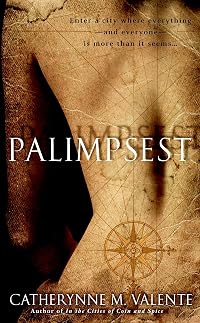
Overall a wonderful collection of dark fairy tale like stories, a wonderful writer. If you like dark fairy tales or stories with an old world feel to them this is the book for you. The writing style reminds some of Catherynne Valente or Elizabeth Hand; intelligently written, beautiful, and a bit vague (not everything is spelled out for the reader). I liked it a lot and will be keeping an eye out for future works from Goss. Definitely for adults only. show less
I am not even sure how to start describing these stories individually. The story "The Belt" tells a tale of a wife who learns what happens to her husband when she removes the belt he uses to restrain her. There is the story "Professor Berkowitz Stands on the Threshold" where a professor is given a choice: he can go into the magical unknown or return to his weary life...but he only gets one chance to make the choice. In "Letters From Budapest" a man receives mysterious show more letters from his brother telling of his descent into the art culture of Budapest and ultimately his demise via magical means. A reoccurring figure throughout is Miss Grey a witch of sorts who shows up in one story as a nanny, in another as a teacher of magic. All the stories are interesting in their own right and I would be hard-pressed to pick a favorite.
Goss's writing is dark, descriptive, atmospheric, magical, and at times a bit vague. Many times the reader is left to determine exactly what has happened, the stories are a bit ambiguous and are not spelled out for the reader. Most of the stories have a very fairy tale like vibe to them. I mean Grimm Brothers type fairy tales...a lot of the stories also have an Old World or European feel to them as well.
The writing is very descriptive and some of the earlier stories felt a bit disjointed, so it took me a couple stories to really get into Goss's writing style. Once I did thought I found the book very hard to put down and was eager to see what wonders the next story held for me.
Overall a wonderful collection of dark fairy tale like stories, a wonderful writer. If you like dark fairy tales or stories with an old world feel to them this is the book for you. The writing style reminds some of Catherynne Valente or Elizabeth Hand; intelligently written, beautiful, and a bit vague (not everything is spelled out for the reader). I liked it a lot and will be keeping an eye out for future works from Goss. Definitely for adults only. show less
Pip and the Fairies is the standout and I'd keep the collection for that alone. Goss's rep seems to be that she's slipstream, but on the whole these are pretty traditionally-structured stories, though more European than N American in feel. There's a certain detachment, even in the first-person narratives, and a studied beauty of language that I associate with work in translation.
A few stories in here really drew me in, and the collection definitely shows promise, but it still feels like there's something missing here, although I'm not sure what.
Uneven anthology: some touching and poetic, others obscure.
Members
- Recently Added By
Lists

Gaslamp Fantasy
87 works; 15 members

Recommended Speculative Fiction by Women and People of Color
298 works; 45 members
Books Read in 2018
4,360 works; 110 members
Author Information

51+ Works 4,365 Members
Theodora Goss is a LibraryThing Author, an author who lists their personal library on LibraryThing.
Some Editions
Awards and Honors
Awards
Work Relationships
Contains
Common Knowledge
- Canonical title
- In the Forest of Forgetting
- Original publication date
- 2006
Classifications
Statistics
- Members
- 395
- Popularity
- 78,972
- Reviews
- 10
- Rating
- (4.31)
- Languages
- English
- Media
- Paper, Audiobook, Ebook
- ISBNs
- 7
- ASINs
- 7