
Terri Windling
Author of Snow White, Blood Red
About the Author
Fairy and folklore scholar Terri Windling, five-time winner of the World Fantasy Award, has edited and written numerous fantasy works for both adults and children. She divides her time between Devon, England, and Tucson, Arizona. (Bowker Author Biography)
Image credit: Photo by Beth Gwinn
Series
Works by Terri Windling
The Green Man: Tales from the Mythic Forest (2002) — Editor; Introduction — 1,108 copies, 19 reviews
The Faery Reel: Tales from the Twilight Realm (2004) — Editor; Introduction — 1,094 copies, 15 reviews
A Wolf at the Door and Other Retold Fairy Tales (2000) — Editor; Introduction — 895 copies, 22 reviews
Borderland: Between the Elflands and the World is a Place Where Magic Runs Amok (1986) — Editor — 455 copies, 5 reviews
Queen Victoria's Book of Spells: An Anthology of Gaslamp Fantasy (2013) — Editor — 399 copies, 18 reviews
Sirens and Other Daemon Lovers: Magical Tales of Love and Seduction (1998) — Editor — 375 copies, 7 reviews
The Year's Best Fantasy and Horror: Thirteenth Annual Collection (2000) — Editor & Introduction — 359 copies
The Year's Best Fantasy and Horror: Eighth Annual Collection (1995) — Editor — 331 copies, 6 reviews
The Year's Best Fantasy and Horror: Seventh Annual Collection (1994) — Editor — 285 copies, 3 reviews
The Year's Best Fantasy and Horror: Fifteenth Annual Collection (2002) — Editor — 277 copies, 4 reviews
The Year's Best Fantasy and Horror: Fourteenth Annual Collection (2001) — Editor — 258 copies, 2 reviews
The Armless Maiden and Other Tales for Childhood's Survivors (1995) — Editor; Contributor — 256 copies, 4 reviews
The Year's Best Fantasy and Horror: Sixteenth Annual Collection (2003) — Editor — 240 copies, 2 reviews
Red Rock 1 copy
Snow White, Blood Red; Black Thorn, White Rose; Ruby Slippers, Golden Tears (1995) — Editor — 1 copy
Gray {short story} 1 copy
Briar Rose 1 copy
Associated Works
Mirror, Mirror on the Wall: Women Writers Explore Their Favorite Fairy Tales (1998) — Contributor — 313 copies, 4 reviews
The Poets' Grimm: 20th Century Poems from Grimm Fairy Tales (2003) — Contributor — 70 copies, 1 review
Tagged
Common Knowledge
- Other names
- Windling, T.
Bach, Bellamy (group pseudonym used by others) - Birthdate
- 1958-12-03
- Gender
- female
- Organizations
- Endicott Studios
- Awards and honors
- World Fantasy Award (Life achievement, 2022)
- Nationality
- USA
- Birthplace
- Fort Dix, New Jersey, USA
- Places of residence
- Devon, England, UK
New York, USA
Tucson, Arizona, USA - Associated Place (for map)
- USA
Members
Reviews
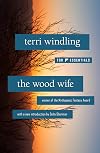
“The night, blue lapis. The mountain, onyx. Saguaro, verdigris with a cooper dish of moon. The wind rustles dry mesquite. A coyote howls. A star falls. And the night cracks me open, with beauty sharp and poignant as grief. The night cracks me open, like a geode, exposing the crystal veins of God.”
I read this story at the very end of August, and in Minnesota that is the beginning of fall. The temperatures are dropping, squirrels are busy hiding their caches, and some trees are starting to show more drop leaves. Yes, we may still have some Indian summer left, but Fall has arrived, and Winter, that horrible and brutal force is just over the rise. As this story climaxes in the Fall, Allhollows’ eve to be exact, it seemed like the perfect time to read it. It was an unplanned, yet perfectly timed preparation for the change of season.
Terri Windling published this in 1996. It won the Mythopoeic Award for Novel of the Year. Terri herself is considered to play a major part in developing the Urban Fantasy Genre. She was also awarded the SFWA's Soltice Award in 2010, a life achievement award for "significant contributions to the speculative fiction field as a writer, editor, artist, educator, and mentor."
The book itself is both a love letter to the American Southwest and a delicate feminine fantasy of escaping the everyday and touching a world beyond our own. It’s lovingly written, interspersed with poetry, heartfelt letters, and multiple perspectives. I loved the intricate and thoughtful descriptions of the southwest – it’s landscapes, food, music, culture, and people. I’ve walked in the Tuscan desert and climbed scraggly hills in Phoenix and it vividly brought back rich memories. I asked Alexa to play the Eagles on Pandora while I read, and it was a great soundtrack to this novel.
If you’re looking for long forages into a fantasy world, this may not be the book for you. It’s a long, slow striptease and we are at least three-quarters through the story before we really get the slightest glimpse into the magical world beyond. That’s not a bad thing, Windling lays out an interesting set of characters and a storyline filled with little and big mysteries. The journey into the fantasy world is more of an event, than any lengthy part of the plot. This worked for me, as I fell for the characters and the mysterious plot points. What’s behind that locked door? How did Cooper die? What happened to Anna? I want to talk about the ending, but alas, no spoilers here.
A lovingly written spiritual, sensuous fantasy that slowly wanders through the plot like a lazy walk in the desert, admiring all the mysteries and beauty along the way. Not perfect, but Four and a half stars that I will round up to Five. show less
I read this story at the very end of August, and in Minnesota that is the beginning of fall. The temperatures are dropping, squirrels are busy hiding their caches, and some trees are starting to show more drop leaves. Yes, we may still have some Indian summer left, but Fall has arrived, and Winter, that horrible and brutal force is just over the rise. As this story climaxes in the Fall, Allhollows’ eve to be exact, it seemed like the perfect time to read it. It was an unplanned, yet perfectly timed preparation for the change of season.
Terri Windling published this in 1996. It won the Mythopoeic Award for Novel of the Year. Terri herself is considered to play a major part in developing the Urban Fantasy Genre. She was also awarded the SFWA's Soltice Award in 2010, a life achievement award for "significant contributions to the speculative fiction field as a writer, editor, artist, educator, and mentor."
The book itself is both a love letter to the American Southwest and a delicate feminine fantasy of escaping the everyday and touching a world beyond our own. It’s lovingly written, interspersed with poetry, heartfelt letters, and multiple perspectives. I loved the intricate and thoughtful descriptions of the southwest – it’s landscapes, food, music, culture, and people. I’ve walked in the Tuscan desert and climbed scraggly hills in Phoenix and it vividly brought back rich memories. I asked Alexa to play the Eagles on Pandora while I read, and it was a great soundtrack to this novel.
If you’re looking for long forages into a fantasy world, this may not be the book for you. It’s a long, slow striptease and we are at least three-quarters through the story before we really get the slightest glimpse into the magical world beyond. That’s not a bad thing, Windling lays out an interesting set of characters and a storyline filled with little and big mysteries. The journey into the fantasy world is more of an event, than any lengthy part of the plot. This worked for me, as I fell for the characters and the mysterious plot points. What’s behind that locked door? How did Cooper die? What happened to Anna? I want to talk about the ending, but alas, no spoilers here.
A lovingly written spiritual, sensuous fantasy that slowly wanders through the plot like a lazy walk in the desert, admiring all the mysteries and beauty along the way. Not perfect, but Four and a half stars that I will round up to Five. show less

This is the third book in a series of 1990s anthologies of "literary fairy tales," in which all the stories are based on or inspired by folk or fairy tales (some much more loosely than others). "Sleeping Beauty" is a particular favorite in this one, but there's a pretty fair variety, including some from cultures other than the usual European sources (although not, as far as I can tell, in the hands of anyone actually from those cultures). The subject matter is generally quite dark. Which is show more true for fairy tales in general, really, at least the unsanitized ones, but the stories here do take some of the disturbing elements that are implicit in the old stories and make them a lot more explicit. Perhaps the majority of these involve domestic abuse and men exercising horrible power over women.
And yet, despite their potentially powerful themes, I have to say, a lot of these struck me as beautifully written but somehow not terribly engaging or satisfying. It might be that I just wasn't in quite the right mood for them. Still, even the stories that kind of left me cold were interesting literary exercises, if nothing else. And there were several that I unambiguously enjoyed, chief among them "The Fox Wife" by Ellen Steiber, which was just a good tale well told. Which is nice, because it was also by far the longest story in the collection. There are also a couple of very good poems.
Rating: Despite my mixed feelings, this one grew on me enough that I'm going to give it 4/5 in the end. show less
And yet, despite their potentially powerful themes, I have to say, a lot of these struck me as beautifully written but somehow not terribly engaging or satisfying. It might be that I just wasn't in quite the right mood for them. Still, even the stories that kind of left me cold were interesting literary exercises, if nothing else. And there were several that I unambiguously enjoyed, chief among them "The Fox Wife" by Ellen Steiber, which was just a good tale well told. Which is nice, because it was also by far the longest story in the collection. There are also a couple of very good poems.
Rating: Despite my mixed feelings, this one grew on me enough that I'm going to give it 4/5 in the end. show less

Even though this book is a slim volume, and contains only four short stories, it serves as an excellent introduction to the shared world of Bordertown created by Terri Windling and Mark Alan Arnold. I’ve previously read many of the later volumes set in the magical town which straddles the border between the normal world and the recently-returned faerieland (the small print run of this early urban fantasy book makes it tricky to find at the public library), so I was delighted to finally get show more a chance to read the originating stories after picking up the book on a recent trip through Calgary.
Of all of the four stories contained in this book, the first story is the one which I like the least. Not that it’s an uninteresting story or poorly written, but more so because it’s more predictable and expected within the fantasy (and urban fantasy) genre. The opening scene sees our protagonist, a guitar player of famous repute (apparently reformed from his bad rock & roll ways), playing his guitar on a lonely mountaintop close to the border between Bordertown and Faerieland and creating/controlling magical shapes in the air through his music. From the get-go it was obvious that this kind of skill is one which is tenuous at best and dangerous at its worst, so I was completely unsurprised when the central conflict of the story occurred when his long-time girlfriend leaves him (for being lazy essentially, another wtf moment) and he goes to the mountain again, this time creating a monster of the magical shapes that has a will only for devouring the person who has wronged him. Then he has to confront the monster and defeat it with his own music, therefore emerging from the conflict a changed man and ready to contribute to the well-being of his relationship. Exciting though it may be, this storyline has been done a million times, so I expected better from the likes of Bordertown!
The second story in the collection was one that I felt was really part of a much bigger tale. The story shares perspective between Gray (a human who is cursed to shape-change into a cat) and Wicker (an elf who was born and raised in Bordertown and makes her way as a tempestuous singer), who essentially spend the story circling unknowingly around each other before Gray’s secret is discovered and the two agree to try to cross into the Faerielands together. I’m not sure if their story is continued in the later Bordertown anthologies, but I sure hope that it is, because it sounds rather interesting. Then again, if they cross into Faerie, chances are that story wouldn’t be part of the Bordertown tales since it’s not actually set in Bordertown...
I was delighted to find that my favourite author, Charles de Lint, had contributed to the origins of Bordertown with a climactic story that introduces readers to the “halfie” (half elf, half human) population of Bordertown, Stick & his dancing ferret Lubin (residents of the Bordertown museum and all-around badasses with golden hearts), and the Horn Dance (the only positively motivated gang in Bordertown). All three of these subjects come up many times in later Bordertown collections, so the discovery that de Lint had played a hand in their creation is one of which I am exceedingly proud. It’s not surprising that de Lint tackled these types of characters and conflicts in Bordertown, since his other novels often deal with themes of prejudice, social justice, and mythic traditions based around music, and doing so here sets the tone for many of the larger social forces within Bordertown. The town straddles the border between the known and unknown, relying on a unique mix of magic and technology to survive, and blending a myriad of cultures to create probably the most cosmopolitan (and potentially problematic) social situation ever created - and de Lint is certainly a master of setting up and working within these unique boundaries (or lack thereof).
The final story in the book treads the realms of an expected fairytale - a human having to rescue a man (in this case an elfin lord) from the high lady of faerie - but Ellen Kushner puts a decidedly Bordertown spin on the tale. Instead of the rescue being in the name of true love (or even “right”) as it generally is in the original tales, the challenge is falsely set by some meddling elves from Faerieland as a means of dividing the human and elvin political factions in Bordertown who they deem to be growing too close. Bordertown has a myriad of gangs (elfin, human, and mixed) and social groups who are common plot devices and characters in the stories, so Kushner’s brief foray into more traditional politics within Bordertown makes for an interesting tale. I don’t recall any other stories which centre on this group of people, and I can’t blame most authors from steering clear of a topic that could easily make a Bordertown story quite mundane (politics are old hat, especially traditional ones), but that doesn’t detract from Kushner’s story. show less
Of all of the four stories contained in this book, the first story is the one which I like the least. Not that it’s an uninteresting story or poorly written, but more so because it’s more predictable and expected within the fantasy (and urban fantasy) genre. The opening scene sees our protagonist, a guitar player of famous repute (apparently reformed from his bad rock & roll ways), playing his guitar on a lonely mountaintop close to the border between Bordertown and Faerieland and creating/controlling magical shapes in the air through his music. From the get-go it was obvious that this kind of skill is one which is tenuous at best and dangerous at its worst, so I was completely unsurprised when the central conflict of the story occurred when his long-time girlfriend leaves him (for being lazy essentially, another wtf moment) and he goes to the mountain again, this time creating a monster of the magical shapes that has a will only for devouring the person who has wronged him. Then he has to confront the monster and defeat it with his own music, therefore emerging from the conflict a changed man and ready to contribute to the well-being of his relationship. Exciting though it may be, this storyline has been done a million times, so I expected better from the likes of Bordertown!
The second story in the collection was one that I felt was really part of a much bigger tale. The story shares perspective between Gray (a human who is cursed to shape-change into a cat) and Wicker (an elf who was born and raised in Bordertown and makes her way as a tempestuous singer), who essentially spend the story circling unknowingly around each other before Gray’s secret is discovered and the two agree to try to cross into the Faerielands together. I’m not sure if their story is continued in the later Bordertown anthologies, but I sure hope that it is, because it sounds rather interesting. Then again, if they cross into Faerie, chances are that story wouldn’t be part of the Bordertown tales since it’s not actually set in Bordertown...
I was delighted to find that my favourite author, Charles de Lint, had contributed to the origins of Bordertown with a climactic story that introduces readers to the “halfie” (half elf, half human) population of Bordertown, Stick & his dancing ferret Lubin (residents of the Bordertown museum and all-around badasses with golden hearts), and the Horn Dance (the only positively motivated gang in Bordertown). All three of these subjects come up many times in later Bordertown collections, so the discovery that de Lint had played a hand in their creation is one of which I am exceedingly proud. It’s not surprising that de Lint tackled these types of characters and conflicts in Bordertown, since his other novels often deal with themes of prejudice, social justice, and mythic traditions based around music, and doing so here sets the tone for many of the larger social forces within Bordertown. The town straddles the border between the known and unknown, relying on a unique mix of magic and technology to survive, and blending a myriad of cultures to create probably the most cosmopolitan (and potentially problematic) social situation ever created - and de Lint is certainly a master of setting up and working within these unique boundaries (or lack thereof).
The final story in the book treads the realms of an expected fairytale - a human having to rescue a man (in this case an elfin lord) from the high lady of faerie - but Ellen Kushner puts a decidedly Bordertown spin on the tale. Instead of the rescue being in the name of true love (or even “right”) as it generally is in the original tales, the challenge is falsely set by some meddling elves from Faerieland as a means of dividing the human and elvin political factions in Bordertown who they deem to be growing too close. Bordertown has a myriad of gangs (elfin, human, and mixed) and social groups who are common plot devices and characters in the stories, so Kushner’s brief foray into more traditional politics within Bordertown makes for an interesting tale. I don’t recall any other stories which centre on this group of people, and I can’t blame most authors from steering clear of a topic that could easily make a Bordertown story quite mundane (politics are old hat, especially traditional ones), but that doesn’t detract from Kushner’s story. show less
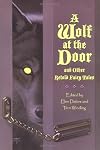
I originally chose this book from the library shelf because it was edited by Ellen Datlow and Terri Windling, whose collections of very severely twisted fairy tales for grown-ups (starting with Snow White, Blood Red) I adore, though they occasionally leave me slightly horrified or at least unsettled.
I was certainly not disappointed by the tales within, though these are, of course, suitable for a younger demographic than the ones I am accustomed to reading in the anthologies gathered by these show more two.
There are some excellent fairy tales in this book, often told from a strange new perspective - for instance, have you ever more deeply considered the story of Falada, who was The Goose Girl's horse? Nancy Farmer has, and retold it in her own way.
Or perhaps thought of what the giants thought of Jack, or how they came to live in the clouds, only reachable by a magic beanstalk? Michael Cadnum brings their story to life with incredible empathy for such usually neglected characters, and in a truly intriguing way.
Some of the fairy tales are also presented in vastly different settings than the ones we are used to when it comes to this kind of story - I think such things can be terribly effective.
Garth Nix's adaptation of Hansel and Gretel, for instance, is set in something approaching a modern city - and I must agree with his statement that being lost in cities is ever so much more terrifying than being lost in a forest.
The main characters of these fairy tales often think less like, well, something out of a fairy story, and more like someone we can empathise with - someone much like us, for all their fantastical situation or trials.
I greatly enjoyed the book, even wishing it were longer - though despite my occasional wish for more of a particular story, I suspect their teasing length is part of their charm - and will definitely be back to re-read it. show less
I was certainly not disappointed by the tales within, though these are, of course, suitable for a younger demographic than the ones I am accustomed to reading in the anthologies gathered by these show more two.
There are some excellent fairy tales in this book, often told from a strange new perspective - for instance, have you ever more deeply considered the story of Falada, who was The Goose Girl's horse? Nancy Farmer has, and retold it in her own way.
Or perhaps thought of what the giants thought of Jack, or how they came to live in the clouds, only reachable by a magic beanstalk? Michael Cadnum brings their story to life with incredible empathy for such usually neglected characters, and in a truly intriguing way.
Some of the fairy tales are also presented in vastly different settings than the ones we are used to when it comes to this kind of story - I think such things can be terribly effective.
Garth Nix's adaptation of Hansel and Gretel, for instance, is set in something approaching a modern city - and I must agree with his statement that being lost in cities is ever so much more terrifying than being lost in a forest.
The main characters of these fairy tales often think less like, well, something out of a fairy story, and more like someone we can empathise with - someone much like us, for all their fantastical situation or trials.
I greatly enjoyed the book, even wishing it were longer - though despite my occasional wish for more of a particular story, I suspect their teasing length is part of their charm - and will definitely be back to re-read it. show less
Lists
Gaslamp Fantasy (1)
Awards


You May Also Like


Associated Authors
Statistics
- Works
- 60
- Also by
- 38
- Members
- 22,256
- Popularity
- #957
- Rating
- 3.9
- Reviews
- 343
- ISBNs
- 197
- Languages
- 4
- Favorited
- 31