On This Page
Description
Investigator Vissarion Lom has been summoned to the capital in order to catch a terrorist --- and ordered to report directly to the head of the secret police. A totalitarian state, worn down by an endless war, must be seen to crush home-grown insurgents with an iron fist. But Lom discovers Mirgorod to be more corrupted than he imagined: a murky world of secret police and revolutionaries, cabaret clubs and doomed artists. Lom has been chosen because he is an outsider, not involved in the show more struggle for power within the party. And because of the sliver of angel stone implanted in his head. show lessTags
Recommendations









Member Reviews
One of the wonderful things about speculative fiction is the gradient of possible worlds its writers make available to readers. Rather than invent a planet nestled in a distant corner of the universe, or resort to the generic dragon and wizard haunted realms of fantasy, writers of speculative fiction can create inverted versions of our world. This is what Peter Higgins accomplishes in his diverting novel, Wolfhound Century (Orbit, February 4, 2014).
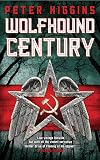
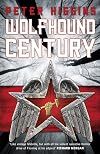
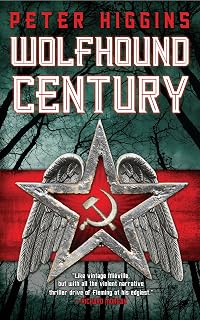
As the book's cover makes clear, Wolfhound Century is set in the fictional equivalent of the Soviet Union. The resemblance is at once clear and ambiguous. Readers will recognize in the Vlast (the nation) Russian "motherland" ideology. The Novozhd, the Vlast's selfless and noble leader, is show more George Orwell's Big Brother (itself a stand-in for Stalin) made flesh. And the redundant security apparatuses described throughout the book evoke the paranoia of the national security state.
But Wolfhound Century is not merely a replica of the USSR. In the Vlast, nature is alive: Rain assaults the protagonist, quite literally, upon his arrival in the capital. Giants work alongside humans, and yet other folkloric creatures are known to, if still feared by, citizens. And "angels" fall from the sky, the rock from which they're made used by humans in medical and military experiments, providing some of the "beneficiaries" incredible powers. (The angels appear to be sentient meteorites, a fair guess given Russia's reputation for being struck by objects from space.)
Inspector Vissarion Lom, our hero, received as a child an implant of "angel flesh" into his forehead; the powers it provides him are negligible. At the opening of Wolfhound Century, Lom has frittered away his career as a provincial police officer by refusing to engage in the politics necessary for advancement. Despite his outsider status, or perhaps because of it, he is summoned to the capital, Mirgorod, to investigate the notorious terrorist Josef Kantor. The story, then, is straightforward: Lom seeks Kantor, and Kantor, at the behest of one of the fallen angels, plots against the Vlast. Their collision is as inevitable as the fall of angel stone to earth.
Higgins' strengths are his setting and his writing, which work together to create a surreal, dreamlike quality that will either entrance or repel readers. Readers, confronted with a fun house image of the Soviet Union, are immediately disoriented. A giant participates in a terrorist raid. What is this place? Higgins wisely elaborates on his creation not with explication, but with detail: Just pages later, Higgins describes giants pulling wagons down a busy street, a scene of everyday life. The effect is surreal in the best possible way.
Higgins' prose contributes groundedness to his fantastical setting. Higgins' sentences are short and punchy, economical; they move the story forward. Higgins is particularly adept at describing landscapes, regardless of whether they're urban or rural. The final third of the novel is set in the marshes outside of Mirgorod, and Higgins' evocation of the swamps is especially successful.
Wolfhound Century has two issues that may put off some readers. The first half of the novel moves slowly as Higgins sets the scene for its more explosive second half. The story at times seems to wander, as adrift as Lom's investigation. Still, patient readers will be rewarded: The payoff here is not merely the action that takes place nearer the end of the book, but also the opportunity to further explore Mirgorod and Higgins' world. Readers begin to receive answers halfway through the book, but shouldn't neglect to enjoy the questions they're faced with as the story builds.
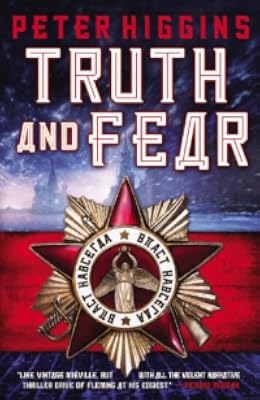
More problematic is the fact that Wolfhound Century is obviously intended as the first installment in a series. It becomes clear in the last quarter of the story that the action will not be resolved by the end of the book, and it's only fair to warn readers that this is the case. (Indeed, the sequel, Truth and Fear, is slated to be published on March 25, 2014.) This comes down to a matter of taste: If you are a reader who isn't bothered by cliffhangers, or if you're willing to commit yourself to another series, Wolfhound Century's ending won't intimidate you. Other readers will wish there was a greater sense of resolution.
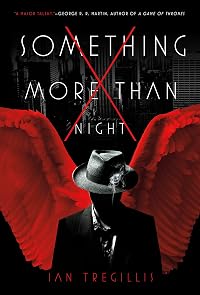
Wolfhound Century is a quiet, unassuming book that will sneak up on those readers who have the patience to permit themselves to be rewarded by it. It in some ways reminded me of Ian Tregillis' recent novel, Something More Than Night. Recommended for readers of unconventional fantasy/sci-fi and those with an interest in Russian mythology and folk culture. show less
As the book's cover makes clear, Wolfhound Century is set in the fictional equivalent of the Soviet Union. The resemblance is at once clear and ambiguous. Readers will recognize in the Vlast (the nation) Russian "motherland" ideology. The Novozhd, the Vlast's selfless and noble leader, is show more George Orwell's Big Brother (itself a stand-in for Stalin) made flesh. And the redundant security apparatuses described throughout the book evoke the paranoia of the national security state.
But Wolfhound Century is not merely a replica of the USSR. In the Vlast, nature is alive: Rain assaults the protagonist, quite literally, upon his arrival in the capital. Giants work alongside humans, and yet other folkloric creatures are known to, if still feared by, citizens. And "angels" fall from the sky, the rock from which they're made used by humans in medical and military experiments, providing some of the "beneficiaries" incredible powers. (The angels appear to be sentient meteorites, a fair guess given Russia's reputation for being struck by objects from space.)
Inspector Vissarion Lom, our hero, received as a child an implant of "angel flesh" into his forehead; the powers it provides him are negligible. At the opening of Wolfhound Century, Lom has frittered away his career as a provincial police officer by refusing to engage in the politics necessary for advancement. Despite his outsider status, or perhaps because of it, he is summoned to the capital, Mirgorod, to investigate the notorious terrorist Josef Kantor. The story, then, is straightforward: Lom seeks Kantor, and Kantor, at the behest of one of the fallen angels, plots against the Vlast. Their collision is as inevitable as the fall of angel stone to earth.
Higgins' strengths are his setting and his writing, which work together to create a surreal, dreamlike quality that will either entrance or repel readers. Readers, confronted with a fun house image of the Soviet Union, are immediately disoriented. A giant participates in a terrorist raid. What is this place? Higgins wisely elaborates on his creation not with explication, but with detail: Just pages later, Higgins describes giants pulling wagons down a busy street, a scene of everyday life. The effect is surreal in the best possible way.
Higgins' prose contributes groundedness to his fantastical setting. Higgins' sentences are short and punchy, economical; they move the story forward. Higgins is particularly adept at describing landscapes, regardless of whether they're urban or rural. The final third of the novel is set in the marshes outside of Mirgorod, and Higgins' evocation of the swamps is especially successful.
Wolfhound Century has two issues that may put off some readers. The first half of the novel moves slowly as Higgins sets the scene for its more explosive second half. The story at times seems to wander, as adrift as Lom's investigation. Still, patient readers will be rewarded: The payoff here is not merely the action that takes place nearer the end of the book, but also the opportunity to further explore Mirgorod and Higgins' world. Readers begin to receive answers halfway through the book, but shouldn't neglect to enjoy the questions they're faced with as the story builds.
More problematic is the fact that Wolfhound Century is obviously intended as the first installment in a series. It becomes clear in the last quarter of the story that the action will not be resolved by the end of the book, and it's only fair to warn readers that this is the case. (Indeed, the sequel, Truth and Fear, is slated to be published on March 25, 2014.) This comes down to a matter of taste: If you are a reader who isn't bothered by cliffhangers, or if you're willing to commit yourself to another series, Wolfhound Century's ending won't intimidate you. Other readers will wish there was a greater sense of resolution.
Wolfhound Century is a quiet, unassuming book that will sneak up on those readers who have the patience to permit themselves to be rewarded by it. It in some ways reminded me of Ian Tregillis' recent novel, Something More Than Night. Recommended for readers of unconventional fantasy/sci-fi and those with an interest in Russian mythology and folk culture. show less
I feel like I'm the wrong reviewer for this book. I'd just finished reading The Count of Monte Cristo which is a novel you mourn once it is over. It takes over your life for the days or months and when it is over, you're looking for your next reading fix and nothing compares. That, and I'm not a big one for constant flight and violence. I've got a moderately high threshold for violence if I understand the purpose of it, but this one went over my threshold and often I was at a loss to the purpose of it. Higgins seemed to always add that one detail that went too far. That might be a plus for another reader.
Wolfhound Century isn't really alternate history as I had thought. Instead, it is a Russian-based world that is very different from show more the true world. A horrible dictator has risen up. Angels have fallen and are embedded in the landscape. Since they are stuck, they are attempting to rule or live on violence through people. Against the angels, are the forest people. Caught in the middle are a bunch of normal people who live in a city that isn't even the same city day to day.
This had most of the elements of a fun, if not great, novel. However, I didn't emotionally connect with the characters, always felt like I had questions that weren't going to be answered, and I knew one side was badbadbad but I wasn't sure the other side was good. If this novel sounds like it is for you though, be warned. It's set up for a sequel. Honestly, I think the sequel will be better. show less
Wolfhound Century isn't really alternate history as I had thought. Instead, it is a Russian-based world that is very different from show more the true world. A horrible dictator has risen up. Angels have fallen and are embedded in the landscape. Since they are stuck, they are attempting to rule or live on violence through people. Against the angels, are the forest people. Caught in the middle are a bunch of normal people who live in a city that isn't even the same city day to day.
This had most of the elements of a fun, if not great, novel. However, I didn't emotionally connect with the characters, always felt like I had questions that weren't going to be answered, and I knew one side was badbadbad but I wasn't sure the other side was good. If this novel sounds like it is for you though, be warned. It's set up for a sequel. Honestly, I think the sequel will be better. show less
 This review was written for LibraryThing Early Reviewers.
REVIEW NOTES:
--I haven't read much fantasy since I was a kid. The restrictive genre cliches (elves, dwarves, orcs, oh my!) got too repetitive to hold my interest. This is a fantasy novel that ignores those cliches completely, and is an example of what fantasy can be when it steps out of Tolkien's shadow.
-The prose is very well done. It expresses a kind of poetry of brutality and violence that reminded me of Cormac McCarthy. But of course the brutal world in depicts is not a wilderness, but a totalitarian state.
-The combination of totalitarianism and a dark, supernatural force underlying it reminded me of Tim Powers's Declare. If you like that book, you'll like this one, and I'd recommend both.
-The 'magic' of this fantasy setting (and, show more tellingly, i don't remember that word appearing in the whole book) is more muddy and folkloric than the more 'superpower style' magic more common to the genre. Reminded me of Mignola or Gaiman.
PERSONAL NOTE:
-This the first novel I've had the chance to finish in months, so I was quite relieved that it was such a good read. show less
--I haven't read much fantasy since I was a kid. The restrictive genre cliches (elves, dwarves, orcs, oh my!) got too repetitive to hold my interest. This is a fantasy novel that ignores those cliches completely, and is an example of what fantasy can be when it steps out of Tolkien's shadow.
-The prose is very well done. It expresses a kind of poetry of brutality and violence that reminded me of Cormac McCarthy. But of course the brutal world in depicts is not a wilderness, but a totalitarian state.
-The combination of totalitarianism and a dark, supernatural force underlying it reminded me of Tim Powers's Declare. If you like that book, you'll like this one, and I'd recommend both.
-The 'magic' of this fantasy setting (and, show more tellingly, i don't remember that word appearing in the whole book) is more muddy and folkloric than the more 'superpower style' magic more common to the genre. Reminded me of Mignola or Gaiman.
PERSONAL NOTE:
-This the first novel I've had the chance to finish in months, so I was quite relieved that it was such a good read. show less
In a fantasy world resembling Stalinist Russia, Inspector Vissarion Lom of the Vlast is assigned a secret mission: to find the terrorist Josef Kantor and foil his schemes, whatever they may be. At the same time, his friend, the photographer and historian Vishnik is recording strange happenings around the great city of Mirgorad, while young Maroussia seeks her absent father and the artist Petrov plans his final artistic tableau. And out in the countryside, yet another angel has fallen to earth. But this one survived, and his intentions toward humanity are not exactly benign.
This was a fantasy novel I fully intended to like (though of course I put off reading and reviewing it, as tends to happen). It promised to be noirish, given the lone show more detective, and likely dark, with the quasi-Russian setting--and I thought such a fantasy sounded promising. And, overall, it met those two expectations. Lom is a fairly noirish detective: melancholy, isolated, honor-bound, and keenly aware of the darkness without and within. This alternate Russia is indeed a dark fantasy setting: Slavic fairy tales come to life in alarming ways throughout, and the atmosphere is as brooding and malevolent as could be desired.
But, really, I don't think it's a spoiler at this point to indicate one of the big problems I had with this book: there isn't an ending. By about 20 pages from the end, I was positive that was the direction the story was heading, and I felt cheated. There's no indication in the ARC that this is not a stand-alone work, and while I haven't seen a finished copy, it doesn't seem (from the posted covers) that this was ever made clear. I don't object to cliffhanger endings as a rule, but I do object to surprise ones, so I feel compelled to inform other potential readers, in case they share my distaste.
I'm not sure, though, that I would really have enjoyed this book, even if it had a proper ending. Sure, it was atmospheric and the prose often found a good balance between poetic flourishes and serviceable action. But by two-thirds or three-quarters through, the action and thus the violence became more than I prefer; the reader is "treated" to increasingly regular depictions of torture and physical destruction. Yes, the beginning is fairly bloody, but the violence seemed to level out in the first half or so, and I was starting to think it wasn't too bad, until the action started back up again.
And the more I think about it, the more I feel like a lot of my dislike is colored by the ending issues: it all felt more or less for naught. Random characters, minor and major, throughout are tormented or obliterated in blood-spattering ways, and by the end, I can't really tell why or whether in the end it will all be resolved in some way to either make the violence "worth it" for a eucatastrophe or to swell into a tragedy that makes the loss of life and limb heartfelt as well as disturbing.
Perhaps, then, it's also the world-building: we get plenty of atmosphere and foreboding, but not as much sense of the meaning behind things. Okay, so the angel clearly wants to be free and return to whatever kind of chaos he was up to before, and the villains have delusions of grandeur; but is that sufficient motive--and mythos, for that matter? It might be, but I don't feel it. The heroes seem to be developing mythic powers and destinies, but how and why? Random mythological creatures pop in and out at odd intervals: are they meaningful symbols or signs of some larger picture or just window-dressing? And this mystical object to be found and opened, is it really a good thing or a bad thing? What exactly is it supposed to do? As described so far, it doesn't seem all that much better than the encroaching evil: both seem more destructive and disruptive than likely to resolve the Vlast's malaise. And is this perpetual war with the Archipelago just around to parallel the Cold War, or does it have any actual bearing on the story?
Yes, I'm sure much of this will make sense in the sequel(s), but why can't we have some sense of this larger picture or telos or whatever after 320 pages? Shouldn't some thematic unity begin to emerge by this point? Perhaps it's my own readerly inadequacies or preferences, but it feels like poor editing: I suppose suspense is supposed to build or something, but I still just feel gypped and nonplussed. And I don't know whether I'll bother wading through whatever blood-and-guts are found in the sequel(s) to find out if any of the myriad questions raised are ever adequately answered. show less
This was a fantasy novel I fully intended to like (though of course I put off reading and reviewing it, as tends to happen). It promised to be noirish, given the lone show more detective, and likely dark, with the quasi-Russian setting--and I thought such a fantasy sounded promising. And, overall, it met those two expectations. Lom is a fairly noirish detective: melancholy, isolated, honor-bound, and keenly aware of the darkness without and within. This alternate Russia is indeed a dark fantasy setting: Slavic fairy tales come to life in alarming ways throughout, and the atmosphere is as brooding and malevolent as could be desired.
But, really, I don't think it's a spoiler at this point to indicate one of the big problems I had with this book: there isn't an ending. By about 20 pages from the end, I was positive that was the direction the story was heading, and I felt cheated. There's no indication in the ARC that this is not a stand-alone work, and while I haven't seen a finished copy, it doesn't seem (from the posted covers) that this was ever made clear. I don't object to cliffhanger endings as a rule, but I do object to surprise ones, so I feel compelled to inform other potential readers, in case they share my distaste.
I'm not sure, though, that I would really have enjoyed this book, even if it had a proper ending. Sure, it was atmospheric and the prose often found a good balance between poetic flourishes and serviceable action. But by two-thirds or three-quarters through, the action and thus the violence became more than I prefer; the reader is "treated" to increasingly regular depictions of torture and physical destruction. Yes, the beginning is fairly bloody, but the violence seemed to level out in the first half or so, and I was starting to think it wasn't too bad, until the action started back up again.
And the more I think about it, the more I feel like a lot of my dislike is colored by the ending issues: it all felt more or less for naught. Random characters, minor and major, throughout are tormented or obliterated in blood-spattering ways, and by the end, I can't really tell why or whether in the end it will all be resolved in some way to either make the violence "worth it" for a eucatastrophe or to swell into a tragedy that makes the loss of life and limb heartfelt as well as disturbing.
Perhaps, then, it's also the world-building: we get plenty of atmosphere and foreboding, but not as much sense of the meaning behind things. Okay, so the angel clearly wants to be free and return to whatever kind of chaos he was up to before, and the villains have delusions of grandeur; but is that sufficient motive--and mythos, for that matter? It might be, but I don't feel it. The heroes seem to be developing mythic powers and destinies, but how and why? Random mythological creatures pop in and out at odd intervals: are they meaningful symbols or signs of some larger picture or just window-dressing? And this mystical object to be found and opened, is it really a good thing or a bad thing? What exactly is it supposed to do? As described so far, it doesn't seem all that much better than the encroaching evil: both seem more destructive and disruptive than likely to resolve the Vlast's malaise. And is this perpetual war with the Archipelago just around to parallel the Cold War, or does it have any actual bearing on the story?
Yes, I'm sure much of this will make sense in the sequel(s), but why can't we have some sense of this larger picture or telos or whatever after 320 pages? Shouldn't some thematic unity begin to emerge by this point? Perhaps it's my own readerly inadequacies or preferences, but it feels like poor editing: I suppose suspense is supposed to build or something, but I still just feel gypped and nonplussed. And I don't know whether I'll bother wading through whatever blood-and-guts are found in the sequel(s) to find out if any of the myriad questions raised are ever adequately answered. show less
This review was written for LibraryThing Early Reviewers.I picked this up because it was described a being very similar in style to China Mieville.
It was - but I don't think it felt derivative at all.
It was sort of like if Mieville met Martin Cruz Smith met Philip Kerr. It may sound strange, but I don't think it's a bad thing at all.
Set in an alternate Soviet state, Vissarion Lom is a 'good' cop, who sees it as an unexpected opportunity when he's called to the capital to undertake a secret investigation. But of course - he gets into far more than he expected, and ends up questioning everything he thought he knew about himself and his society.
Higgins does a great job of creating his dark and atmospheric world, and weaving in mythological and original fantasy and science-fiction elements. (And show more really, just some wonderfully weird and grotesque things...) I'm impressed.
I'll be picking up the sequel... and yes, it is all too obvious that there will be a sequel, but I liked it enough that I'm deducting no points for the cliffhanger-ish ending. show less
It was - but I don't think it felt derivative at all.
It was sort of like if Mieville met Martin Cruz Smith met Philip Kerr. It may sound strange, but I don't think it's a bad thing at all.
Set in an alternate Soviet state, Vissarion Lom is a 'good' cop, who sees it as an unexpected opportunity when he's called to the capital to undertake a secret investigation. But of course - he gets into far more than he expected, and ends up questioning everything he thought he knew about himself and his society.
Higgins does a great job of creating his dark and atmospheric world, and weaving in mythological and original fantasy and science-fiction elements. (And show more really, just some wonderfully weird and grotesque things...) I'm impressed.
I'll be picking up the sequel... and yes, it is all too obvious that there will be a sequel, but I liked it enough that I'm deducting no points for the cliffhanger-ish ending. show less
I started out wanting to like this book; a fantasy set in a Stalinist-noir not-quite-Russia, with something strange fallen from the sky in the tundra, a fantastic Tunguska event; and the first part certainly lived up to this premise, with some interesting society building. The Vlast isn't a Communist state, but it's clearly Russian; the title is taken from a quote by Osip Mandelstam, the politics echoes the sort of society that existed in 20th century Czarist times (Czarist Russia and Stalinist Russia weren't all that different), but it's sufficiently different to be of interest.
But I had a great problem with the writing. Yes, it's elegant, it sets scenes well, the characters were identifiable and I could relate to them, but - why all show more the sentences without verbs? Is this what they teach in Creative Writing courses these days? And are editors now incapable of throwing a book back to the author, saying "Get your grammar right!" or "Put in some punctuation, for god's sake!" There are times when this is acceptable, for impact or in reporting a character's inner dialogue, but when it happens with such regularity as in this book, it is just sheer sloppiness.
Still, getting around this - and accepting that it might just be me that's old-fashioned (but still! No verbs???!!) - the story kept me turning pages as Lom got further and further into the conspiracy. And then this cataclysmic flood occurs and the whole story heads off in a different direction, still clearly part of the plot but moving the action and the nature of Lom's relation to the world and the situation into new territory. He dies, and is resurrected in some way. He has a titanic struggle with a mythical being, which turns out to be sufficiently stupid to be able to be defeated.
And then the story ends.
Other reviewers have called the ending a cliff-hanger. No it isn't. It's the end of a chapter. A cliff-hanger would set up a situation and leave you wondering not just what happens next or how the story ends, but specifically how the characters get out the situation they are in. In this case, the answer to that is "They get a tram back to town". That's not a cliff-hanger; that's the end of a chapter and there's an expectation that something will follow. There was no indication in the book or its packaging that there was going to be a sequel, but other reviewers have assumed that there would be (though one has suggested that there may be a gross binding error, and if the book was short of some 70 pages then there would be enough space to get to a denouement, or even a real cliff-hanger). If this really is a major error by Gollancz, then I wonder just what we are coming to. I would be appalled if my publisher made such a cock-up, and I'd be asking my agent to explore other avenues.
Such a shame; as I said, I was really looking forward to enjoying this book. But with the eccentric grammar and the plot running into a brick wall at the end of the book, I came away from 'Wolfhound Century' very disappointed indeed. show less
But I had a great problem with the writing. Yes, it's elegant, it sets scenes well, the characters were identifiable and I could relate to them, but - why all show more the sentences without verbs? Is this what they teach in Creative Writing courses these days? And are editors now incapable of throwing a book back to the author, saying "Get your grammar right!" or "Put in some punctuation, for god's sake!" There are times when this is acceptable, for impact or in reporting a character's inner dialogue, but when it happens with such regularity as in this book, it is just sheer sloppiness.
Still, getting around this - and accepting that it might just be me that's old-fashioned (but still! No verbs???!!) - the story kept me turning pages as Lom got further and further into the conspiracy. And then this cataclysmic flood occurs and the whole story heads off in a different direction, still clearly part of the plot but moving the action and the nature of Lom's relation to the world and the situation into new territory. He dies, and is resurrected in some way. He has a titanic struggle with a mythical being, which turns out to be sufficiently stupid to be able to be defeated.
And then the story ends.
Other reviewers have called the ending a cliff-hanger. No it isn't. It's the end of a chapter. A cliff-hanger would set up a situation and leave you wondering not just what happens next or how the story ends, but specifically how the characters get out the situation they are in. In this case, the answer to that is "They get a tram back to town". That's not a cliff-hanger; that's the end of a chapter and there's an expectation that something will follow. There was no indication in the book or its packaging that there was going to be a sequel, but other reviewers have assumed that there would be (though one has suggested that there may be a gross binding error, and if the book was short of some 70 pages then there would be enough space to get to a denouement, or even a real cliff-hanger). If this really is a major error by Gollancz, then I wonder just what we are coming to. I would be appalled if my publisher made such a cock-up, and I'd be asking my agent to explore other avenues.
Such a shame; as I said, I was really looking forward to enjoying this book. But with the eccentric grammar and the plot running into a brick wall at the end of the book, I came away from 'Wolfhound Century' very disappointed indeed. show less
This book was a major disappointment, and indeed angered me, not because it was a poorly written book - it is in fact a good story with a unique and fascinating setting - but because it literally stops in the middle of a scene. Nothing in the book comes to any resolution. Not a cliffhanger, no, it simply stops in the middle of the story. There is no indication anywhere in the book, not on the cover, in the notes, in a preface, in the marketing material, anywhere - that this is the first in a series. But make no mistake, this is #1 in a series, in fact, it could be best described as like just reading the first few chapters of a book (except, it is in fact a book length work). Really, I was so convinced that I thought I had a defective show more printing and nearly went out to buy another copy. (Indeed, the #2 was released in 2014.) This is a good detective story in an alternate world fantasy with a steampunk flavor, but in a Russian setting with slavic mythology elements. Pretty interesting, and if in fact I had wrote this review after reading the whole series (sometime in the distant future) then my opinion would be completely reversed - but for now, I just can't get over the clipped ending. You have been warned. show less
Members
- Recently Added By
Lists

Top Five Books of 2013
1,562 works; 721 members

Animals in the Title
498 works; 11 members
Author Information

8+ Works 376 Members
Some Editions
Awards and Honors
Awards
Series

Common Knowledge
- Original publication date
- 2013-03 (US); 2013 (UK) (US | UK)
- People/Characters
- Vissarion Y Lom; Josef Kantor
- Epigraph
- The woulfhound century is on my back --
But I am not a wolf.
--Osip Mandelstam (1891-1938) - Blurbers
- Morgan, Richard K.; Hamilton, Peter F.; Rajaniemi, Hannu
Classifications
Statistics
- Members
- 268
- Popularity
- 120,738
- Reviews
- 36
- Rating
- (3.38)
- Languages
- English, Finnish, French, Polish
- Media
- Paper, Audiobook, Ebook
- ISBNs
- 12
- ASINs
- 6