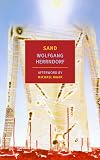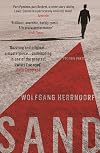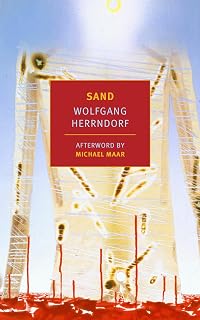
Sand
by Wolfgang Herrndorf
On This Page
Description
"Set in the aftermath 1972 Munich Olympics massacre, this darkly sophisticated literary thriller by one of Germany's most celebrated writers is now available in the US for the first time. North Africa, 1972. While the world is reeling from the massacre of Israeli athletes at the Munich Olympics, a series of mysterious events is playing out in the Sahara. Four people are murdered in a hippie commune, a suitcase full of money disappears, and a pair of unenthusiastic detectives are assigned to show more investigate. In the midst of it all, a man with no memory tries to evade his armed pursuers. Who are they? What do they want from him? If he could just recall his own identity he might have a chance of working it out. This is a darkly sophisticated literary thriller from Wolfgang Herrndorf, a master storyteller and star of the German literary scene"-- show lessTags
Recommendations


















Member Reviews
German artist and novelist Wolfgang Herrndorf (1965-2013)
Bizarre, wacky, comical, offbeat, eccentric, quizzical, weird are among the ways reviewers have described Wolfgang Herrndorf’s stunning, highly entertaining crime thriller that has been baffling readers ever since its original publication in 2011.
That being said, I’m here to report good news – this New York Review Books (NYRB) edition contains an illuminating Afterward by German literary scholar Michael Maar. Afterward rather than Introduction is most apt since Mr. Maar provides clues to a number of the novel’s puzzles after mentioning that Wolfgang Herrndorf found book reviews written with spoilers highly distasteful.
As a way of respecting the author’s sentiments show more pertaining to book reviews, other than noting the action takes place in 1972 in and around a North African port city near an oasis where European and American hippies have founded a commune, I will attempt to avoid any spoilers by linking my own comments to quotes taken from Michael Maar’s Afterward.
“Sand has a romanticism of its own, the cool, dark Romanticism of the Gothic tale, but is as sharply contoured as a work by Poe.” ---------- There’s a TV news report of the massacre of athletes from Israel at the Munich Olympics perpetrated by Palestinian terrorists on the heels of the murder of four hippies in a local oasis commune. A sense of danger at every turn contributes to the novel’s tension and suspense. I can picture fans of such authors as Edgar Allan Poe or Heinrich von Kleist relishing each spinning, gyrating twist in Herrndorf’s innovative novel.
“Even the simple question of the identity of the book’s hero turns out to be a knotty one” ---------- A handsome European educated man has completely lost his memory. He takes the name of Carl Gross since a tall, striking blonde by the name of Helen sees Carl Gross is the maker of the suit jacket he’s wearing. But who is he really? In two somewhat humorous scenes we find Carl attempting to determine his past self by walking the streets in a yellow blazer and salmon-colored Bermuda shorts (this is North Africa!) and paying a visit to a psychiatrist on the strength of a flyer promising state-of-the-arts methods and introductory rates. If this sound like a far-out existential tale – bulls-eye.
“Readers of Sand miss something equally important by overlooking the novel’s basic construction, which is as discreet as it is compelling.” --------- The novel is comprised of sixty-eight short chapters that snap back and forth between various players and locales. I initially planned to take my time reading since there are multiple murders and I didn’t want to miss any clues. But the storytelling is totally captivating; I found myself pressing on page after page deep into the night. There’s good reason Sand is called a thriller.
“Herrndorf provides information in a way that is staggered, rhythmicized, slightly delayed, quasi slantwise. But he provides everything we need.” ---------- Each chapter can be viewed as a dot in a connect the dots picture. It might not be apparent on a first reading but every single paragraph is given a distinct purpose. Wolfgang Herrndorf offered any reviewer of his novel one hundred euros for each loose end that reviewer could find. It was a safe bet since the author knew very well there were no loose ends.
“Anyone with a weakness for artfully constructed plots is in for a feast here." ---------- By way of example, the manner in which the character of Helen is presented is remarkable. Before this lady enters the story’s action we learn many things of her background that will ultimately influence unfolding events – as a child she could deal effectively with a dead pet while those around her, even adults, sobbed or became hysterical; she studied theater at Princeton; if she strolled across campus in a tight T-shirt she would have at least three invitations to dinner; she maintained a lifelong friendship with Michelle, a dizzy, idealistic hippie who would eventually join a commune in a North African oasis.
“Herrndorf started off as a painter and carried his ingenuity over into this other discipline: in the shimmering heat of the desert, everything is seen, not merely asserted, and there is nothing without color, sharply drawn shadows, texture.” ---------- How true! Here’s a description from the first chapter: “The eastern walls of the huts blazed pale orange. The hollow, dull rhythm died down as it receded into the alleyways. Shrouded figures, lying in the cool ditches like mummies, awoke, and cracked lips formed words of praise and offering to the one true God. Three dogs dipped their tongues into a dirty puddle. The whole night through the temperature hadn’t sunk below thirty degrees.”
“Epigraphs light the way into each chapter, elusive and misanthropic” ---------- Epigraphs from Herodotus, Nabokov and Basho to Richard Nixon and Scrooge McDuck. One of the fascinating parts of reading each chapter is to go back and reread the epigraph to see how it sets the tone and fits into the unfurling episode almost as if it were a piece in a jigsaw puzzle.
“All bad novels are alike; each great novel is great in its own way.” ---------- There’s no question Michael Maar judges Sand a great novel. The tragedy for the literary world is Wolfgang Herrndorf was diagnosed with a brain tumor in 2010 and took his own life at the young age of forty-eight in 2013. What future great novels we would have had if he was still with us.
Especial thanks goes out to translator Tim Mohr who did a marvelous job rendering Wolfgang Herrndorf’s German into a very readable, vibrant English.
Sand will take its place on my bookshelf in a prominent place awaiting my next reread. I urge you to treat yourself to this New York Review Books edition.
"He tried to remember what he could still remember. It wasn't as if he couldn't remember anything at all. He remembered how the men had talked, how they attacked each other. He remembered a rattan suitcase full of money. And that one man, whom they referred to as Cetrois, had fled into the desert on a moped." - Wolfgang Herrndorf, Sand show less
The four stars are out of respect for the structure/plot of Sand, for the way the novel is put together, the setting, and the writing itself. That's a lot of praise -- but I must also confess didn't enjoy reading it. I appreciate it, yes. In 1972 or so, a young French/Arabic man, trained in France, has recently been assigned to a police station on the coast of North Africa (country unnamed). In a nearby town is a hippie commune and a young Arab thief, on the rumor that there is a suitcase of money, comes in and ends up shooting four people there. The policeman, name of Polidorio investigates - - - I can't say another thing without risking some sort of spoiler -- suffice it to say there is an international aspect to the crime - and a show more touch of Graham Greene humour despite some appalling violence.
My feeling is that this is a genuine hybrid between a literary and a thriller/suspense/mystery novel. Some of my discomfort came, perhaps, from the tension between just what sort of novel I was reading. Now that I'm done I can say the most important aspect is the structure, after that, the setting and the effect that this environment has on humans (not good).
This is one of the NYRB classics series which is brilliantly curated. I'm not "disappointed" by the choice, the book is brilliant, just not for me.**** show less
My feeling is that this is a genuine hybrid between a literary and a thriller/suspense/mystery novel. Some of my discomfort came, perhaps, from the tension between just what sort of novel I was reading. Now that I'm done I can say the most important aspect is the structure, after that, the setting and the effect that this environment has on humans (not good).
This is one of the NYRB classics series which is brilliantly curated. I'm not "disappointed" by the choice, the book is brilliant, just not for me.**** show less
A simultaneously complicated and straightforward story of a man who turns up in North Africa in 1972 with amnesia. People are following him, kidnapping him, beating and torturing him, and he has no idea who he is or why. There are clues salted throughout the book, which is long at 457 pages, but is also pretty fascinating.
A dense thriller with hints of Pynchon. The plot, however, is scrutable, if you read closely (or continue through the Afterword.)
Nordafrika 1972. Ein Mann ohne Gedächtnis wird von der Amerikanerin Helen an einer Tankstelle aufgegabelt. Er weiß nicht, wer er ist, ist aber anscheinend verwickelt in gefährliche Machenschaften, wird verfolgt, gefoltert und weiß nicht, wem er trauen kann.
Das Buch ist verwirrend, aber sehr gut zu lesen. Es ist spannend, ohne jedoch Antworten zu geben.
Es ist pessimistisch und gandenlos. Und doch ist es satirisch und witzig. Eine seltsame Mischung aus der Feder eines viel zu früh verstorbenen Sprachkünstlers.
Was schreibt der Autor selbst dazu:
http://www.wolfgang-herrndorf.de/2010/09/acht/
Im Angesicht des Todes schreibt gleichzeitig dieses Werk und den optimistischen Tschick. Und seinen Blog, den man unbedingt auch lesen show more sollte.
"Immer die gleichen drei Dinge, die mir den Stecker ziehen: Die Freundlichkeit der Welt, die Schönheit der Natur, kleine Kinder." show less
Das Buch ist verwirrend, aber sehr gut zu lesen. Es ist spannend, ohne jedoch Antworten zu geben.
Es ist pessimistisch und gandenlos. Und doch ist es satirisch und witzig. Eine seltsame Mischung aus der Feder eines viel zu früh verstorbenen Sprachkünstlers.
Was schreibt der Autor selbst dazu:
http://www.wolfgang-herrndorf.de/2010/09/acht/
Im Angesicht des Todes schreibt gleichzeitig dieses Werk und den optimistischen Tschick. Und seinen Blog, den man unbedingt auch lesen show more sollte.
"Immer die gleichen drei Dinge, die mir den Stecker ziehen: Die Freundlichkeit der Welt, die Schönheit der Natur, kleine Kinder." show less
Sep 21, 2013German
Mine forventninger til Sand var store. For et par år siden læste jeg Tschick af samme forfatter, som er en helt vidunderlig ungdomsroman, og dette var den næste bog han udgav. Der leges igen med genrerne – Tschick var en slags roadmovie – for Sand er en thriller, der alligevel ikke vil være en thriller.
Sand foregår i 1972, samtidig med det palæstinensiske angreb på de olympiske lege i München. Og her har vi det første brud med konventionen, for der er ingen sammenhæng til begivenhederne der. I det hele taget er der masser af den slags drillerier: En politimand får en fornemmelse – uden at den er rigtig. En bundet mand får slidt en hånd fri – uden at det fører til mere.
Alligevel er det en thriller. Handlingen show more udspiller sig i Nordafrika, nærmere bestemt i den fiktive storby Targat, i oasen Tindirma og i ørkenen mellem de to. Bogen åbner med en massakre i det lille europæiske og stærkt venstreorienterede kollektiv i oasen og en mystisk mand ankommer for at sælge vigtige oplysninger om fremstilling af atomvåben, men handlingen kommer først for alvor i gang, da en mand vågner i en fabriksbygning ude i ørkenen. Det er nat, og han bløder fra baghovedet, men har i øvrigt ingen erindring om, hvad der er sket eller hvem han er. Snart er han på flugt, og ved en tankstation på vej ind til byen møder han den amerikanske kvinde Helen, der giver ham et lift og beslutter at hjælpe ham med hans søgen. Hun giver ham også navnet Carl efter navnet på det firma, der har lavet hans habit
.
Romanen igennem følger vi Carls jagt på sin identitet og hans videre flugt, for at adskillige grupper er ude efter ham, bliver snart klart. En bortførelse og en brevkniv gennem hånden er jo tydelige indikationer. Han afsøger de sparsomme spor, der fører til meget lidt, og undervejs udsættes han for en næsten uendelig række af lidelser, mens fortvivlelsen bare vokser og vokser. Kan et menneske overhovedet udholde så meget? Og hvorfor bliver han bare ved og ved?
Sand både udfordrer og opfylder thrillerens konventioner, og Herrndorfs fantasi og sprogkunst fejler ikke noget. Alligevel bliver manglen på svar trukket lidt for langt ud, og jeg savnede også den helt unikke sprogtone og fortællerstemme, der var med til at gøre Tschick så uforglemmelig. show less
Sand foregår i 1972, samtidig med det palæstinensiske angreb på de olympiske lege i München. Og her har vi det første brud med konventionen, for der er ingen sammenhæng til begivenhederne der. I det hele taget er der masser af den slags drillerier: En politimand får en fornemmelse – uden at den er rigtig. En bundet mand får slidt en hånd fri – uden at det fører til mere.
Alligevel er det en thriller. Handlingen show more udspiller sig i Nordafrika, nærmere bestemt i den fiktive storby Targat, i oasen Tindirma og i ørkenen mellem de to. Bogen åbner med en massakre i det lille europæiske og stærkt venstreorienterede kollektiv i oasen og en mystisk mand ankommer for at sælge vigtige oplysninger om fremstilling af atomvåben, men handlingen kommer først for alvor i gang, da en mand vågner i en fabriksbygning ude i ørkenen. Det er nat, og han bløder fra baghovedet, men har i øvrigt ingen erindring om, hvad der er sket eller hvem han er. Snart er han på flugt, og ved en tankstation på vej ind til byen møder han den amerikanske kvinde Helen, der giver ham et lift og beslutter at hjælpe ham med hans søgen. Hun giver ham også navnet Carl efter navnet på det firma, der har lavet hans habit
.
Romanen igennem følger vi Carls jagt på sin identitet og hans videre flugt, for at adskillige grupper er ude efter ham, bliver snart klart. En bortførelse og en brevkniv gennem hånden er jo tydelige indikationer. Han afsøger de sparsomme spor, der fører til meget lidt, og undervejs udsættes han for en næsten uendelig række af lidelser, mens fortvivlelsen bare vokser og vokser. Kan et menneske overhovedet udholde så meget? Og hvorfor bliver han bare ved og ved?
Sand både udfordrer og opfylder thrillerens konventioner, og Herrndorfs fantasi og sprogkunst fejler ikke noget. Alligevel bliver manglen på svar trukket lidt for langt ud, og jeg savnede også den helt unikke sprogtone og fortællerstemme, der var med til at gøre Tschick så uforglemmelig. show less
Jul 17, 2016Danish
Read it twice now - couldn´t remember that much but enjoyed it. Read the "Gesamtausgabe"-Edition with an added comment in the end that made me realize that I never got the plot of the story right.
Leaving it now embarrassed for a while - to try to solve the riddle once more in a not so distant future :)
Leaving it now embarrassed for a while - to try to solve the riddle once more in a not so distant future :)
Mar 19, 2022German
Members
- Recently Added By
Lists

German Literature
518 works; 56 members

Best Beach Reads
99 works; 61 members
Author Information

11 Works 1,863 Members
Some Editions
Awards and Honors
Awards
Series
Belongs to Publisher Series
Common Knowledge
- Canonical title
- Sand
- Original title
- Sand
- Original publication date
- 2011 (Original German) (Original German)
- First words
- Atop the mud-brick wall stood a man stripped to the waist, with his arms stretched out to the sides as if crucified.
The surprise German literary sensation of 2010 was Wolfgang Herrndorf's road novel Tschick (translated into English as Why We Took the Car), heaped with awards, translated into many languages, and before long as... (show all)signed reading in Costa Rican schools. (Afterword) - Last words
- (Click to show. Warning: May contain spoilers.)It lifted its shovel like a priest raising the Ark of Covenant, showed it to the infidels, and then dumped the entire contents onto the mound of rubbish.
(Click to show. Warning: May contain spoilers.)He is amiable indeed, and his work will endure. (Afterword) - Original language
- German
Classifications
Statistics
- Members
- 358
- Popularity
- 87,737
- Reviews
- 11
- Rating
- (3.86)
- Languages
- English, German
- Media
- Paper, Audiobook, Ebook
- ISBNs
- 12
- ASINs
- 6