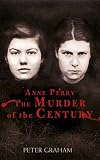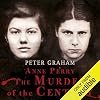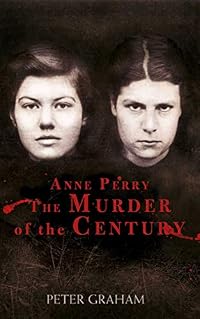
Anne Perry and the Murder of the Century
by Peter Graham
On This Page
Description
On June 22, 1954, teenage friends Juliet Hulme—better known as bestselling mystery writer Anne Perry—and Pauline Parker went for a walk in a New Zealand park with Pauline's mother, Honora. Half an hour later, the girls returned alone, claiming that Pauline's mother had had an accident. But when Honora Parker was found in a pool of blood with the brick used to bludgeon her to death close at hand, Juliet and Pauline were quickly arrested, and later confessed to the killing. Their motive? A show more plan to escape to the United States to become writers, and Honora's determination to keep them apart. Their incredible story made shocking headlines around the world and would provide the subject for Peter Jackson's Academy Award–nominated film, Heavenly Creatures.A sensational trial followed, with speculations about the nature of the girls' relationship and possible insanity playing a key role. Among other things, Parker and Hulme were suspected of lesbianism, which was widely considered to be a mental illness at the time. This mesmerizing book offers a brilliant account of the crime and ensuing trial and shares dramatic revelations about the fates of the young women after their release from prison. With penetrating insight, this thorough analysis applies modern psychology to analyze the shocking murder that remains one of the most interesting cases of all time.
. show less
Tags
Recommendations


Member Recommendations
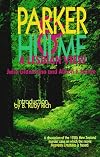
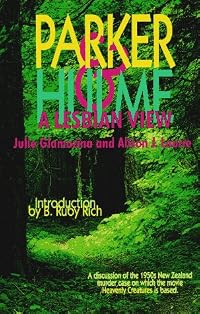
PuddinTame Parker & Hulme was actually the first book written on the case. It focuses on the social and political life of New Zealand at the time, especially with regard to lesbians, while recounting the course of the murder, trial, and media coverage. Anne Perry and the Murder of the Century, originally So Brilliantly Clever, has the most on the crime and trial, with some information on the afterlife of Parker and Hulme.
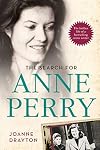
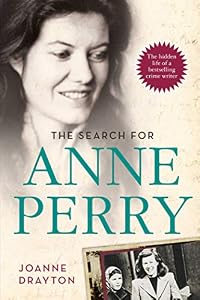
PuddinTame This book focuses on Anne Perry's (Juliet Hulme's) life and work, which includes the crime as well as her later life as a popular author. Anne Perry and the Murder of the Century, originally So Brilliantly Clever, focuses more on the crime and the trial, but does include some information on Parker's and Hulme's later lives.
Member Reviews
In June of 1954, Juliet Hulme and Pauline Parker took a walk in a Christchurch, New Zealand, park with Pauline's mother. A bit later, the teenager girls ran into a nearby shop in a panic, looking for help for Pauline's mother, who fell and hit her head on the trail. What initially appeared to be an accident was almost immediately identified as murder - after all, it's unlikely that someone falling to the ground would hit her head more than 40 times and wind up with bruises on her throat. And with little questioning, the girls told the police exactly what they did: they beat her to death with a brick in a sock.
This wasn't a sudden or spur of the moment decision. Juliet and Pauline had been extremely close companions for several years and show more had a relationship that included strong fantasy and near-delusional aspects. Both had grown up with significant issues of abandonment earlier in life, and both had trouble connecting with family and others emotionally. Plus, their families - especially Juliet's - were pretty screwed up. Their trial didn't involve questions of guilt at all, since the girls freely admitted the events that happened, but rather focused on whether they were responsible for their actions under the insanity defense in the law at the time. The jury found them guilty - and they spent about 5 years each in prison before essentially disappearing from public view on release.
Then in 1998, Peter Jackson released Heavenly Creatures to wide public acclaim, a movie documenting the crime and the public furor over the trial. Pauline, after release, converted to a strong Catholic belief, to the point of trying to become a nun. When that didn't work out, she left New Zealand for England, where she lived quietly for many years running a riding school and horse boarding establishment. Once the movie came out, she eventually left for the Orkney Islands, where she farms a small croft and lives as a hermit with little contact with others.
Juliet, on the other hand, moved to the US, then England, and changed her name to Anne Perry - her stepfather's name. Yep, NY Times bestselling author Anne Perry. Writer of more than thirty murder mysteries Anne Perry. And this gets to the heart of my thoughts about Graham's book. On the one hand, it's a rather common, albeit well done, true crime book. He's documented the crime well, his telling of the story keeps the reader's interest, and he handles issues from that time (for example, the girls' purported lesbian relationship) with reasonable delicacy. So I'd give it a decent recommendation on the face of things.
On the other hand, the more I read this book, the more I realized that there are millions of people reading rather good murder mysteries written by someone who has actually committed a murder. So the further I went the more this story creeped me out. And in that sense this book becomes more than just a decent true crime book and opens some interesting questions for me. What is the role of rehabilitation here? Anne Perry certainly claims to regret what was done, and the girls' behavior shows plenty of signs of mental illness that seems to have gotten better as she matured. Perry has paid for her crime, but these events happened and are part of the life experience from which she writes. Is it appropriate to experience her murder mysteries as a reader, knowing what horrific thing lies behind them? I certainly don't have any answers, but these are interesting questions!
Do I recommend the book? Yes. As I mention above, it's a decently written true crime story. But if you're an Anne Perry fan, this story could change how you view her work. show less
This wasn't a sudden or spur of the moment decision. Juliet and Pauline had been extremely close companions for several years and show more had a relationship that included strong fantasy and near-delusional aspects. Both had grown up with significant issues of abandonment earlier in life, and both had trouble connecting with family and others emotionally. Plus, their families - especially Juliet's - were pretty screwed up. Their trial didn't involve questions of guilt at all, since the girls freely admitted the events that happened, but rather focused on whether they were responsible for their actions under the insanity defense in the law at the time. The jury found them guilty - and they spent about 5 years each in prison before essentially disappearing from public view on release.
Then in 1998, Peter Jackson released Heavenly Creatures to wide public acclaim, a movie documenting the crime and the public furor over the trial. Pauline, after release, converted to a strong Catholic belief, to the point of trying to become a nun. When that didn't work out, she left New Zealand for England, where she lived quietly for many years running a riding school and horse boarding establishment. Once the movie came out, she eventually left for the Orkney Islands, where she farms a small croft and lives as a hermit with little contact with others.
Juliet, on the other hand, moved to the US, then England, and changed her name to Anne Perry - her stepfather's name. Yep, NY Times bestselling author Anne Perry. Writer of more than thirty murder mysteries Anne Perry. And this gets to the heart of my thoughts about Graham's book. On the one hand, it's a rather common, albeit well done, true crime book. He's documented the crime well, his telling of the story keeps the reader's interest, and he handles issues from that time (for example, the girls' purported lesbian relationship) with reasonable delicacy. So I'd give it a decent recommendation on the face of things.
On the other hand, the more I read this book, the more I realized that there are millions of people reading rather good murder mysteries written by someone who has actually committed a murder. So the further I went the more this story creeped me out. And in that sense this book becomes more than just a decent true crime book and opens some interesting questions for me. What is the role of rehabilitation here? Anne Perry certainly claims to regret what was done, and the girls' behavior shows plenty of signs of mental illness that seems to have gotten better as she matured. Perry has paid for her crime, but these events happened and are part of the life experience from which she writes. Is it appropriate to experience her murder mysteries as a reader, knowing what horrific thing lies behind them? I certainly don't have any answers, but these are interesting questions!
Do I recommend the book? Yes. As I mention above, it's a decently written true crime story. But if you're an Anne Perry fan, this story could change how you view her work. show less
Because in 1994 Anne Perry’s books were not yet selling in the numbers they soon would sell, many of her current fans (if they were old enough even to have heard about it at the time) missed the big announcement that year about the author’s true identity. Some forty years after having been convicted of one of the more infamous murders in the history of New Zealand, a New Zealand journalist revealed that Anne Perry is none other than convicted murderer Juliet Hulme – the same Juliet Hulme who in 1954, as a teen, helped Pauline Parker, her best friend, beat the girl’s mother to death with half a brick that Juliet brought from home for that specific purpose. Peter Graham’s Anne Perry and the Murder of the Century is a show more meticulously researched account of events leading up to the murder, the murder itself, the trial that followed, and what happened to the key players in those events once the two killers had been released from prison to go their separate ways.
Juliet Hulme, daughter of a prominent English couple, came to New Zealand as a young girl when her father was recruited for a university position in Christchurch. Her lack of social skills did not stop the physically striking Juliet from making an impression on her classmates, albeit it, for the most part, a negative impression. Pauline Parker, on the other hand, was blessed neither with physical attractiveness, nor with any social skills of which to speak. The angry and socially inept Pauline wanted badly to find a soul-mate to whom she could reveal her thoughts and dreams, and Juliet wanted just as badly to find someone she could recreate in her own image. The two girls were made for each other because each of them got their wish.
Pauline Parker’s mother, Honorah Rieper, did not die an easy death. Barely aware of what was happening to her, the woman nonetheless valiantly attempted to fight off her attackers, and it was only when Juliet held her down by the throat that Pauline was finally able to finish off her mother. There was never any doubt as to whom the woman’s murderers were, but the defiantly gleeful manner in which the two teens confessed to what they had done still managed to shock and surprise the country.
Five and one-half years later, after the two young women were released from prison, they assumed new names and began the new lives far from Christchurch, that they hoped would shield them from further notoriety. And it worked for forty years.
There is a lot of material out there, including one major movie (Heavenly Creatures), a documentary made inside Anne Perry’s Scotland home (Interiors), and several books that attempt to explain how two fifteen-year-old girls could so callously murder the mother of one of them. In Anne Perry and the Murder of the Century, Peter Graham explores each possibility, one by one, reaching his own conclusion that the strong homosexual ties between the two girls, compounded by a perfect meshing of two distinct personality disorders, created exactly the perfect storm needed to make such a thing possible.
Perhaps most shocking today, is how differently the two women have responded to what they did in 1954. On the one hand, Paulette Parker has lived a life of repentance and appears still to be much bothered by what she did to her mother. On the other, Juliet Hulme (Anne Perry) still shows no remorse whatsoever and has constructed a version of the events that she uses to explain why she had no other choice but to help her friend commit matricide. As Graham notes, Perry’s version of what led up to the murder is so obviously false that it cannot be taken seriously. Anne Perry appears to be much the same person that she was in 1954.
When asked if she ever thinks of the woman she and Paulette murdered, this writer who has made a fine living for herself writing bloody murder mysteries for the last four decades said this:
“No. She was somebody I barely knew.”
And yet, as late as 2006 according to Peter Graham, Anne Perry and her publisher were known to grant interviews about the murder just prior to the publication of a new Anne Perry book, under the theory, I suppose, that “no publicity is bad publicity.”
To this point, they seem to be correct about that. show less
Juliet Hulme, daughter of a prominent English couple, came to New Zealand as a young girl when her father was recruited for a university position in Christchurch. Her lack of social skills did not stop the physically striking Juliet from making an impression on her classmates, albeit it, for the most part, a negative impression. Pauline Parker, on the other hand, was blessed neither with physical attractiveness, nor with any social skills of which to speak. The angry and socially inept Pauline wanted badly to find a soul-mate to whom she could reveal her thoughts and dreams, and Juliet wanted just as badly to find someone she could recreate in her own image. The two girls were made for each other because each of them got their wish.
Pauline Parker’s mother, Honorah Rieper, did not die an easy death. Barely aware of what was happening to her, the woman nonetheless valiantly attempted to fight off her attackers, and it was only when Juliet held her down by the throat that Pauline was finally able to finish off her mother. There was never any doubt as to whom the woman’s murderers were, but the defiantly gleeful manner in which the two teens confessed to what they had done still managed to shock and surprise the country.
Five and one-half years later, after the two young women were released from prison, they assumed new names and began the new lives far from Christchurch, that they hoped would shield them from further notoriety. And it worked for forty years.
There is a lot of material out there, including one major movie (Heavenly Creatures), a documentary made inside Anne Perry’s Scotland home (Interiors), and several books that attempt to explain how two fifteen-year-old girls could so callously murder the mother of one of them. In Anne Perry and the Murder of the Century, Peter Graham explores each possibility, one by one, reaching his own conclusion that the strong homosexual ties between the two girls, compounded by a perfect meshing of two distinct personality disorders, created exactly the perfect storm needed to make such a thing possible.
Perhaps most shocking today, is how differently the two women have responded to what they did in 1954. On the one hand, Paulette Parker has lived a life of repentance and appears still to be much bothered by what she did to her mother. On the other, Juliet Hulme (Anne Perry) still shows no remorse whatsoever and has constructed a version of the events that she uses to explain why she had no other choice but to help her friend commit matricide. As Graham notes, Perry’s version of what led up to the murder is so obviously false that it cannot be taken seriously. Anne Perry appears to be much the same person that she was in 1954.
When asked if she ever thinks of the woman she and Paulette murdered, this writer who has made a fine living for herself writing bloody murder mysteries for the last four decades said this:
“No. She was somebody I barely knew.”
And yet, as late as 2006 according to Peter Graham, Anne Perry and her publisher were known to grant interviews about the murder just prior to the publication of a new Anne Perry book, under the theory, I suppose, that “no publicity is bad publicity.”
To this point, they seem to be correct about that. show less
3.7 Need a notebook to keep up with all the names and characters. Too much detail in many areas. Insightful look into how mental health and the justice system worked for a shocking 1954 matriarchal murder in New Zealand.
I remember putting this book on my wishlist after hearing somewhere on LT about the fact that author Anne Perry had been involved in murdering a friend's mother when she was a teenager. I wasn't a fan of Perry's Victorian mystery series, but the real-life situation intrigued me. It floated up to the top of my attention pool recently when reading about Peter Jackson's movies, as I came across Heavenly Creatures, Jackson's fictionalized version of the infamous New Zealand crime. It was a quick read, somewhat repetitive with its facts, but overall quite interesting. The author went to some trouble to distinguish what is known now about sexuality, mental health, and child development from what was believed in the mid-twentieth century; and show more to discuss changes in treatment as well as general attitudes toward these aspects of humanity. show less
Anne Perry -- Juliet Hulme -- and her friend, Pauline Parker, killed Pauline's mother when the girls were teenagers. Their crime, which they said was to prevent their parents from separating them, stunned New Zealand. Peter Jackson made an oddly sympathetic movie about the crime, "Heavenly Creatures," introducing Kate Winslet as Juliet. Graham's book is a fine piece of reporting (except that he repeatedly criticizes Perry for not admitting she's a lesbian -- how is her sexual orientation anyone else's business?). The best pages are his analysis of quotes from Perry's mysteries that suggest she still sees nothing wrong with killing people who get in your way. Parker expressed remorse for killing her mother and destroying her family. show more Hulme/Perry has never said anything of the kind. It's really creepy. show less
Graham covers quite a bit of ground so I'm marking a five-star effort down to four stars because of the patience it required to plow through some segments. As an aside, I'm reasonably certain those 'trying' segments will not be the same for everyone since this is a comprehensive look at Hulme-Parker and I can't think of a unique curiosity that won't be satisfied. Well-written (though you will need to decode some New Zealand jargon) and as sympathetic as possible to all involved. Much was based Pauline Rieper Parker's diary with no counterpoint from Juliet Hulme's writing which was destroyed by her mother at the time of her arrest -- you can't help wondering how different the slant of this book might have been if that diary had survived.
Almost all of what I knew about this murder I learned from the movie, "Heavenly Creatures", which detailed the murder of Honora Rieper in New Zealand by her daughter, Pauline Rieper (Parker) and Juliet Hulme.
The author notes that this is one of only two murders that have garnered such interest when the killers and the victim are unknown and it isn't a case of spree killing, mass murders or serial killing. The only other case was Leopold and Loeb.
Peter Graham starts with the murder then goes back to before the girls were born giving us information about the four parents which helps us understand what could have lead to this brutal murder. He then goes on to the relationship between the girls, the murder and the trial.
This is a show more fascinating case due to the fantasy world these girls built for themselves as well as their almost pathological need for each other. It was these two factors which led to the murder of Pauline's mother. Add to this the fact that one of the two girls, Juliet Hulme, went on to become a best-selling author (Anne Perry) and this case has all the ingredients necessary for the decades of interest it has garnered around the world. show less
The author notes that this is one of only two murders that have garnered such interest when the killers and the victim are unknown and it isn't a case of spree killing, mass murders or serial killing. The only other case was Leopold and Loeb.
Peter Graham starts with the murder then goes back to before the girls were born giving us information about the four parents which helps us understand what could have lead to this brutal murder. He then goes on to the relationship between the girls, the murder and the trial.
This is a show more fascinating case due to the fantasy world these girls built for themselves as well as their almost pathological need for each other. It was these two factors which led to the murder of Pauline's mother. Add to this the fact that one of the two girls, Juliet Hulme, went on to become a best-selling author (Anne Perry) and this case has all the ingredients necessary for the decades of interest it has garnered around the world. show less
Members
- Recently Added By
Lists

2022 Christmas Gifts
60 works; 13 members

True Crime
156 works; 1 member

True Crime
216 works; 16 members

Check Library
169 works; 1 member
Author Information

2 Works 372 Members
Peter Graham has spent 30 years in Hong Kong as a Crown Counsel and barrister in private practice. Having returned to his native Canterbury Plains, he now grows apples, supervises a few pigs, reads a lot of history and mulls over the past. This is his first book and, with other subjects in mind, he hopes it will not be the last.
Some Editions
Awards and Honors
Awards
Common Knowledge
- Canonical title
- Anne Perry and the Murder of the Century
- Original title
- So brilliantly clever : Parker, Hulme and the murder that shocked the world
- Original publication date
- 2011-11
- People/Characters
- Hilary Nathan nee Pauline Parker; Anne Perry nee Juliet Hulme; Honorah Parker; Meg McDonald; Hilda Hulme; Henry Hulme (show all 7); Walter "Bill" Perry
- Important places
- Christchurch, New Zealand
- Important events
- murder of Honorah Parker
- Related movies
- Heavenly Creatures (1994)
- Dedication
- To Rebecca, Guy, Lucy and Louise
- First words
- By eleven o'clock in the morning, hard bright sunlight had melted the last pockets of frost from the rector's expansive lawns and dispelled the mist from the river that glided through the grounds.
- Last words
- (Click to show. Warning: May contain spoilers.)Would either want to be reminded of the time when Gina and Deborah believed themselves goddesses, heavenly creatures, the two most glorious beings in creation?
- Publisher's editor
- Varnham, Mary
- Canonical DDC/MDS
- 823.914
- Canonical LCC
- PR6066.E693
- Disambiguation notice
- Originally published in 2011 under the title So Brilliantly Clever : Parker Hulme and the Murder that Shocked the World by Awa Press, Wellington, New Zealand.
Classifications
Statistics
- Members
- 375
- Popularity
- 84,578
- Reviews
- 26
- Rating
- (3.57)
- Languages
- English
- Media
- Paper, Audiobook, Ebook
- ISBNs
- 6
- ASINs
- 3