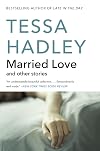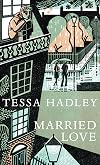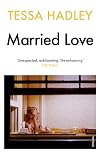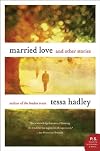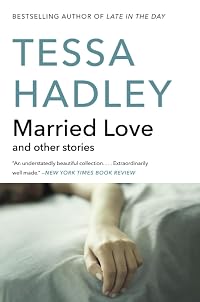
Married Love
by Tessa Hadley
On This Page
Description
"Married Love is a masterful collection of short fiction from one of today's most accomplished storytellers. These tales showcase the qualities for which Tessa Hadley has long been praised: her humor, warmth, and psychological acuity; her powerful, precise, and emotionally dense prose; her unflinching examinations of family relationships. Here are stories that range widely across generations and classes, exploring the private and public lives of unforgettable characters: a young girl who show more haunts the edges of her parents' party; a wife released by the sudden death of her film-director husband; an eighteen-year-old who insists on marrying her music professor, only to find herself shut out from his secrets. In this stunning collection, Hadley evokes worlds that expand in the imagination far beyond the pages, capturing domestic dramas, generational sagas, wrenching love affairs and epiphanies, and distilling them to remarkable effect."--from cover, p. [4] show lessTags
Recommendations




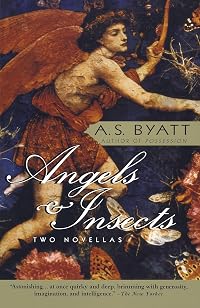
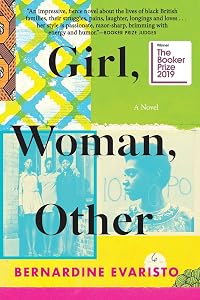
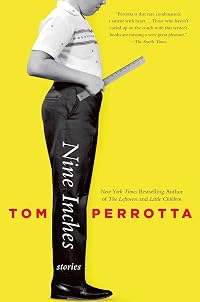

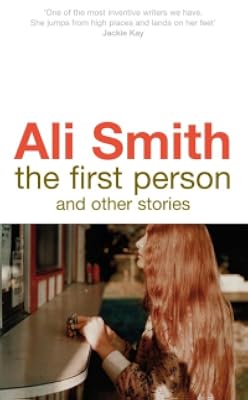



Member Reviews
Short stories are very hard to get right, at least for this reader. They don't tend to be my favorite type of writing to read. While their length makes them ideal for reading in small bursts, especially nice for those of us who spend so much time in carpools or sitting at sports practices in which we are not participants, they can also feel too small or too spare to be complete and very often feel incomplete and unsatisfying. Tessa Hadley, in her new collection, Married Love and Other Stories, has avoided these common pitfalls of short stories and created a complete and intricately crafted collection of tales about ordinary people muddling through their lives and relationships and the domestic dramas and non-events that give shape to show more their existence.
Hadley's writing is controlled and tightly composed as she creates her characters and their particular circumstances. Every nuance of speech and even their smallest of actions is considered and carefully constructed to give the reader the measure of not only the character but their entire life in relation to each other, outside events, and the one small space in time captured within the short story. The stories all focus on relationship and the ways in which people together are not what they seem, going along living their lives of quiet desperation or hiding momentous events of little importance even while tiny flashes of unvarnished truth wink from their everyday, generally unremarkable lives. What Hadley has done so well is that an instant or several minor instances in her characters' lives are richly complex and representative of the whole of their lives. They are the people around us. They are universal. They are us.
The title story tells of a young woman determined to marry her brilliant music professor who is forty-five years her elder and the slow dawning realization about the lack of brilliance in the mundanity of everyday married life as the years pile up. The other stories are just as firmly set in the unremarkable everyday as the first one and yet they all resonate with profound emotional insight. A woman helping a friend clean an industrial building reflects on her family and her relationship with them, especially her army son, as she scrubs walls clean and unplugs a filthy sink. A girlfriend and boyfriend meet each others' families, realizing that they are outsiders, disappointing and different. A young man searches out his wealthier cousin to make her acquaintance but is less drawn to her than to her sly companion who knows him for who he is. A girl lurks around the edges of her parents' party in the company of the strange, pitiable young man who is her mother's hanger-on. A brother delayed coming home from abroad worries about his unreachable sister after he sees her Facebook status change. A young woman living at home in the aftermath of her brother's suicide tries to slink through her life unnoticed until she starts to move beyond being defined by his death. These are just some of the stories but they are representative of the whole.
There is nothing particularly remarkable happening in any of the stories in the collection but Hadley has managed to catch them so perfectly and illuminate them so fully that they feel entirely complete and self-contained. They are densely emotional despite their commonplace events and they highlight the interior life, the secret feeling we so carefully conceal from the world. Hadley has deftly peeled back the surface and shown the intense swirl beneath the skin. There is not much happiness to be found in the stories but rather than its opposite depression, there's more an undertone of resignation running through many of them. And while there's a lot of truth to the resignation, that's a little depressing in and of itself. Short story fans will definitely not want to miss this offering but those who don't often read short stories should also appreciate the masterly writing here as long as they aren't looking for happy, feel-good stories. show less
Hadley's writing is controlled and tightly composed as she creates her characters and their particular circumstances. Every nuance of speech and even their smallest of actions is considered and carefully constructed to give the reader the measure of not only the character but their entire life in relation to each other, outside events, and the one small space in time captured within the short story. The stories all focus on relationship and the ways in which people together are not what they seem, going along living their lives of quiet desperation or hiding momentous events of little importance even while tiny flashes of unvarnished truth wink from their everyday, generally unremarkable lives. What Hadley has done so well is that an instant or several minor instances in her characters' lives are richly complex and representative of the whole of their lives. They are the people around us. They are universal. They are us.
The title story tells of a young woman determined to marry her brilliant music professor who is forty-five years her elder and the slow dawning realization about the lack of brilliance in the mundanity of everyday married life as the years pile up. The other stories are just as firmly set in the unremarkable everyday as the first one and yet they all resonate with profound emotional insight. A woman helping a friend clean an industrial building reflects on her family and her relationship with them, especially her army son, as she scrubs walls clean and unplugs a filthy sink. A girlfriend and boyfriend meet each others' families, realizing that they are outsiders, disappointing and different. A young man searches out his wealthier cousin to make her acquaintance but is less drawn to her than to her sly companion who knows him for who he is. A girl lurks around the edges of her parents' party in the company of the strange, pitiable young man who is her mother's hanger-on. A brother delayed coming home from abroad worries about his unreachable sister after he sees her Facebook status change. A young woman living at home in the aftermath of her brother's suicide tries to slink through her life unnoticed until she starts to move beyond being defined by his death. These are just some of the stories but they are representative of the whole.
There is nothing particularly remarkable happening in any of the stories in the collection but Hadley has managed to catch them so perfectly and illuminate them so fully that they feel entirely complete and self-contained. They are densely emotional despite their commonplace events and they highlight the interior life, the secret feeling we so carefully conceal from the world. Hadley has deftly peeled back the surface and shown the intense swirl beneath the skin. There is not much happiness to be found in the stories but rather than its opposite depression, there's more an undertone of resignation running through many of them. And while there's a lot of truth to the resignation, that's a little depressing in and of itself. Short story fans will definitely not want to miss this offering but those who don't often read short stories should also appreciate the masterly writing here as long as they aren't looking for happy, feel-good stories. show less
This is a collection of twelve interesting but somewhat gloomy stories that explore the human heart through various prisms. A nineteen announces to her family that she plans to marry her lover--a professor 45 years her senior. A family gathers in the country for the matriarch's 60th birthday. A girl forms a friendship with an imaginative outcast. A young man sets his sights on marriage with a wealthy second cousin but returns from the war to a surprise within himself. A young woman struggling with her brother's suicide forms an unlikely friendship with a gruff older woman. Three adult godchildren gather to sort through their godmother's belongings. The situations Hadley depicts are, for the most part, rather banal, but once they take show more off, the stories tend to travel in unexpected directions. I read a review that claimed Hadley has a gift for opening lines. True--but she has an equally strong gift for conclusions. Most of these stories aren't neatly wrapped up; instead, they may simply come to an abrupt halt or gently wander off. But what they generally do is conclude with an image that stays in the reader's mind.
I enjoyed this collection much more than Hadley's novel The London Train, and perhaps it is because her style is so well suited to the smaller but more intense frame of the short story. It forces the reader to focus on her tightness of language and the crystalline quality of her descriptions, her believable dialogue and characters that ring true. While I can't say that I loved every one of these stories, I definitely appreciated Hadley's mastery of her craft. show less
I enjoyed this collection much more than Hadley's novel The London Train, and perhaps it is because her style is so well suited to the smaller but more intense frame of the short story. It forces the reader to focus on her tightness of language and the crystalline quality of her descriptions, her believable dialogue and characters that ring true. While I can't say that I loved every one of these stories, I definitely appreciated Hadley's mastery of her craft. show less
I'm not generally a big fan of short stories, because I think the genre doesn't have the opportunity to really develop characters well. But hats off to Ms Hadley for the job she's done here. I found nearly all of these stories interesting and even satisfying in some way. I liked the emphasis on relationships and the presence of slightly damaged people. There are often slightly quirky characters, but they are explored and revealed in such a way that we get some idea what lies behind that quirkiness. We can see that they are all real people.
I have to confess, when I saw the blurb from the San Francisco Chronicle on the cover -- "An acknowledged master of limning the Chekhovian mysteries of experience." -- I kind of panicked. I know Chekhov is great, but isn't The Seagull super obscure and boring? I'm pretty sure I know what 'limning' might mean, but needless to say, I was a bit daunted to start.
I needn't have worried! While these stories are quiet in a way, they aren't boring or obscure. They're moody and sad, poignant and romantic, bittersweet and heartbreaking, frustrating and expansive. Hadley's writing is pretty at times -- ("The wind is tearing scraps of cloud in a fitfully gleaming sky, and combing through the twigs of the hornbeam trees (the trees are another show more difference between this street and his), setting them springing and dancing like whips.", from 'The Trojan Prince') -- and sharp at other times, like 'In the Cave', six pages that articulated perfectly the disappointment of not being in love.
Some of the stories are historical -- set in the '20s or the '70s -- while others are ambigu-contemporary. All are about relationships in some way, and usually about the way those relationships fail one or both people. The New Yorker has the entirety of 'Married Love', the titular first story of this volume, online; you can get a sense of Hadley's writing style and subject through this story, which I found captivating and maddening. My favorite story might have been 'The Trojan Prince', about a young man in 1920 who decides to befriend his wealthier second cousin for a nebulous, un-articulated reason and instead finds he's less enamored of her than he expected.
I inhaled this volume over the past weekend -- there are twelve gems in this book -- and it was perfect for kicking me out of my reading funk. These sad snapshots of love and life were a kind of escape -- I was grateful for my own happier relationships and caught up in the whirlwind of the ones contained in the book -- and I'm still thinking about these stories with a mix of sadness and longing. show less
I needn't have worried! While these stories are quiet in a way, they aren't boring or obscure. They're moody and sad, poignant and romantic, bittersweet and heartbreaking, frustrating and expansive. Hadley's writing is pretty at times -- ("The wind is tearing scraps of cloud in a fitfully gleaming sky, and combing through the twigs of the hornbeam trees (the trees are another show more difference between this street and his), setting them springing and dancing like whips.", from 'The Trojan Prince') -- and sharp at other times, like 'In the Cave', six pages that articulated perfectly the disappointment of not being in love.
Some of the stories are historical -- set in the '20s or the '70s -- while others are ambigu-contemporary. All are about relationships in some way, and usually about the way those relationships fail one or both people. The New Yorker has the entirety of 'Married Love', the titular first story of this volume, online; you can get a sense of Hadley's writing style and subject through this story, which I found captivating and maddening. My favorite story might have been 'The Trojan Prince', about a young man in 1920 who decides to befriend his wealthier second cousin for a nebulous, un-articulated reason and instead finds he's less enamored of her than he expected.
I inhaled this volume over the past weekend -- there are twelve gems in this book -- and it was perfect for kicking me out of my reading funk. These sad snapshots of love and life were a kind of escape -- I was grateful for my own happier relationships and caught up in the whirlwind of the ones contained in the book -- and I'm still thinking about these stories with a mix of sadness and longing. show less
The twelve stories collected in Tessa Hadley’s Married Love are carefully observed and, at times, subtle. They tend toward interiors. Lives of middle-class (or aspirationally middle-class) English women and, sometimes, men. Although the decades in which the stories take place vary across the 20th century, the tone is remarkably similar. Indeed, except in special cases, the voice of markedly different characters, even across different stories sounds very much the same. However, it is just those special cases that reveal Tessa Hadley as a writer of significance and almost unsettling calm.
The title story, “Married Love”, stands out, while following it closely in intensity are, “A Mouthful of Cut Glass”, “In the Country”, and show more “Because the Night”. These are unsentimental accounts of insistent lives. An inner something, possibly fire, drives the main character in each. I found them curious without being riveting. Sometimes it is as though the writing is on the verge of being bold and daring and then pulls back. Call it reticence, a very English demeanour. show less
The title story, “Married Love”, stands out, while following it closely in intensity are, “A Mouthful of Cut Glass”, “In the Country”, and show more “Because the Night”. These are unsentimental accounts of insistent lives. An inner something, possibly fire, drives the main character in each. I found them curious without being riveting. Sometimes it is as though the writing is on the verge of being bold and daring and then pulls back. Call it reticence, a very English demeanour. show less
This is a set of stories about relationships. Not necessarily a very cheerful or optimistic set of stories, but each one does find something to say about the nature of relationships. They feature young love, old love, loss and parting with a clear eyed lack of romanticism. In one sense nothing much happens in any of these stories, yet each of them tells us something fundamental about relations with other people. It wasn't exactly a fun book to listen to, but there was something deep in each small tale told.
Another half star if I could.
I am a big fan of Hadley's and there are some very good stories in this collection - Pretending, In the Cave, In the Country. I love her style which is so smooth and then, at the end, you feel a big emotional punch.
I am a big fan of Hadley's and there are some very good stories in this collection - Pretending, In the Cave, In the Country. I love her style which is so smooth and then, at the end, you feel a big emotional punch.
Members
- Recently Added By
Lists

BBC Radio 4 Bookclub
340 works; 13 members
Author Information

24+ Works 3,311 Members
Tessa Hadley teaches literature and creative writing at Bath Spa University College in Cardiff, Wales.
Some Editions
Awards and Honors
Common Knowledge
- Canonical title
- Married Love
- Original publication date
- 2012
Classifications
Statistics
- Members
- 178
- Popularity
- 183,815
- Reviews
- 10
- Rating
- (3.73)
- Languages
- English, Italian
- Media
- Paper, Audiobook, Ebook
- ISBNs
- 13
- ASINs
- 3