On This Page
Description
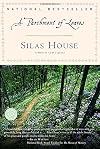
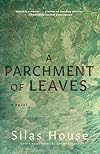
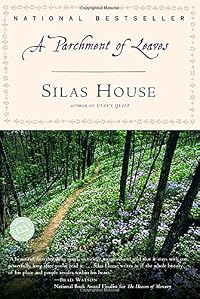
When Silas House made his debut with Clay's Quilt last year, it touched a nerve not just in his home state (where it quickly became a bestseller), but all across the country. Glowing reviews-from USA Today (House is letter-perfect with his first novel), to the Philadelphia Inquirer (Compelling. . . . House knows what's important and reminds us of the value of family and home, love and loyalty), to the Mobile Register (Poetic, haunting), and everywhere in between-established him as a writer show more to watch. His second novel won't disappoint. Set in 1917, A PARCHMENT OF LEAVES tells the story of Vine, a beautiful Cherokee woman who marries a white man, forsaking her family and their homeland to settle in with his people and make a home in the heart of the mountains. Her mother has strange forebodings that all will not go well, and she's right. Vine is viewed as an outsider, treated with contempt by other townspeople. Add to that her brother-in-law's fixation on her, and Vine's life becomes more complicated than she could have ever imagined. In the violent turn of events that ensues, she learns what it means to forgive others and, most important, how to forgive herself. As haunting as an old-time ballad, A PARCHMENT OF LEAVES is filled with the imagery, dialect, music, and thrumming life of the Kentucky mountains. For Silas House, whose great-grandmother was Cherokee, this novel is also a tribute to the family whose spirit formed him. Silas House is the New York Times bestselling author of seven novels, one book of creative nonfiction, and three plays. His writing has appeared in the New York Times, the Atlantic, the Advocate, Time, Garden & Gun, and other publications. A former commentator for NPR's All Things Considered, House is the winner of the Nautilus Award, the Storylines Prize from the NAV/New York Public Library, an E. B. White Honor, and many other awards. show lessTags
Recommendations





Member Reviews
This is a beautifully written story of love and family, guilt and forgiveness. The prologue and epilogue are written in third person, while the body of the story is narrated by Vine, a Cherokee descended from a group who hid during Removal and remained in their Kentucky mountains. Now the mid-1910s, big-man in town is ousting the Redbud Camp Cherokees without so much as payment for their land, taking over their mountain to build his mansion. Saul is sent to work on clearing the building area, when he meets and falls in love with Vine.
I loved this book. I’m trying to work out why it spoke to me so. It’s not historically significant, or deep, or fancy in any way. It is written in very simple language. “And then I knowed that I was show more fooling myself. The rains of spring would not wash away what had already been done.” Simple, but with such beauty and clarity. The setting, though we still see it through Vine’s simple words, is just as lovely to my mind as it is to her eyes. You come to know her places and what she thinks of them, as if you are there, too. Her garden, the path between their home and her mother-in-law’s home, the cooling river, her old home-place – the scenery was lovingly painted. The characters were true to their time, their thoughts and motives believable. And so well described that you could see them in your mind and know how they felt. Perhaps it’s the Cherokee in me, or the fact that I spent my youthful summers in a place very similar to the area described, or that I’ve known and loved my share of Esmes. I don’t know why; I just loved it!
Mr. House’s creation has a lot to like. I liked both mothers; I liked the local midwife. Not sure about the violets. Where I’m from, violets bloom in the early spring, and then just a month or two. They wouldn’t be there for the picking on a hot, sultry day. Maybe they grow a different kind in Kentucky; hope so, ‘cause I don’t want to not like anything about this book. But I forgive him if he got that wrong, because everything else felt so right, including speaking a woman’s voice – he even got that right. If you happen on this review, please go check out the CK for quotations from Parchment of Leaves so you can read some snippets from the pen of Silas House. Then I’m sure you’ll want to read his book yourself.
One of my top four reads this year. I loved it! show less
I loved this book. I’m trying to work out why it spoke to me so. It’s not historically significant, or deep, or fancy in any way. It is written in very simple language. “And then I knowed that I was show more fooling myself. The rains of spring would not wash away what had already been done.” Simple, but with such beauty and clarity. The setting, though we still see it through Vine’s simple words, is just as lovely to my mind as it is to her eyes. You come to know her places and what she thinks of them, as if you are there, too. Her garden, the path between their home and her mother-in-law’s home, the cooling river, her old home-place – the scenery was lovingly painted. The characters were true to their time, their thoughts and motives believable. And so well described that you could see them in your mind and know how they felt. Perhaps it’s the Cherokee in me, or the fact that I spent my youthful summers in a place very similar to the area described, or that I’ve known and loved my share of Esmes. I don’t know why; I just loved it!
Mr. House’s creation has a lot to like. I liked both mothers; I liked the local midwife. Not sure about the violets. Where I’m from, violets bloom in the early spring, and then just a month or two. They wouldn’t be there for the picking on a hot, sultry day. Maybe they grow a different kind in Kentucky; hope so, ‘cause I don’t want to not like anything about this book. But I forgive him if he got that wrong, because everything else felt so right, including speaking a woman’s voice – he even got that right. If you happen on this review, please go check out the CK for quotations from Parchment of Leaves so you can read some snippets from the pen of Silas House. Then I’m sure you’ll want to read his book yourself.
One of my top four reads this year. I loved it! show less
Any two people can set and jaw all day long but it takes two people right for each other to set together and just be quiet Quote - A Parchment Of Leaves
I love Appalachian Fiction and Silas House draws the reader in with a wonderful sense of time and place. I had this one on my to read list for awhile and January seemed like a good time to de clutter the TBR list as I knew I had some pretty good books there but always swayed by new books.
Set in early 1900s rural Kentucky and young Saul Sullivan is heading up to Redbud camp to look for work. He is wary but unafraid of the Cherokee girl there whose beauty is said to cause the death of all men who see her, but the minute Saul lays eyes on Vine he knows she is meant to be his show more wife.
Beautiful writing, with vivid descriptions that take you right to the heart of Appalachia. If I had read this one as opposed to listening to it probably would have taken me way longer to finish as its the sort of novel where you want to go back and re-read passages just for the beauty of the writing. I loved the characters although predictable they are well written and have a genuineness about them that makes you care about their outcome in the story.
This is a quiet book, its not full of action or twists and turns, just a good story well told with the added bonus of amazing sense of time and place, and I think readers who have enjoyed books like [b:The Giver of Stars|43925876|The Giver of Stars|Jojo Moyes|https://i.gr-assets.com/images/S/compressed.photo.goodreads.com/books/1572879113l/43925876._SX50_.jpg|68351635] or [b:The Book Woman of Troublesome Creek|40914165|The Book Woman of Troublesome Creek|Kim Michele Richardson|https://i.gr-assets.com/images/S/compressed.photo.goodreads.com/books/1543864778l/40914165._SY75_.jpg|63789129] may well enjoy this one too.
I listened to this on on Audible and the narrator was really good. show less
I love Appalachian Fiction and Silas House draws the reader in with a wonderful sense of time and place. I had this one on my to read list for awhile and January seemed like a good time to de clutter the TBR list as I knew I had some pretty good books there but always swayed by new books.
Set in early 1900s rural Kentucky and young Saul Sullivan is heading up to Redbud camp to look for work. He is wary but unafraid of the Cherokee girl there whose beauty is said to cause the death of all men who see her, but the minute Saul lays eyes on Vine he knows she is meant to be his show more wife.
Beautiful writing, with vivid descriptions that take you right to the heart of Appalachia. If I had read this one as opposed to listening to it probably would have taken me way longer to finish as its the sort of novel where you want to go back and re-read passages just for the beauty of the writing. I loved the characters although predictable they are well written and have a genuineness about them that makes you care about their outcome in the story.
This is a quiet book, its not full of action or twists and turns, just a good story well told with the added bonus of amazing sense of time and place, and I think readers who have enjoyed books like [b:The Giver of Stars|43925876|The Giver of Stars|Jojo Moyes|https://i.gr-assets.com/images/S/compressed.photo.goodreads.com/books/1572879113l/43925876._SX50_.jpg|68351635] or [b:The Book Woman of Troublesome Creek|40914165|The Book Woman of Troublesome Creek|Kim Michele Richardson|https://i.gr-assets.com/images/S/compressed.photo.goodreads.com/books/1543864778l/40914165._SY75_.jpg|63789129] may well enjoy this one too.
I listened to this on on Audible and the narrator was really good. show less
That's all anybody can ask for, if you think about it--to have somebody love you and depend on you and take care of you when you're sick, and mourn over your casket when you die. Family's the only thing a person's got in this life.
This is a story of family, of how one comes to be, how the roots we receive from our parents define us, how unconnected people form one, how complicated the interactions can be, and sometimes how tragic. The character at the heart of this tale is Vine, a Cherokee whose family hid in the North Carolina mountains and avoided the Trail of Tears, who marries a white man, Saul, and she is so perfectly drawn that I felt I knew her soul by the end of the book.
The most immediate thing I noticed about Silas House is show more the authentic voice with which he portrays his characters. They speak the vernacular of the Kentucky mountains with a ring of truth that can only come from a writer who knows the place and its people intimately. There is a minstrel quality to the writing, like that of an ancient storyteller singing his song. And, there is description of the mountains and nature that reminds one of how close our ancestors lived to the natural world that we so frequently ignore.
I walked out to the tree and put my finger to a leaf, smooth like it was coated with wax. I could feel its veins, wet and round. I had always found comfort in the leaves, in their silence. They were like a parchment that hold words of wisdom. Simply holding them in my hand gave me some of the peace a tree possesses. To be like that--to just be--that's the most noble thing of all.
I knew that I wanted to read Silas House, but somehow this book kept being pushed behind others. When I drew up my Old and New Challenge this year, it was the first book I put on the list. I did it to ensure that another year could not elapse without my reading it. My only regret is that I waited this long to discover what I always knew I was missing. show less
This is a story of family, of how one comes to be, how the roots we receive from our parents define us, how unconnected people form one, how complicated the interactions can be, and sometimes how tragic. The character at the heart of this tale is Vine, a Cherokee whose family hid in the North Carolina mountains and avoided the Trail of Tears, who marries a white man, Saul, and she is so perfectly drawn that I felt I knew her soul by the end of the book.
The most immediate thing I noticed about Silas House is show more the authentic voice with which he portrays his characters. They speak the vernacular of the Kentucky mountains with a ring of truth that can only come from a writer who knows the place and its people intimately. There is a minstrel quality to the writing, like that of an ancient storyteller singing his song. And, there is description of the mountains and nature that reminds one of how close our ancestors lived to the natural world that we so frequently ignore.
I walked out to the tree and put my finger to a leaf, smooth like it was coated with wax. I could feel its veins, wet and round. I had always found comfort in the leaves, in their silence. They were like a parchment that hold words of wisdom. Simply holding them in my hand gave me some of the peace a tree possesses. To be like that--to just be--that's the most noble thing of all.
I knew that I wanted to read Silas House, but somehow this book kept being pushed behind others. When I drew up my Old and New Challenge this year, it was the first book I put on the list. I did it to ensure that another year could not elapse without my reading it. My only regret is that I waited this long to discover what I always knew I was missing. show less
This is the story of a young woman named Vine, from an assimilated Cherokee family living in Kentucky in the early 20th century. She falls in love and marries a white man named Saul Sullivan, who takes her to live among his family, far enough away from home to make visits a rare occurrence. She finds life among these strong descendants of Irish immigrants different from what she has been accustomed to, and she misses her parents, but she builds strong relationships with her mother-in-law, and other women of God's Creek. The character development is good, the regional history and culture very well presented, but there isn't an awful lot to this story, until a traumatic event threatens to destroy Vine's composure and possibly rip her new show more family apart. I enjoyed spending time in this place, with these people, but the ending was a bit abrupt and unsatisfying. This is considered to be the first of House's Appalachian trilogy, but he wrote these books chronologically inside out, starting with Clay's Quilt set in the late 20th century, then A Parchment of Leaves which takes place during WWI, and ending with The Coal Tattoo set in the 1960's. I'm reading them in publication order by happenstance, not choice. show less
High in the mountains of rural Kentucky in 1917, Silas Sullivan fell in love with a beautiful Cherokee woman named Vine. After their marriage Vine left her family in the Redbud settlement to go live among the white people who would never quite accept her although, as Silas' wife, she was accorded some respect. Esme, Silas' mother, quickly grew to love Vine, while Aaron, Silas' younger brother looked at Vine with deep longing and desire. Silas and Vine welcomed a daughter named Birdie, but shortly thereafter Silas left with a logging crew to help with the war effort since the United States had finally joined WWI. Months passed without Silas' return and finally Aaron made his move on the beautiful Vine. She adamantly put Aaron in his show more place and ordered him to leave which he did for several months. Aaron returned bringing with him a pregnant wife, Aidia, who bore a striking resemblence to Vine. It became obvious that Aaron was mistreating Aidia and although both Esme and Vine tried to intercede, Aaron continued his drunken attacks on his wife. A violent encounter between Vine and Aaron would change everyone's lives forever.
Altough I thoroughly enjoyed the time period and the rural setting I found the book to be somewhat boring for at least the first half. I like Vine's character and that of her best friend, the scandalously divorced Serena. Esme was a very strong woman with a deep secret that she revealed to Vine late in the story. I never got a good sense of Silas, however. Maybe that was the point, though, to show that these very capable women were just fine withough a man. show less
Altough I thoroughly enjoyed the time period and the rural setting I found the book to be somewhat boring for at least the first half. I like Vine's character and that of her best friend, the scandalously divorced Serena. Esme was a very strong woman with a deep secret that she revealed to Vine late in the story. I never got a good sense of Silas, however. Maybe that was the point, though, to show that these very capable women were just fine withough a man. show less
I purchased A Parchment of Leaves on the recommendation of a local, independent book seller. I was skeptical at best: incredulous that Silas House had the audacity to think he couldeffectviely write from a woman's vantage. House proved me wrong. Not only did he effectivley convey Vine's story, but, he did so with the heart and soul of a woman.
House provides enough violent detail without being gratutious or detracting. Likewise, he sprinkles in enough romance that the reader understands the love Vine and Saul share without pushing the envelope to the edge of chick lit. House ends the book at the perfect point. He left enough unanswered that I could imagine where Vine and Saul's lives were headed, but, not hungry for a sequel.
House provides enough violent detail without being gratutious or detracting. Likewise, he sprinkles in enough romance that the reader understands the love Vine and Saul share without pushing the envelope to the edge of chick lit. House ends the book at the perfect point. He left enough unanswered that I could imagine where Vine and Saul's lives were headed, but, not hungry for a sequel.
Beautiful story, plaintively told. This passage especially moved me, and I don't want to forget it: "Terror does things to you. It hardens a part of you. I have heard people call that hard-hearted, but it's not your heart that turns to stone when something awful happens. It's your gut, where all the real feelings come from. That was froze up inside me and I didn't long to thaw it."
Members
- Recently Added By
Author Information

19+ Works 2,653 Members
Awards and Honors
Series

Common Knowledge
- Canonical title
- A Parchment of Leaves
- Original publication date
- 2002
- People/Characters
- Vine Sullivan; Saul Hagen Sullivan; Aaron Sullivan; Esme Sullivan; Serena Sizemore
- Important places
- Crow County, Kentucky, USA
- Epigraph
- Part One: Confluence.
There is so much writ upon the parchment of leaves,
So much of beauty blown upon the winds,
I can but fold my hands and sink my knees
In the leaf pages.
-James Still, “I Was Born Hu... (show all)mble”
Part Two: On the Mountain.
There are things in the forest that can kill you with ease.
-Lisa Parker, “Bloodroot”
Part Three: The Promise of Joy.
Dream of deep woods,
High purple hills, a small cool sky. -Jane Hicks, “Gershoem” - Dedication
- For
Betty Louise Walker House,
Thelma Jean Hoskins Smallwood,
Eleshia Ann Smallwood Sloan,
Teresa Ann Gambrel House
-the women who made me - First words
- Prologue: There was much talk that spring of a Cherokee girl who was able to invoke curses on anyone passing her threshold.
Ch. 1: Those words flew out of my mouth, as sneaky and surprising as little birds that had been waiting behind my teeth to get out. - Quotations
- “Shh. Listen.” Her watery eyes would scan the treetops as a gentle breeze drifted over. “That’s the Creator passing through.” But bad as it is to admit, I had never thought a lot about the Lord. I did that day.... (show all) I started believing the day my baby was born, because I could look right down and see proof of Him.
“I’d like to call her Birdie,” I told him. I knowed that his people cracked the Bible for names, but I didn’t care. … This was my one moment of creation. My mother had named me Vine in the hopes that I would help... (show all) the earth to produce, that I would like to put my hands into the soil and find joy in seeing what came forth. It had worked for her. So I named my baby Birdie, hoping that she would sing to me every day of my life.
…Serena would never have to worry about killing a hog. A midwife – whose hands caught life – would never have been asked to kill so much as a gnat.
“The old ways sort of slipped in every once in a while – but my daddy wanted us to be Americans. He was raised to think this was best.” … “His granddaddy hid out during the Removal. Seen a lot of his people forc... (show all)ed out I guess them tales kept getting handed down to Daddy and he didn’t want his children to be in danger of that happening again. He wanted us to fit in.” … “When Daddy was little, teachers would wash his mouth out with soap for speaking Cherokee,” I said.
I was not praying, but I was aware of God. I was so sure of His presence there that it amazed me to think I had once doubted His existence. … “I brung this little redbud with me from my home place, back where my people ... (show all)lived,” I said.
I stood for a moment in the garden. The swelling moon lit the ground in silver and shadows. … Come spring, this patch of earth would be bushy and tall and I would be able to lie in my bed and hear the plants rubbing again... (show all)st one another in a midnight breeze. The scent of the soil was fragrant on the cold air. I hoped that by the time spring came, I would be able to keep my marriage, too. That I would be able to give it the same nurturing that I found easy to give to the corn and the tomatoes. Raising a garden and keeping a marriage in shape are not that different, I realized.
All the while, I remembered everything I knowed about Esme. Replayed every time we had together in my mind. I had spent many a day with her, and my soul ached. She was like a mommy to me. She had taught me many a thing wi... (show all)thout me even realizing that I was learning. She showed me what sacrifice was – the way she had laid down her pride to raise a child that wasn’t hers, the way she had loved Aaron in spite of the way he had come into being. I would have loved her for this alone, even without all the other things she had done for me.
The smell of water came to her on the air, and she knew it was raining somewhere far across the mountains. She opened her eyes to look over his shoulder. The road here was like a tunnel of leaves. The trees were ancient an... (show all)d curled over in a green, moving arch. A little wind came up off the river and rippled past. The leaves turned their white sides to face her: God passing through. - Last words
- (Click to show. Warning: May contain spoilers.)Last chapter: I couldn’t imagine seeing my people once again.
(Click to show. Warning: May contain spoilers.)Epilogue: The leaves turned their white sides to face her: God passing through.
Classifications
Statistics
- Members
- 439
- Popularity
- 69,617
- Reviews
- 18
- Rating
- (4.02)
- Languages
- English
- Media
- Paper, Audiobook, Ebook
- ISBNs
- 10
- UPCs
- 1
- ASINs
- 6