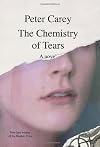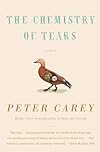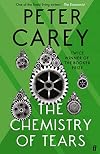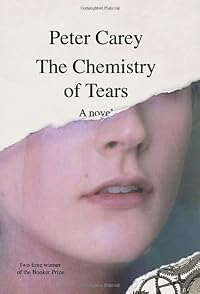
The Chemistry of Tears
by Peter Carey
On This Page
Description
Fiction. Literature. Historical Fiction. HTML:An automaton, a man and a woman who can never meet, two stories of love—all are brought to incandescent life in this hauntingly moving novel from one of the finest writers of our time.London 2010: Catherine Gehrig, conservator at the Swinburne museum, learns of the sudden death of her colleague and lover of thirteen years. As the mistress of a married man, she must struggle to keep the depth of her anguish to herself. The one other person show more who knows Catherine’s secret—her boss—arranges for her to be given a special project away from prying eyes in the museum’s Annexe. Usually controlled and rational, but now mad with grief, Catherine reluctantly unpacks an extraordinary, eerie automaton that she has been charged with bringing back to life.
As she begins to piece together the clockwork puzzle, she also uncovers a series of notebooks written by the mechanical creature’s original owner: a nineteenth-century Englishman, Henry Brandling, who traveled to Germany to commission it as a magical amusement for his consumptive son. But it is Catherine, nearly two hundred years later, who will find comfort and wonder in Henry’s story. And it is the automaton, in its beautiful, uncanny imitation of life, that will link two strangers confronted with the mysteries of creation, the miracle and catastrophe of human invention, and the body’s astonishing chemistry of love and feeling. show less
Tags
Recommendations




























Member Recommendations

Member Reviews
A good old-fashioned alternating-narrator novel: in the present day we have horologist Catherine, whose life for the last thirteen years has revolved around a secret affair with her married colleague Matthew, trying to cope with her very private grief at his sudden death as she throws herself into a complex restoration project at work. And in 1854, there is Henry, who has already lost one child and is desperately afraid of losing another, on a quixotic mission to the Black Forest to commission a German craftsman to build an extravagantly complex automaton which Henry has come to believe is the only thing that could cheer up his sick son, Percy.
All this is complicated further by Catherine's boss, Eric, who seems to know much more about show more what's going on in her life than he ought to, and Sumper, the German mechanic Henry engages, who turns out to have trained with a slightly fictional version version of Charles Babbage ("Sir Albert Cruickshank" here — Ada Lovelace does get a brief mention under her own name, though), and to have ambitions to build more than a simple automaton.
In essence this seems to be a book about the kind of things grief does to us when we aren't able to accept other people's sympathy and support, for whatever reason. And to that extent it works well, but there's a lot of other stuff here, some of which works, but much of it seems to be only very vaguely relevant. There's obviously a loose end of the thread about putting excessive trust in technology that goes right back to Oscar and Lucinda, and there's also Carey's long-standing fixation with the motor-car that keeps popping up, and the Brothers Grimm, and maybe a Frankenstein thing...?
I didn't feel Carey handled the mid-Victorian narrator as convincingly here as he has in other books, and there's an awkward tension between the realistic expectations he builds up and the constructed, non-realistic way the world of the book develops, that leaves the reader puzzled rather than unsettled. Fun at times, but not one of his best. show less
All this is complicated further by Catherine's boss, Eric, who seems to know much more about show more what's going on in her life than he ought to, and Sumper, the German mechanic Henry engages, who turns out to have trained with a slightly fictional version version of Charles Babbage ("Sir Albert Cruickshank" here — Ada Lovelace does get a brief mention under her own name, though), and to have ambitions to build more than a simple automaton.
In essence this seems to be a book about the kind of things grief does to us when we aren't able to accept other people's sympathy and support, for whatever reason. And to that extent it works well, but there's a lot of other stuff here, some of which works, but much of it seems to be only very vaguely relevant. There's obviously a loose end of the thread about putting excessive trust in technology that goes right back to Oscar and Lucinda, and there's also Carey's long-standing fixation with the motor-car that keeps popping up, and the Brothers Grimm, and maybe a Frankenstein thing...?
I didn't feel Carey handled the mid-Victorian narrator as convincingly here as he has in other books, and there's an awkward tension between the realistic expectations he builds up and the constructed, non-realistic way the world of the book develops, that leaves the reader puzzled rather than unsettled. Fun at times, but not one of his best. show less
Here's something I don't often say about a novel: I don't get it.
There are two stories here, one of recently-bereaved Catherine, who is a horologist at the Swinburne and has been asked to work on an automaton, and one of Henry, the 19th century gentleman who commissioned the automaton for his sick child. In her grief, Catherine becomes obsessed with Henry and his story, and goes to great lengths to read his notebooks. Why should Catherine latch on to Henry so strongly? What, exactly, was so interesting about Henry's story? Why should we care about either of these characters? I would love to know.
I found Henry's sections almost unreadably muddled and dull. Catherine's sections were mostly clear, but even there characters would have show more revelations or make connections that remained utterly murky to me. And I never could warm to Catherine, even enough to be interested what happened to her, what with her nastiness, her instincts to drown her grief in alcohol and drugs, and her devotion to a love and a man who are never realized on the page. It's entirely possible I'm missing something here, but truly, this effort from a two-time Booker-winner left me confused, irritated, and utterly flummoxed. show less
There are two stories here, one of recently-bereaved Catherine, who is a horologist at the Swinburne and has been asked to work on an automaton, and one of Henry, the 19th century gentleman who commissioned the automaton for his sick child. In her grief, Catherine becomes obsessed with Henry and his story, and goes to great lengths to read his notebooks. Why should Catherine latch on to Henry so strongly? What, exactly, was so interesting about Henry's story? Why should we care about either of these characters? I would love to know.
I found Henry's sections almost unreadably muddled and dull. Catherine's sections were mostly clear, but even there characters would have show more revelations or make connections that remained utterly murky to me. And I never could warm to Catherine, even enough to be interested what happened to her, what with her nastiness, her instincts to drown her grief in alcohol and drugs, and her devotion to a love and a man who are never realized on the page. It's entirely possible I'm missing something here, but truly, this effort from a two-time Booker-winner left me confused, irritated, and utterly flummoxed. show less
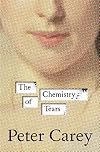
I agree with other reviewers that the cover is stupid and seriously misrepresents this book. I want to give it four and a half stars. I had no issues with liking the protagonists at all, they are uncomfortable cranky grief-stricken people and I felt strong sympathy and anxiety for both of them. The characters and ideas are developed with a lot of organic mystery and complications that feel well worth re-reading, I think this book is good enough to not be entirely graspable the first time through. I was riveted when the automaton appeared early on, wasn't sure it would pay off but when it is built and displayed the final passage describing it in action could not be more thrilling or satisfactory. Half a point off for some vague and show more impenetrable spots, which may or may not improve for me if I read it again. show less
The Chemistry of Tears is bewitching and beguiling. It teases and tempts but ultimately left me unsatisfied. There are two story threads, interwoven; in the first Catherine, a conservator of clocks, is grief stricken from the death of her longtime secret lover - an affair which turns out to be nowhere near as secret as she imagines. To help her recovery, she is given the task of rebuilding an automaton - a mechanical silver swan commissioned and built in the 19th century. In doing this she is helped, and hindered, by her assistant Amanda who seems to be struggling with her own demons, to know rather too much about Catherine, and to have her own agenda for the swan. At the same time Catherine becomes obsessed with the journals of Henry show more Brandling, the original commissioner of the swan, and these journals make up the second story arc
Brandling, the wealthy scion of an eccentric family, travels to Germany looking for a clockmaker who can make a copy of Vaucanson's Digesting Duck for the amusement of his son, stricken with TB. On arriving in Germany he is lead a merry dance by an eccentric group of characters lead by the larger than life clockmaker Herr Sumper, who takes his commission but ultimately refuses to make a copy of the duck, preferring instead to construct the swan. Brandling's frustrations and trials in getting his duck made and worries over his son are mirrored in Catherine's attempts to reconstruct the swan and deal with her own grief.
For me, only Catherine's narrative works - her fears and insecurities and slow realisation of her manipulation by the Museum Director, Eric Croft, are convincing and engrossing. But the Brandling narrative frustrated me. It seemed to be structured as a fairy tale, with acts of small magic, lots of getting lost in the forest, and Brandling the innocent quester who cannot quite understand what he sees. But it was all a little mystical for my tastes, and I found my attention wandering whenever Sumper was on his soapbox browbeating Brandling with his fantastical theories.
I was also unconvinced by the air of millenial doom, with all the 2010 characters seemingly obsessed by the Gulf Of Mexico oil spill and the suggestion that the machines and mechanisms that hold such excitement for Sumper are now beyond out control and the cause of our destruction
But as always with Carey the writing is funny, engaging and compelling. But I left the book with questions unanswered and the feeling that I had been observing through a keyhole, with things I wanted to know about falling outside my line of sight show less
Brandling, the wealthy scion of an eccentric family, travels to Germany looking for a clockmaker who can make a copy of Vaucanson's Digesting Duck for the amusement of his son, stricken with TB. On arriving in Germany he is lead a merry dance by an eccentric group of characters lead by the larger than life clockmaker Herr Sumper, who takes his commission but ultimately refuses to make a copy of the duck, preferring instead to construct the swan. Brandling's frustrations and trials in getting his duck made and worries over his son are mirrored in Catherine's attempts to reconstruct the swan and deal with her own grief.
For me, only Catherine's narrative works - her fears and insecurities and slow realisation of her manipulation by the Museum Director, Eric Croft, are convincing and engrossing. But the Brandling narrative frustrated me. It seemed to be structured as a fairy tale, with acts of small magic, lots of getting lost in the forest, and Brandling the innocent quester who cannot quite understand what he sees. But it was all a little mystical for my tastes, and I found my attention wandering whenever Sumper was on his soapbox browbeating Brandling with his fantastical theories.
I was also unconvinced by the air of millenial doom, with all the 2010 characters seemingly obsessed by the Gulf Of Mexico oil spill and the suggestion that the machines and mechanisms that hold such excitement for Sumper are now beyond out control and the cause of our destruction
But as always with Carey the writing is funny, engaging and compelling. But I left the book with questions unanswered and the feeling that I had been observing through a keyhole, with things I wanted to know about falling outside my line of sight show less
Already twice a winner of the prestigious Booker Prize, Peter Carey now offers his readers The Chemistry of Tears, a complexly constructed study of grief and self-identity set in contemporary London. Despite its modern-day setting (2010), however, the novel can also legitimately be called historical fiction as much of its story is lifted directly from the pages of a nineteenth century Englishman’s personal diary.
Catherine Gehrig is a conservator at the Swinburne Museum whose thirteen-year affair with a married colleague is still a mostly well-kept secret. As far as she knows, no one at the museum suspects that she and Matthew Tindall, one of the museum’s head curators, have a relationship of that sort. Their secret is so show more successfully kept, in fact, that when Matthew dies suddenly, Catherine is among the last of the museum employees to get the news. Now, her whole world in turmoil, she must pretend that she has not been emotionally crippled by her devastating grief.
Fortunately for Catherine, her boss - the one man who now seems to have been aware of the affair – places her on immediate sick leave before transferring her to a more isolated museum annex to work on the unusual project he has chosen for her. There Catherine finds eight boxes filled with the diagrams and mechanical parts needed to restore and assemble what appears to be a160-year-old duck automation. It is when she discovers a series of notebooks relating to the origin of the automation that Catherine becomes obsessed with her new assignment.
Carey will, from this point, alternate accounts of Catherine’s life with pages taken from the notebooks of Henry Brandling, the Englishman who originally commissioned the amazing automation she is working to reconstruct. Brandling, a man completely devoted to his sickly young son, hopes that the boy will be so taken with the mechanical duck that he will somehow find the will to conquer the disease that is slowly killing him. Brandling’s willingness to do whatever it takes to keep his son alive brings him to a tiny German village where he falls into the hands of a strange clockmaker who will drive him closer and closer to despair.
The Chemistry of Tears tackles complex human emotions, emotions that probably have to be personally experienced for one to comprehend their full impact on the human psyche. Catherine’s entire identity, the person she believed herself to be, was defined by her affair with Matthew Tindall. When Matthew died, the old Catherine Gehrig died with him, and now she is working just as hard to reconstruct a self-identity for herself as she is on rebuilding the antique mechanical duck. Whether or not she can succeed with either project is the question.
The Chemistry of Tears is a moving novel, one that will especially speak to those readers who have suffered a level of grief similar to Catherine’s. While it is not a long novel, it does suffer a bit from an overabundance of mysterious side plots pertaining to the tribulations suffered by the automation’s original owner. Readers, however, should not be overly discouraged by this because The Chemistry of Tears is well worth the effort required – and each of the side plots contributes to the book’s atmosphere or depth of the Henry Brandling character. show less
Catherine Gehrig is a conservator at the Swinburne Museum whose thirteen-year affair with a married colleague is still a mostly well-kept secret. As far as she knows, no one at the museum suspects that she and Matthew Tindall, one of the museum’s head curators, have a relationship of that sort. Their secret is so show more successfully kept, in fact, that when Matthew dies suddenly, Catherine is among the last of the museum employees to get the news. Now, her whole world in turmoil, she must pretend that she has not been emotionally crippled by her devastating grief.
Fortunately for Catherine, her boss - the one man who now seems to have been aware of the affair – places her on immediate sick leave before transferring her to a more isolated museum annex to work on the unusual project he has chosen for her. There Catherine finds eight boxes filled with the diagrams and mechanical parts needed to restore and assemble what appears to be a160-year-old duck automation. It is when she discovers a series of notebooks relating to the origin of the automation that Catherine becomes obsessed with her new assignment.
Carey will, from this point, alternate accounts of Catherine’s life with pages taken from the notebooks of Henry Brandling, the Englishman who originally commissioned the amazing automation she is working to reconstruct. Brandling, a man completely devoted to his sickly young son, hopes that the boy will be so taken with the mechanical duck that he will somehow find the will to conquer the disease that is slowly killing him. Brandling’s willingness to do whatever it takes to keep his son alive brings him to a tiny German village where he falls into the hands of a strange clockmaker who will drive him closer and closer to despair.
The Chemistry of Tears tackles complex human emotions, emotions that probably have to be personally experienced for one to comprehend their full impact on the human psyche. Catherine’s entire identity, the person she believed herself to be, was defined by her affair with Matthew Tindall. When Matthew died, the old Catherine Gehrig died with him, and now she is working just as hard to reconstruct a self-identity for herself as she is on rebuilding the antique mechanical duck. Whether or not she can succeed with either project is the question.
The Chemistry of Tears is a moving novel, one that will especially speak to those readers who have suffered a level of grief similar to Catherine’s. While it is not a long novel, it does suffer a bit from an overabundance of mysterious side plots pertaining to the tribulations suffered by the automation’s original owner. Readers, however, should not be overly discouraged by this because The Chemistry of Tears is well worth the effort required – and each of the side plots contributes to the book’s atmosphere or depth of the Henry Brandling character. show less
My favourite kind of book - one that interweaves a character and her life alongside the reading of a book (or in this case, a journal). There is a mystery at the heart of this tale, though not one that could ever be resolved - as Crofty would say, sometimes the mystery is the thing, and not the solution.
Peter Carey's The Chemistry of Tears is the moving story of a young curator grappling with a deep personal loss. Her boss gives her the task of reconstructing a 19th-century automaton, and Catherine is drawn deeply into the story of the machine's creation through the manuscript journals of its patron. Carey's a fine storyteller, and he's managed to craft a tale just as intricate as mechanical creature within.
Members
- Recently Added By
Lists

Top Five Books of 2013
1,562 works; 715 members

IMPAC Dublin Literary Award 2014 longlist
150 works; 3 members
Author Information

42+ Works 24,726 Members
Peter Carey was born on May 7, 1943 in Bacchus Marsh, Victoria, Australia. His first two books, The Fat Man in History (1974) and War Crimes (1979), were short story collections. His first novel, Bliss, was published in 1982. At the time he was balancing his writing career with the operation of an advertising agency in Sydney, and his books were show more not generally known outside of Australia. He began to receive international attention when Illywhacker was published in 1985. He won the Booker Prize in 1988 for Oscar and Lucinda and in 2001 for True History of the Kelly Gang. His other works include The Tax Inspector, Parrot and Olivier in America, and The Chemistry of Tears. He also won the Miles Franklin Award three times. In 2015 he made the Australian Book Designers Association Award shortlist for his title Amnesia. This title also made the 2015 Prime Minister's Literary Awards shortlist. (Bowker Author Biography) show less
Some Editions
Awards and Honors
Awards
Series
Belongs to Publisher Series
Common Knowledge
- Canonical title
- The Chemistry of Tears
- Original title
- The Chemistry of Tears
- Original publication date
- 2012
- Dedication
- For Frances Coady
- First words
- Dead, and no one told me.
- Original language
- English
Classifications
- Genres
- General Fiction, Fiction and Literature, Historical Fiction
- DDC/MDS
- 823.914 — Literature & rhetoric English & Old English literatures English fiction 1900- 1901-1999 1945-1999
- LCC
- PR9619.3 .C36 .C44 — Language and Literature English English Literature English literature: Provincial, local, etc.
- BISAC
Statistics
- Members
- 747
- Popularity
- 37,491
- Reviews
- 37
- Rating
- (3.27)
- Languages
- 8 — Dutch, English, French, German, Italian, Portuguese, Spanish, Turkish
- Media
- Paper, Audiobook, Ebook
- ISBNs
- 45
- ASINs
- 8