On This Page
Description
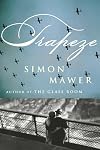
A propulsive novel of World War II espionage by the author of The Glass RoomBarely out of school and doing her bit for the British war effort, Marian Sutro has one quality that makes her stand out—she is a native French speaker. It is this that attracts the attention of the SOE, the Special Operations Executive, which trains agents to operate in occupied Europe. Drawn into this strange, secret world at the age of nineteen, she finds herself undergoing commando training, attending a show more "school for spies," and ultimately, one autumn night, parachuting into France from an Royal Air Force bomber to join the Wordsmith resistance network.
But there's more to Marian's mission than meets the eye of her SOE controllers; her mission has been hijacked by another secret organization that wants her to go to Paris and persuade a friend—a research physicist—to join the Allied war effort. The outcome could affect the whole course of the war.
A fascinating blend of fact and fiction, Trapeze is both an old-fashioned adventure story and a modern exploration of a young woman's growth into adulthood. There is violence, and there is love. There is death and betrayal, deception and revelation. But above all there is Marian Sutro, an ordinary young woman who, like her real-life counterparts in the SOE, did the most extraordinary things at a time when the ordinary was not enough.
. show less
Tags
Recommendations











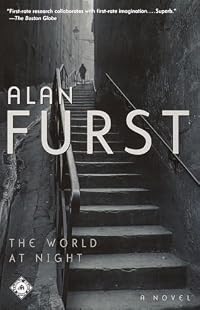

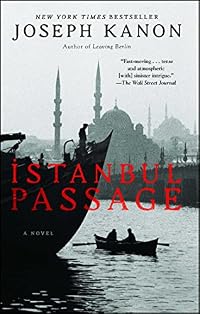

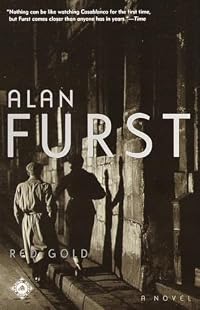

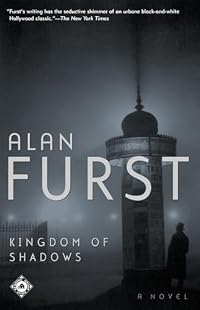









Member Recommendations

Member Reviews
I found this book a fascinating read as a picture of the work of the Special Operations Executive. Our heroine is Marian Sutro, a 19 year old bilingual Engish girl who's spent much of her life in France. She's recruited to the SOE in 1943, and after training will form part of the Resistance in France. It becomes clear that her special task will be to make contact with an old family friend, Clement Pelletier, who is a nuclear physicist in Paris. Her training, her growing sexual awareness, her tasks as she arrives first of all in rural south west France and then in Paris are all excitingly described. I found her adventures, her feelings, the picture of Paris under German occupation all involving and believable. How should she behave when show more nobody is to be trusted, when everyone she meets might turn out to be shadowing or following her? Mawer's descriptions of suspicion and claustrophobia, of hardship and deprivation are moving and involving. Only Marion's unexpected action in the last few pages of the novel failed to hit the right note, but the ending itself was convincing. A well researched and exciting book. show less
Inspired by the exploits of the women who left Britain to help the French resistance fighters in the Second World War, Mawer has written a story that lives up to their achievements. In a wholly absorbing novel, he traces the career of Marian Sutro through her recruitment and training, before she parachutes into the French countryside. Mawer’s skill is to capture the boredom, excitement, fear and heartaches as Marian grows through her successive experiences and identities. He also contrasts the different lives of those in Britain with those in the French provinces and Paris, making for a fascinating book that envelops the reader and is full of peril and adventure, leading to a nail-biting climax.
An exciting story about an adventurous and brave young woman who joins the Special Operations Executive during World War II and gets dropped into France during the occupation. The story hits some of the usual beats: the recruitment by a mysterious and secret organization, the training, the possible love interest, but once our heroine is parachuted into France the story becomes unpredictable and exciting.
As a realistic view of heroism under pressure, of a heroine for our times, of an imperfect but determined secret agent, this is a wonderful book.
I highly recommend it.
As a realistic view of heroism under pressure, of a heroine for our times, of an imperfect but determined secret agent, this is a wonderful book.
I highly recommend it.
I loved this. I stayed up late reading the last ~100 pages or so. This is a novel based on the British women who were recruited as spies and dropped into France during WW2. We open with our protagonist, Marian Sutro, a 19yo diplomat's daughter, is about to parachute from a noisy plane into a random field in the night of occupied France.
As with 'The Glass Room,' Mawer's prose is somehow simple, but elegant and affecting. His story-telling is traditional, yet magical. I will not spoil - but the ending was fabulous. This novel is more story and less introspection than 'The Glass Room,' but still much of what he writes about fear, identity, physics was very thought-provoking.
I feel like I should have more to say since I am rating this show more book so highly but I really don't. SImply the best type of reading experience in my opinion - plot, prose, story-telling, setting - all without seeming Hollywoodish or melodramatic. Bravo. Mawer is on his way to becoming a favorite of mine. show less
As with 'The Glass Room,' Mawer's prose is somehow simple, but elegant and affecting. His story-telling is traditional, yet magical. I will not spoil - but the ending was fabulous. This novel is more story and less introspection than 'The Glass Room,' but still much of what he writes about fear, identity, physics was very thought-provoking.
I feel like I should have more to say since I am rating this show more book so highly but I really don't. SImply the best type of reading experience in my opinion - plot, prose, story-telling, setting - all without seeming Hollywoodish or melodramatic. Bravo. Mawer is on his way to becoming a favorite of mine. show less
I appreciate the author’s obvious research into WWII in France, the Resistance movement, and women in SOE operations. I really got into the danger of the situations and the intensity of the secretive and suspenseful events. That intensity is vital to spy thrillers and Mawer delivers here. I especially liked some of the details in how Marian performed her Resistance work like delivering the radio crystals. Clever!
I did find it a bit hard to connect with Marian, though. I found her cold and distant at times. Given some of the situations she was in and the circumstances of the world at the time, I guess I could see where she might keep her emotions buttoned down. But far too often I had to wonder at her calm reserve.
Also, let me just show more say….. Holy crap, that ending!!! My brain imploded when I read the last few paragraphs and not in a good way. It’s a MASSIVE cliffhanger and one that has no foreshadowing that it was coming (at least to my piddlely little brain). I hate when books do this, especially with no indication that a follow up book will be coming down the tailpipe. The book lost a star right there.
Mawer does a great job in bringing Nazi-occupied France to life and making us live the struggle for freedom and liberation. The main character is hard at times to connect with, portraying a cold exterior. But I think that could be due to the time and circumstances. But that ending…. Oy vey!! Just be forewarned going in that you’ll be tempted to chuck the book at the wall. So not a bad read but not the best either. show less
I did find it a bit hard to connect with Marian, though. I found her cold and distant at times. Given some of the situations she was in and the circumstances of the world at the time, I guess I could see where she might keep her emotions buttoned down. But far too often I had to wonder at her calm reserve.
Also, let me just show more say….. Holy crap, that ending!!! My brain imploded when I read the last few paragraphs and not in a good way. It’s a MASSIVE cliffhanger and one that has no foreshadowing that it was coming (at least to my piddlely little brain). I hate when books do this, especially with no indication that a follow up book will be coming down the tailpipe. The book lost a star right there.
Mawer does a great job in bringing Nazi-occupied France to life and making us live the struggle for freedom and liberation. The main character is hard at times to connect with, portraying a cold exterior. But I think that could be due to the time and circumstances. But that ending…. Oy vey!! Just be forewarned going in that you’ll be tempted to chuck the book at the wall. So not a bad read but not the best either. show less
I’ve read some of all the espionage masters — Le Carré, Greene, Littell — but don’t remember ever reading a book with a female spy as the lead. When I encountered The Girl Who Fell from the Sky, with a cover blurb from Alan Massie that said “As good as le Carré”, I had to try it.
The Girl Who Fell From The Sky
Marian Sutro is a young woman, half British and half French, with a command of French, a taste for adventure, and a restlessness that makes her jump at a chance for an unspecified, clandestine opportunity to help Britain in the war (World War II). Before she knows it she is in training as a spy, jumping out of airplanes, and exploring her first fumbling experiences of sex. And Marian turns out to have a taste show more and a talent for firearms.
The Girl Who Fell from the Sky is much more in the vein of Alan Furst than Le Carré. There’s little in the way of the moral ambiguity or the creeping sense that there aren’t any good guys or bad guys, just shades of grey, the calling card of Le Carré. Rather, this is WWII and the bad guys are bad and the good guys are good, if a bit unfussy about methods. The first half of the book is leisurely — it’s not until halfway through that Marian finally graduates from training and does a parachute jump into the French countryside. There are a lot of atmospherics, which makes one think of Furst, capturing the sense of wartime, even as events themselves move slowly. But the second half of the book accelerates, the tension rises, and Marian’s recklessness increases. The rendering of a female spy who is reckless to the point of irrationality, but is still a believable character, is something unique I don’t think I’ve encountered in the dozens of espionage novels I’ve read.
I really enjoyed this book (although “as good as Le Carré” is over stating things) — I’m very much looking forward to Tightrope, the sequel.
(Note: The Girl Who Fell from the Sky was published in the UK; it appeared in the US under the title Trapeze — not sure why they ditched such an awesome title). show less
The Girl Who Fell From The Sky
Marian Sutro is a young woman, half British and half French, with a command of French, a taste for adventure, and a restlessness that makes her jump at a chance for an unspecified, clandestine opportunity to help Britain in the war (World War II). Before she knows it she is in training as a spy, jumping out of airplanes, and exploring her first fumbling experiences of sex. And Marian turns out to have a taste show more and a talent for firearms.
The Girl Who Fell from the Sky is much more in the vein of Alan Furst than Le Carré. There’s little in the way of the moral ambiguity or the creeping sense that there aren’t any good guys or bad guys, just shades of grey, the calling card of Le Carré. Rather, this is WWII and the bad guys are bad and the good guys are good, if a bit unfussy about methods. The first half of the book is leisurely — it’s not until halfway through that Marian finally graduates from training and does a parachute jump into the French countryside. There are a lot of atmospherics, which makes one think of Furst, capturing the sense of wartime, even as events themselves move slowly. But the second half of the book accelerates, the tension rises, and Marian’s recklessness increases. The rendering of a female spy who is reckless to the point of irrationality, but is still a believable character, is something unique I don’t think I’ve encountered in the dozens of espionage novels I’ve read.
I really enjoyed this book (although “as good as Le Carré” is over stating things) — I’m very much looking forward to Tightrope, the sequel.
(Note: The Girl Who Fell from the Sky was published in the UK; it appeared in the US under the title Trapeze — not sure why they ditched such an awesome title). show less
Based on the true story of a group of young women who were recruited in Britain, during WWII, to serve in the French Division of The Special Operations Executive, the book is filled with historic facts about their training, innocence and bravery in the face of enormous danger. The SOE trained these women for espionage and all types of weapon use. Dropped into France, in secret, they became different people, and they performed whatever assignments they were given, often completely on their own, facing untold danger. Many did not survive the effort.
The author, Simon Mawer, introduces us to Marian Sutro when she is a young girl of 19. A member of the WAF, she is recruited into this spy machine and parachuted into France with several new show more identities. She enters the maelstrom of war, young and a bit naïve, however, she is forced to mature quickly. She and other recruits become romantically involved with each other, although it is against regulations, so in addition to this exciting tale of espionage, there are forbidden romantic liaisons and love stories taking place. Romance can fog the mind and compromise their ability to think clearly, but the constant danger makes them behave carelessly and foolishly sometimes. There is always so much at stake; this behavior becomes a release for tension. Marian’s mission is of the highest priority and her life is always in danger. There is no shortage of mystery or intrigue. We witness murder and betrayal, fear and courage, in the face of monumental danger. If caught, awful consequences await them.
This historic piece of fiction, about a group of people engaged in the effort to end World War II that I had never heard about before, is really engaging and eye opening. Working alongside freedom fighters who often believed that the women were unworthy of the task, whose beauty was distracting, they must nevertheless prove themselves and do their job in the face of the resistance, rudeness, and mistrust.
I particularly liked the descriptive use of language. It made what might have been a mundane spy story, leap off the page. There was little use of crude language, inappropriate sex and whatever other contrivance other writers of late seem to be wont to do; instead, Mawer uses the language effectively to tell the story by creating images that are revealing. For instance, body odor is the scent from an armpit, an image the reader can appreciate.
I found the reader of this audio to be excellent. Her vocal expression made the content clear. Her use of voices brought the characters to life and her tone seemed pitch perfect to me. show less
The author, Simon Mawer, introduces us to Marian Sutro when she is a young girl of 19. A member of the WAF, she is recruited into this spy machine and parachuted into France with several new show more identities. She enters the maelstrom of war, young and a bit naïve, however, she is forced to mature quickly. She and other recruits become romantically involved with each other, although it is against regulations, so in addition to this exciting tale of espionage, there are forbidden romantic liaisons and love stories taking place. Romance can fog the mind and compromise their ability to think clearly, but the constant danger makes them behave carelessly and foolishly sometimes. There is always so much at stake; this behavior becomes a release for tension. Marian’s mission is of the highest priority and her life is always in danger. There is no shortage of mystery or intrigue. We witness murder and betrayal, fear and courage, in the face of monumental danger. If caught, awful consequences await them.
This historic piece of fiction, about a group of people engaged in the effort to end World War II that I had never heard about before, is really engaging and eye opening. Working alongside freedom fighters who often believed that the women were unworthy of the task, whose beauty was distracting, they must nevertheless prove themselves and do their job in the face of the resistance, rudeness, and mistrust.
I particularly liked the descriptive use of language. It made what might have been a mundane spy story, leap off the page. There was little use of crude language, inappropriate sex and whatever other contrivance other writers of late seem to be wont to do; instead, Mawer uses the language effectively to tell the story by creating images that are revealing. For instance, body odor is the scent from an armpit, an image the reader can appreciate.
I found the reader of this audio to be excellent. Her vocal expression made the content clear. Her use of voices brought the characters to life and her tone seemed pitch perfect to me. show less
Members
- Recently Added By
Lists

Top Five Books of 2013
1,562 works; 721 members

Women in War
148 works; 28 members

Books Read in 2017
4,249 works; 129 members

Books Read in 2015
3,299 works; 126 members
Author Information

17+ Works 3,669 Members
Author and biology teacher Simon Mawer was born in England in 1948. He studied at Somerset's Millfield School and Oxford's Brasenose College, receiving a degree in zoology. Mawer's first novel, Chimera, won the McKitterick Prize, while The Fall earned the 2003 Boardman Tasker Prize for Mountain Literature. He has written several other novels, as show more well as the exhibition companion volume Gregor Mendel: Planting the Seeds of Genetics. His novel, Tightrope, made the New Zealand Best Seller List in 2015 and won the Walter Scott Prize for Historical Fiction. (Bowker Author Biography) Simon Mawer has a degree from Oxford & lives in Rome. He is the author of "Mendel's Dwarf" & several other widely praised & prize winning novels. 010 r show less
Some Editions
Awards and Honors
Distinctions
Series

Common Knowledge
- Canonical title
- The Girl Who Fell From the Sky
- Original title
- The Girl Who Fell From the Sky
- Alternate titles
- Trapeze (US) (US)
- Original publication date
- 2012
- People/Characters
- Marian Sutro
- Important places
- Paris, France
- Epigraph
- Pour vivre heureux, vivons caches - Florian
The French Section of the special Operations Executive sent thirty-nine women into the field between May 1941 and September 1944. Of these, twelve were murdered following their capture by the Germans while one other died of ... (show all)meningitis during her mission. The remainder survived the war. Some of these women became well known to the public through films and books that were written about them. Others remained, and remain, obscure. They were all remarkable. - Dedication
- To the memory of Colette, one of the women of SOE
- First words
- She's sitting in the fuselage, trussed up like a piece of baggage, battered by noise.
- Last words
- (Click to show. Warning: May contain spoilers.)Who knows why? Who Cares?
- Original language
- English
Classifications
Statistics
- Members
- 602
- Popularity
- 48,358
- Reviews
- 37
- Rating
- (3.56)
- Languages
- 8 — Czech, Dutch, English, French, German, Italian, Norwegian (Bokmål), Spanish
- Media
- Paper, Audiobook, Ebook
- ISBNs
- 30
- ASINs
- 8