On This Page
Description
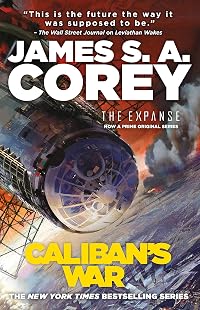
We are not alone. On Ganymede, breadbasket of the outer planets, a Martian marine watches as her platoon is slaughtered by a monstrous supersoldier. On Earth, a high-level politician struggles to prevent interplanetary war from reigniting. And on Venus, an alien protomolecule has overrun the planet, wreaking massive, mysterious changes and threatening to spread out into the solar system. In the vast wilderness of space, James Holden and the crew of the Rocinante have been keeping the peace show more for the Outer Planets Alliance. When they agree to help a scientist search war-torn Ganymede for a missing child, the future of humanity rests on whether a single ship can prevent an alien invasion that may have already begun . . . show lessTags
Recommendations


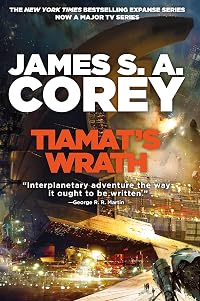





Member Reviews
This was so much fun! Not as mindblowingly good as Leviathan Wakes, but that’s because I’m comfortable with the world now and so the added depth here didn’t wow me as much as in the first one. It’s a great mystery and adventure, perfectly plotted with all sorts of twists, and involves some very cool science fact and science fiction. I especially like how richly human the characters are—they’re not stereotypes, they don’t fall into tropes, they get to be awesome and vulnerable, courageous and terrified—and how their actions and mistakes turn the plot, instead of the other way around.
Recommended, but you do have to read the books in order if you don’t want to get massively spoiled.
7/10
Recommended, but you do have to read the books in order if you don’t want to get massively spoiled.
7/10
Well, however you felt about the first book in this series, that's roughly how you'll feel about the second one. Much of this book is a color-by-numbers sequel. There's even another prologue with another girl in jeopardy, and much of the plot is driven by a man's obsessive desire to save her.
There are improvements, though. The man in this case is the father of the (very young) girl, so the plot-driving obsession is much less creepy. Even better, there are some new characters who are actually not purchases from the Stock Character Bargain Store (remaindered shelf). Both Bobbie (a space marine) and Avasarala (an old cranky UN bureaucrat) are great; they're people, I enjoyed them, I was interested to read about them. And they got show more narratives! Actual women, with point of view sections! These authors CAN do it; apparently they just forgot in the first book.
Unfortunately, the authors didn't exactly realize what they had there. (I was very much hoping that Bobbie would join the team for good.) They persist in their delusion that James Holden is likable (he isn't) and that his relationship with Naomi is interesting (it isn't).
And all their other old problems persist, too. They continue to write superficially; this whole book is supposed to be about trauma, and the way it drives us, but all the trauma responses are so skin-deep and so similar that it really doesn't work at all. They're still doing action movies in book form -- read fast, forget fast, basically. And they still want us to care about the wrong things for the wrong reasons. And they're still missing a good fact-checker; my copy is peppered with notes that basically say "this doesn't work that way" and "but that's what a concussion IS" and so on.
Am I enjoying the books? Yeah, they're light and fast-paced and entertaining. But I'm not buying them, because these aren't books you'd ever want to read again. They're the book version of cotton candy. (But flavored with alien goo.)
Warnings: Child death, child harm. show less
There are improvements, though. The man in this case is the father of the (very young) girl, so the plot-driving obsession is much less creepy. Even better, there are some new characters who are actually not purchases from the Stock Character Bargain Store (remaindered shelf). Both Bobbie (a space marine) and Avasarala (an old cranky UN bureaucrat) are great; they're people, I enjoyed them, I was interested to read about them. And they got show more narratives! Actual women, with point of view sections! These authors CAN do it; apparently they just forgot in the first book.
Unfortunately, the authors didn't exactly realize what they had there. (I was very much hoping that Bobbie would join the team for good.) They persist in their delusion that James Holden is likable (he isn't) and that his relationship with Naomi is interesting (it isn't).
And all their other old problems persist, too. They continue to write superficially; this whole book is supposed to be about trauma, and the way it drives us, but all the trauma responses are so skin-deep and so similar that it really doesn't work at all. They're still doing action movies in book form -- read fast, forget fast, basically. And they still want us to care about the wrong things for the wrong reasons. And they're still missing a good fact-checker; my copy is peppered with notes that basically say "this doesn't work that way" and "but that's what a concussion IS" and so on.
Am I enjoying the books? Yeah, they're light and fast-paced and entertaining. But I'm not buying them, because these aren't books you'd ever want to read again. They're the book version of cotton candy. (But flavored with alien goo.)
Warnings: Child death, child harm. show less
Double wow. This, while still not a five-star book, was better than the first in the series. Just some quick thoughts:
Diversity is still very great, without seeming pedantic. Avasarala is a bad-ass, as well as being a richly developed, multi-dimensional character. She's awesome, and the lengths they go to make her so show some real skill.
This book was in danger of going to the same well too many times, but saved itself by not only making this about the characters (the "mission," while driving the novel, is beside the point), and also having the characters comment on how similar the antagonistic elements in this book were to the last-- though they don't break the fourth wall.
Not much else to say here, as the main characters are all back show more and the new ones added fit in well and are pretty well-developed. Bobbie and Avasarala are given much attention and it pays off, especially for Avasarala. Love that foul-mouth lady. The world-building continues, scaffolding off of what is already a familiar system to us and thinking it through with enough scientific verisimilitude to fade into the background as just the context of a great quest/adventure.
I found it fascinating how the author(s) played with genre in both of this and Leviathan Wakes. Leviathan was clearly in the noir vein of detective fiction, with a hardboiled detective and a mystery in need of solving. Caliban's War was very much a political thriller-- the main characters kind of act like tofu and take on the flavor of the genre they find themselves in. That's not a bad thing, as it works very well. Can't wait to see what they do with the third. show less
Diversity is still very great, without seeming pedantic. Avasarala is a bad-ass, as well as being a richly developed, multi-dimensional character. She's awesome, and the lengths they go to make her so show some real skill.
This book was in danger of going to the same well too many times, but saved itself by not only making this about the characters (the "mission," while driving the novel, is beside the point), and also having the characters comment on how similar the antagonistic elements in this book were to the last-- though they don't break the fourth wall.
Not much else to say here, as the main characters are all back show more and the new ones added fit in well and are pretty well-developed. Bobbie and Avasarala are given much attention and it pays off, especially for Avasarala. Love that foul-mouth lady. The world-building continues, scaffolding off of what is already a familiar system to us and thinking it through with enough scientific verisimilitude to fade into the background as just the context of a great quest/adventure.
I found it fascinating how the author(s) played with genre in both of this and Leviathan Wakes. Leviathan was clearly in the noir vein of detective fiction, with a hardboiled detective and a mystery in need of solving. Caliban's War was very much a political thriller-- the main characters kind of act like tofu and take on the flavor of the genre they find themselves in. That's not a bad thing, as it works very well. Can't wait to see what they do with the third. show less
Note: This is Book 2 in the series and really should be enjoyed after having read Book 1.
Several months have passed since the events of Leviathan Wakes. Holden and crew are now working for Fred, basically being his enforcers in their sleek Martian ship the Rocinante. In fact, they’ve become rather humdrum about having to deal with space pirates. The ship’s broken coffee maker is a bigger nuisance than space pirates! But then something horrible happens on Ganymede, the bread basket for the Belters and stations. Holden and his crew are drawn into some protomolecule nastiness and they might not survive as a whole.
Book 1 was really good and Book 2 surpasses that. There are so many great points about this book. First, my only complaint show more from Book 1 has been addressed. We have more female characters and they affect the plot! Yay! Chrisjen Avasarala is a cross between a Spy Master and a top-notch politician. She’s got her reasons for going after the goals she sets and she’s got a harsh mouth. I loved her commentary. Then’s there’s Bobbie, a Mech Warrior with the Mars Military. She’s a very large Polynesian woman, all muscle with a good balance of brains and skills. Naomi didn’t shine as brightly for me in this book, but I didn’t agree with all her choices. That’s OK; I don’t have to agree with all the heroes to enjoy the book.
Amos got some depth on him and there were several great scenes with him. That canned chicken scene still stands out. Amos likes to fight but he also uses his violence as a tool. He’s not just some angry brawler. We still haven’t gotten much on Alex but he did get some good jokes now that there’s another Martian for him to joke around with. Jim Holden is still the central character and I enjoyed they various scenarios he’s put in that make him question his ethics.
So let’s talk about that protomolecule that everyone thought was safely locked up and in Fred’s custody. Well, somehow somewhere someone got their hands on some and started doing experiments with it. Now Ganymede is another goo zone. Prax, a botanist living on Ganymede before the incident, is desperately searching for his daughter. The crew of the Roci get pulled into this affair and Prax temporarily becomes both part of the crew and a paying customer.
There were so many moments in this book where I thought for sure we’re going to lose this character or that one or a planet or a spaceship. Mobile protomolecule monsters! Plenty of political intrigue. One man very determined to make life tough for everyone. The hunt for Prax’s kid, Mei.
The ending held some surprises. It closed out the big events for this book but set us up for the next one. There’s a character that’s back which I didn’t expect. Also, there’s big stuff happening on Venus and it looks like humanity will finally have to do something about it.
The Narration: Jefferson Mays continues to do a really great job with this series. I love his accents for Avasarala (Indian) and Alex (Texan). His female voices sound like ladies. He’s able to keep all the characters distinct and he pulls off the big and nuanced emotions alike. show less
Several months have passed since the events of Leviathan Wakes. Holden and crew are now working for Fred, basically being his enforcers in their sleek Martian ship the Rocinante. In fact, they’ve become rather humdrum about having to deal with space pirates. The ship’s broken coffee maker is a bigger nuisance than space pirates! But then something horrible happens on Ganymede, the bread basket for the Belters and stations. Holden and his crew are drawn into some protomolecule nastiness and they might not survive as a whole.
Book 1 was really good and Book 2 surpasses that. There are so many great points about this book. First, my only complaint show more from Book 1 has been addressed. We have more female characters and they affect the plot! Yay! Chrisjen Avasarala is a cross between a Spy Master and a top-notch politician. She’s got her reasons for going after the goals she sets and she’s got a harsh mouth. I loved her commentary. Then’s there’s Bobbie, a Mech Warrior with the Mars Military. She’s a very large Polynesian woman, all muscle with a good balance of brains and skills. Naomi didn’t shine as brightly for me in this book, but I didn’t agree with all her choices. That’s OK; I don’t have to agree with all the heroes to enjoy the book.
Amos got some depth on him and there were several great scenes with him. That canned chicken scene still stands out. Amos likes to fight but he also uses his violence as a tool. He’s not just some angry brawler. We still haven’t gotten much on Alex but he did get some good jokes now that there’s another Martian for him to joke around with. Jim Holden is still the central character and I enjoyed they various scenarios he’s put in that make him question his ethics.
So let’s talk about that protomolecule that everyone thought was safely locked up and in Fred’s custody. Well, somehow somewhere someone got their hands on some and started doing experiments with it. Now Ganymede is another goo zone. Prax, a botanist living on Ganymede before the incident, is desperately searching for his daughter. The crew of the Roci get pulled into this affair and Prax temporarily becomes both part of the crew and a paying customer.
There were so many moments in this book where I thought for sure we’re going to lose this character or that one or a planet or a spaceship. Mobile protomolecule monsters! Plenty of political intrigue. One man very determined to make life tough for everyone. The hunt for Prax’s kid, Mei.
The ending held some surprises. It closed out the big events for this book but set us up for the next one. There’s a character that’s back which I didn’t expect. Also, there’s big stuff happening on Venus and it looks like humanity will finally have to do something about it.
The Narration: Jefferson Mays continues to do a really great job with this series. I love his accents for Avasarala (Indian) and Alex (Texan). His female voices sound like ladies. He’s able to keep all the characters distinct and he pulls off the big and nuanced emotions alike. show less
Somehow even better than the first one. The new viewpoints are great -- especially Avasarala, who is threatening to oust Amos as my favourite character, even though he (and virtually everybody else) got even more incredible this novel. The strength of The Expanse remains its characters, each with a unique, clear voice and personality, each interesting, each memorable. That's not to say the plots and the world building aren't top notch, though, because they are. The story manages to walk the fine line between epic and realistic, and the world truly feels like a very human, very flawed distant future that is neither dystopian nor utopian. I'm completely sold and will happily read every giant tome in this series, indubitably sobbing for show more more once I some day finish. show less
It's been several years since I read the first book in the series but after finally getting back into it, I'm not sure why I waited so long. Happily, I dropped back into the universe relatively smoothly and eager to find out what happens next. Corey does a brilliant job of crafting a diverse cast of characters, some new and others familiar from the previous book, and while chapters are from varying perspectives the writing quality is so consistent I remain in awe that these books are co-written by two authors. There's plenty of a sci-fi action to be had but also great character development, basically everything I love about a good space opera. The book does have a bit of a cliffhanger at the end so I definitely won't be waiting years show more before picking up book three. show less
It's tough coming up with a sequel to a book as impressive and successful as "Leviathan Wakes". You have to walk the line between keeping continuity of plot and characters without simply repeating the first book with a slightly different problem set. The second book doesn't have the advantage of being new and unknown so the world-building has to continue and surprise has to be introduced along the way. With a series on the scale of "The Expanse" you literally need to keep expanding the scope and deepening the complexity of the plot while somehow keeping a human focus.
I think "Caliban's War" managed to navigate its way through all those challenges, It then exceeded my expectations by keeping me emotionally engaged all the way show more through.
After I'd set the book aside, let myself recover, ordered the next book in the series and taken a breathe, I kept coming back to HOW this had been achieved.
I've come up with three rules the authors seem to have followed to make "Caliban's War" work so well.
1. Keep the winning formula but make just enough changes to excite.
As with the first book, we have Holden tilting at windmills and launching himself and his crew on a quest to save the girl. Except this version of Holden is carrying the scars from the first book and living with the compromise he made with the OPA. Between them, those things are twisting him into someone he doesn't want to be.
Yet again we have the humanity under threat from the protovirus and ruthless amoral businessmen but this time the governments of Earth and or Mars seem to be involved and its possible that the protovirus has an agenda of its own.
2. Maintain the quality of the writing
One of the strengths of both books is how well written each scene is. There is no filler or padding. This is a novel written with to a well-thought-out storyboard where every scene has a purpose. Nothing is there just to move you along to a more important scene.
The point of view from which any scene is written remains consistent with other scenes from that same character's point of view. The scene may well move the plot along, or foreshadow doom or deepen the world-building but each scene ALWAYS builds the character of the person from whose point of view it's written.
The intercutting of the scenes is artfully managed to keep momentum, let you see some of the story arc coming, and leave you wishing you could have stayed with the previous character's scene for just a little longer.
3. Give me new characters to love or loathe
If I don't care about the characters then I'm not going to wade through a book as long as "Caliban's War". In a series of long books, there needs to be a constant flow of new characters. If the focus stays on the same small group of people all the time then the scope won't expand and it's likely that I'm going to have to twist the characters and their relationships out of shape to keep things fresh.
In "Caliban's War", I was given three new characters to engage with. Each of them is interesting in their own right as people while also giving me a very different view, based on their culture and their mindset, on what's going on.
I got Bobbie a Gunnery Sergeant in the Martian Marines. She competent, apolitical, focused on her mission to kill whatever it was that took her team apart in the opening to the book. She does more than give a soldier's perspective. She adds the view of someone with strong beliefs, independence of mind and a size and skill set that normally makes her the most dangerous person in any room.
I got Prax, the Belter botanist who has spent his life focusing on how to design plants that will thrive on stations and provide everyone with food and air. He's a quiet focused, logical man who takes great pleasure in each small victory while taking setbacks in his stride and keeping moving towards his goal. He's not a man of action. He's not a people person. He sees his work destroyed, his daughter abducted and knows that his city and everyone in it is dying. His reaction, a mixture of deep shock, grief, and grim determination to get his daughter back makes him a fascinating addition to the cast.
Finally, I got one of my favourite characters ever: Avasarala, a senior Earth politician/bureaucrat. In the testosterone-driven world of politics and military strategy, she stands out not just because she's the only woman in the room but because she has created a persona for herself as the old grandmother who wears bright saris, has a foul mouth and is completely ruthless.
Avasarala is not a cardboard cut-out hard-assed politician. She's married to a Professor of Poetry. She twists her diary to spend time with her grandchildren. She will use anyone and anything to get what she wants.
One of the things that I liked most about "Caliban's War" was Avasarala's growing awareness that her growing awareness that while she understood the political game and played it better than anyone else, she may have misunderstood what is really going on. show less
I think "Caliban's War" managed to navigate its way through all those challenges, It then exceeded my expectations by keeping me emotionally engaged all the way show more through.
After I'd set the book aside, let myself recover, ordered the next book in the series and taken a breathe, I kept coming back to HOW this had been achieved.
I've come up with three rules the authors seem to have followed to make "Caliban's War" work so well.
1. Keep the winning formula but make just enough changes to excite.
As with the first book, we have Holden tilting at windmills and launching himself and his crew on a quest to save the girl. Except this version of Holden is carrying the scars from the first book and living with the compromise he made with the OPA. Between them, those things are twisting him into someone he doesn't want to be.
Yet again we have the humanity under threat from the protovirus and ruthless amoral businessmen but this time the governments of Earth and or Mars seem to be involved and its possible that the protovirus has an agenda of its own.
2. Maintain the quality of the writing
One of the strengths of both books is how well written each scene is. There is no filler or padding. This is a novel written with to a well-thought-out storyboard where every scene has a purpose. Nothing is there just to move you along to a more important scene.
The point of view from which any scene is written remains consistent with other scenes from that same character's point of view. The scene may well move the plot along, or foreshadow doom or deepen the world-building but each scene ALWAYS builds the character of the person from whose point of view it's written.
The intercutting of the scenes is artfully managed to keep momentum, let you see some of the story arc coming, and leave you wishing you could have stayed with the previous character's scene for just a little longer.
3. Give me new characters to love or loathe
If I don't care about the characters then I'm not going to wade through a book as long as "Caliban's War". In a series of long books, there needs to be a constant flow of new characters. If the focus stays on the same small group of people all the time then the scope won't expand and it's likely that I'm going to have to twist the characters and their relationships out of shape to keep things fresh.
In "Caliban's War", I was given three new characters to engage with. Each of them is interesting in their own right as people while also giving me a very different view, based on their culture and their mindset, on what's going on.
I got Bobbie a Gunnery Sergeant in the Martian Marines. She competent, apolitical, focused on her mission to kill whatever it was that took her team apart in the opening to the book. She does more than give a soldier's perspective. She adds the view of someone with strong beliefs, independence of mind and a size and skill set that normally makes her the most dangerous person in any room.
I got Prax, the Belter botanist who has spent his life focusing on how to design plants that will thrive on stations and provide everyone with food and air. He's a quiet focused, logical man who takes great pleasure in each small victory while taking setbacks in his stride and keeping moving towards his goal. He's not a man of action. He's not a people person. He sees his work destroyed, his daughter abducted and knows that his city and everyone in it is dying. His reaction, a mixture of deep shock, grief, and grim determination to get his daughter back makes him a fascinating addition to the cast.
Finally, I got one of my favourite characters ever: Avasarala, a senior Earth politician/bureaucrat. In the testosterone-driven world of politics and military strategy, she stands out not just because she's the only woman in the room but because she has created a persona for herself as the old grandmother who wears bright saris, has a foul mouth and is completely ruthless.
Avasarala is not a cardboard cut-out hard-assed politician. She's married to a Professor of Poetry. She twists her diary to spend time with her grandchildren. She will use anyone and anything to get what she wants.
One of the things that I liked most about "Caliban's War" was Avasarala's growing awareness that her growing awareness that while she understood the political game and played it better than anyone else, she may have misunderstood what is really going on. show less
Members
- Recently Added By
Lists

Best Science Fiction Novels
816 works; 426 members

Leseliste
21 works; 1 member

ALA The Reading List
490 works; 28 members

Read in 2014
334 works; 11 members

Best Urban Fantasy
634 works; 79 members

Books Read in 2015
3,299 works; 129 members
Books Read in 2016
4,666 works; 199 members

Books Read in 2019
4,052 works; 110 members

To Read
617 works; 7 members

Books Read in 2021
5,361 works; 114 members

Ranking
66 works; 1 member

Books Read in 2026
2,154 works; 70 members

Books Read in 2025
4,128 works; 98 members

Eldritch Exarch Press - Appendix N
244 works; 1 member
Author Information

49+ Works 45,281 Members
James S.A. Corey is the pen name for a collaboration between Daniel Abraham and Ty Franck. James is Daniel's middle name, Corey is Ty's middle name, and S.A. are Daniel's daughter's initials. James' current project is a series of science fiction novels called The Expanse Series. They are also the authors of Honor Among Thieves: Star Wars (Empire show more and Rebellion). (Bowker Author Biography) show less
Some Editions
Awards and Honors
Awards
Distinctions
Notable Lists
Series

Work Relationships
Is contained in
Common Knowledge
- Canonical title
- Caliban's War
- Original title
- Caliban's War
- Original publication date
- 2012-06-26
- People/Characters
- James Holden; Praxidike Meng; Bobbie Draper; Chrisjen Avasarala; Naomi Nagata; Alex Kamal (show all 29); Amos Burton; Fred Johnson; Mei Meng; Tricia Pichon; Mikel Agee; Soren Cottwold; Annette Rabbir; Sadavir Errinwright; Michael-Jon de Uturbé; Arjun Avasarala; Basia Merton; Jules-Pierre Mao; Santichai Supitayaporn; Melissa Supitayaporn; Gloria Tannenbaum; Maxwell Asinnian-Koh; Esteban Sorrento-Gillis; Amanda Telelé; Carlos Merrian; Emma Corlinowski; Nicola Mulko; Richard Tseng; Augusto Nguyen
- Important places
- Ganymede; Io; Earth; The Rocinante
- Dedication
- To Bester and Clarke, who got us here
- First words
- "Mei?" Mis Carrie said. "Please put your painting work away now. Your mother is here."
- Last words
- (Click to show. Warning: May contain spoilers.)"Hey," Detective Miller said. "We gotta talk."
- Blurbers
- Martin, George R.R.; Stross, Charles; Walton, Jo
- Original language
- English
Classifications
Statistics
- Members
- 5,605
- Popularity
- 2,383
- Reviews
- 212
- Rating
- (4.17)
- Languages
- 12 — Bulgarian, Czech, Dutch, English, French, German, Hungarian, Italian, Polish, Russian, Spanish, Turkish
- Media
- Paper, Audiobook, Ebook
- ISBNs
- 49
- ASINs
- 22