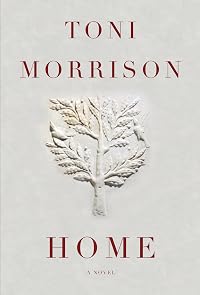
Home
by Toni Morrison
On This Page
Description
"The story of a Korean war veteran on a quest to save his younger sister"--Tags
Recommendations




Member Recommendations
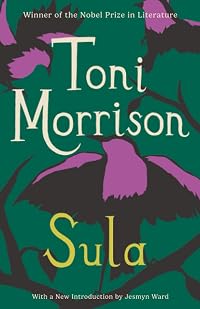
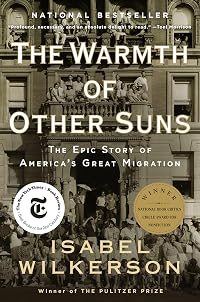
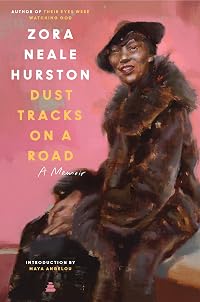
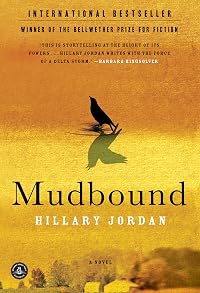
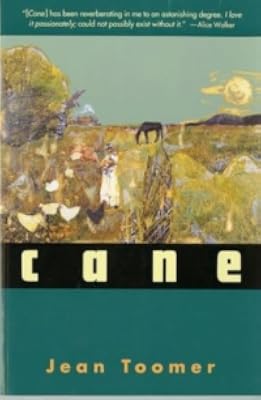
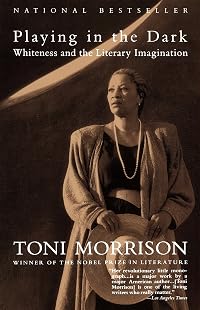
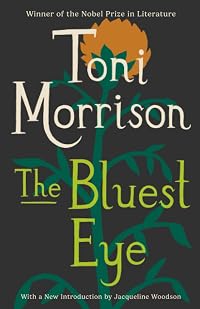
Louve_de_mer Pour les problèmes de ségrégation raciale aux États-Unis.

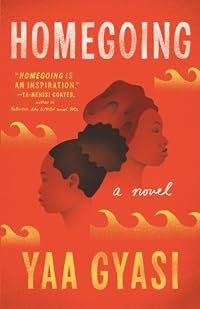
Limelite Another war; another man; another exposure to atrocity; another wandering in body and spirit to find oneself, one's fraternal kin, and the meaning of home. Only vastly more brutal, beautiful and poetic.
Member Reviews
I've been working my way through all of Toni Morrison's novels over the past 4 years, but I've now reached one I haven't read before. I think this must be her shortest novel but it packs a narrative punch. Frank Money is a traumatized veteran of the Korean War who travels across the country when he learns that his younger sister Cee's life is at risk. We ultimately learn that the white doctor Cee works for, Dr. Beauregard Scott, performed an unethical experiment on her that leaves her sterile. Over the course of Frank's travels we flashback to his childhood memories with Cee and the wartime incident that haunts him. The book touches upon themes of family, the community of women, trauma, and racism in 1950s America.
“Maniac moonlight doing the work of absent stars matched his desperate frenzy, lighting his hunched shoulders and footprints left in the snow.”
Bravo! Now that’s writing! And that's the joy of reading Toni Morrison!
“Of course, she waited the nine days before naming, lest death notice fresh life and eat it.”
“He who harms the least of mine disturbs the tranquility of my mind.”
Frank is a Korean War Veteran with severe PTSD who has to go home to help his sister. And it's quite a story! And it's so beautifully written! It's one of those books that makes one sad when it's over.
“In my little-boy heart I felt heroic and I knew that if they found us or touched her I would kill.”
I LOVED the ending! Perfect!
“Here stands a man.”
Bravo! Now that’s writing! And that's the joy of reading Toni Morrison!
“Of course, she waited the nine days before naming, lest death notice fresh life and eat it.”
“He who harms the least of mine disturbs the tranquility of my mind.”
Frank is a Korean War Veteran with severe PTSD who has to go home to help his sister. And it's quite a story! And it's so beautifully written! It's one of those books that makes one sad when it's over.
“In my little-boy heart I felt heroic and I knew that if they found us or touched her I would kill.”
I LOVED the ending! Perfect!
“Here stands a man.”
Toni Morrison's Home left me feeling at once immersed in the story and voyeuristic as if I was staring in the window at secrets that weren't mine to know. Morrison's story telling once again reads like a lyrical documentation of a segment of the characters' lives. As usual she left me wanting to know what happened to Frank and Cee after life continued even as I imagined their lives following a familiar course. Morrison captures slices of life that grab our hearts and make us think about people whose circumstances may differ from our own. Home is the quintessential story of a search for life that always brings one back to one's roots. Morrison always delivers just as she does this story of family, secrets, and survival. Reading Home show more feels like taking a trip home... show less
2012. This book told some sad truths about racism, poverty, and war. And it told them in Morrison’s inimitable and beautiful way, so it was not so difficult to hear them as it might otherwise be, but the knowing of them will have to live in my bones.
(Spoilers, spoilers, spoilers, spoilers)
That white men kidnapped black people and made them fight to the death while they gambled on the outcome. That white doctors experimented on black women and sterilized them, leaving them to die when they were done with them. That men traumatized by the horrors of war, may do horrible things themselves. Her writing is so good, the horrors slip in so gently, no better way to learn the truth. This was my last Toni Morrison novel. I’ve read them all show more now. I cried when she died, because there would be no more. I will go back and reread the ones I haven’t read for a while. Beloved and Song of Solomon especially. show less
(Spoilers, spoilers, spoilers, spoilers)
That white men kidnapped black people and made them fight to the death while they gambled on the outcome. That white doctors experimented on black women and sterilized them, leaving them to die when they were done with them. That men traumatized by the horrors of war, may do horrible things themselves. Her writing is so good, the horrors slip in so gently, no better way to learn the truth. This was my last Toni Morrison novel. I’ve read them all show more now. I cried when she died, because there would be no more. I will go back and reread the ones I haven’t read for a while. Beloved and Song of Solomon especially. show less
In Home, Toni Morrison tells the story of Frank Money, a Korean War veteran who embarks on an odyssey to rescue his sister Cee from a bad situation. Frank suffers from PTSD and severe guilt at having survived the war when his childhood friends did not. He has yet to reconnect with his family despite having always felt close to Cee. But then he receives a mysterious letter informing him Cee is in danger, and he is compelled to track her down.
As Frank makes his way towards Cee, his memories shed light on his experiences during the war. And at the same time, readers learn more of Cee’s story. Cee had run off with a ne'er-do-well to escape oppressive small-town family life, and when that relationship failed found work with a doctor who show more practiced eugenics. She naively submitted to his “treatments,” with disastrous consequences.
Reading Morrison’s fiction usually requires a certain willingness to go with the flow until I figure out what’s going on. But Home’s narrative is straightforward, almost mainstream in its approach. Cee’s situation was resolved in a way that was a bit too tidy. But I found her recovery, as well as Frank’s, sufficiently moving to warrant a 4-star rating. show less
As Frank makes his way towards Cee, his memories shed light on his experiences during the war. And at the same time, readers learn more of Cee’s story. Cee had run off with a ne'er-do-well to escape oppressive small-town family life, and when that relationship failed found work with a doctor who show more practiced eugenics. She naively submitted to his “treatments,” with disastrous consequences.
Reading Morrison’s fiction usually requires a certain willingness to go with the flow until I figure out what’s going on. But Home’s narrative is straightforward, almost mainstream in its approach. Cee’s situation was resolved in a way that was a bit too tidy. But I found her recovery, as well as Frank’s, sufficiently moving to warrant a 4-star rating. show less
He came home from the war with a party in his head
A brother goes off to war, leaving his sister to fend for herself. He returns home with untreated PTSD, can't go back to the Deep South and all its memories until he gets a message that his sister is in trouble. You can go home again, you just have to be prepared to pay... as if you didn't pay to stay away.
This is, to my shame, only the second Morrison novel I've read. I read Beloved last year and was absolutely bowled over by it. According to the blurb, the novella-ish Home is "a Rosetta stone for her entire work, containing all the themes that have fueled her novels", and I can't argue with that; but as good as Home is at times, it feels like it could have used either fewer themes or show more more pages. There's so much cooking between the lines here; the way Morrison writes about race, gender and class, never needing to say who's what, just making it obvious with a few sharp observations, how people have learned to behave and relate. The unspeakable horror of childhood and wartime memories that have to be pushed down if you're going to live. But at 150 pages, it feels too crowded; especially towards the end, where she abandons that sharp eye to instead simply have the characters tell us their hangups, and some of it feels a bit like one of Alan Alda's Serious Episodes of M*A*S*H.
But damn, I need to read more Morrison. Because when she's good, she's incredible. show less
A brother goes off to war, leaving his sister to fend for herself. He returns home with untreated PTSD, can't go back to the Deep South and all its memories until he gets a message that his sister is in trouble. You can go home again, you just have to be prepared to pay... as if you didn't pay to stay away.
This is, to my shame, only the second Morrison novel I've read. I read Beloved last year and was absolutely bowled over by it. According to the blurb, the novella-ish Home is "a Rosetta stone for her entire work, containing all the themes that have fueled her novels", and I can't argue with that; but as good as Home is at times, it feels like it could have used either fewer themes or show more more pages. There's so much cooking between the lines here; the way Morrison writes about race, gender and class, never needing to say who's what, just making it obvious with a few sharp observations, how people have learned to behave and relate. The unspeakable horror of childhood and wartime memories that have to be pushed down if you're going to live. But at 150 pages, it feels too crowded; especially towards the end, where she abandons that sharp eye to instead simply have the characters tell us their hangups, and some of it feels a bit like one of Alan Alda's Serious Episodes of M*A*S*H.
But damn, I need to read more Morrison. Because when she's good, she's incredible. show less
Frank Money, a Korean War vet, returns home, suffering from post-traumatic stress disorder. He does not want to return to his hometown of Lotus, Georgia, but he has no choice when he learns that his sister Cee is very ill. As he travels back, the reader learns Frank’s history, how he had always been his sister’s protector, and how he enlisted to escape the stifling atmosphere of Lotus.
Most of the book is narrated from the third person omniscient point of view, some focusing on other characters besides Frank, but the insertion of first person dramatic monologues from Frank’s viewpoint are the most revealing.
As would be expected from Morrison, the book is about racism, this time in the period between just before the end of Jim show more Crow and the beginning of the Civil Rights movement. Frank is a war veteran but that doesn’t guarantee him equal treatment, even in the Northern states through which he travels.
The novel follows the classic structure of the hero’s journey. Frank leaves home, undergoes trials, gains self-knowledge through his experiences, and returns home a changed person. Frank thinks about his sister who “could know the truth, accept it,” and in the end he does that too: he accepts the truth about his heart of darkness revealed in Korea. When he returns to Lotus, his attitude has changed: “he could not believe how much he had once hated this place. Now it seemed fresh and ancient, safe and demanding.” It is as if he recognizes the symbolism of the town’s name: though its roots are usually found in the muck at the bottom of ponds, it is a beautiful flower.
In some ways the book seems an indictment of medicine as practised by men. Cee recovers because the women in her community use traditional healing practices which are sharply contrasted with patriarchal medicine epitomized by a Dr. Scott who uses women for his experiments in eugenics. “Those women with seen-it-all eyes” are the ones who “repair what an educated bandit doctor had plundered.” Frank isn’t even allowed to visit his sister because the women believe “his maleness would worsen her condition.” Cee is healed not just physically, but spiritually as well: “They delivered unto him a Cee who would never again need his hand over her eyes or his arms to stop her murmuring bones.” I love books with strong female characters, but I found the portrayal of these healers too sanctifying.
This sanctification continues with Cee. As the younger sibling, she was always the one whom Frank rescued, and he does save her from the clutches of Dr. Scott. However, Cee, after her recovery is determined that “she wanted to be the person who would never again need rescue. . . . she wanted to be the one who rescued. . . “Ironically it is her older brother whom she recues by showing him that she “was gutted, infertile, but not beaten” and he need not be either.
In the end, both Cee and Frank are like a sweet bay tree which is described as “split down the middle, beheaded, undead – spreading its arms, one to the right, one to the left.” “It looked so strong/So beautiful/Hurt right down the middle/But alive and well.” It is this affirmation of human strength in the midst of suffering that is the strongest reason to read this book. show less
Most of the book is narrated from the third person omniscient point of view, some focusing on other characters besides Frank, but the insertion of first person dramatic monologues from Frank’s viewpoint are the most revealing.
As would be expected from Morrison, the book is about racism, this time in the period between just before the end of Jim show more Crow and the beginning of the Civil Rights movement. Frank is a war veteran but that doesn’t guarantee him equal treatment, even in the Northern states through which he travels.
The novel follows the classic structure of the hero’s journey. Frank leaves home, undergoes trials, gains self-knowledge through his experiences, and returns home a changed person. Frank thinks about his sister who “could know the truth, accept it,” and in the end he does that too: he accepts the truth about his heart of darkness revealed in Korea. When he returns to Lotus, his attitude has changed: “he could not believe how much he had once hated this place. Now it seemed fresh and ancient, safe and demanding.” It is as if he recognizes the symbolism of the town’s name: though its roots are usually found in the muck at the bottom of ponds, it is a beautiful flower.
In some ways the book seems an indictment of medicine as practised by men. Cee recovers because the women in her community use traditional healing practices which are sharply contrasted with patriarchal medicine epitomized by a Dr. Scott who uses women for his experiments in eugenics. “Those women with seen-it-all eyes” are the ones who “repair what an educated bandit doctor had plundered.” Frank isn’t even allowed to visit his sister because the women believe “his maleness would worsen her condition.” Cee is healed not just physically, but spiritually as well: “They delivered unto him a Cee who would never again need his hand over her eyes or his arms to stop her murmuring bones.” I love books with strong female characters, but I found the portrayal of these healers too sanctifying.
This sanctification continues with Cee. As the younger sibling, she was always the one whom Frank rescued, and he does save her from the clutches of Dr. Scott. However, Cee, after her recovery is determined that “she wanted to be the person who would never again need rescue. . . . she wanted to be the one who rescued. . . “Ironically it is her older brother whom she recues by showing him that she “was gutted, infertile, but not beaten” and he need not be either.
In the end, both Cee and Frank are like a sweet bay tree which is described as “split down the middle, beheaded, undead – spreading its arms, one to the right, one to the left.” “It looked so strong/So beautiful/Hurt right down the middle/But alive and well.” It is this affirmation of human strength in the midst of suffering that is the strongest reason to read this book. show less
Members
- Recently Added By
Published Reviews
ThingScore 75
Like a Toni Morrison primer, Home is a compression of many of the Nobel laureate’s perennial themes of memory, love and loss, uprooting and homecoming. Morrison’s characters struggle to overcome disturbing inner rhythms, caught between trying to exist freely in the world and being captivated by internal demons....
Home does not have the grand, sweeping narrative of Morrison’s best show more fiction. The story’s many brutal acts... are placed before the reader with so little fanfare as to detract from their power.
The book is also much more linguistically subdued than most of her work, and her grand themes of redemption, homecoming, and self-ownership do not work best on a small scale. Still, slice it anywhere and you will find striking moments, dialogue that sings with life, and the mythic American landscape and its people surviving within it. show less
Home does not have the grand, sweeping narrative of Morrison’s best show more fiction. The story’s many brutal acts... are placed before the reader with so little fanfare as to detract from their power.
The book is also much more linguistically subdued than most of her work, and her grand themes of redemption, homecoming, and self-ownership do not work best on a small scale. Still, slice it anywhere and you will find striking moments, dialogue that sings with life, and the mythic American landscape and its people surviving within it. show less
added by zhejw
“Home” is unusual, not only in that it features a male protagonist but that it’s so fiercely focused on the problem of manhood. The novel opens with a childhood memory of horses that “stood like men.” And as Money makes his way across the country to rescue his sister, he’s haunted by what it means to be a man. “Who am I without her,” he wonders, “that underfed girl with the show more sad, waiting eyes?” Are acts of violence essentially masculine, or are they an abdication of manliness? Is it possible, the novel finally asks, to consider the manhood implicit in sacrifice, in laying down one’s life?
What Money eventually does to help his sister and to quiet his demons is just as surprising and quietly profound as everything else in this novel. Despite all the old horrors that Morrison faces in these pages with weary recognition, “Home” is a daringly hopeful story about the possibility of healing — or at least surviving in a shadow of peace. show less
What Money eventually does to help his sister and to quiet his demons is just as surprising and quietly profound as everything else in this novel. Despite all the old horrors that Morrison faces in these pages with weary recognition, “Home” is a daringly hopeful story about the possibility of healing — or at least surviving in a shadow of peace. show less
added by zhejw
[I]f Morrison had finished writing the novel she so carefully began, it might have been one of her best in years. But at well under 200 pages with wide margins, Home barely begins before it ends....
Home should be relentless, unsparing, but Morrison relents halfway through, and spares everyone – most of all herself.
Home should be relentless, unsparing, but Morrison relents halfway through, and spares everyone – most of all herself.
added by zhejw
Lists

Llibres que he llegit el 2020
50 works; 1 member

Favorite Books Published in 2012
57 works; 17 members

IMPAC Dublin Literary Award 2014 longlist
150 works; 3 members

I Could Live There
185 works; 12 members

Same Title
115 works; 3 members
Author Information

103+ Works 80,490 Members
Some Editions
Awards and Honors
Awards
Distinctions
Series
Belongs to Publisher Series
Keltainen kirjasto (450)
Common Knowledge
- Canonical title*
- Heimkehr
- Original title
- Home
- Original publication date
- 2012-05-08
- People/Characters
- Frank Money; Ycidra Money
- Important places
- Lotus, Georgia
- Epigraph
- Whose house is this?
Whose night keeps out the light
In here?
Say, who owns this house?
It's not mine.
I dreamed another, sweeter, brighter
With a view of lakes crossed in painted boats,
Of fields wide a... (show all)s arms open for me.
This house is strange.
Its shadows lie.
Say, tell me, why does its lock fit my key? - Dedication
- Slade
- First words
- They rose up like men.
- Last words
- (Click to show. Warning: May contain spoilers.)Come on brother. Let's go home.
- Original language
- English
*Some information comes from Common Knowledge in other languages. Click "Edit" for more information.
Classifications
Statistics
- Members
- 1,846
- Popularity
- 11,796
- Reviews
- 89
- Rating
- (3.84)
- Languages
- 11 — Dutch, English, Finnish, French, German, Italian, Norwegian (Bokmål), Portuguese, Slovenian, Spanish, Swedish
- Media
- Paper, Audiobook, Ebook
- ISBNs
- 47
- ASINs
- 14