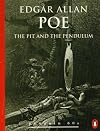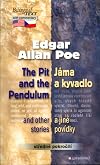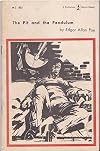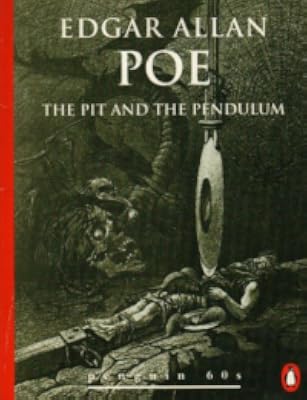
The Pit and the Pendulum and Other Stories
by Edgar Allan Poe
On This Page
Description
Classic Literature. Fiction. Literature. Short Stories. HTML:This selection of Poe's critical writings, short fiction and poetry demonstrates an intense interest in aesthetic issues and the astonishing power and imagination with which he probed the darkest corners of the human mind. The Fall of the House of Usher describes the final hours of a family tormented by tragedy and the legacy of the past. In The Tell Tale Heart, a murderer's insane delusions threaten to betray him, while stories show more such as The Pit and the Pendulum and The Cask of Amontillado explore extreme states of decadence, fear and hate. show lessTags
Recommendations























Member Reviews
A brilliant, awe-full, awful portrayal of torture taking a man to the brink of the abyss. It’s sensual (the senses - not sexy), visceral, and real - not in terms of historical accuracy, but because there’s no trace of the supernatural: all the evil comes from unseen humans.
I’ve read it before, but had forgotten that it’s utterly ruined by its ending.
The narrator has been sentenced to death by the black-robed, white-lipped Inquisitors of Toledo. Seven tall candles, like “white and slender angels”, burn down as he descends to delirium. His tomb-like cell is dark and damp, smelly, silent, and solitary. His memories blur, as does his consciousness.
“The blackness of eternal night encompassed me. I struggled for breath. The show more intensity of the darkness seemed to oppress and stifle me.”
He tries to rationalise, remember, and work out the shape and dimensions of his containment. He recalls:
“A thousand vague rumors… too ghastly to repeat, save in a whisper.”
The pit he finds is, of course, a metaphor, but absolutely real as well (inasmuch as anything in this is definitely real).
“I saw clearly the doom which had been prepared for me.”
More than one: sedation, hunger, thirst, restraint, rats, and, of course, the pendulum. Worst of all, helplessly watching, hearing, and smelling the hissing, glittering steel crescent blade getting ever closer to his heart.
Image: The pendulum in the story is like a scythe, but Harry Clarke’s 1919 illustration has a Beardsley-esque quality that suits the story well. (Source)
Quotes
• “I saw, too, for a few moments of delirious horror, the soft and nearly imperceptible waving of the sable draperies which enwrapped the walls of the apartment.”
• “There was the choice of death with its direst physical agonies, or death with its most hideous moral horrors.”
• “The entire surface of this metallic enclosure was rudely daubed in all the hideous and repulsive devices to which the charnel superstition of the monks has given rise.”
• “I knew that surprise, or entrapment into torment, formed an important portion of all the grotesquerie of these dungeon deaths.”
• “I had but escaped death in one form of agony, to be delivered unto worse than death in some other.”
See also
• Are you expecting this and this?
• There are several mentions of his heart: the “heart's unnatural stillness” and “the tumultuous motion of the heart”. See The Tell-Tale Heart, which I reviewed HERE, for a spookier slant. I’ve also reviewed Poe’s The Fall of the House of Usher, HERE.
• Adolfo Bioy Casares’ The Invention of Morel, also has a condemned narrator struggling to survive, trying to make sense of his surroundings, and questioning his sanity, though in other ways it’s intriguingly different. See my review HERE.
Image: The laser scene, in Goldfinger: “You expect me to talk?”... “No, Mr Bond, I expect you to die.” (Source) show less
I’ve read it before, but had forgotten that it’s utterly ruined by its ending.
The narrator has been sentenced to death by the black-robed, white-lipped Inquisitors of Toledo. Seven tall candles, like “white and slender angels”, burn down as he descends to delirium. His tomb-like cell is dark and damp, smelly, silent, and solitary. His memories blur, as does his consciousness.
“The blackness of eternal night encompassed me. I struggled for breath. The show more intensity of the darkness seemed to oppress and stifle me.”
He tries to rationalise, remember, and work out the shape and dimensions of his containment. He recalls:
“A thousand vague rumors… too ghastly to repeat, save in a whisper.”
The pit he finds is, of course, a metaphor, but absolutely real as well (inasmuch as anything in this is definitely real).
“I saw clearly the doom which had been prepared for me.”
More than one: sedation, hunger, thirst, restraint, rats, and, of course, the pendulum. Worst of all, helplessly watching, hearing, and smelling the hissing, glittering steel crescent blade getting ever closer to his heart.
Image: The pendulum in the story is like a scythe, but Harry Clarke’s 1919 illustration has a Beardsley-esque quality that suits the story well. (Source)
Quotes
• “I saw, too, for a few moments of delirious horror, the soft and nearly imperceptible waving of the sable draperies which enwrapped the walls of the apartment.”
• “There was the choice of death with its direst physical agonies, or death with its most hideous moral horrors.”
• “The entire surface of this metallic enclosure was rudely daubed in all the hideous and repulsive devices to which the charnel superstition of the monks has given rise.”
• “I knew that surprise, or entrapment into torment, formed an important portion of all the grotesquerie of these dungeon deaths.”
• “I had but escaped death in one form of agony, to be delivered unto worse than death in some other.”
See also
• Are you expecting this and this?
• There are several mentions of his heart: the “heart's unnatural stillness” and “the tumultuous motion of the heart”. See The Tell-Tale Heart, which I reviewed HERE, for a spookier slant. I’ve also reviewed Poe’s The Fall of the House of Usher, HERE.
• Adolfo Bioy Casares’ The Invention of Morel, also has a condemned narrator struggling to survive, trying to make sense of his surroundings, and questioning his sanity, though in other ways it’s intriguingly different. See my review HERE.
Image: The laser scene, in Goldfinger: “You expect me to talk?”... “No, Mr Bond, I expect you to die.” (Source) show less
At age twelve I was given my first introduction to the world of literature by my mother who read me Poe’s The Pit and the Pendulum. I can still vividly recollect living through the horrors of the chamber with the unnamed narrator, wondering why Christian monks would construct such a room and why Christian monks would inflict such torture. I still wrestle with a number of the story’s themes.
SADISM
Why do such a thing? The story’s torture chamber is not a makeshift construction slapped together; rather, with its pendulum descending in mathematical precision and its collapsing metal walls turning red hot, to assemble such a bizarre, intricate room would take sophisticated engineering, huge resources and lots of time, perhaps years. show more What does such a room say about the Western monastic tradition and the mentality of monks?
In The Distant Mirror, The Calamitous 14th Century author Barbara W. Tuchman richly portrays the psychology of these chaotic, disorderly times. For example, she writes, “In village games, players with hands tied behind them competed to kill a cat nailed to a post by battering it to death with their heads, at the risk of cheeks ripped open or eyes scratched out by the frantic animal’s claws. Trumpets enhanced the excitement. Or a pig enclosed in a wide pen was chased by men with clubs to the laughter of spectators as he ran squealing from the blows until beaten lifeless. Accustomed in their own lives to physical hardship and injury, medieval men and women were not necessarily repelled by the spectacle of pain but rather enjoyed it. It may be that the untender medieval infancy produced adults who valued others no more than they had been valued in their own formative years.”
Nowadays, we have a name for “untender infancy”: child abuse. We also have a word for enjoying the spectacle of pain inflicted on others: sadism. Of course, the effects of child abuse and living in a society accepting sadism as the norm would not disappear when men became monks. What undoubtedly added fuel to this psychological fire was a religion and theology giving a central place to guilt and sin and thus turning men against their own bodies and, more specifically, again their own sexuality.
Reaching absolute conclusions about the mindset of peoples living centuries ago can never be an exact science, but it doesn’t take too much imagination to understand how such a life in such a time would produce a population of dark, twisted people. Poe’s tale takes place in 1820s not the 1350s, but how much did the psychology of the monasteries really change in these years?
ALTERED STATES OF CONSCIOUSNESS
In the beginning stages of the narrator’s ordeal, he conveys the following, “Very suddenly there came back to my soul motion and sound – the tumultuous motion of the heart, and, in my ears, the sound of its beating. Then a pause in which all is blank. Then again sound, and motion and touch – a tingling sensation pervading my frame. Then the mere consciousness of existence, without thought – a condition which lasted long.”
Teachers within the various yoga and Buddhist traditions talk about the "consciousness of existence, without thought," that is, the gap between thoughts. In such a gap between thoughts we are given a glimpse of the ground of being, pure awareness of space. This awareness can be developed through meditation or occasionally experienced through such things as hallucinogens, trance, or, as with the narrator of Poe’s tale, extreme emotional states.
FEAR
Adding to the fear of actual physical suffering, there is the fear we project with our minds and imaginations. The narrator’s imagination is afire: “And now, as I still continued to step cautiously onward, there came thronging upon my recollection a thousand vague rumors of the horrors of Toledo. Of the dungeons there had been strange things narrated – fables I had always deemed them – but yet strange and too ghastly to repeat, save in a whisper. Was I left to perish of starvation in this subterranean world of darkness; or what fate, perhaps even more fearful, awaited me?” Fear thrives on our projecting into the future: whatever pain or agony we are currently experiencing, there is always the ever-present possibility our plight will become worse.
HOPE AND GOOD FORTUNE
The narrator is forever hopeful and it’s the narrator’s hope coupled with his fear and sufferings that gives the tale its emotional depth and breath. And, as it turns out, good fortune or what we more commonly call ‘luck’ follows the narrator at three critical junctures in the tale. Oh, Fortuna, if we could all have such good fortune and luck at critical points in our own lives!
“I call to mind flatness and dampness; and then all is madness - the madness of a memory which busies itself among forbidden things.”
― Edgar Allan Poe, The Pit and the Pendulum show less
A classic of sensational horror, The Pit and the Pendulum is also, for me, one of the Poe stories that most closely resembles (and certainly influences) later writers such as Franz Kafka. Here we have several Kafka-like elements: a judgment pronounced by distant, stern, inhuman judges, with no sense of what crime, if any, may have been committed, and then a devious punishment that gets more devious as time goes on. The narrator is also utterly alone in the world, save the hungry rats, and this loneliness allows him to reflect quite eloquently on his own dream-like consciousness. At the same time, Poe maintains a frenzied intensity that literally kept me on the edge of my seat the entire time. Amazing how much he packs into so few pages!
At age 12 I was given my introduction to the world of literature by my mother who read me Poe’s The Pit and the Pendulum. I can still vividly recollect living through the horrors of the chamber with the unnamed narrator, wondering why Christian monks would construct such a room and why Christian monks would inflict such torture. I still wrestle with a number of the story’s themes.
Sadism
Why do such a thing? The story’s torture chamber is not a makeshift construction slapped together; rather, with its pendulum descending in mathematical precision and its collapsing metal walls turning red hot, to assemble such a bizarre, intricate room would take sophisticated engineering. huge resources and lots of time, perhaps years. What does show more such a room say about the Western monastic tradition and the mentality of monks?
In ‘The Distant Mirror, The Calamitous 14th Century', author Barbara W. Tuchman richly portrays the psychology of these chaotic, disorderly times. For example, she writes, “In village games, players with hands tied behind them competed to kill a cat nailed to a post by battering it to death with their heads, at the risk of cheeks ripped open or eyes scratched out by the frantic animal’s claws. Trumpets enhanced the excitement. Or a pig enclosed in a wide pen was chased by men with clubs to the laughter of spectators as he ran squealing from the blows until beaten lifeless. Accustomed in their own lives to physical hardship and injury, medieval men and women were not necessarily repelled by the spectacle of pain but rather enjoyed it. . . . It may be that the untender medieval infancy produced adults who valued others no more than they had been valued in their own formative years.” Nowadays, we have a name for “untender infancy”: child abuse. We also have a word for enjoying the spectacle of pain inflicted on others: sadism.
Of course, the effects of child abuse and living in a society accepting sadism as the norm would not disappear when men became monks. What undoubtedly added fuel to this psychological fire was a religion and theology giving a central place to guilt and sin and thus turning men against their own bodies and, more specifically, again their own sexuality. Reaching absolute conclusions about the mindset of peoples living centuries ago can never be an exact science, but it doesn’t take too much imagination to understand how such a life in such a time would produce a population of dark, twisted people. Poe’s tale takes place in 1820s not the 1350s, but how much did the psychology of the monasteries really change in these years?
Altered States of Consciousness
In the beginning stages of the narrator’s ordeal, he conveys the following, “Very suddenly there came back to my soul motion and sound – the tumultuous motion of the heart, and, in my ears, the sound of its beating. Then a pause in which all is blank. Then again sound, and motion and touch – a tingling sensation pervading my frame. Then the mere consciousness of existence, without thought – a condition which lasted long.” Yogis and Buddhist teachers talk about the ‘consciousness of existence, without thought’, that is, the gap between thoughts. In such a gap between thoughts we are given a glimpse of the ground of being, pure awareness of space. This awareness can be developed through meditation or occasionally experienced through such things as hallucinogens, trance, or, as with the narrator of Poe’s tale, extreme emotional states.
Fear
Adding to the fear of actual physical suffering, there is the fear we project with our minds and imaginations. The narrator’s imagination is afire: “And now, as I still continued to step cautiously onward, there came thronging upon my recollection a thousand vague rumors of the horrors of Toledo. Of the dungeons there had been strange things narrated – fables I had always deemed them – but yet strange and too ghastly to repeat, save in a whisper. Was I left to perish of starvation in this subterranean world of darkness; or what fate, perhaps even more fearful, awaited me?” Fear thrives on our projecting into the future: whatever pain or agony we are currently experiencing, there is always the ever-present possibility our plight will become worse.
Hope and Good Fortune
The narrator is forever hopeful and it’s the narrator’s hope coupled with his fear and sufferings that gives the tale its emotional depth and breath . And, as it turns out, good fortune or what we more commonly call ‘luck’ follows the narrator at three critical junctures in the tale. Oh, Fortuna, if we could all have such good fortune and luck at critical points in our own lives! show less
Sadism
Why do such a thing? The story’s torture chamber is not a makeshift construction slapped together; rather, with its pendulum descending in mathematical precision and its collapsing metal walls turning red hot, to assemble such a bizarre, intricate room would take sophisticated engineering. huge resources and lots of time, perhaps years. What does show more such a room say about the Western monastic tradition and the mentality of monks?
In ‘The Distant Mirror, The Calamitous 14th Century', author Barbara W. Tuchman richly portrays the psychology of these chaotic, disorderly times. For example, she writes, “In village games, players with hands tied behind them competed to kill a cat nailed to a post by battering it to death with their heads, at the risk of cheeks ripped open or eyes scratched out by the frantic animal’s claws. Trumpets enhanced the excitement. Or a pig enclosed in a wide pen was chased by men with clubs to the laughter of spectators as he ran squealing from the blows until beaten lifeless. Accustomed in their own lives to physical hardship and injury, medieval men and women were not necessarily repelled by the spectacle of pain but rather enjoyed it. . . . It may be that the untender medieval infancy produced adults who valued others no more than they had been valued in their own formative years.” Nowadays, we have a name for “untender infancy”: child abuse. We also have a word for enjoying the spectacle of pain inflicted on others: sadism.
Of course, the effects of child abuse and living in a society accepting sadism as the norm would not disappear when men became monks. What undoubtedly added fuel to this psychological fire was a religion and theology giving a central place to guilt and sin and thus turning men against their own bodies and, more specifically, again their own sexuality. Reaching absolute conclusions about the mindset of peoples living centuries ago can never be an exact science, but it doesn’t take too much imagination to understand how such a life in such a time would produce a population of dark, twisted people. Poe’s tale takes place in 1820s not the 1350s, but how much did the psychology of the monasteries really change in these years?
Altered States of Consciousness
In the beginning stages of the narrator’s ordeal, he conveys the following, “Very suddenly there came back to my soul motion and sound – the tumultuous motion of the heart, and, in my ears, the sound of its beating. Then a pause in which all is blank. Then again sound, and motion and touch – a tingling sensation pervading my frame. Then the mere consciousness of existence, without thought – a condition which lasted long.” Yogis and Buddhist teachers talk about the ‘consciousness of existence, without thought’, that is, the gap between thoughts. In such a gap between thoughts we are given a glimpse of the ground of being, pure awareness of space. This awareness can be developed through meditation or occasionally experienced through such things as hallucinogens, trance, or, as with the narrator of Poe’s tale, extreme emotional states.
Fear
Adding to the fear of actual physical suffering, there is the fear we project with our minds and imaginations. The narrator’s imagination is afire: “And now, as I still continued to step cautiously onward, there came thronging upon my recollection a thousand vague rumors of the horrors of Toledo. Of the dungeons there had been strange things narrated – fables I had always deemed them – but yet strange and too ghastly to repeat, save in a whisper. Was I left to perish of starvation in this subterranean world of darkness; or what fate, perhaps even more fearful, awaited me?” Fear thrives on our projecting into the future: whatever pain or agony we are currently experiencing, there is always the ever-present possibility our plight will become worse.
Hope and Good Fortune
The narrator is forever hopeful and it’s the narrator’s hope coupled with his fear and sufferings that gives the tale its emotional depth and breath . And, as it turns out, good fortune or what we more commonly call ‘luck’ follows the narrator at three critical junctures in the tale. Oh, Fortuna, if we could all have such good fortune and luck at critical points in our own lives! show less
"To the victims of its tyranny, there was the choice of death with its direst physical agonies, or death with its most hideous moral horrors. I had been reserved for the latter. By long suffering my nerves had been unstrung, until I trembled at the sound of my own voice, and had become in every respect a fitting subject for the species of torture which awaited me."
Really good, suspenseful little story, told with Poe's deft touch of the macabre. Unlike most of Poe's other stories, though, this one actually endson a positive note! (I know! Crazy, right?)
I didn't love this too much, though, because it didn't have the sort of moral or philosophical depth that Ligeia and The Fall of the House of Usher did- then again, those two dealt with show more largely supernatural, abnormal happenings, whereas this is pretty much just an account of Inquisitorial torture. Heinous and terrifying, to be sure, but it didn't make me think or ask me important questions (apart from wondering what the narrator was sentenced to death for), and those are two things that I really want from my short stories. I hold Poe's stories to an even higher standard, as those two mentioned before were amazing and thought-provoking.
I'm off to read Masque of the Red Death now! The Month of Poe continues! show less
Really good, suspenseful little story, told with Poe's deft touch of the macabre. Unlike most of Poe's other stories, though, this one actually ends
I didn't love this too much, though, because it didn't have the sort of moral or philosophical depth that Ligeia and The Fall of the House of Usher did- then again, those two dealt with show more largely supernatural, abnormal happenings, whereas this is pretty much just an account of Inquisitorial torture. Heinous and terrifying, to be sure, but it didn't make me think or ask me important questions (apart from wondering what the narrator was sentenced to death for), and those are two things that I really want from my short stories. I hold Poe's stories to an even higher standard, as those two mentioned before were amazing and thought-provoking.
I'm off to read Masque of the Red Death now! The Month of Poe continues! show less
I've previously written that regardless of what or who came before, it all really starts with Lovecraft and I stand by that. However, that said, I've been a huge Poe fan my entire life and I feel that he's generally more famous for a reason -- he's damn good! I love his work and I think he was very original in many of his works, including this one, but I subjectively feel Lovecraft did him one better, if only subtly. In other words, for me, Lovecraft is 1A and Poe is 1B. Together, they're simply unbeatable. Very recommended!
Poe knows how to create an atmosphere, build tension and prolong horror better than almost anyone. It is what has made him so popular for so long. This story of the inquisition makes the blood freeze at moments. I could not bear the scene with the rats!
Members
- Recently Added By
Lists

1001 Books You Must Read Before You Die
1,448 works; 1,134 members

Recommended Reading : 600 Classics Reviewed, Editors of Salem Press, 2015
634 works; 6 members

el
1,139 works; 1 member
Author Information

3,808+ Works 107,423 Members
Edgar Allan Poe was born in Boston, Massachusetts on January 19, 1809. In 1827, he enlisted in the United States Army and his first collection of poems, Tamerlane and Other Poems, was published. In 1835, he became the editor of the Southern Literary Messenger. Over the next ten years, Poe would edit a number of literary journals including the show more Burton's Gentleman's Magazine and Graham's Magazine in Philadelphia and the Broadway Journal in New York City. It was during these years that he established himself as a poet, a short story writer, and an editor. His works include The Fall of the House of Usher, The Tell-Tale Heart, The Murders in the Rue Morgue, The Mystery of Marie Roget, A Descent into the Maelstrom, The Masque of the Red Death, and The Raven. He struggle with depression and alcoholism his entire life and died on October 7, 1849 at the age of 40. (Bowker Author Biography) show less
Series
Belongs to Publisher Series
Work Relationships
Common Knowledge
- Canonical title
- The Pit and the Pendulum and Other Stories
- Original publication date
- 1842
- Original language
- English
- Disambiguation notice
- This edition of The Pit and the Pendulum together with three other stories, The Black Cat, The Tell-tale heart and The Premature Burial, was published in 1995 as one of the small Penguin 60s series to ma... (show all)rk the 60th anniversary of Penguin Books. Most, if not all, of the other collections of Poe's stories under this title contain more stories. Please do not combine this collection with others of different content.
Classifications
- Genres
- Fiction and Literature, Horror, General Fiction
- DDC/MDS
- 813.3 — Literature & rhetoric American literature in English American fiction in English Middle 19th Century 1830-1861
- LCC
- PN6728.4 .P5 — Language and Literature Literature (General) Literature (General) Collections of general literature Comic books, strips, etc.
- BISAC
Statistics
- Members
- 683
- Popularity
- 41,942
- Reviews
- 21
- Rating
- (4.02)
- Languages
- English
- Media
- Paper, Audiobook, Ebook
- ISBNs
- 9
- ASINs
- 2