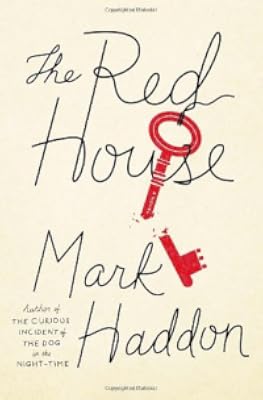
The Red House
by Mark Haddon
On This Page
Description
Richard, a wealthy doctor, invites his estranged sister Angela and her family to join him for a week at a vacation home in the English countryside, which results in a symphony of long-held grudges, fading dreams, and rising hopes.Tags
Recommendations



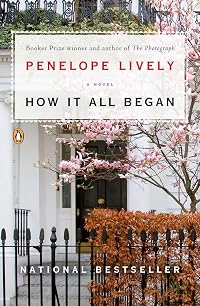
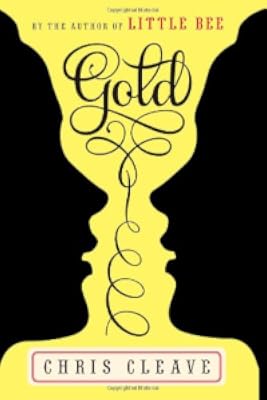

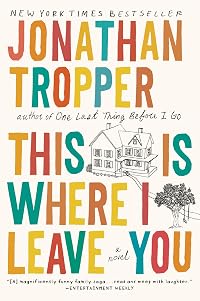
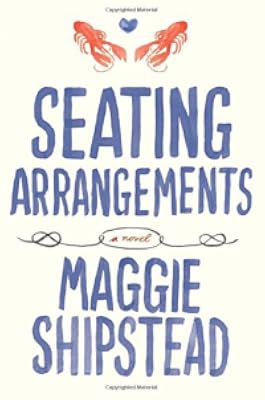








Member Recommendations

by anonymous user

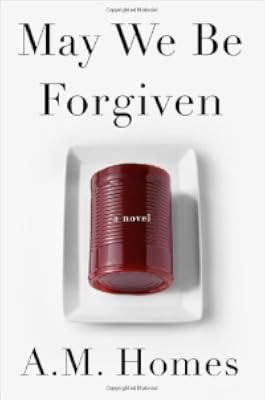
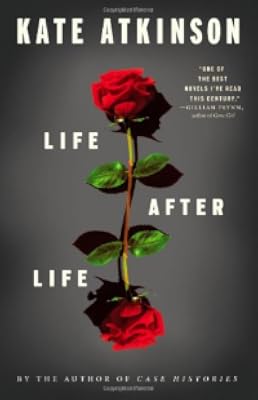
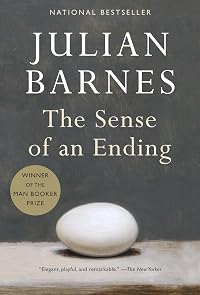
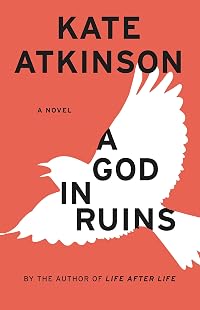
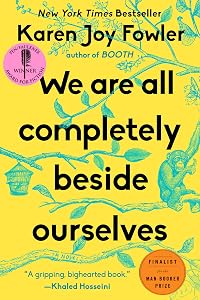
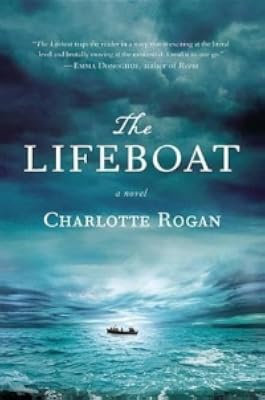
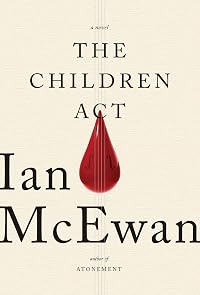
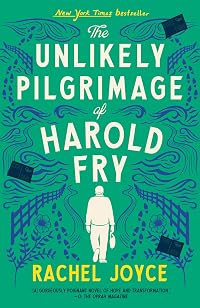
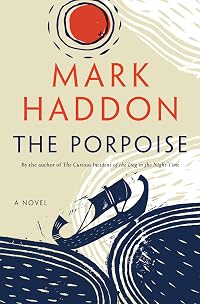
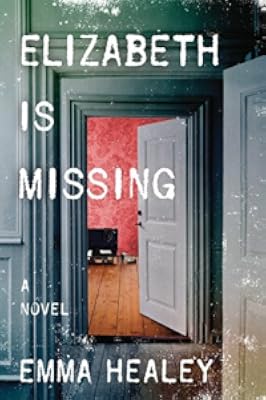
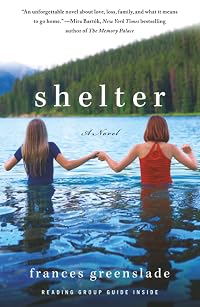
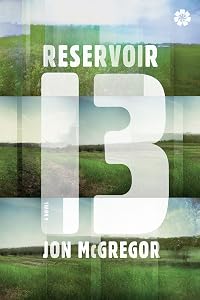
baystateRA Both books have a tangle of reticent English family members misunderstanding each other while on holiday
JGoto About a dysfunctional family, but written with humor.
SimoneA Both books tell the story of a family with issues, from their different viewpoints. 'All Families' does it with lots of black humor, 'The Red House' with an interesting approach to the viewpoints.
Member Reviews
Although this book by the author of The Curious Incident of the Dog in the Night-Time got off to a slow start for me, in the end I found that I liked it very much.
The writing at first seemed somewhat choppy to me, and I didn't like that both present and past tense was used while writing about the same time frame. I didn't like being broadsided by the occasional snippet of cruelty. There were too many paragraphs filled with fragmented sentences, things that seemed relative perhaps to the whole world but not connected to the story. As an example:
Marja, Helmand. The sniper far back enough from the window to stop sun flaring on the rifle sight. Crack and kickback. A marine stumbles under the weight of his red buttonhole. Dawn light on wild show more horses in the Khentii Mountains. Huddersfield, brown sugar bubbling in a tarnished spoon. Turtles drown in oil.
Huh? I think these paragraphs are supposed to give me a sense of the wider world, the world beyond this dysfunctional family on vacation and their relatively petty problems. But initially, they just made me think, “Hey, this ain't Grapes of Wrath and Haddon ain't Steinbeck.”
And then I got used to them and enjoyed them. I liked every single one of these flawed characters trying to find sense in their lives. I even liked the immensely unlikeable Melissa. Anyone who has ever had any sort of human relationship, which pretty much includes all of us, will find familiarity in this lovely story.
I was given an advance reader's copy of the book, and the quote may have changed in the published edition. show less
The writing at first seemed somewhat choppy to me, and I didn't like that both present and past tense was used while writing about the same time frame. I didn't like being broadsided by the occasional snippet of cruelty. There were too many paragraphs filled with fragmented sentences, things that seemed relative perhaps to the whole world but not connected to the story. As an example:
Marja, Helmand. The sniper far back enough from the window to stop sun flaring on the rifle sight. Crack and kickback. A marine stumbles under the weight of his red buttonhole. Dawn light on wild show more horses in the Khentii Mountains. Huddersfield, brown sugar bubbling in a tarnished spoon. Turtles drown in oil.
Huh? I think these paragraphs are supposed to give me a sense of the wider world, the world beyond this dysfunctional family on vacation and their relatively petty problems. But initially, they just made me think, “Hey, this ain't Grapes of Wrath and Haddon ain't Steinbeck.”
And then I got used to them and enjoyed them. I liked every single one of these flawed characters trying to find sense in their lives. I even liked the immensely unlikeable Melissa. Anyone who has ever had any sort of human relationship, which pretty much includes all of us, will find familiarity in this lovely story.
I was given an advance reader's copy of the book, and the quote may have changed in the published edition. show less
Richard and Angela, estranged siblings who have just lost their mother, bring their tense nuclear families to a cottage in the Welch countryside for a week-long holiday. Typical family discord fare, but Haddon tackles the interpersonal and intra-personal landscape with a challenging narrative technique: each new paragraph is narrated from a different character's point of view. This requires concentration as the reader is getting to know the characters and I found it rather distracting for the first third of the novel. Once I felt like I had the cast of characters straight, I found the technique interesting; it creates a choppy and disconnected pace that mirrors the dysfunction of the characters' relationships. This novel is all about show more relationships and only one character emerges as anyone I'd want to get to know better (Alex has promise but he also has too much teenage boy about him for me to want to spend time in his company). If you tend to like novels with likable characters, this one may not be for you, but Haddon's wry humor and his merciless depiction of people trying to establish connection and feel like their lives matter won me over in the end. show less
While I seem to be in the minority given previously posted reviews, I must admit that I really liked this book. It tells the story of an estranged brother and sister who, with their families, spend a week together on vacation in Wales.
So much happens in these characters' minds and hearts! We see a brother and sister who grew up together, but have such different recollections of their childhood and their parents. Young adults struggling with their sexuality. Spouses struggling with the state of their marriages. All while trying to relax and enjoy time together away from the pressures of work and home.
Mark Haddon shows real skill in the writing style he employed. Every chapter contains short sections from the point of view of every show more character. Sometimes in conversation; others times their thoughts. And thoughts wander, and maybe aren't related to what's going on at the moment. Mr. Haddon pulls this off without confusing the reader. The glimpses of the internal lives of the characters helped me to identify with them; like the say about icebergs, 90% is below the surface.
This book, like Curious Incident, had strong character voice(s) -- something I really like about Mr. Haddon's writing. show less
So much happens in these characters' minds and hearts! We see a brother and sister who grew up together, but have such different recollections of their childhood and their parents. Young adults struggling with their sexuality. Spouses struggling with the state of their marriages. All while trying to relax and enjoy time together away from the pressures of work and home.
Mark Haddon shows real skill in the writing style he employed. Every chapter contains short sections from the point of view of every show more character. Sometimes in conversation; others times their thoughts. And thoughts wander, and maybe aren't related to what's going on at the moment. Mr. Haddon pulls this off without confusing the reader. The glimpses of the internal lives of the characters helped me to identify with them; like the say about icebergs, 90% is below the surface.
This book, like Curious Incident, had strong character voice(s) -- something I really like about Mr. Haddon's writing. show less
“The Red House” took a while for me to settle into. At first, the voices of the characters all sounded similar – different words and complaints – but similar tones. (Almost none of them positive save young Benjy.) Every character seemed unhappy, yearning for more, and dreading the upcoming family vacation in one form or another. I was having trouble keeping the relationships straight – who was married to whom – which child/children went with each parent.
And then finally, about halfway through, the tones differentiated themselves and became a rhythm. A rhythm of family life, at once familiar, and yet out of the ordinary as these people are removed from their daily lives, yet still firmly entrenched in their problems.
Brother show more and sister Richard and Angela have recently lost their mother, and try to connect with the little family they have left. Estranged from one another over time, on this getaway, they realize how deep the divide goes.
“If he’d asked the question, she would have told him everything, but he didn’t know what question to ask.”
Once the characters started to solidify, I was far more interested in the book, though in many places, the story wanders off into descriptions of history, archeology, biology, religion that, while interesting, throw off the flow of the story, and I found myself a bit lost again.
“One person looks around and sees a universe created by a God who watches over its long unfurling, marking the fall of sparrows and listening to the prayers of his finest creation. Another person believes that life, with all its baroque complexity, is a chemical aberration that will briefly decorate the surface of a ball of rock spinning somewhere among a billion galaxies. And the two of them could talk for hours and find no great difference between each other, for neither set of beliefs make us kinder or wiser.”
But when the novel focus on the oddities and intricacies of family, the story is at its strongest. “…siblings can be cruel, and companionship refused is worse than loneliness, and you could cast your eye over any playground and not tell who comes from a brood of seven or one. But later, when parents fall from grace and become ordinary messed-up human beings and turn slowly from careers into people who must be cared for in their turn, who then will share those growing frustrations are pore over the million petty details of that long-shared soap-opera carry that means nothing to others? And when they are finally gone, who will turn to you and say, Yes, I remember the red rocking horse…Yes, I remember the imaginary bed under the hawthorn tree.”
Like it or not, we are tied to our families. Similar to us or complete opposites, those who with we were raised and lived with day after day are a part of us, a part of our history, a part of what formed us. Sometimes we become who we are because of them, sometimes in spite of them.
This small part of this family’s life, that which they spent together in “The Red House”, provides the reader a look inside a small group of people, not much different than many others…but when seen on this level, provide an interesting glimpse of the delicate and every evolving structure that is a human family. show less
And then finally, about halfway through, the tones differentiated themselves and became a rhythm. A rhythm of family life, at once familiar, and yet out of the ordinary as these people are removed from their daily lives, yet still firmly entrenched in their problems.
Brother show more and sister Richard and Angela have recently lost their mother, and try to connect with the little family they have left. Estranged from one another over time, on this getaway, they realize how deep the divide goes.
“If he’d asked the question, she would have told him everything, but he didn’t know what question to ask.”
Once the characters started to solidify, I was far more interested in the book, though in many places, the story wanders off into descriptions of history, archeology, biology, religion that, while interesting, throw off the flow of the story, and I found myself a bit lost again.
“One person looks around and sees a universe created by a God who watches over its long unfurling, marking the fall of sparrows and listening to the prayers of his finest creation. Another person believes that life, with all its baroque complexity, is a chemical aberration that will briefly decorate the surface of a ball of rock spinning somewhere among a billion galaxies. And the two of them could talk for hours and find no great difference between each other, for neither set of beliefs make us kinder or wiser.”
But when the novel focus on the oddities and intricacies of family, the story is at its strongest. “…siblings can be cruel, and companionship refused is worse than loneliness, and you could cast your eye over any playground and not tell who comes from a brood of seven or one. But later, when parents fall from grace and become ordinary messed-up human beings and turn slowly from careers into people who must be cared for in their turn, who then will share those growing frustrations are pore over the million petty details of that long-shared soap-opera carry that means nothing to others? And when they are finally gone, who will turn to you and say, Yes, I remember the red rocking horse…Yes, I remember the imaginary bed under the hawthorn tree.”
Like it or not, we are tied to our families. Similar to us or complete opposites, those who with we were raised and lived with day after day are a part of us, a part of our history, a part of what formed us. Sometimes we become who we are because of them, sometimes in spite of them.
This small part of this family’s life, that which they spent together in “The Red House”, provides the reader a look inside a small group of people, not much different than many others…but when seen on this level, provide an interesting glimpse of the delicate and every evolving structure that is a human family. show less
There's a brief scene in this novel where several characters are trying to asssemble a puzzle, with some frustration and not much success. One possible "like it or hate it" outcome of this novel is that you'll feel the same way-- too many jumbled pieces, no coherent overall picture.
Haddon writes the novel from eight points of view (the eight characters in the novel) in short bursts of dialogue, interior and exterior, ranging from a paragraph to about three pages apiece. People briefly connect (rarely), more often collide, deflect, dissemble, outright lie (to themselves and to others). Misdirection is the name of the game. Feelings and emotions are buried and left to seethe. Unhealthy atmosphere for a family vacation and ideal setup to show more show how massively one family can be dysfunctional? You bet.
The key to reading this novel is tenacity, not to skim over the brief brusts of text and to work hard at assembling the fragments (the "puzzle pieces") into, if not a satisfying whole, than at least something loosely linked together to give an overall idea of how families work and do not work together. I'm not sure that Haddon ever quite does pull of the trick, in the end, of putting the puzzle pieces into what's shown on the box, but I do think we come up with at least a reasonably satisfying hazy, shifting concept of what it means to be a family. No perfection is achieved, no resolutions are arrived at, no ends are tidly put away, but that's okay.
I'll admit I did end the novel feeling a little unsatisfied, not because I wanted a happy ending or because I was invested in narrative resolution, but simply because Haddon seemed only to reinforce the point that "things are basically still jumbled and problematic" with no real forward thrust in the novel beyond that basic idea. There is character development, yes, but I'm not sure how far it takes us in terms of working through ideas in the novel so much as it's just stating the same ideas over and over (this is true to varying degrees, depending on the character in question).
My advice would be to take this one slowly and not to be tempted to rush by the rapidly-shifting points of view; it looks deceptively like a quick read, but to make it one would be to sell it short. Mull over it and turn the core ideas over in your mind and try to see beyond the fragments; it may not be a picture that Haddon wants you to see at all, but this may be the most interesting idea of all. show less
Haddon writes the novel from eight points of view (the eight characters in the novel) in short bursts of dialogue, interior and exterior, ranging from a paragraph to about three pages apiece. People briefly connect (rarely), more often collide, deflect, dissemble, outright lie (to themselves and to others). Misdirection is the name of the game. Feelings and emotions are buried and left to seethe. Unhealthy atmosphere for a family vacation and ideal setup to show more show how massively one family can be dysfunctional? You bet.
The key to reading this novel is tenacity, not to skim over the brief brusts of text and to work hard at assembling the fragments (the "puzzle pieces") into, if not a satisfying whole, than at least something loosely linked together to give an overall idea of how families work and do not work together. I'm not sure that Haddon ever quite does pull of the trick, in the end, of putting the puzzle pieces into what's shown on the box, but I do think we come up with at least a reasonably satisfying hazy, shifting concept of what it means to be a family. No perfection is achieved, no resolutions are arrived at, no ends are tidly put away, but that's okay.
I'll admit I did end the novel feeling a little unsatisfied, not because I wanted a happy ending or because I was invested in narrative resolution, but simply because Haddon seemed only to reinforce the point that "things are basically still jumbled and problematic" with no real forward thrust in the novel beyond that basic idea. There is character development, yes, but I'm not sure how far it takes us in terms of working through ideas in the novel so much as it's just stating the same ideas over and over (this is true to varying degrees, depending on the character in question).
My advice would be to take this one slowly and not to be tempted to rush by the rapidly-shifting points of view; it looks deceptively like a quick read, but to make it one would be to sell it short. Mull over it and turn the core ideas over in your mind and try to see beyond the fragments; it may not be a picture that Haddon wants you to see at all, but this may be the most interesting idea of all. show less
 This review was written for LibraryThing Early Reviewers.
The plot is simple. Richard, a radiologist, rents a holiday house in the Welsh countryside with his wife Louisa and his stepdaughter Melissa. Richard invites his sister Angela, her husband Dominic, and their three children (Alex, Daisy, and Benjy) to join them. The duration of the novel is the one week of the family vacation, each day being given a separate chapter.
Not much happens; there are no dramatic events. The focus is on the inner lives of characters. The point of view constantly alternates among the eight characters. The book is written in varying degrees of stream-of-consciousness/dramatic monologue style combined with excerpts from books being read, snippets of lyrics of music being listened to, and seemingly random show more lists.
Because of the constantly shifting point of view, the reader gradually gets to know each character as an individual and what is really important to him/her. Secrets, anxieties, insecurities, motivations, regrets, and desires are revealed. It is this character development that is the novel’s tour de force. The author has a real talent for “peeling back those layers” (24) and revealing the person “under the veneer” (32). Often it is seemingly small observations that reveal so much. When Dominic enthuses about the amazing view at the cottage, Richard responds, “You’re welcome” (25). Those two words say so much about Richard’s personality. When he meets Louisa’s first husband who comments that “Louisa tells me you’re a doctor,” Richard is uncomfortable with his too-lengthy, muscular handshake and so feels the need to clarify: “Consultant. Neuroradiology” (55). Again these are telling words, as is a sentence on the following page: “He’d arranged his cutlery at half-past six” (56). By the time the book is finished, the reader will feel he/she has spent a week with these eight people.
Family is obviously one of the themes of the novel. Early on a definition is given: “Family, that slippery word, a star to every wandering bark, and everyone sailing under a different sky” (10). In one way or another most of the characters want to escape from their families. Louisa is embarrassed about her ”working-class roots which she was trying to escape” (102), an embarrassment she shares with her daughter who hopes to see her mother’s brothers, “Never again, hopefully” (240); Angela wants to be “off duty” from her family so she can have “only herself to please” (96); Daisy wants to run until she finds “the edge of the world and the beginning of some other place where no one knows her” (151). One character literally runs away.
Characters claim not to have anything in common with family members. Alex “recognized nothing of himself in Mum and Dad” (45) while Angela looks at her brother and thinks, “We have nothing in common, nothing” (30). Louisa thinks Richard would “have nothing in common” (224) with her brothers just as Melissa dares Daisy to “Tell me one thing [Louisa and Richard have] in common” (94). Of course this is not true as many similarities are revealed. Louisa experienced “unexpected loneliness” (107) when her first husband, who “wanted it all the time” (55), left her; Richard suffered “intolerable loneliness” (111) when his first wife, “who was so explicit about her needs” (124), left him. Angela and Benjy spend a great deal of time in the worlds of their imaginations. Dominic acknowledges he “has never really grown up” (97) and Richard unknowingly agrees with his sister (71) by thinking of himself as “a little boy” (131). Poor self-esteem is evidenced in the female cousins (123), and Richard and Benjy even have similar gestures (129).
Richard decides, “I didn’t really understand what family meant . . . . You have to work at these things” (101), and, ironically, throughout the book the characters also work at connecting with family: that “was what one wanted ultimately, wasn’t it, that connection” (60). People want to be asked, “Tell me about yourself” (17) or “Tell me more” (175) but, unfortunately, few connections are made. Sometimes people are “too distracted” (180) and aren’t “really listening” (101). Instead there are “stilted conversations” (27) and a constant “Reaching out and pulling back” (88). For example, during a conversation with his sister, Richard doesn’t know what question to ask (129). Then he learns his mistake (145) and so approaches his sister only to have her reply, “I talked to Louisa earlier. I’m not sure I can talk about it twice in one day” (163). After a conversation with Daisy, Angela realizes, “A door had opened and she’d slammed it shut” (189), but she is not the only one to do this. Richard realizes he mishandled a conversation with his daughter-in-law and promises, “Perhaps I should talk to her. . . . I won’t wear hobnailed boots this time” (234). In fact the characters seem very adept at saying the wrong thing. During a conversation with her sister-in-law, Angela realizes, “On what planet was this a good thing to say?” (82) and Alex acknowledges his “foot-in-mouth disease” (181) just as Louisa apologizes, “I shouldn’t have said those things” (197).
In the end, the message seems to be that real connection is impossible. Despite “how similar they might be after all” (240), “Everyone [lives] in their little worlds” (221). Dominic concludes, “How rarely people were together” (233). Richard realizes “And his own sister . . . ? They had the same parents, they had lived in the same house for sixteen years but he had no idea who she really was” (238). Everyone “stumbled through life failing to understand everyone” (246). Daisy’s statement could serve as a mantra for all her family members: “I am ignorant, I understand so little, I am only human” (175).
There are minor, rather than major epiphanies. Characters do realize things about themselves and others, but the insights are not earth shatteringly profound. Louisa realizes people don’t treat family members like adults (66); Angela recognizes the root cause of her resentment of her brother (101); Dominic acknowledges his character flaws (178) which his eldest son also identifies (239). Many of these insights seem insubstantial and fleeting. Daisy may have a flash “out of the blue. Her mother was a human being” (87), but her behavior towards Angela does not change. Some readers might be disappointed with the minor revelations the characters experience; like Richard they might have “expected something to be resolved or mended or rediscovered” (260). In reality, although we may think “something would change. Revelation, turning point, but it doesn’t happen” (260).
And this realism is what is great about the novel. An inability to communicate, having to say, “What I meant was” (218), and having to admit having no “idea what he[/she] was talking about” (57), especially with those closest to us, is a common problem. Many people want to escape their pasts but “we all [have] past lives that rose up” (199). We’ve all had memories evoked at odd moments: “You thought it was all gone, the house demolished, the furniture sold, photos eaten away by mildew and damp. Then you opened a tin of sardines with that little metal key” (54). We’ve all compared memories with others and discovered that “We all look back and see things differently” (208). We’ve probably all had moments of insight and then, for some reason, they lose their significance: “How pleased we are to have our eyes opened but how easily we close them again” (236). At some time we all feel “strangers to ourselves” (198) and that “Every day [we find] out more and understand less” (217). Certainly there must be others who can identify with the description of life “as a clumsy cartwheel down a long long hill, hitting this rock and that tree, a little more bruised and scratched with each successive impact till . . . what” (260)?
Many times as I was reading the novel, I thought of T. S. Eliot’s poem “The Hollow Men”: “Between the idea/And the reality/ . . . /Falls the Shadow/ . . . / Between the emotion/And the response/Falls the Shadow”. As William J. Thomas, publisher and editor-in-chief at Doubleday, wrote, “ Mark Haddon is a master at exploring the gap between the action and the intent, between the desire to connect and its impossibility.” The style of the novel with its stream-of-consciousness style and its occasional inclusion of literary references and dense lists is reminiscent of Eliot’s poetry, especially “The Hollow Men” and “The Love Song of J. Alfred Prufrock,” which also includes sections in a foreign language and passages inserted without explanation. Admittedly, some of the passages in the novel may leave the reader perplexed: “Marja, Helmand. . . . Dawn light on wild horses in the Khentii Mountains. . . . Cadmium, arsenic, benzene. . . . Brando and Hepburn pace their silver cages . . . .Mein Irisch kind, wo weilest du? . . . Arklow Surf to White Mountains, Cymbeline to Ford Jetty . . . A girl wakes and has no time to remember the dream about the birds” (131). Nonetheless, a complete understanding of these passages is not required for an understanding of the novel’s themes, and, for those so inclined, these are puzzles to be deciphered. As with Eliot, there is also symbolism here, especially that of houses. At the beginning, there is a statement, “Behind everything there is always a house” (12) which is repeated at the end (251). In between there are several observations about houses, including references to “How eloquently houses speak” (184) and how silent they can be: “Louisa puts her hand on the bumpy wall and listens. Paint over plaster over stone. Nothing. Complete silence” (262). A wonderful image for family memories is found in Benjy’s drawing of the cottage: “the wonky lines, the weird scale, the eccentric detail, for this is how they will all remember the place, nothing quite as it was, elements added, elements removed” (259).
This is not a novel for those looking for an action-packed, escapist adventure. For those looking for realistic interpretive literature, seek no further. Reading this book is like going on a journey, and “the journey [is] the constructive thing” (259). show less
Not much happens; there are no dramatic events. The focus is on the inner lives of characters. The point of view constantly alternates among the eight characters. The book is written in varying degrees of stream-of-consciousness/dramatic monologue style combined with excerpts from books being read, snippets of lyrics of music being listened to, and seemingly random show more lists.
Because of the constantly shifting point of view, the reader gradually gets to know each character as an individual and what is really important to him/her. Secrets, anxieties, insecurities, motivations, regrets, and desires are revealed. It is this character development that is the novel’s tour de force. The author has a real talent for “peeling back those layers” (24) and revealing the person “under the veneer” (32). Often it is seemingly small observations that reveal so much. When Dominic enthuses about the amazing view at the cottage, Richard responds, “You’re welcome” (25). Those two words say so much about Richard’s personality. When he meets Louisa’s first husband who comments that “Louisa tells me you’re a doctor,” Richard is uncomfortable with his too-lengthy, muscular handshake and so feels the need to clarify: “Consultant. Neuroradiology” (55). Again these are telling words, as is a sentence on the following page: “He’d arranged his cutlery at half-past six” (56). By the time the book is finished, the reader will feel he/she has spent a week with these eight people.
Family is obviously one of the themes of the novel. Early on a definition is given: “Family, that slippery word, a star to every wandering bark, and everyone sailing under a different sky” (10). In one way or another most of the characters want to escape from their families. Louisa is embarrassed about her ”working-class roots which she was trying to escape” (102), an embarrassment she shares with her daughter who hopes to see her mother’s brothers, “Never again, hopefully” (240); Angela wants to be “off duty” from her family so she can have “only herself to please” (96); Daisy wants to run until she finds “the edge of the world and the beginning of some other place where no one knows her” (151). One character literally runs away.
Characters claim not to have anything in common with family members. Alex “recognized nothing of himself in Mum and Dad” (45) while Angela looks at her brother and thinks, “We have nothing in common, nothing” (30). Louisa thinks Richard would “have nothing in common” (224) with her brothers just as Melissa dares Daisy to “Tell me one thing [Louisa and Richard have] in common” (94). Of course this is not true as many similarities are revealed. Louisa experienced “unexpected loneliness” (107) when her first husband, who “wanted it all the time” (55), left her; Richard suffered “intolerable loneliness” (111) when his first wife, “who was so explicit about her needs” (124), left him. Angela and Benjy spend a great deal of time in the worlds of their imaginations. Dominic acknowledges he “has never really grown up” (97) and Richard unknowingly agrees with his sister (71) by thinking of himself as “a little boy” (131). Poor self-esteem is evidenced in the female cousins (123), and Richard and Benjy even have similar gestures (129).
Richard decides, “I didn’t really understand what family meant . . . . You have to work at these things” (101), and, ironically, throughout the book the characters also work at connecting with family: that “was what one wanted ultimately, wasn’t it, that connection” (60). People want to be asked, “Tell me about yourself” (17) or “Tell me more” (175) but, unfortunately, few connections are made. Sometimes people are “too distracted” (180) and aren’t “really listening” (101). Instead there are “stilted conversations” (27) and a constant “Reaching out and pulling back” (88). For example, during a conversation with his sister, Richard doesn’t know what question to ask (129). Then he learns his mistake (145) and so approaches his sister only to have her reply, “I talked to Louisa earlier. I’m not sure I can talk about it twice in one day” (163). After a conversation with Daisy, Angela realizes, “A door had opened and she’d slammed it shut” (189), but she is not the only one to do this. Richard realizes he mishandled a conversation with his daughter-in-law and promises, “Perhaps I should talk to her. . . . I won’t wear hobnailed boots this time” (234). In fact the characters seem very adept at saying the wrong thing. During a conversation with her sister-in-law, Angela realizes, “On what planet was this a good thing to say?” (82) and Alex acknowledges his “foot-in-mouth disease” (181) just as Louisa apologizes, “I shouldn’t have said those things” (197).
In the end, the message seems to be that real connection is impossible. Despite “how similar they might be after all” (240), “Everyone [lives] in their little worlds” (221). Dominic concludes, “How rarely people were together” (233). Richard realizes “And his own sister . . . ? They had the same parents, they had lived in the same house for sixteen years but he had no idea who she really was” (238). Everyone “stumbled through life failing to understand everyone” (246). Daisy’s statement could serve as a mantra for all her family members: “I am ignorant, I understand so little, I am only human” (175).
There are minor, rather than major epiphanies. Characters do realize things about themselves and others, but the insights are not earth shatteringly profound. Louisa realizes people don’t treat family members like adults (66); Angela recognizes the root cause of her resentment of her brother (101); Dominic acknowledges his character flaws (178) which his eldest son also identifies (239). Many of these insights seem insubstantial and fleeting. Daisy may have a flash “out of the blue. Her mother was a human being” (87), but her behavior towards Angela does not change. Some readers might be disappointed with the minor revelations the characters experience; like Richard they might have “expected something to be resolved or mended or rediscovered” (260). In reality, although we may think “something would change. Revelation, turning point, but it doesn’t happen” (260).
And this realism is what is great about the novel. An inability to communicate, having to say, “What I meant was” (218), and having to admit having no “idea what he[/she] was talking about” (57), especially with those closest to us, is a common problem. Many people want to escape their pasts but “we all [have] past lives that rose up” (199). We’ve all had memories evoked at odd moments: “You thought it was all gone, the house demolished, the furniture sold, photos eaten away by mildew and damp. Then you opened a tin of sardines with that little metal key” (54). We’ve all compared memories with others and discovered that “We all look back and see things differently” (208). We’ve probably all had moments of insight and then, for some reason, they lose their significance: “How pleased we are to have our eyes opened but how easily we close them again” (236). At some time we all feel “strangers to ourselves” (198) and that “Every day [we find] out more and understand less” (217). Certainly there must be others who can identify with the description of life “as a clumsy cartwheel down a long long hill, hitting this rock and that tree, a little more bruised and scratched with each successive impact till . . . what” (260)?
Many times as I was reading the novel, I thought of T. S. Eliot’s poem “The Hollow Men”: “Between the idea/And the reality/ . . . /Falls the Shadow/ . . . / Between the emotion/And the response/Falls the Shadow”. As William J. Thomas, publisher and editor-in-chief at Doubleday, wrote, “ Mark Haddon is a master at exploring the gap between the action and the intent, between the desire to connect and its impossibility.” The style of the novel with its stream-of-consciousness style and its occasional inclusion of literary references and dense lists is reminiscent of Eliot’s poetry, especially “The Hollow Men” and “The Love Song of J. Alfred Prufrock,” which also includes sections in a foreign language and passages inserted without explanation. Admittedly, some of the passages in the novel may leave the reader perplexed: “Marja, Helmand. . . . Dawn light on wild horses in the Khentii Mountains. . . . Cadmium, arsenic, benzene. . . . Brando and Hepburn pace their silver cages . . . .Mein Irisch kind, wo weilest du? . . . Arklow Surf to White Mountains, Cymbeline to Ford Jetty . . . A girl wakes and has no time to remember the dream about the birds” (131). Nonetheless, a complete understanding of these passages is not required for an understanding of the novel’s themes, and, for those so inclined, these are puzzles to be deciphered. As with Eliot, there is also symbolism here, especially that of houses. At the beginning, there is a statement, “Behind everything there is always a house” (12) which is repeated at the end (251). In between there are several observations about houses, including references to “How eloquently houses speak” (184) and how silent they can be: “Louisa puts her hand on the bumpy wall and listens. Paint over plaster over stone. Nothing. Complete silence” (262). A wonderful image for family memories is found in Benjy’s drawing of the cottage: “the wonky lines, the weird scale, the eccentric detail, for this is how they will all remember the place, nothing quite as it was, elements added, elements removed” (259).
This is not a novel for those looking for an action-packed, escapist adventure. For those looking for realistic interpretive literature, seek no further. Reading this book is like going on a journey, and “the journey [is] the constructive thing” (259). show less
Angela, a woman who feels put upon by having to care for her dying mother, is married to Dominic, who is a bit of a slacker job-wise. Their three children are in various stages of growing-up; daughter Daisy is of particular concern because she's recently found Jesus. Richard, an slightly rigid overachiever, is married to Louisa, a woman with a past. Louisa's daughter Melissa is a bit of a handful. Angela and Richard are siblings who are semi-estranged. When their mother passes away, Richard gets the brilliant idea to invite Angela and her family on a week's holiday in the country. When the two families get together is becomes apparent how estranged everybody is from each other - even within the same family unit.
Overall, these people show more are not the group you'd choose to spend your vacation with. They are prickly and flawed. They aren't even particularly nice. But they are interesting, and do mostly learn a bit about each other and themselves during their week together. If you want a nice happy family story, The Red House isn't for you. But if you like and understand various forms of dysfunction in your family dynamics, I'd recommend this book. show less
Overall, these people show more are not the group you'd choose to spend your vacation with. They are prickly and flawed. They aren't even particularly nice. But they are interesting, and do mostly learn a bit about each other and themselves during their week together. If you want a nice happy family story, The Red House isn't for you. But if you like and understand various forms of dysfunction in your family dynamics, I'd recommend this book. show less
Members
- Recently Added By
Published Reviews
ThingScore 67
Haddon’s tone is flawless, so compassionate and detailed and precise that this novel beguiles without cloying, illuminates without demystifying. All happy families may be alike, but oh, how wonderful to witness the myriad unhappiness of the others, conjured by a virtuoso wordsmith.
added by LiteraryFiction
If you want truly great literature set in an English country house, you still can’t beat Wodehouse’s Blandings books for deep-core contentment and unbridled comic zip. “The Red House,” on the other hand, reads as if it were written to silence those critics who damn Haddon with the faint praise of being too “readable.” Mission accomplished.
added by LiteraryFiction
Shortly after their mother's death, wealthy doctor Richard invites his estranged sister and her family to accompany him on holiday in the Welsh countryside with his new wife and teenage stepdaughter. Angela convinces her husband and their three children to come on the premise that it's the best, or only, vacation they can afford, and so begins the novel's seven-day drama—each relative show more descending on the country manse. Haddon engages the reader with his intimate portrayals of realistic and knowable, though by and large not wholly likable, characters; and for a week, familial alliances are made and broken enough for a 100-years' war. The book's ambition is perhaps greater than the ends it achieves—although comfortably paced and plotted, the frenetic changes in narrator are often disorienting. Copyright 2012 Booklist Reviews. show less
added by kthomp25
Lists

Dishonourable Mentions of 2013
189 works; 63 members

I Could Live There
185 works; 12 members

Which house?
423 works; 16 members

Books Read in 2025
4,091 works; 97 members
Author Information

42+ Works 57,778 Members
Author and screenwriter Mark Haddon was born in Northampton, U.K. in 1962. He received a B.A. in English from Merton College and a MSc in English Literature from Edinburgh University. Since 1996, he has worked on numerous television projects. He has won two BAFTAs and The Royal Television Society Best Children's Drama for Microsoap, which he show more created and wrote 12 out of 25 episodes. He also wrote the screenplay for the BBC television adaption of Fungus the Bogeyman. He has written fifteen children's books including the Agent Z series. In 1994, he was shortlisted for the Smarties Prize for The Real Porky Philips. He won the 2003 Whitbread Book of the Year Award for his novel The Curious Incident of the Dog in the Night-time, which provides a realistic insight into what it is like to have autism. He currently lives in Oxford with his family. He was runner-up for the BBC National Short Story Award with his title 'Bunny'. (Bowker Author Biography) show less
Awards and Honors
Distinctions
Common Knowledge
- Canonical title
- The Red House
- Original title
- The Red House
- Original publication date
- 2012
- People/Characters*
- Richard; Angela; Louisa; Melissa; Dominic; Alex (show all 8); Daisy; Benyi
- Important places
- Herefordshire, England, UK
- Dedication
- To Clare, with thanks to Mary Gawne-Cain
- First words
- Cooling towers and sewage farms.
- Last words
- (Click to show. Warning: May contain spoilers.)High up, a red kite weaving its way through the holes in the wind.
*Some information comes from Common Knowledge in other languages. Click "Edit" for more information.
Classifications
Statistics
- Members
- 1,350
- Popularity
- 17,724
- Reviews
- 96
- Rating
- (3.14)
- Languages
- 7 — Dutch, English, French, German, Italian, Norwegian (Bokmål), Portuguese
- Media
- Paper, Audiobook, Ebook
- ISBNs
- 38
- ASINs
- 12
