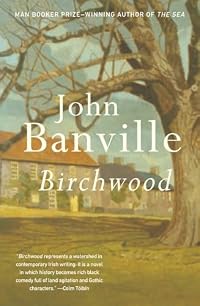
Birchwood
by John Banville
On This Page
Description
A classic novel of family, isolation and a blighted Ireland from the Booker Prize-winning author of The Sea depicts the end of innocence for a boy and his country. Once the big house on an Irish estate, Birchwood has turned into a dilapidated family manor filled with memories and despair. One disaster succeeds another, until young Gabriel Godkin runs away to join a traveling circus and look for his long-lost twin sister. Soon he discovers that famine and unrest stalk the countryside, and show more Ireland is ruined too. Told with lyrical prose, John Banville's Birchwood is the elegiac story of the aristocratic decline of an eccentric family riddled with dark secrets. "John Banville is one of the greatest masters of the English language." -The Scotsman show lessTags
Recommendations















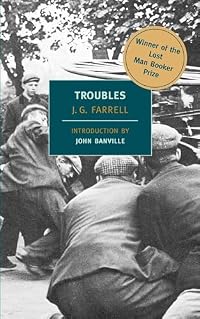
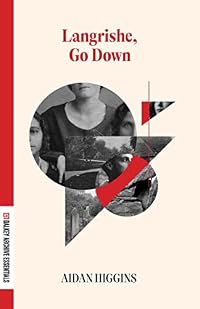



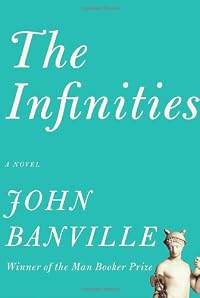
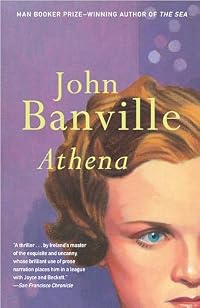








Member Reviews
This book has very clear echoes of Proust, both in the writing style and in the sense of nostalgia that pervades the story of aristocratic decline. The references are clear and deliberate - in the very first chapter, Banville's narrator refers to his fragments of memory as "madeleines" and talks of his "search for time misplaced."
None of this boded very well for the novel - I had Proust on my night-table for ages, but every time I read it I fell asleep so quickly that I seemed to go backwards as much as forwards. And aristocratic decline strikes me as generally a good thing, so I often struggle to feel much sympathy for the lords and ladies forced to survive in only two houses instead of five.
Birchwood, though, I thoroughly enjoyed. show more While the writing style is reminiscent of Proust in its dreamy beauty, it clips along at a much faster pace, as does the sometimes bizarre plot of childhood resentments, exploding grandmothers, running off to join the circus, searching for a long-lost sister, etc. Also there's a detachment from the destruction that comes to Birchwood, a sense that it's inevitable and even deserved, a strong context of the social unrest in Ireland at the time.
The writing was brilliant from the first page to the last, and made me want to read a lot more of Banville's work. show less
None of this boded very well for the novel - I had Proust on my night-table for ages, but every time I read it I fell asleep so quickly that I seemed to go backwards as much as forwards. And aristocratic decline strikes me as generally a good thing, so I often struggle to feel much sympathy for the lords and ladies forced to survive in only two houses instead of five.
Birchwood, though, I thoroughly enjoyed. show more While the writing style is reminiscent of Proust in its dreamy beauty, it clips along at a much faster pace, as does the sometimes bizarre plot of childhood resentments, exploding grandmothers, running off to join the circus, searching for a long-lost sister, etc. Also there's a detachment from the destruction that comes to Birchwood, a sense that it's inevitable and even deserved, a strong context of the social unrest in Ireland at the time.
The writing was brilliant from the first page to the last, and made me want to read a lot more of Banville's work. show less
I wonder if there is a category called Irish Gothic, because sure as the night is black, Birchwood reminds me so much of Faulkner's Southern Gothic I had to blink twice to be sure what I was reading.
The prose is beautiful, well it is Banville after all. The first half of the book held me enthralled, however the latter part was a bit disappointing as the "big secret" was telegraphed so early in the book, I thought...surely there must be more to it. Nope, there was not more to it. /shrugs/
One of his shorter novels at only 170 pages, it could have been shorter, cutting out some of the dross of the second half, either that or fleshing out that same latter part to give more depth to some of the peripheral characters.
I do recommend it though show more for Banville addicts such as myself. :) show less
The prose is beautiful, well it is Banville after all. The first half of the book held me enthralled, however the latter part was a bit disappointing as the "big secret" was telegraphed so early in the book, I thought...surely there must be more to it. Nope, there was not more to it. /shrugs/
One of his shorter novels at only 170 pages, it could have been shorter, cutting out some of the dross of the second half, either that or fleshing out that same latter part to give more depth to some of the peripheral characters.
I do recommend it though show more for Banville addicts such as myself. :) show less
John Banville writes exquisite, lyrical prose, while telling an enthralling story. This novel, set in Ireland in the days of the potato famines, is divided into two parts. Gabriel Godkin returns to his ancestral home after the death of his father, and while cleaning up the broken glass and repairing windows, he begins to recall his childhood. As part two begins, the young Gabriel has run away and joined a circus in an attempt to find what he believes to be his lost twin sister. Eventually, the story comes full circle and he returns to Birchwood.
At first glance the two parts of the story seem disjointed, but Banville ties things up neatly at the end. The reality I envisioned in part one, clashed with the reality in part two, but the show more brief part three resolved all these threads into a neat package.
This is my second Banville (after the Booker prize winning, The Sea). I have four more of his books, so I will be working my way through them in 2009. He has written 13 titles in all, so I will have to track down those others.
If you have never read Banville, start with The Sea. You will be hooked. Five stars
-Jim, 12/27/08 show less
At first glance the two parts of the story seem disjointed, but Banville ties things up neatly at the end. The reality I envisioned in part one, clashed with the reality in part two, but the show more brief part three resolved all these threads into a neat package.
This is my second Banville (after the Booker prize winning, The Sea). I have four more of his books, so I will be working my way through them in 2009. He has written 13 titles in all, so I will have to track down those others.
If you have never read Banville, start with The Sea. You will be hooked. Five stars
-Jim, 12/27/08 show less
Capturing Ireland's famine with a devastating bleakness, the novel coruscates, overflows with elegiac prose.
Cuando Gabriel Godkin regresa a Birchwood tras varios años, la gran casa familiar no es más que una propiedad ruinosa con habitantes enajenados. Hurgando en los recuerdos, rememora sus primeras experiencias de amor y de pérdida, pero los desastres se suceden y el joven decide huir con un circo ambulante para buscar a su hermana gemela, desaparecida tiempo atrás. Pronto descubrirá que el hambre y el malestar acechan el campo y que Irlanda también está arruinada.
Dec 27, 2017Spanish
La historia del niño que regresa a su casa en el campo, grande, vieja antigua y huye con un circo para buscar a su hermana, perdida muchos años atrás... rara, incómoda, bien escrita.
Nov 3, 2020Spanish
Una de las primeras novelas de JB en la que ya aparecen todas sus obsesiones y la marca indeleble de su pluma magnética.
Mar 2, 2018Spanish
Members
- Recently Added By
Author Information

90+ Works 28,023 Members
Some Editions
Awards and Honors
Work Relationships
Is abridged in
Common Knowledge
- Canonical title
- Birchwood
- Original publication date
- 1973
- Important places
- Ireland
- Epigraph
- Odi et amo: quare id faciam, fortasse requiris
Nescio, sed fieri sentio et excrucior.
I hate and I love; ask how? I cannot tell you
Only I feel it, and I am torn in two
Catullus - Dedication
- To the Dunham-Shermans
Stepan-Candaus, and
the Browns - Blurbers
- Delaney, Frank
- Original language
- English
Classifications
Statistics
- Members
- 342
- Popularity
- 92,180
- Reviews
- 7
- Rating
- (3.62)
- Languages
- English, Spanish
- Media
- Paper, Audiobook, Ebook
- ISBNs
- 16
- ASINs
- 6