On This Page
Description
Gifted with the unusual ability to embroider the very fabric of life, sixteen-year-old Adelice is summoned by Manipulation Services to become a Spinster, a move that will separate her from her beloved family and home forever.Tags
Recommendations

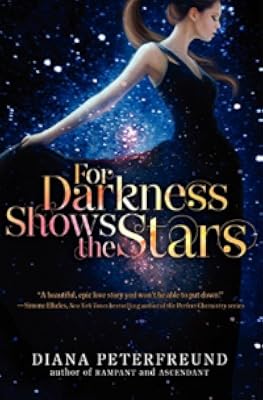
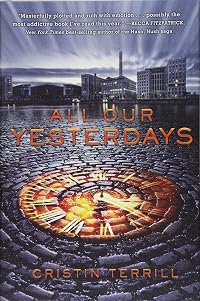

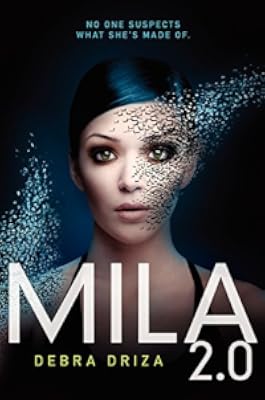
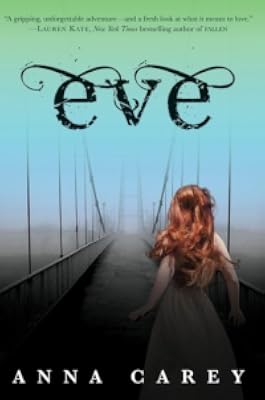
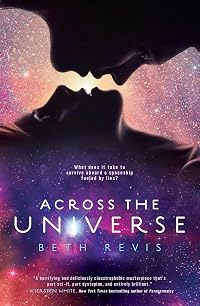
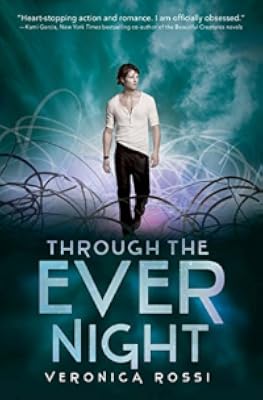
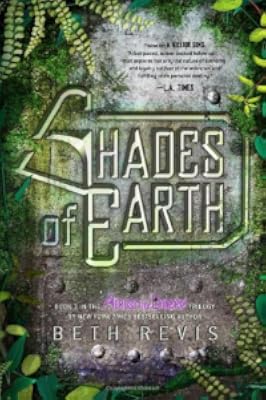
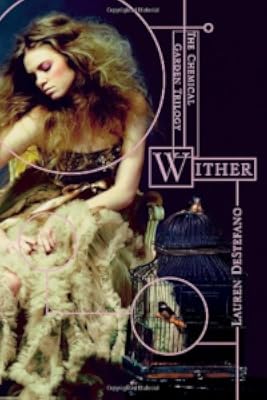


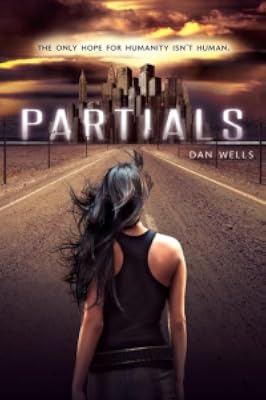

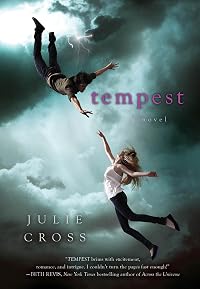
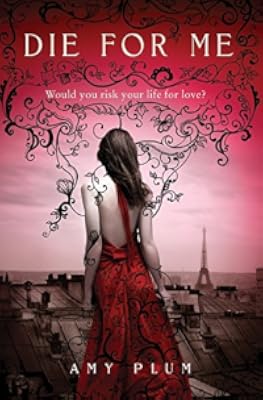
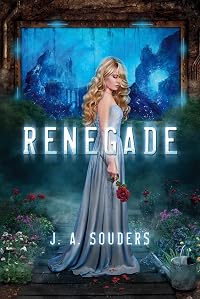
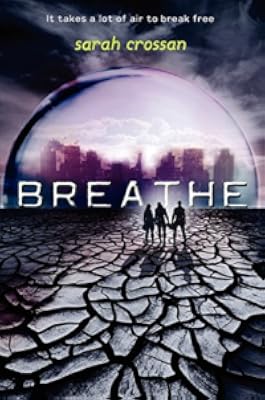
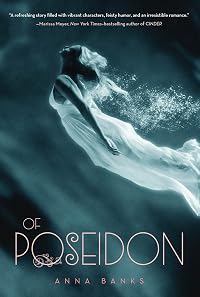
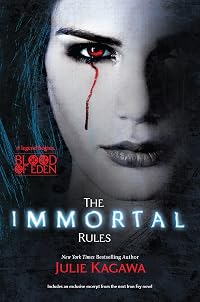
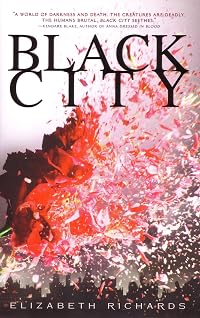

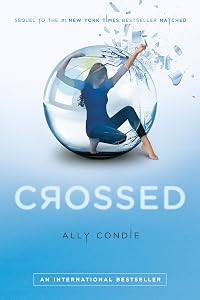

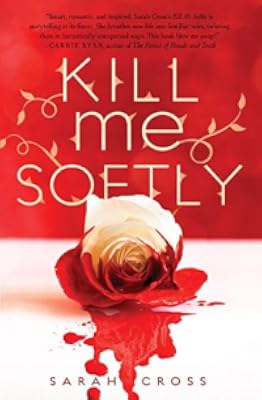
Member Recommendations
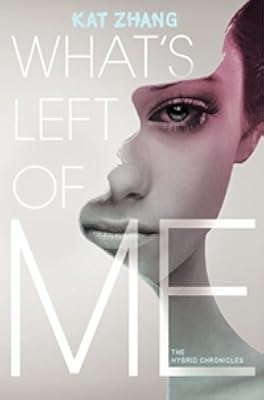
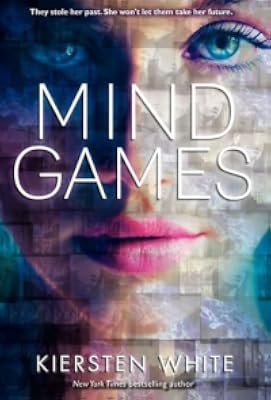
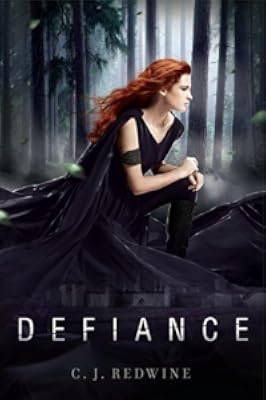
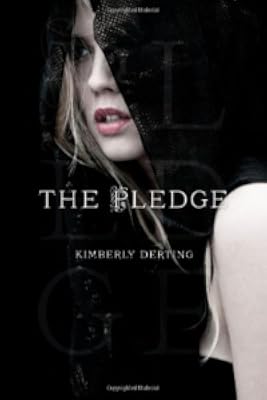
Jthierer Similar theme of a girl's talent for weaving singling her out in a dystopian society.
StefanieGeeks post-apocolyptic, isolation dystopia, romance, earth-like world, government conspiracy, teen series.
StefanieGeeks female roles, feminist allegory, patriarchal society, dystopia.
Member Reviews
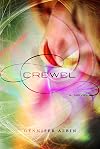
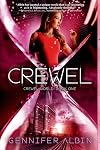
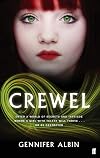
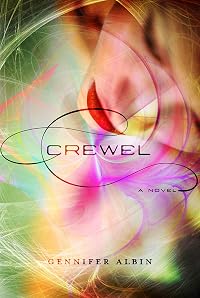
I’m terrible with books sometimes: I’ve fallen in love with some pretty obscure titles (one of my favorite books is The Basic Eight by Daniel Handler; please tell me if you know it), but sometimes I don’t hear of popular ones until they’re everywhere. And, as sheepish as I am to admit it, I hadn’t heard of Crewel before when I won a copy in a giveaway hosted by A.T. O’Connor on her blog, Whispering Minds. As soon as I saw the cover, though, I had a feeling I was going to like this one. I get like that with covers sometimes. It’s like love at first sight. (Of course, there are times when my first impression is terribly, terribly wrong, but usually I’m pretty good about it.)
Here’s my only real complaint about Crewel: the show more description doesn’t give the book justice. It makes it sound like the entire story revolves around the last hour that Adelice has before the Guild comes to get her, and there’s so much more than that. (Also, it makes it sound like she actually escapes, so I was bewildered when the Guild swoops in and completely upends her life.)
Other than that, no complaints, really. I couldn’t stop reading this book. The idea of a world where environment and events are part of a carefully woven tapestry was new and interesting. (Well, new if you don’t think about the Fates. But this interpretation still struck me as pretty fresh.) The world of Spinsters (girls selected for their above-average ability to work the looms and weave — quite literally — the fabric of society) is one of glamour, as long as you don’t think too hard about what it is they’re doing…especially when it comes time to rip a thread. (Or, in not-so-subtle terms, end a life.) The amount of power held by these women is envious to some and terrifying to others, and I enjoyed watching the power plays in action. Like so many recent YA titles, there’s a love triangle, but it’s not terribly distracting. The world is well crafted and well explained, and I really enjoyed reading this.
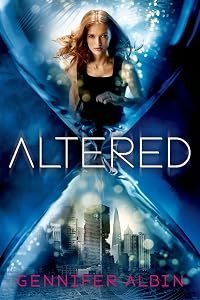
All in all: Worth reading, particularly if you enjoy dystopian novels. However, I recently finished Altered, book two in the series, and I don’t think it held up to the promise of Crewel. So if you’re looking for a consistently strong series, maybe search elsewhere. (Altered isn’t bad, just…it didn’t excite me the way the first installment did.) show less
Here’s my only real complaint about Crewel: the show more description doesn’t give the book justice. It makes it sound like the entire story revolves around the last hour that Adelice has before the Guild comes to get her, and there’s so much more than that. (Also, it makes it sound like she actually escapes, so I was bewildered when the Guild swoops in and completely upends her life.)
Other than that, no complaints, really. I couldn’t stop reading this book. The idea of a world where environment and events are part of a carefully woven tapestry was new and interesting. (Well, new if you don’t think about the Fates. But this interpretation still struck me as pretty fresh.) The world of Spinsters (girls selected for their above-average ability to work the looms and weave — quite literally — the fabric of society) is one of glamour, as long as you don’t think too hard about what it is they’re doing…especially when it comes time to rip a thread. (Or, in not-so-subtle terms, end a life.) The amount of power held by these women is envious to some and terrifying to others, and I enjoyed watching the power plays in action. Like so many recent YA titles, there’s a love triangle, but it’s not terribly distracting. The world is well crafted and well explained, and I really enjoyed reading this.
All in all: Worth reading, particularly if you enjoy dystopian novels. However, I recently finished Altered, book two in the series, and I don’t think it held up to the promise of Crewel. So if you’re looking for a consistently strong series, maybe search elsewhere. (Altered isn’t bad, just…it didn’t excite me the way the first installment did.) show less
Imagine a world where the phrase “the fabric of time” has a very literal meaning. Imagine that a certain proportion of the entire populace has the power to manipulate time and matter. Now imagine today’s politicians and world leaders and their reaction to such a discovery. Can one truly fathom the lengths to which these leaders would go to protect their power bases? Flash-forward several generations, and one can begin to understand the world of Gennifer Albin’s Crewel.
Adelice is a stereotypical dystopian heroine – intelligent but somewhat clueless on the behind-the-scenes politics. She is not afraid to stand up for her beliefs, but her inability to learn from her mistakes, to listen to well-meaning advice, and to think before show more she acts tends to create scenes that are more frustrating than they are interesting. One would wish Adelice has a bit more caution before she leaps into action, as strategy is every bit as important in such worlds as fearlessness. More importantly, strategic thinking is much more enjoyable for a reader than all action all the time without much advanced thinking.
Unfortunately, there is also the requisite love triangle. While it does create for a more intriguing story, one cannot help but opine that the plot would be just fine without any sort of romantic sub-plot. On the one hand, it is a natural process of maturation to be attracted to/distracted by the members of the opposite sex at age sixteen. Then again, there is something to be said about bucking the trend and treating Adelice like the independent young woman she is supposed to embody without her having getting entangled in romantic involvements.
Crewel is not the type of novel to stand up to scrutiny. The entire backstory quickly falls to pieces with too much thought. While highly creative, even the explanations that are given about this woven world cannot bear the strain of close inspection. This is not any fault of the writing per se but an issue with the suspense of logic and science that is required in order for the plot to work in its entirety. Once a reader starts questioning just how the looms work, how the world of Arras exists, whether anything in Arras is real, or even trying to picture how such a world would work in the real world, the story unravels (pun not necessarily intended).
For all its faults, Crewel is still an overall fun novel. Because of the unfamiliarity of Adelice’s world, the story grabs a reader’s interest from the very beginning and never lets go. A reader knows at once that Adelice’s understanding of Arras, for all her questions and doubts, is highly limited, and the search for answers beyond her ken is as much a driving force of the novel as her ongoing peril. The descriptions are luscious and appropriately vivid for a world in which weaving, with its focus on textures and colors, is essential. It is very easy to be swept up into Adelice’s world.
Ms. Albin must be given props for creating a dystopian novel that is completely different, on the surface anyway, from most of what is already out on the shelves. With Arras and her Spinsters, she has created a world that is beautifully sinister while touching on current socio-economic issues that impact a large majority of the world today. Adelice may be frustrating, but she is not afraid to take a stand, an essential characteristic in any heroine worthy of being labeled as such. The first story sets up the sequel quite nicely without creating too abrupt a cliffhanger. One can only hope that Ms. Albin will better address the issues with logic and science and answer many of the continuing questions during future novels.
Acknowledgments: Thank you to Macmillan Publishing for my review copy! show less
Adelice is a stereotypical dystopian heroine – intelligent but somewhat clueless on the behind-the-scenes politics. She is not afraid to stand up for her beliefs, but her inability to learn from her mistakes, to listen to well-meaning advice, and to think before show more she acts tends to create scenes that are more frustrating than they are interesting. One would wish Adelice has a bit more caution before she leaps into action, as strategy is every bit as important in such worlds as fearlessness. More importantly, strategic thinking is much more enjoyable for a reader than all action all the time without much advanced thinking.
Unfortunately, there is also the requisite love triangle. While it does create for a more intriguing story, one cannot help but opine that the plot would be just fine without any sort of romantic sub-plot. On the one hand, it is a natural process of maturation to be attracted to/distracted by the members of the opposite sex at age sixteen. Then again, there is something to be said about bucking the trend and treating Adelice like the independent young woman she is supposed to embody without her having getting entangled in romantic involvements.
Crewel is not the type of novel to stand up to scrutiny. The entire backstory quickly falls to pieces with too much thought. While highly creative, even the explanations that are given about this woven world cannot bear the strain of close inspection. This is not any fault of the writing per se but an issue with the suspense of logic and science that is required in order for the plot to work in its entirety. Once a reader starts questioning just how the looms work, how the world of Arras exists, whether anything in Arras is real, or even trying to picture how such a world would work in the real world, the story unravels (pun not necessarily intended).
For all its faults, Crewel is still an overall fun novel. Because of the unfamiliarity of Adelice’s world, the story grabs a reader’s interest from the very beginning and never lets go. A reader knows at once that Adelice’s understanding of Arras, for all her questions and doubts, is highly limited, and the search for answers beyond her ken is as much a driving force of the novel as her ongoing peril. The descriptions are luscious and appropriately vivid for a world in which weaving, with its focus on textures and colors, is essential. It is very easy to be swept up into Adelice’s world.
Ms. Albin must be given props for creating a dystopian novel that is completely different, on the surface anyway, from most of what is already out on the shelves. With Arras and her Spinsters, she has created a world that is beautifully sinister while touching on current socio-economic issues that impact a large majority of the world today. Adelice may be frustrating, but she is not afraid to take a stand, an essential characteristic in any heroine worthy of being labeled as such. The first story sets up the sequel quite nicely without creating too abrupt a cliffhanger. One can only hope that Ms. Albin will better address the issues with logic and science and answer many of the continuing questions during future novels.
Acknowledgments: Thank you to Macmillan Publishing for my review copy! show less
Got swept up in this and enjoyed it until I got around 250 pages in. I liked the idea of exploring what reality really is, and the concept of weaving a reality is certainly an interesting one. Then came the big reveal about Earth and I started losing interest. And throwing in a love triangle and an illicit lesbian affair didn’t help, perhaps because none of it seemed to organically grow from the plot or to have a lot of chemistry.
There were a few things I found frustrating about this book. Probably my biggest problem with the plot was when it was revealed thatArras was built “over” Earth, because I immediately started thinking that Adelice could have just fled to Earth, and this thought recurred to me each time Adelice was saying show more things like “but there’s no place to run.” I was mentally yelling at her for pretty much the rest of the book to just go to Earth and get it over with. To be honest, Earth seems like a fairly good place to run; everyone thinks it’s abandoned, the only contact it has with Arras is through the mining operations and even this seems indirect, and it’s an entire planet, so there would be plenty of places for her to hide. And if it’s still populated, this could even work to her advantage, as she could blend in with the current population. Why did it take her over a hundred pages to figure out she could flee to Earth?
Don’t know if I’ll be continuing with the series or not (the library has the other two books of the trilogy), although I would be interested to see the author’s idea of whatEarth is actually like at this point in time. And maybe get some more explanations as to how Arras’s reality is woven. show less
There were a few things I found frustrating about this book. Probably my biggest problem with the plot was when it was revealed that
Don’t know if I’ll be continuing with the series or not (the library has the other two books of the trilogy), although I would be interested to see the author’s idea of what
DNF’d @ 78%
I usually wouldn’t do a proper review for a DNF – largely because I usually DNF at the beginning – but I was far enough in this one that I feel it deserves some words. I have LOTS of word for Crewel, and they are mostly unfriendly.
*deep breath*
Crewel is about a girl in a dystopian world that is strictly ruled like the 1950s and women are basically treated like brainless dolls, unless you’re a Spinster, which is basically a goddess because you have the ability to manipulate the world. Naturally, Adelice is a Spinster. Or, more specifically, she is a Creweler, which is the most powerful upcoming Spinster. As expected in Cookie Cutter YA Dystopia Fantasy, Adelice is not into doing that. She spends a lot of time show more flirting with two boys (*gasp!* love triangle) and being an emotionless robot.
Aaaughhh.
So this ended up on my TBR because of the concept of a woven world. I’ve come across this concept in Egyptian mythology, where Neith weaves the world in her loom. There are lot of world myths involving weaving and fate and creation, featuring great figures like Anansi, and Moirai of Greek myth. Cool stuff, guys. Great basis for a story.
Only, this wasn’t about that at all, not really. The glimpses we get of that are awesome, and the philosophy behind that aspect of world-building is wicked cool BUT unfortunately, we are saddled with Adelice and she ruins everything.
Some small things that made me hate Adelice:
When she learns that one of her crushes watched his wife and baby die, she responds with jealousy that he had a wife.
She quickly forgets her own personal tragedy, then remembers when it’s convenient to the story, then forgets again.
She’s a selfish brat who marches in like she’s important and behaves horribly and is hit with no real consequences.
She cuts her hands to shreds for 12 hours and almost doesn’t let medical help in (which she calls only after crying) because it’s her crush.
These are a few examples, but honestly – it’s Adelice as a whole. She’s flat, shallow, selfish, and self-important. I can’t be bothered to feel bad for her because she has the attention span of a butterfly and the emotional range of a teaspoon.
These things weren’t what made me DNF it, though. There were other decent characters, and the writing wasn’t the worst I’ve ever read.
What made me DNF it was the way Gennifer Albin chose to handle homosexuality in her world.
When a lesbian couple arises, the two characters who discover it are abashed that something like this could actually happen. One of the couple gets “remapped” so she will not be that way. In all the instances that this is explained, it really comes down to “I can’t explain why this is wrong, only that this is wrong, and sometimes they’ll turn a blind eye but really a relationship should be a man and a woman.”
Paraphrased, but strongly implied.
I tried to listen past it. I waited for some sort of explanation how things were going to be okay. But it came down to “they are broken and we fixed them” which infuriated me.
Nope. DNF. We’re done.
Nobody in that situation needed to be “fixed”. show less
I usually wouldn’t do a proper review for a DNF – largely because I usually DNF at the beginning – but I was far enough in this one that I feel it deserves some words. I have LOTS of word for Crewel, and they are mostly unfriendly.
*deep breath*
Crewel is about a girl in a dystopian world that is strictly ruled like the 1950s and women are basically treated like brainless dolls, unless you’re a Spinster, which is basically a goddess because you have the ability to manipulate the world. Naturally, Adelice is a Spinster. Or, more specifically, she is a Creweler, which is the most powerful upcoming Spinster. As expected in Cookie Cutter YA Dystopia Fantasy, Adelice is not into doing that. She spends a lot of time show more flirting with two boys (*gasp!* love triangle) and being an emotionless robot.
Aaaughhh.
So this ended up on my TBR because of the concept of a woven world. I’ve come across this concept in Egyptian mythology, where Neith weaves the world in her loom. There are lot of world myths involving weaving and fate and creation, featuring great figures like Anansi, and Moirai of Greek myth. Cool stuff, guys. Great basis for a story.
Only, this wasn’t about that at all, not really. The glimpses we get of that are awesome, and the philosophy behind that aspect of world-building is wicked cool BUT unfortunately, we are saddled with Adelice and she ruins everything.
Some small things that made me hate Adelice:
When she learns that one of her crushes watched his wife and baby die, she responds with jealousy that he had a wife.
She quickly forgets her own personal tragedy, then remembers when it’s convenient to the story, then forgets again.
She’s a selfish brat who marches in like she’s important and behaves horribly and is hit with no real consequences.
She cuts her hands to shreds for 12 hours and almost doesn’t let medical help in (which she calls only after crying) because it’s her crush.
These are a few examples, but honestly – it’s Adelice as a whole. She’s flat, shallow, selfish, and self-important. I can’t be bothered to feel bad for her because she has the attention span of a butterfly and the emotional range of a teaspoon.
These things weren’t what made me DNF it, though. There were other decent characters, and the writing wasn’t the worst I’ve ever read.
What made me DNF it was the way Gennifer Albin chose to handle homosexuality in her world.
When a lesbian couple arises, the two characters who discover it are abashed that something like this could actually happen. One of the couple gets “remapped” so she will not be that way. In all the instances that this is explained, it really comes down to “I can’t explain why this is wrong, only that this is wrong, and sometimes they’ll turn a blind eye but really a relationship should be a man and a woman.”
Paraphrased, but strongly implied.
I tried to listen past it. I waited for some sort of explanation how things were going to be okay. But it came down to “they are broken and we fixed them” which infuriated me.
Nope. DNF. We’re done.
Nobody in that situation needed to be “fixed”. show less
I really wanted to like this book. The premise was unique, the dystopian genre is fantastic, and it has a beautiful cover. So it should have been awesome.
Sadly, I was only left frustrated by the usual insta-love triangle scenario and confusing descriptions. I didn't feel attached or connected to either of the love interests so the romance certainly didn't reel me in. The weaving descriptions were strange and almost ridiculous. During the climactic ending I found myself visualizing the main character shooting spidey-webs from her wrists to save herself and her two boy toys. This high suspense cliff-hanger ending only left me laughing at the overall bizarreness.
Sadly, I was only left frustrated by the usual insta-love triangle scenario and confusing descriptions. I didn't feel attached or connected to either of the love interests so the romance certainly didn't reel me in. The weaving descriptions were strange and almost ridiculous. During the climactic ending I found myself visualizing the main character shooting spidey-webs from her wrists to save herself and her two boy toys. This high suspense cliff-hanger ending only left me laughing at the overall bizarreness.
Got swept up in this and enjoyed it until I got around 250 pages in. I liked the idea of exploring what reality really is, and the concept of weaving a reality is certainly an interesting one. Then came the big reveal about Earth and I started losing interest. And throwing in a love triangle and an illicit lesbian affair didn’t help, perhaps because none of it seemed to organically grow from the plot or to have a lot of chemistry.
There were a few things I found frustrating about this book. Probably my biggest problem with the plot was when it was revealed thatArras was built “over” Earth, because I immediately started thinking that Adelice could have just fled to Earth, and this thought recurred to me each time Adelice was saying show more things like “but there’s no place to run.” I was mentally yelling at her for pretty much the rest of the book to just go to Earth and get it over with. To be honest, Earth seems like a fairly good place to run; everyone thinks it’s abandoned, the only contact it has with Arras is through the mining operations and even this seems indirect, and it’s an entire planet, so there would be plenty of places for her to hide. And if it’s still populated, this could even work to her advantage, as she could blend in with the current population. Why did it take her over a hundred pages to figure out she could flee to Earth?
Don’t know if I’ll be continuing with the series or not (the library has the other two books of the trilogy), although I would be interested to see the author’s idea of whatEarth is actually like at this point in time. And maybe get some more explanations as to how Arras’s reality is woven. show less
There were a few things I found frustrating about this book. Probably my biggest problem with the plot was when it was revealed that
Don’t know if I’ll be continuing with the series or not (the library has the other two books of the trilogy), although I would be interested to see the author’s idea of what
4.5/5 stars.
"Wow" doesn't cover how much I've fallen in love with this book and this world, or how I felt when I finished the last page. One of the best of 2012 by far and absolutely gorgeous, "Crewel" takes us to a parallel world where everything is tightly controlled (for our own good, of course), and where things aren't always as they seem. If you're looking for one of the most original books in YA in the past few years, look no further - "Crewel" is definitely the book for you.
You can't trust your eyes or your memories in Arras, and I love stories that have the potential to turn pretty much anyone (especially our protagonist) into an unreliable narrator. If you've been reading the blog for awhile, you'll know that I'm very into show more worldbuilding no matter the genre (even contemporary books need a bit of it), and that one of my most coveted tenets of top-shelf worldbuilding is that the characters and the world weave into each other and feed off of each other. In "Crewel", this is literally the case. The world of Arras is literally WOVEN by the Spinsters - women with the supernatural ability to mess with time and space. Now, while they have power, unfortunately, like any good dystopia, it's the dudes that have power over THEM. I loved the hierarchy and structuring of the government of Arras. Albin puts out the rules of the world fairly quickly - you can have so many kids, the neighborhoods are divided by gender and so forth. Albin sticks with these rules pretty steadily throughout the book - until the plot twists start.
And everything I'd wanted in the "Matched" series? "Crewel" has fulfilled and beaten it out by a mile or more. Yes, it really is that awesome. Albin is fearless when it comes to the content of her book, and ruthless when it comes to killing her darlings repeatedly to get the desired emotional payoff. There are no hesitations in this book, there are no places where you can feel the writer hit the wall. It unfurls smoothly, even in the rockiest of places in the individual character arcs and mail plot (and especially where the two collide).
The characters are awesome - Adelice is a wonderful protagonist who kicks ass, takes names, and basically thumbs her nose at the system - but not without severe cost. She learns the cruel (no pun intended) truths behind what keeps Arras and its people alive, as well as how the world itself came to be by some of the most awesome villains in fantasy/dystopian (or paranormal dystopian) that I've read so far this year. You want to hate them, but at the end of the day, with some of them, you just can't make yourself once you find out their reasons for being, well, evil. I love hateable characters and Albin isn't afraid to make those characters in the traditional mustache-curling villanous way.
What I could have done without (and why this isn't a straight-up five star book) is the love triangle. I can see why Albin did it, and how it works well with the story, but guys, I'm love-triangle'd out regardless if it's MG, YA, NA (New Adult), or Adult. I'm done. However, this love triangle was easier to swallow because of how it sets up everything for book two. Which I really, really, really want. Like, yesterday.
But, final verdict? If you're a fan of fantasy, paranormal, or dystopian books (or a mix of all three), you simply must check this book out. Hell, even if you're not a fan, check it out anyway. "Crewel" will be out October 16, 2012 from Macmillan in North America, so be sure to go out and find a copy. You will most definitely get lost in this world. Its place on my best of 2012 is very well-deserved, and I just need that second book now!
(posted to goodreads, shelfari, librarything, and birthofanewwitch.wordpress.com) show less
"Wow" doesn't cover how much I've fallen in love with this book and this world, or how I felt when I finished the last page. One of the best of 2012 by far and absolutely gorgeous, "Crewel" takes us to a parallel world where everything is tightly controlled (for our own good, of course), and where things aren't always as they seem. If you're looking for one of the most original books in YA in the past few years, look no further - "Crewel" is definitely the book for you.
You can't trust your eyes or your memories in Arras, and I love stories that have the potential to turn pretty much anyone (especially our protagonist) into an unreliable narrator. If you've been reading the blog for awhile, you'll know that I'm very into show more worldbuilding no matter the genre (even contemporary books need a bit of it), and that one of my most coveted tenets of top-shelf worldbuilding is that the characters and the world weave into each other and feed off of each other. In "Crewel", this is literally the case. The world of Arras is literally WOVEN by the Spinsters - women with the supernatural ability to mess with time and space. Now, while they have power, unfortunately, like any good dystopia, it's the dudes that have power over THEM. I loved the hierarchy and structuring of the government of Arras. Albin puts out the rules of the world fairly quickly - you can have so many kids, the neighborhoods are divided by gender and so forth. Albin sticks with these rules pretty steadily throughout the book - until the plot twists start.
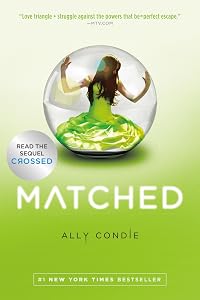
And everything I'd wanted in the "Matched" series? "Crewel" has fulfilled and beaten it out by a mile or more. Yes, it really is that awesome. Albin is fearless when it comes to the content of her book, and ruthless when it comes to killing her darlings repeatedly to get the desired emotional payoff. There are no hesitations in this book, there are no places where you can feel the writer hit the wall. It unfurls smoothly, even in the rockiest of places in the individual character arcs and mail plot (and especially where the two collide).
The characters are awesome - Adelice is a wonderful protagonist who kicks ass, takes names, and basically thumbs her nose at the system - but not without severe cost. She learns the cruel (no pun intended) truths behind what keeps Arras and its people alive, as well as how the world itself came to be by some of the most awesome villains in fantasy/dystopian (or paranormal dystopian) that I've read so far this year. You want to hate them, but at the end of the day, with some of them, you just can't make yourself once you find out their reasons for being, well, evil. I love hateable characters and Albin isn't afraid to make those characters in the traditional mustache-curling villanous way.
What I could have done without (and why this isn't a straight-up five star book) is the love triangle. I can see why Albin did it, and how it works well with the story, but guys, I'm love-triangle'd out regardless if it's MG, YA, NA (New Adult), or Adult. I'm done. However, this love triangle was easier to swallow because of how it sets up everything for book two. Which I really, really, really want. Like, yesterday.
But, final verdict? If you're a fan of fantasy, paranormal, or dystopian books (or a mix of all three), you simply must check this book out. Hell, even if you're not a fan, check it out anyway. "Crewel" will be out October 16, 2012 from Macmillan in North America, so be sure to go out and find a copy. You will most definitely get lost in this world. Its place on my best of 2012 is very well-deserved, and I just need that second book now!
(posted to goodreads, shelfari, librarything, and birthofanewwitch.wordpress.com) show less
Members
- Recently Added By
Author Information

Some Editions
Awards and Honors
Awards
Notable Lists
Series

Work Relationships
Common Knowledge
- Canonical title
- Crewel
- Original title
- Crewel
- Alternate titles
- Crewel: A Novel
- Original publication date
- 2012-10-16
- Dedication
- To Robin, who demanded I write a book, and to Josh, who made it happen
- First words
- They came in the night.
- Last words
- (Click to show. Warning: May contain spoilers.)But before I can reach out to break its mysterious hold, on the horizon a bloated mass appears, a ship in the air, flying low along the skyline, and from it, a sweeping light bursts forth, as though to welcome us back home.
- Blurbers
- Angelini, Josephine; O'Brien, Garagh
Classifications
Statistics
- Members
- 798
- Popularity
- 34,992
- Reviews
- 86
- Rating
- (3.51)
- Languages
- English, German, Spanish
- Media
- Paper, Audiobook, Ebook
- ISBNs
- 15
- UPCs
- 1
- ASINs
- 6