Fools of Fortune
by William Trevor
On This Page
Description
William Quinton, a young Irishman who survived the 1918 Irish "troubles," fell in love with a beautiful English cousin. Not until fifty years later did he learn that they have a child.Tags
Recommendations











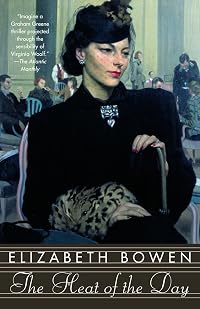

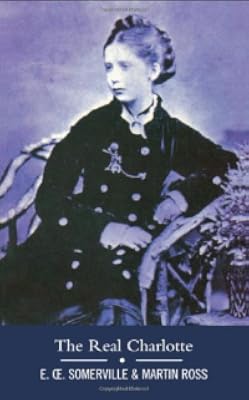


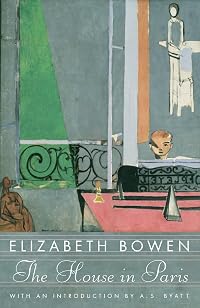
Member Recommendations

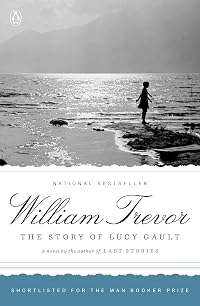
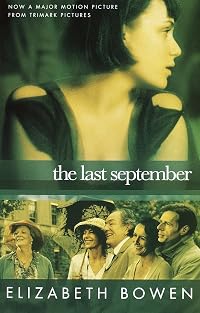
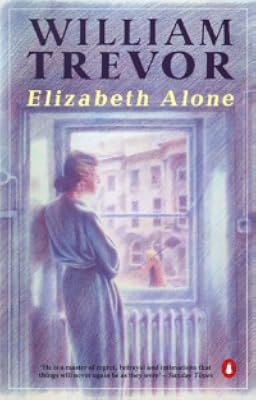
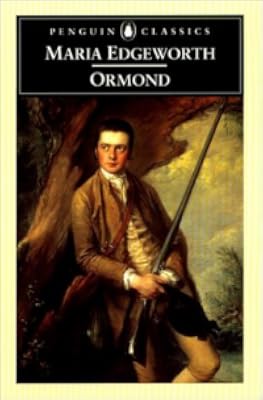
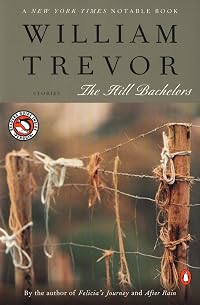
wandering_star Both books are set in Anglo-Irish country houses, both deal with family relationships and the consequences of particular actions through the generations.
Member Reviews
This book shares many qualities with William Trevor's later novel [b:The Story of Lucy Gault|167302|The Story of Lucy Gault|William Trevor|https://images.gr-assets.com/books/1311648314s/167302.jpg|1020595], which I rated very highly when I read it a couple of years ago, and in some ways this one is even better.
Once again the story concerns a Protestant family in the Catholic south that has seen better days, and once again pivotal events cast very long shadows.
The setting is Kilneagh, a big house in rural county Cork that is the seat of the Quinton family. Although Protestant, the family has a history of unusual sympathy with the local Catholics. Across the water in a grander house in Dorset, the Woodcombe family has seen three of its show more daughters marry Quintons and move to Kilneagh. At the start of the story the last of these, Anna, and her husband William, have two daughters and a son Willie, whose childhood is central to the first half of the book. After an informer for the Black and Tans is found hanged on the estate, the Tans take a brutal revenge, setting fire to the house, and killing William, his daughters and several estate workers. Afterwards Willie, his mother and a loyal housemaid move to Cork, and Anna slides into alcoholism as we follow Willie's escapades in the boarding school his father attended near Dublin.
Anna's sister comes to visit accompanied by her daughter Marianne, whose doomed relationship with Willie dominates the rest of the book. After Anna kills herself, Marianne and her mother return for the funeral, and Marianne spends a night with Willie. In the next part we follow Marianne to a finishing school in Switzerland, where she discovers she is pregnant and returns to Ireland once again in search of Willie, who has disappeared to take revenge on his father's killer. Marianne chooses to stay in Kilneagh rather than returning to her parents who want her child to be adopted. The third part finds the child Imelda at Kilneagh, unable to escape the shadows of the past. The final three parts are all much shorter, bringing the story up to date and adding a note of partial redemption.
The book is wonderfully evocative but hauntingly sad. This is my new favourite Trevor novel. show less
Once again the story concerns a Protestant family in the Catholic south that has seen better days, and once again pivotal events cast very long shadows.
The setting is Kilneagh, a big house in rural county Cork that is the seat of the Quinton family. Although Protestant, the family has a history of unusual sympathy with the local Catholics. Across the water in a grander house in Dorset, the Woodcombe family has seen three of its show more daughters marry Quintons and move to Kilneagh. At the start of the story the last of these, Anna, and her husband William, have two daughters and a son Willie, whose childhood is central to the first half of the book. After an informer for the Black and Tans is found hanged on the estate, the Tans take a brutal revenge, setting fire to the house, and killing William, his daughters and several estate workers. Afterwards Willie, his mother and a loyal housemaid move to Cork, and Anna slides into alcoholism as we follow Willie's escapades in the boarding school his father attended near Dublin.
Anna's sister comes to visit accompanied by her daughter Marianne, whose doomed relationship with Willie dominates the rest of the book
The book is wonderfully evocative but hauntingly sad. This is my new favourite Trevor novel. show less
Chosen as a contribution to Cathy's Reading Ireland at 746 Books and A Year with William Trevor hosted by Kim at Reading Matters, Fools of Fortune is also a title listed in 1001 Books You Must Read Before You Die. It's included — along with two others by Trevor, Felicia's Journey (1994) and The Story of Lucy Gault (2002) — as a poignant novel [that[ explores the legacy of Ireland's decolonisation, tracing the aftermath from the time of the Black and Tans through to the 1980s.
I've read a fair few of Trevor's books, some reviewed here on the blog but many more from my Blytonesque binge when I discovered his work in 2004. What I've come to expect from Trevor is that he writes gently about devastating events, and he does so in his mid-career novel Fools of Fortune too.
His central character is William Quinton, just a boy when the Black and Tans kill his father and torch his ancestral home Kilneagh, killing his sisters in the fire as well. The Quintons are an Anglo-Irish family (what my mother used to call 'English people living in Ireland') but they have nationalist sympathies. They support Home Rule, and they host visits from Irish heroes such as Michael Collins. And though they had nothing to do with the murder of a returned WW1 soldier thought to be a spy for Britain, the Black and Tans' retaliation blights Willie's entire life.
In the hands of a lesser storyteller, this could have been a dreary tale. Instead, the narration by Willie in the first part of the novel brings us his memories of boyhood at Kilneagh where his father is a mill-owner and his future seems assured. There are droll stories of Willie's time at boarding school with a wonderful cast of characters including eccentric masters and irrepressible boys with mastery of the untruths that they tell to evade punishment for various misdeeds. One of these misdeeds, however, involves a former master falsely accused of wrongdoing, a drunk, who avenges himself with a pathetic insult, unseen except by the trio of mischief makers, Willie, Ring and de Courcy. In the aftermath, however, the drunk gets his revenge because his accuser is traumatised by the mockery of schoolboys. But the drunk never knows it because he's drifted away. This incident is emblematic of the bigger theme: that the aftermath of trauma persists long after the event.
Along with his exploration of revenge as part of a cycle of violence, Trevor also illuminates the issue of blame based on accusations that may or may not be false.
To read the rest of my review please visit https://anzlitlovers.com/2023/03/14/fools-of-fortune-1983-by-william-trevor/ show less
Fools of Fortune poses a world of love and devotion against their destructive opposites. [...] Trevor's view combines both Yeats' intense vision of tragic cycles with a more benevolent Chekhovian sense of a rural world in which a futile human tragicomedy isshow more
played out. [...] Trevor is a writer of wonderful economy and precise observation, whose focus is distinctly on the intimacy of his characters' relations and the local world they inhabit. (1001 Books You Must Read Before You Die, 2006 Edition, ABC Books, p.713)
I've read a fair few of Trevor's books, some reviewed here on the blog but many more from my Blytonesque binge when I discovered his work in 2004. What I've come to expect from Trevor is that he writes gently about devastating events, and he does so in his mid-career novel Fools of Fortune too.
His central character is William Quinton, just a boy when the Black and Tans kill his father and torch his ancestral home Kilneagh, killing his sisters in the fire as well. The Quintons are an Anglo-Irish family (what my mother used to call 'English people living in Ireland') but they have nationalist sympathies. They support Home Rule, and they host visits from Irish heroes such as Michael Collins. And though they had nothing to do with the murder of a returned WW1 soldier thought to be a spy for Britain, the Black and Tans' retaliation blights Willie's entire life.
In the hands of a lesser storyteller, this could have been a dreary tale. Instead, the narration by Willie in the first part of the novel brings us his memories of boyhood at Kilneagh where his father is a mill-owner and his future seems assured. There are droll stories of Willie's time at boarding school with a wonderful cast of characters including eccentric masters and irrepressible boys with mastery of the untruths that they tell to evade punishment for various misdeeds. One of these misdeeds, however, involves a former master falsely accused of wrongdoing, a drunk, who avenges himself with a pathetic insult, unseen except by the trio of mischief makers, Willie, Ring and de Courcy. In the aftermath, however, the drunk gets his revenge because his accuser is traumatised by the mockery of schoolboys. But the drunk never knows it because he's drifted away. This incident is emblematic of the bigger theme: that the aftermath of trauma persists long after the event.
Along with his exploration of revenge as part of a cycle of violence, Trevor also illuminates the issue of blame based on accusations that may or may not be false.
To read the rest of my review please visit https://anzlitlovers.com/2023/03/14/fools-of-fortune-1983-by-william-trevor/ show less
Reason Read: Reading 1001 Oct botm
This book was written by William Trevor in 1983 and it is a historical work of fiction and starts out comparing a house in Dorset with a house in Kilneagh, England and Ireland and the backdrop is a protestant family with roots in both England and Ireland. It is about violence of terrorism and the injury to the innocent that has devastating long term effects. The style is different in that each main character does an inner dialogue with the other person, but never puts the words in a letter and never really talks with the other person. There are 3 main characters; Willie, Marianne, Imelda but the secondary characters are very important and sometimes more sympathetic than any of the 3 main characters. I show more had a hard time engaging with the novel. It probably was the structure and also the fact that these characters were so frustrating. I am glad I read it and I do think it deserves its place on the 1001 list. It also was the winner of the Whitbread Award for best Novel. show less
This book was written by William Trevor in 1983 and it is a historical work of fiction and starts out comparing a house in Dorset with a house in Kilneagh, England and Ireland and the backdrop is a protestant family with roots in both England and Ireland. It is about violence of terrorism and the injury to the innocent that has devastating long term effects. The style is different in that each main character does an inner dialogue with the other person, but never puts the words in a letter and never really talks with the other person. There are 3 main characters; Willie, Marianne, Imelda but the secondary characters are very important and sometimes more sympathetic than any of the 3 main characters. I show more had a hard time engaging with the novel. It probably was the structure and also the fact that these characters were so frustrating. I am glad I read it and I do think it deserves its place on the 1001 list. It also was the winner of the Whitbread Award for best Novel. show less
Willie Quinton grows up on his family’s estate, Kilneagh near Fermoy, Ireland in the 1920s safe in the knowledge he will continue to live in the manor house and one day run the mill. After an informer is found dead on the property the Black and Tans stage a vicious attack, partially burning the manor house and killing Willie’s father, sisters, and some of the staff, even the dogs.
Willie and his mother move to Cork and she never recovers from the tragedy. Willie eventually returns for a time, but the cycle of revenge continues. “The battlefield has never quietened,” as one character observes.
A masterpiece.
Willie and his mother move to Cork and she never recovers from the tragedy. Willie eventually returns for a time, but the cycle of revenge continues. “The battlefield has never quietened,” as one character observes.
A masterpiece.
I really like Trevor's writing. The style is simple and straightforward, but the plot and characters are always deeply drawn. This novel begins during the Irish war for independence in the early 1900s and introduces a family whose house is burnt down, killing several family members, by the Black and Tans. The aftermath of this for the remaining family members is the subject of the book.
Though I really liked this, it wasn't my favorite book by William Trevor, which remains The Story of Lucy Gault.
Though I really liked this, it wasn't my favorite book by William Trevor, which remains The Story of Lucy Gault.
This is a beautifully written, haunting novel that shows the dominance of the past over the present. One horribly wrong decision sets into motion a chain of events that culminates in destruction that endures for generations. It is also a story of enduring love and the consequences of that love. Willliam Trevor is a consummate writer.
A story of how one terrible incident drastically influences the lives of several generations of an Irish family. The story is told from the alternating perspectives of three characters, with each section getting progressively shorter. While a good story and fairly well-written,it might have been better if the ending was as fleshed out as the beginning.
Members
- Recently Added By
Lists

Revolutions
72 works; 5 members

Novels set in the Irish Southwest
14 works; 1 member
Author Information

120+ Works 13,504 Members
William Trevor Cox was born in Mitchelstown, County Cork, Ireland on May 24, 1928. He received a degree in history from Trinity College in 1950. Before becoming a full-time author in 1965, he worked as a sculptor, a teacher, and a copywriter at an advertising agency. He exhibited his sculptures in Dublin and England and was joint winner of the show more International Year of the Political Prisoner art competition in 1952. His first novel, A Standard of Behaviour, was published in 1958. His other novels include Other People's Worlds, Nights at the Alexandra, The Silence in the Garden, The Story of Lucy Gault, My House in Umbria, and Love and Summer. He won the Hawthornden Prize in 1964 for The Old Boys, the Whitbread Award in 1976 for The Children of Dynmouth, the Whitbread Award in 1983 for Fools of Fortune, and the Whitbread Award in 1994 for Felicia's Journey. His short story collections include The Day We Got Drunk on Cake and Other Stories, The Ballroom of Romance and Other Stories, Beyond the Pale, A Bit on the Side, Cheating at Canasta, and The Mark-2 Wife. The Hill Bachelors received the 2001 Irish Times Irish Literature Prize for Fiction and the PEN/Macmillan Silver Pen Award for Short Stories. He received the Allied Irish Banks' Prize in 1976, The Sunday Times Award for Literary Excellence in 1992, the David Cohen British Literature Prize in 1999, and the Bob Hughes Lifetime Achievement Award in Irish Literature in 2008. In 1977, he was awarded an honorary CBE in recognition of his services to literature. He died on November 20, 2016 at the age of 88. (Bowker Author Biography) show less
Awards and Honors
Awards
Series
Belongs to Publisher Series
Common Knowledge
- Canonical title
- Fools of Fortune
- Original publication date
- 1983
- Related movies
- Fools of Fortune (1990 | IMDb)
- First words
- It is 1983.
- Last words
- (Click to show. Warning: May contain spoilers.)Almost a week it will take to pick the fruit, longer if rain interrupts.
- Blurbers
- Keane, Molly; Greene, Graham
- Original language
- English
Classifications
Statistics
- Members
- 665
- Popularity
- 43,455
- Reviews
- 12
- Rating
- (3.93)
- Languages
- 6 — Dutch, English, French, German, Italian, Swedish
- Media
- Paper, Audiobook, Ebook
- ISBNs
- 25
- ASINs
- 8