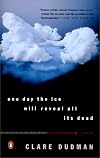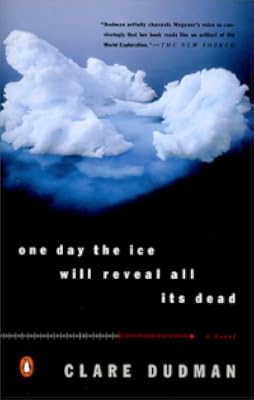
One Day the Ice Will Reveal All Its Dead
by Clare Dudman 
On This Page
Description
In his lifetime Alfred Wegener was a German meteorologist who was better known for his offbeat scientific adventures than for his now famous theory of continental drift. In this lushly imagined and beautifully written novel, Clare Dudman charts his life from his 1880 birth to his last daring Arctic exploration in 1930. Dudman vividly chronicles the key episodes that punctuated his life, such as his 1906 record-setting long-distance balloon flight; his several expeditions to Greenland; his show more passionate love for his long-suffering wife; his investigations into meteorites, lunar craters, and the formation of raindrops; and his horrific experiences in the trenches of World War I. Dudman also tells of his struggle to defend his theories, a struggle that forced him to leave all that he loved to make one final, fateful, expedition to Greenland at the age of forty-nine. show lessTags
Recommendations










































Member Reviews
I'm usually not a great fan of US retitlings of UK books (think back to Christopher Priest's novel set in Hardy country, A Dream of Wessex, which in the US became The Perfect Lover), but in this instance I gave a cheer when I discovered on the copyright page that the original UK title had been Wegener's Jigsaw. Hellish emotive, wot?
To say this is a biographical novel about Alfred Wegener, the meteorologist/glaciologist who, in the early part of the 20th century, was the first to formulate and champion a coherent theory (or, really, hypothesis) of continental drift, would be accurate but somewhat misleading. Usually one expects a biographical novel to have somewhat the same structure as a biography, but Dudman has eschewed this show more approach to adopt one that's far more interesting and which gives the book an affect almost of magic realism. The novel starts with Wegener's death on the Greenland ice. What follow are countless smallish, roughly chronological sections narrated by Wegener himself seemingly as a representation of his-whole-life-flashed-before-him as he waits to die. Dudman/Wegener calls these items memory beads, and that seems as good a descriptive term as any. Jigsawed together in one's mind as one reads, they build up a picture of Wegener as a highly appealing, passionate personality; whether they succeed as a biographical account for the reader unfamiliar with the bare bones of Wegener's life is another matter, and one that I confess didn't occur to me -- so enchanted was I by Dudman's telling -- until afterwards.
A major additional joy is that Dudman names some of the now mainly forgotten scientists who, for reasons largely of hideboundedness (even though the complaint that Wegener could produce no plausible mechanism for drift was a fair one), so steadfastly rejected his hypothesis. Despite the historical reality that it wasn't until long after Wegener's death that these numbskulls -- or at least the surviving ones -- got their comeuppance, when the 1960s discovery of the phenomenon of seafloor spreading not only provided a mechanism for drift but (almost) dictated that the continents had to drift, still one feels that the naming of names here offers some kind of justice to the man's memory.
In short, if you want a ripping yarn (Gabriel Hunt and the Secret of the Earth's Plates?), look elsewhere; but, if you want an absorbing and for the most part beautifully written narrative that unveils a bit of science's history that's perhaps too often overlooked, this is the book for you. show less
I started this book early last year but had to set it aside because life got in the way. It is not a book to read while distracted or stressed. In fact, I started the book several times before I could settle into it, and even then I read it slowly. It is sometimes like reading poetry.
"One Day the Ice Will Reveal All Its Dead" is a first person account of the life of the German meteorologist Alfred Wegener. Wegener (1880-1930) is notable to us now for his pioneering arctic explorations and his theory of continental drift. Dudman researched from mostly German sources, there not being much available about Wegener in English. And she tells us she derived his voice from his many diaries. From he and his brother's early efforts to use show more weather balloons and also hot air balloon flights to enable research, to his death on his last polar exploratory trip in Greenland in 1930, the book chronicles his both his scientific and personal lives in a way, I think, no biography could do.
Beautifully written, this stunning novel is wonderfully descriptive:
"The icicles dangle like the fringed edges of an Inuit's anorak. They pick out each ridge of the icy roof, layer after layer, as if they are hung from a hidden rope and the slightest wind would make them jangle. But they ping only if they are touched, snapping neatly into a fragile spike and a blunt partner. So we limbo-dance carefully under the low roof of the entrance, following the river under the glacier.
Even Bertelsen is speechless. We have emerged into a cathedral, blue -lit not from the sky, but from the sun shining through the ice: cerulean blue and turquoise glance off every face and illuminate every crevice. The sound of water mixes with its own echoes off the ceiling: gurglings and sudden rushes, quieter and then louder. A gasp from Koch is made into a whisper, as if there is someone listening and answering back."
It is Wegener's voice that carries us through this book, indeed, it is a baptismal immersion of a kind. Oftentimes it is infused with wonder, the joys of discovery, a reverence for the physical world that sometimes seems spiritual. Yet we also feel his frustrations and deep disappointments. We seem him in love, and we see him at war. We understand what drives him. One Day the Ice Will Reveal All Its Dead is a brilliant book, fascinating, often riveting, and wonderfully lyrical. (read autumn 2012) show less
"One Day the Ice Will Reveal All Its Dead" is a first person account of the life of the German meteorologist Alfred Wegener. Wegener (1880-1930) is notable to us now for his pioneering arctic explorations and his theory of continental drift. Dudman researched from mostly German sources, there not being much available about Wegener in English. And she tells us she derived his voice from his many diaries. From he and his brother's early efforts to use show more weather balloons and also hot air balloon flights to enable research, to his death on his last polar exploratory trip in Greenland in 1930, the book chronicles his both his scientific and personal lives in a way, I think, no biography could do.
Beautifully written, this stunning novel is wonderfully descriptive:
"The icicles dangle like the fringed edges of an Inuit's anorak. They pick out each ridge of the icy roof, layer after layer, as if they are hung from a hidden rope and the slightest wind would make them jangle. But they ping only if they are touched, snapping neatly into a fragile spike and a blunt partner. So we limbo-dance carefully under the low roof of the entrance, following the river under the glacier.
Even Bertelsen is speechless. We have emerged into a cathedral, blue -lit not from the sky, but from the sun shining through the ice: cerulean blue and turquoise glance off every face and illuminate every crevice. The sound of water mixes with its own echoes off the ceiling: gurglings and sudden rushes, quieter and then louder. A gasp from Koch is made into a whisper, as if there is someone listening and answering back."
It is Wegener's voice that carries us through this book, indeed, it is a baptismal immersion of a kind. Oftentimes it is infused with wonder, the joys of discovery, a reverence for the physical world that sometimes seems spiritual. Yet we also feel his frustrations and deep disappointments. We seem him in love, and we see him at war. We understand what drives him. One Day the Ice Will Reveal All Its Dead is a brilliant book, fascinating, often riveting, and wonderfully lyrical. (read autumn 2012) show less
Maybe one day the ice will reveal all its dead. Maybe as it flows downwards and outwards, everything it contains will be expelled too. Maybe it will reveal individuals from each time, each race that tried and failed to conquer this most lifeless place on earth. There would be a Saqaq hunter, with a huge dog and a bow and arrow. Then an old woman from the Dorset people found with a broken harpoon and shells for trade. Then maybe a little girl from the sea people who had crept away from the winter house and followed the northern lights in play. Then the ice would reveal the men in boats: from the north a woman and a baby in an umiak, and from the east a ship full of people. The woman would be small and dark and her baby would have a blue show more mark at the base of its back. She will wear furs and will be fat and strong. The people in the longboat would be tall with long, thin faces. The ice will reveal their relatives: all of them thin and ill, their clothes made from cloth and in their stomachs scraps of scrawny mutton. They had died astonished, as if they thought they had been living somewhere else.
The book jacket for One Day The Ice Will Reveal All Its Dead describes Clare Dudman as an industrial research and development scientist. Had I not known this before reading this wondrous book, I would have said she was surely a poet. This book is beautifully written in the first person, and is so dense with the triumphs and disappointments of a richly imagined life that it nearly defies description. From its preface on the physics of ice and how it holds the history of man in the Arctic, to its surreal conclusion of death and burial by the ice, the beauty of Dudman’s writing nearly took my breath away.
Alfred Wegener was a German scientist and Arctic explorer, whose theories were little recognized and often ridiculed in his lifetime. Even today he is not widely known, despite his importance as the originator of the theory of continental drift, as well as his ideas on the formation of raindrops and meteoric impacts as the source of lunar craters. Dudman’s fictionalized account of Wegener’s life is thoroughly researched and based on actual events, but goes far beyond these constraints in creating a living portrait of both the man and the scientist, devoted to those he loves, yet in the end defined by his quest for exploration and discovery.
The story begins in 1883 with Wegener as a child of three, pulling away from his sister and brother to run into an icy canal, trying to catch patches of light in his hand. His childhood is filled with curiosity, boyish exploration and beginning scientific observations, with his parents’ quiet tolerance bordering on encouragement. But Alfred’s craving for an escape from the boredom and crowding of his life in Berlin grows ever more urgent as he reaches young adulthood. His brother Kurt is equally restless, and in a wonderful chapter on brotherly collaboration and unspoken competition, their record-setting flight in a hydrogen balloon foreshadows the adventure of Arctic exploration still to come.
Now I shall teach you how to fly. Not the noisy flying that Kurt has recently grown to love, but that of our first flight together, which was almost silent, almost peaceful, and joined us together so completely that at last we had to pull apart.
Wegener’s obsession with exploring the uncharted areas of Greenland consumes much of the book. At first a meteorologist joining the team of the Danish explorer, Mylius-Erichsen, he later assumes the role of leader for his own expedition. The narrative is filled with the details of fellow explorers, sled dogs, ponies, needed provisions, the harsh beauty of the environment, unimaginable cold, physical exertion and hunger, and the many ways that the glacier ice manifests its dangers. There is science also to be found in these pages, as Wegener’s scientific thoughts flow and interconnect, his genius revealed by the author through the lyricism of his theories.
There is a time, I tell her, that takes so long that only the land can understand. It is the land’s time, with land-seconds, land-minutes and land-hours. In this time there are different rules; substances change character, even the most brittle solid can become liquid enough to flow. A land-second is long enough for an icicle to bend, and for a glacier to creep downwards to the sea. In a land-minute rocks can be pushed into mountains and they can curve and fold like baker’s dough. But during a land-hour the solid-liquid continents have time to float by in the liquid-solid mantle; they fracture, they rift, they form valleys and then they float away. They push their way through the sima-mantle that has now become a liquid sea. Imagine the hours creaking by, Hilde, imagine continents colliding, earthquakes making the whole globe shake, and a mountain chain rising in a colossal wave.
Wegener’s most treasured times are spent exploring in Greenland, interrupted by long periods of professorships, publishing and fighting for acceptance of his theories, World War I, marriage and fatherhood. Dudman is masterful in her creation of the important persons in Wegener’s life. His relationship to his wife, Else, is of particular significance, her support and sacrifice essential to the fulfillment of his dreams and an emotional anchor during his long absences. Yet the depth of his sensitivity seems most intensely expressed through his visions of “the falling man” who haunts him, taking on the persona of those he has lost through tragic death – a brother who dies at a young age, fellow explorers who do not return from expeditions, his brother-in- law lost to suicide, and ultimately his own fate on the ice.
The snow is thicker today. It hides the ground in a heavy dry mire. My legs are pistons, like Kurt’s legs, a long time ago, on a frozen river. The arms join in. I am a machine. Nothing more. A machine following Rasmus and his sledge and his dogs. A gentle snow is falling. Adding to the ground. The wind driving it forwards, with me. Snow on the ground. Snow in the air. None of it melts. My skis push through it like the western side of a continent. To watch it is mesmerising. One foot, then another. One hand out and then the next… One continent forcing its way through a white sima. What could make it move? What could make it crumble? If I could answer this, would they listen? Rasmus fades. Comes into view. Fades again. I have the sensation that I am walking in nothing. I look ahead. Like the fog, the snow forms shapes. In front of me a man, falling.
…The snow has stopped falling. If I move my eyes I can see the ice. Oh, if you could see it as I see it now – a sweeping, glistening carpet, hovering, and above it the sun stretching as it sets – your heart would hurt too.
Highly recommended. show less
The book jacket for One Day The Ice Will Reveal All Its Dead describes Clare Dudman as an industrial research and development scientist. Had I not known this before reading this wondrous book, I would have said she was surely a poet. This book is beautifully written in the first person, and is so dense with the triumphs and disappointments of a richly imagined life that it nearly defies description. From its preface on the physics of ice and how it holds the history of man in the Arctic, to its surreal conclusion of death and burial by the ice, the beauty of Dudman’s writing nearly took my breath away.
Alfred Wegener was a German scientist and Arctic explorer, whose theories were little recognized and often ridiculed in his lifetime. Even today he is not widely known, despite his importance as the originator of the theory of continental drift, as well as his ideas on the formation of raindrops and meteoric impacts as the source of lunar craters. Dudman’s fictionalized account of Wegener’s life is thoroughly researched and based on actual events, but goes far beyond these constraints in creating a living portrait of both the man and the scientist, devoted to those he loves, yet in the end defined by his quest for exploration and discovery.
The story begins in 1883 with Wegener as a child of three, pulling away from his sister and brother to run into an icy canal, trying to catch patches of light in his hand. His childhood is filled with curiosity, boyish exploration and beginning scientific observations, with his parents’ quiet tolerance bordering on encouragement. But Alfred’s craving for an escape from the boredom and crowding of his life in Berlin grows ever more urgent as he reaches young adulthood. His brother Kurt is equally restless, and in a wonderful chapter on brotherly collaboration and unspoken competition, their record-setting flight in a hydrogen balloon foreshadows the adventure of Arctic exploration still to come.
Now I shall teach you how to fly. Not the noisy flying that Kurt has recently grown to love, but that of our first flight together, which was almost silent, almost peaceful, and joined us together so completely that at last we had to pull apart.
Wegener’s obsession with exploring the uncharted areas of Greenland consumes much of the book. At first a meteorologist joining the team of the Danish explorer, Mylius-Erichsen, he later assumes the role of leader for his own expedition. The narrative is filled with the details of fellow explorers, sled dogs, ponies, needed provisions, the harsh beauty of the environment, unimaginable cold, physical exertion and hunger, and the many ways that the glacier ice manifests its dangers. There is science also to be found in these pages, as Wegener’s scientific thoughts flow and interconnect, his genius revealed by the author through the lyricism of his theories.
There is a time, I tell her, that takes so long that only the land can understand. It is the land’s time, with land-seconds, land-minutes and land-hours. In this time there are different rules; substances change character, even the most brittle solid can become liquid enough to flow. A land-second is long enough for an icicle to bend, and for a glacier to creep downwards to the sea. In a land-minute rocks can be pushed into mountains and they can curve and fold like baker’s dough. But during a land-hour the solid-liquid continents have time to float by in the liquid-solid mantle; they fracture, they rift, they form valleys and then they float away. They push their way through the sima-mantle that has now become a liquid sea. Imagine the hours creaking by, Hilde, imagine continents colliding, earthquakes making the whole globe shake, and a mountain chain rising in a colossal wave.
Wegener’s most treasured times are spent exploring in Greenland, interrupted by long periods of professorships, publishing and fighting for acceptance of his theories, World War I, marriage and fatherhood. Dudman is masterful in her creation of the important persons in Wegener’s life. His relationship to his wife, Else, is of particular significance, her support and sacrifice essential to the fulfillment of his dreams and an emotional anchor during his long absences. Yet the depth of his sensitivity seems most intensely expressed through his visions of “the falling man” who haunts him, taking on the persona of those he has lost through tragic death – a brother who dies at a young age, fellow explorers who do not return from expeditions, his brother-in- law lost to suicide, and ultimately his own fate on the ice.
The snow is thicker today. It hides the ground in a heavy dry mire. My legs are pistons, like Kurt’s legs, a long time ago, on a frozen river. The arms join in. I am a machine. Nothing more. A machine following Rasmus and his sledge and his dogs. A gentle snow is falling. Adding to the ground. The wind driving it forwards, with me. Snow on the ground. Snow in the air. None of it melts. My skis push through it like the western side of a continent. To watch it is mesmerising. One foot, then another. One hand out and then the next… One continent forcing its way through a white sima. What could make it move? What could make it crumble? If I could answer this, would they listen? Rasmus fades. Comes into view. Fades again. I have the sensation that I am walking in nothing. I look ahead. Like the fog, the snow forms shapes. In front of me a man, falling.
…The snow has stopped falling. If I move my eyes I can see the ice. Oh, if you could see it as I see it now – a sweeping, glistening carpet, hovering, and above it the sun stretching as it sets – your heart would hurt too.
Highly recommended. show less
I loved this book. First, the writing was beautiful when describing the terrifying and wonderful arctic ice, and the struggles of the scientists to conquer it. Second, the story of Alfred Wegener's life is fascinating. He was a German scientist in the early 1900s who made important contributions to ballooning, meteorology, climate, rain, and developed a theory of how craters were formed on the moon. He also was the first to put forth the theory of Continental Drift, which evolved into Plate Tectonics. He was an arctic explorer, spending several years on the glaciers of Greenland. The novel also describes his service in the army during World War I, and his family.
A beautiful and fascinating book about arctic exploration, this is a fictionalized bio of an actual scientist who was interested in many fields related to weather, the Arctic, plate tectonics, et al. It's also a thoughtful book on the process of science and thinking and experimentation, as well as being a wonderful narrative about adventure as well as family relations.
Seen through the eyes of Alfred Wegener, this book about his life mixed both poetry and science. I liked learning about Wegener's expeditions in Greenland and about his trying to convince the scientific community about continental drift.
This book starts slow, but it was worthwhile to understand the workings of explorers/scientists in the early 1900's. Would recommend to any geologist, explorer.
Members
- Recently Added By
Lists

Explorers in fiction
31 works; 3 members
Author Information

6+ Works 299 Members
Clare Dudman was born in North Wales and has worked as an industrial research and development scientist. She is married with two sons and lives in Chester. This is her first novel. Her Web site is www.claredudman.com.
Clare Dudman is a LibraryThing Author, an author who lists their personal library on LibraryThing.
Awards and Honors
Common Knowledge
- Original publication date
- 2003
- People/Characters
- Alfred Wegener
- Important places
- Greenland; Germany; Denmark
- Important events
- Proposal of the concept of continental drift; World War I (1914 | 1918); Exploration of Greenland
- Dedication
- To CCD
With all my love - First words
- Let me tell you about ice.
- Last words
- (Click to show. Warning: May contain spoilers.)Oh, if you could see it as I see it now - a sweeping, glistening carpet, hovering, and above it the sun stretching as it sets - your heart would hurt too.
- Publisher's editor
- Garnons-Williams, Helen; Slovak, Paul
Classifications
Statistics
- Members
- 160
- Popularity
- 204,183
- Reviews
- 10
- Rating
- (4.00)
- Languages
- English
- Media
- Paper, Audiobook, Ebook
- ISBNs
- 11
- ASINs
- 1