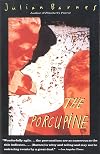
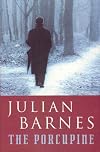
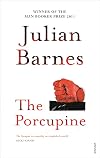
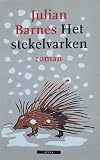
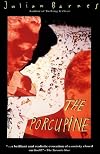
The Porcupine
by Julian Barnes
On This Page
Description
In his latest novel, Julian Barnes, author ofTalking It OverandA History of the World in 10 1/2 Chapters, trains his laser-bright prose on the collapse of Communism in Eastern Europe. Stoyo Petkanov, the deposed Party leader, is placed on trial for crimes that range from corruption to political murder. Petkanov's guilt -- and the righteousness of his opponents -- would seem to be self-evident. But, as brilliantly imagined by Barnes, the trial of this cunning and unrepentant dictator show more illuminates the shadowy frontier between the rusted myths of the Communist past and a capitalist future in which everything is up for grabs. show lessTags
Recommendations
































Member Reviews
An enjoyable account and dissection of the criminal trial that followed the overthrow of a Communist dictator in Eastern Europe. Makes some clever comments on the provability of the biggest crimes, and on what you have to do if you want to win.
An unnamed Soviet satellite country (It's Bulgaria) has ousted its dictator and communist government, having opted for that oh-so-popular democracy stuff. Everyone is happy now, right? Except the electricity has become shoddy, crime is on the rise and food and fuel is being rationed due to shortages. The book opens with a large group of citizens taking advantage of their newfound freedom by staging a protest before a government office in frustration over empty grocery store shelves.
All this sets the stage for the prosecution of the former dictator, where the country will try its hand at democratic court hearing. Granted everyone knows he will be found guilty, but it is the Prosecuting General's job to play it up for the television show more cameras to give the appearance of a fair democratic trial. One might question the logic of that, and I suppose that was exactly the author's intention.
What The Porcupine does well is show that not all conflicts are Good versus Evil. Though everyone will agree that democracy is a (mostly) fantastic thing, the communistic dictator makes the case that under him the country flourished, and he is appalled that the democratic representatives are incapable of so much as putting sausages in the grocery stores.
The book could probably be perceived as propaganda in favor of communism. You would have to try really hard and disregard much of what the author has to say, but I suspect it's possible. What it does better is demonstrate how complicated major political conflicts are. It's too easy to simplify such things, especially considering how biased most media outlets are. While it is clear-cut which is the better path to walk, there are pitfalls in every choice available. show less
All this sets the stage for the prosecution of the former dictator, where the country will try its hand at democratic court hearing. Granted everyone knows he will be found guilty, but it is the Prosecuting General's job to play it up for the television show more cameras to give the appearance of a fair democratic trial. One might question the logic of that, and I suppose that was exactly the author's intention.
What The Porcupine does well is show that not all conflicts are Good versus Evil. Though everyone will agree that democracy is a (mostly) fantastic thing, the communistic dictator makes the case that under him the country flourished, and he is appalled that the democratic representatives are incapable of so much as putting sausages in the grocery stores.
The book could probably be perceived as propaganda in favor of communism. You would have to try really hard and disregard much of what the author has to say, but I suspect it's possible. What it does better is demonstrate how complicated major political conflicts are. It's too easy to simplify such things, especially considering how biased most media outlets are. While it is clear-cut which is the better path to walk, there are pitfalls in every choice available. show less
What I liked about this book was the complexity of its characters. It tells the story of a former Communist dictator being put on trial by the new democratic government. In another author's hands, it could have been unbearable. The Cold War is often viewed in simplistic terms: we won, they lost, democracy=good, communism=evil. It would have been easy to make the characters into cardboard cutouts, the dictator into some kind of James Bond villain.
The reality, of course, is that nobody thinks of himself as evil. We might think others are evil, but for our own actions there is always a justification. It's the way human beings operate: we act, and then our brains go into overdrive telling stories and rewriting history with ourselves as the show more heroes. The main character in this book, former dictator Stoyanov, is no different. He has been a dictator for decades, has spied on his own people, jailed those who opposed him, stifled freedom of expression, etc etc. But in his eyes, he was serving his country, building Socialism, doing what needed to be done. As he writes in a letter to the new government:
"I have done everything in the belief that it was good for my country. I have made mistakes along the way, but I have not committed crimes against my people. It is for these mistakes that I accept political responsibility."
Reading this book, in fact, I was reminded of Tony Blair's resignation speech:
"Hand on heart, I did what I thought was right. I may have been wrong. That is your call. But believe one thing, if nothing else. I did what I thought was right for our country."
Blair, of course, was democratically elected and did not infringe his people's freedoms in the way an Eastern Bloc dictator did. That's not what I'm trying to say. I just mean that in many people's view, including mine, he committed serious crimes while in office. Whichever way you look at it, he's certainly responsible for many thousands of deaths. There's even a campaign to have him arrested. But he retells the story to make himself the hero. I may have made mistakes, but I honestly tried to do the right thing. Listen out for it - it's a common line people use when they're accused of doing wrong. I've probably used it myself a few times.
The other characters in the book are well fleshed out as well, from the prosecutor to the random people watching on TV. Everyone has their ambiguities, their own personal mix of higher motives and blatant self-interest. The trial delivers a verdict, but fails to deliver what people really want, because what they want is unattainable. An oppressive regime affects the whole society for generations, corrupts and co-opts ordinary people, blurs the distinctions between right and wrong. Justice is hard enough to attain in a simple criminal trial. When it's an entire nation's policies for half a century that's being put on trial, it's not surprising that the results often fail to satisfy.
So Barnes does a good job of bringing out the complexities of a particular political moment. His writing is also very engaging, very smooth and elegant right from the beginning. The plot was not the most compelling, because it basically just follows the trial, and apart from a few twists and turns along the way, you know more or less where things are heading. Thankfully it's a relatively short book, otherwise I think it could have started to drag. But at the length it is (138 pages), the interesting characters, clever observations and elegant prose were enough to sustain my interest. I definitely want to read more Julian Barnes books now, with A History of the World in 10 1/2 Chapters being top of the list. show less
The reality, of course, is that nobody thinks of himself as evil. We might think others are evil, but for our own actions there is always a justification. It's the way human beings operate: we act, and then our brains go into overdrive telling stories and rewriting history with ourselves as the show more heroes. The main character in this book, former dictator Stoyanov, is no different. He has been a dictator for decades, has spied on his own people, jailed those who opposed him, stifled freedom of expression, etc etc. But in his eyes, he was serving his country, building Socialism, doing what needed to be done. As he writes in a letter to the new government:
"I have done everything in the belief that it was good for my country. I have made mistakes along the way, but I have not committed crimes against my people. It is for these mistakes that I accept political responsibility."
Reading this book, in fact, I was reminded of Tony Blair's resignation speech:
"Hand on heart, I did what I thought was right. I may have been wrong. That is your call. But believe one thing, if nothing else. I did what I thought was right for our country."
Blair, of course, was democratically elected and did not infringe his people's freedoms in the way an Eastern Bloc dictator did. That's not what I'm trying to say. I just mean that in many people's view, including mine, he committed serious crimes while in office. Whichever way you look at it, he's certainly responsible for many thousands of deaths. There's even a campaign to have him arrested. But he retells the story to make himself the hero. I may have made mistakes, but I honestly tried to do the right thing. Listen out for it - it's a common line people use when they're accused of doing wrong. I've probably used it myself a few times.
The other characters in the book are well fleshed out as well, from the prosecutor to the random people watching on TV. Everyone has their ambiguities, their own personal mix of higher motives and blatant self-interest. The trial delivers a verdict, but fails to deliver what people really want, because what they want is unattainable. An oppressive regime affects the whole society for generations, corrupts and co-opts ordinary people, blurs the distinctions between right and wrong. Justice is hard enough to attain in a simple criminal trial. When it's an entire nation's policies for half a century that's being put on trial, it's not surprising that the results often fail to satisfy.
So Barnes does a good job of bringing out the complexities of a particular political moment. His writing is also very engaging, very smooth and elegant right from the beginning. The plot was not the most compelling, because it basically just follows the trial, and apart from a few twists and turns along the way, you know more or less where things are heading. Thankfully it's a relatively short book, otherwise I think it could have started to drag. But at the length it is (138 pages), the interesting characters, clever observations and elegant prose were enough to sustain my interest. I definitely want to read more Julian Barnes books now, with A History of the World in 10 1/2 Chapters being top of the list. show less
Akin to Ismail Kadare, reflects 1990s transition from post Communism to market economies for former Soviet satellite states. Nothing new revealed but well written. Characters succinctly represent multiple facets of responses to changing times. Could work as a play. No hero or Antihero, has a Greek chorus of sorts with students/grandmother. Mussolini made the trains run on time vs freedom of expression: freedom to express disappointment.
What does a society do when options are limited? Non-verbal women’s protest of clanging pots and pans excellent metaphor re expression of overwhelmed frustration.
The people want both sides without compromise: a glamourous First Lady who cares nothing for clothes, a man of the people who leads like a show more TV star. Novel makes one thing of all the senseless deaths but few deaths make sense anyway; the truth of main character’s actions/motivations not revealed as in real life they wouldn’t be either. There probably isn’t one path forward as society has always diverging paths. Mostly it is about survival of one particular group at a time. show less
What does a society do when options are limited? Non-verbal women’s protest of clanging pots and pans excellent metaphor re expression of overwhelmed frustration.
The people want both sides without compromise: a glamourous First Lady who cares nothing for clothes, a man of the people who leads like a show more TV star. Novel makes one thing of all the senseless deaths but few deaths make sense anyway; the truth of main character’s actions/motivations not revealed as in real life they wouldn’t be either. There probably isn’t one path forward as society has always diverging paths. Mostly it is about survival of one particular group at a time. show less
A different book for Barnes. The setting is an unnamed East European country transitioning from Soviet domination to a democratic, free-market system; the Communist Party has been overthrown and the old Party Leader, Petkanov, is on trial; the prosecutor, Solinsky, is newly appointed and the son of an old, disgraced, comrade of the Party Leader; his wife is the daughter of a renowned anti-fascist fighter. The elements and themes followed in this fictitious country are certainly real and universal; they would have been played out across Eastern Europe.
There are few absolutes even in assessing the crimes and corruption of the Communist era with its repression and silencing of opponents. And much depends on perspectives. Petkanov argues, show more with some veracity that society has deteriorated with the downfall of the old regime: food prices have soared, pornography is for sale on the steps of the cathedral, joblessness and crime and endemic; Solinksy’s reply is that it takes time to build a new society; to which Petkanov replies that the same was true of building socialism and he adduces a long, long list of international honours conferred on him as a progressive leader. Nor is corruption limited to those at the highest levels: it varies in scope and scale, but it becomes part of the fabric of society and as one protagonist comments: “We can’t purify the human race….There’ll always be opportunists. You just have to make sure that they’re on your side.”
The searches for “iron consequentiality” and the “cause-and-effect of logical motive and resultant action” are themselves chimeras because they may be part of systems and processes, and even the human need for order and explanation, but they mean nothing, they have no explanatory power, in face of “ego, and the exercise of authority as a reflection of character has been replaced by the psychopathic retention of power by all possible means and in mockery of all implausibilities.”
Throughout the novel, a group of young people watch the trial together on TV and pass ribald comments on the performances and postures of Petkanov and Solinsky and the whole Communist system. A grandmother of one of the students sits in her kitchen under a picture of Lenin and ignores the taunts of the young people about the world and the system that has passed. The novel ends with the old woman standing alone in front of the Mausoleum of the First Leader holding, in the rain, a small framed print of Lenin that she holds out to passers-by. And so she epitomizes one of the most devastating effects of something like the Soviet system: the power of playing on the human need to believe in something, the appeal of feeling part of something bigger and grander and better when choices presented where starker and when achievements were made often in the face of horrendous odds, but at the same time denying to know or recognize that all of this, all this struggle and sacrifice was in the service of a monstrous denial of any individual rights to life or liberty in favour of individual power and corruption. show less
There are few absolutes even in assessing the crimes and corruption of the Communist era with its repression and silencing of opponents. And much depends on perspectives. Petkanov argues, show more with some veracity that society has deteriorated with the downfall of the old regime: food prices have soared, pornography is for sale on the steps of the cathedral, joblessness and crime and endemic; Solinksy’s reply is that it takes time to build a new society; to which Petkanov replies that the same was true of building socialism and he adduces a long, long list of international honours conferred on him as a progressive leader. Nor is corruption limited to those at the highest levels: it varies in scope and scale, but it becomes part of the fabric of society and as one protagonist comments: “We can’t purify the human race….There’ll always be opportunists. You just have to make sure that they’re on your side.”
The searches for “iron consequentiality” and the “cause-and-effect of logical motive and resultant action” are themselves chimeras because they may be part of systems and processes, and even the human need for order and explanation, but they mean nothing, they have no explanatory power, in face of “ego, and the exercise of authority as a reflection of character has been replaced by the psychopathic retention of power by all possible means and in mockery of all implausibilities.”
Throughout the novel, a group of young people watch the trial together on TV and pass ribald comments on the performances and postures of Petkanov and Solinsky and the whole Communist system. A grandmother of one of the students sits in her kitchen under a picture of Lenin and ignores the taunts of the young people about the world and the system that has passed. The novel ends with the old woman standing alone in front of the Mausoleum of the First Leader holding, in the rain, a small framed print of Lenin that she holds out to passers-by. And so she epitomizes one of the most devastating effects of something like the Soviet system: the power of playing on the human need to believe in something, the appeal of feeling part of something bigger and grander and better when choices presented where starker and when achievements were made often in the face of horrendous odds, but at the same time denying to know or recognize that all of this, all this struggle and sacrifice was in the service of a monstrous denial of any individual rights to life or liberty in favour of individual power and corruption. show less
3.5/5
It is well written, but it's not as interesting as the other works of Julian Barnes. But it's certainly much better than "Before she met me". And the topic is different. What I do like is how Barnes never takes a side. We see the pros and cons of communism/socialism as well as democracy.
It is well written, but it's not as interesting as the other works of Julian Barnes. But it's certainly much better than "Before she met me". And the topic is different. What I do like is how Barnes never takes a side. We see the pros and cons of communism/socialism as well as democracy.
A novella about the show trial of an eastern European former communist dictator. Main point seemed to be that communisism "can't get to heaven on the first jump" but that it did alright for it's first time anyway, and that one day in some form it will be back.
Members
- Recently Added By
Lists

Books Read in 2012
816 works; 34 members
Author Information

89+ Works 43,043 Members
Julian Barnes was born in Leicester, England, on January 19, 1946. He received a degree in modern languages from Magdalen College, Oxford University in 1968. He has held jobs as a lexicographer for the Oxford English Dictionary, a reviewer and literary editor for the New Statesmen and the New Review, and a television critic. He has written show more numerous works of fiction including Arthur and George, Pulse: Stories, The Noise of Time, and England, England. He received the Somerset Maugham Award in 1980 for Metroland, the Geoffrey Faber Memorial Prize in 1985 and a Prix Medicis in 1986 for Flaubert's Parrot, and the Man Booker Prize in 2011 for The Sense of an Ending. He also writes non-fiction works including Letters from London, The Pedant in the Kitchen, and Nothing to Be Frightened Of. He received the Shakespeare Prize by the FVS Foundation in 1993, the Austrian State Prize for European Literature in 2004, and the David Cohen Prize for Literature in 2011. He writes detective novels under the pseudonym Dan Kavanaugh. His works under this name include Duffy, Fiddle City, Putting the Boot In, and Going to the Dogs. (Bowker Author Biography) show less
Awards and Honors
Notable Lists
Series
Belongs to Publisher Series
Gallimard, Folio (2716)
Common Knowledge
- Canonical title
- The Porcupine
- Original title
- The Porcupine
- Original publication date
- 1992
- Important places*
- Bulgarije
- Dedication
- To Dimitrina
- Quotations*
- Era possibile che una nazione intera perdesse la facoltà di mettere qualcosa in discussione, di nutrire qualche legittimo dubbio? E se il muscolo della contraddizione si fosse semplicemente atrofizzato per mancanza di eserci... (show all)zio?
Toglievi l'uniforme a un soldato e la lunghezza delle sue frasi raddoppiava.
Nell'epoca in cui viviamo, il concetto di «carattere» è del tutto fuorviante, perché è stato sostituito dall'ego, così come l'esercizio dell'autorità come riflesso del carattere è stato a sua volta sostituito dalla sm... (show all)ania malata di conservare il potere con ogni possibile mezzo e in barba a qualsiasi mancanza di plausibilità. Stalin voleva Kirov morto: benvenuti nel mondo moderno. - Original language
- English
*Some information comes from Common Knowledge in other languages. Click "Edit" for more information.
Classifications
Statistics
- Members
- 629
- Popularity
- 46,121
- Reviews
- 16
- Rating
- (3.39)
- Languages
- 11 — Danish, Dutch, English, Finnish, French, German, Italian, Portuguese, Romanian, Spanish, Swedish
- Media
- Paper, Audiobook, Ebook
- ISBNs
- 30
- ASINs
- 7