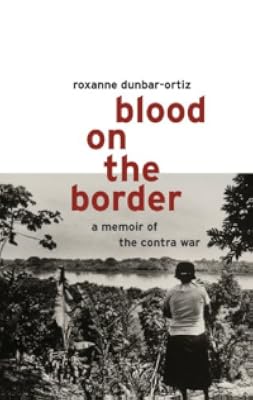
Blood on the Border: A Memoir of the Contra War
by Roxanne Dunbar-Ortiz
On This Page
Description
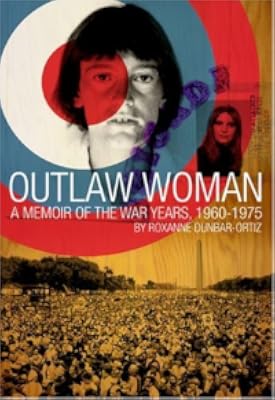
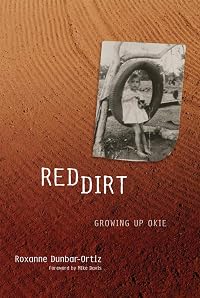
"This is a revised edition of Blood on the Border, Roxanne Dunbar-Ortiz's memoir of her involvement in the Contra War of Nicaragua during the Reagan administration. This edition features an all-new afterword by the author. Blood on the Border completes Roxanne Dunbar-Ortiz's memoir series that started with Red Dirt and continued with Outlaw Woman"--Provided by publisher.Tags
Recommendations
















Member Reviews
Some passages from Blood on the Border:
The deputy director of the CIA, Bobby Ray Inman, one of the weirdest of that cast of spook characters, was featured at a press conference exhibiting grainy photographs that resembled Rorschach inkblot tests. In a seeming parody of a TV meteorologist, he pointed his white stick at various parts of the photograph and recounted a narrative that had nothing to do with the picture, which he then described as unassailable evidence. The story he told was of a massive Cuban occupation of the northeast region of Nicaragua. He claimed that the landing strip at Puerto Cabezas was being prepared for fighter jets to land and that a Cuban military base was being built; the most telling detail of all, he said, show more was the appearance of a baseball diamond, which proved the Cubans were there to stay. This caused amusement in Nicaragua, where baseball had been the national sport ever since the US Marines had first occupied the country in the 1890s.
I never figured out if Inman was completely insane or quite crafty. In any case, he resigned in March 1982, and his boss, William Casey, was even loonier. At times, it seemed absurd to try to counteract this nuttiness with rationality. But it was not only the spooks; General Alexander Haig, Reagan’s secretary of state, held a press conference at the Dupont Circle Hilton Hotel in Washington in which he pointed to another photograph (blown up almost two stories tall) and described what he termed as widespread massacres. The photograph showed human bodies enveloped in flames. Haig claimed that these were Miskitu Indians being burned alive by Sandinista soldiers. Newspapers featured the photograph with headlines screaming of massacres and atrocities against the Nicaraguan Indians. During the following days, tiny correction boxes appeared in newspapers - why it wasn’t a big story itself I couldn’t figure out - reporting that the photograph was the property of the conservative French daily Le Figaro, and was taken in 1978, before the Sandinistas took power. The photo actually showed the Red Cross burning corpses of the victims of Somoza’s bombing of civilians in Managua in 1978. The irony was that such massacres were actually happening in nearby Guatemala as Haig spoke, massacres about which the administration said nothing. To my knowledge, no reporter ever questioned Haig about his allegations and misrepresentation of the photograph, nor did he ever admit his deception. The administration was that brazen. Even when corrections were printed, the lies created a kind of populist genocidal logic, in which “exaggerations” were then acknowledged, but people assumed that there must be some core of truth to the charges nevertheless.
*
I understood, but could not forgive, the temptations of celebrity hunger. I had my own “fifteen minutes of fame” in 1968-70 in the women’s liberation movement. Such attention can replace a fragile sense of self, so that only more attention can fill the void that remains, and more attention is never enough.
*
Writing was a kind of release and relief. I had worked on the subject so long that writing the book was more like reading, the words almost forming themselves. My mind and body became a kind of word processor, disappearing into the work. I loved - I still love - the way writing allows me to put pieces together into meaningful wholes, or at least ones that give meaning to me. I cannot function without trying to see the whole. show less
The deputy director of the CIA, Bobby Ray Inman, one of the weirdest of that cast of spook characters, was featured at a press conference exhibiting grainy photographs that resembled Rorschach inkblot tests. In a seeming parody of a TV meteorologist, he pointed his white stick at various parts of the photograph and recounted a narrative that had nothing to do with the picture, which he then described as unassailable evidence. The story he told was of a massive Cuban occupation of the northeast region of Nicaragua. He claimed that the landing strip at Puerto Cabezas was being prepared for fighter jets to land and that a Cuban military base was being built; the most telling detail of all, he said, show more was the appearance of a baseball diamond, which proved the Cubans were there to stay. This caused amusement in Nicaragua, where baseball had been the national sport ever since the US Marines had first occupied the country in the 1890s.
I never figured out if Inman was completely insane or quite crafty. In any case, he resigned in March 1982, and his boss, William Casey, was even loonier. At times, it seemed absurd to try to counteract this nuttiness with rationality. But it was not only the spooks; General Alexander Haig, Reagan’s secretary of state, held a press conference at the Dupont Circle Hilton Hotel in Washington in which he pointed to another photograph (blown up almost two stories tall) and described what he termed as widespread massacres. The photograph showed human bodies enveloped in flames. Haig claimed that these were Miskitu Indians being burned alive by Sandinista soldiers. Newspapers featured the photograph with headlines screaming of massacres and atrocities against the Nicaraguan Indians. During the following days, tiny correction boxes appeared in newspapers - why it wasn’t a big story itself I couldn’t figure out - reporting that the photograph was the property of the conservative French daily Le Figaro, and was taken in 1978, before the Sandinistas took power. The photo actually showed the Red Cross burning corpses of the victims of Somoza’s bombing of civilians in Managua in 1978. The irony was that such massacres were actually happening in nearby Guatemala as Haig spoke, massacres about which the administration said nothing. To my knowledge, no reporter ever questioned Haig about his allegations and misrepresentation of the photograph, nor did he ever admit his deception. The administration was that brazen. Even when corrections were printed, the lies created a kind of populist genocidal logic, in which “exaggerations” were then acknowledged, but people assumed that there must be some core of truth to the charges nevertheless.
*
I understood, but could not forgive, the temptations of celebrity hunger. I had my own “fifteen minutes of fame” in 1968-70 in the women’s liberation movement. Such attention can replace a fragile sense of self, so that only more attention can fill the void that remains, and more attention is never enough.
*
Writing was a kind of release and relief. I had worked on the subject so long that writing the book was more like reading, the words almost forming themselves. My mind and body became a kind of word processor, disappearing into the work. I loved - I still love - the way writing allows me to put pieces together into meaningful wholes, or at least ones that give meaning to me. I cannot function without trying to see the whole. show less
A fascinating memoir of a woman who was an activist for the rights of indigenous persons, and who became involved in activism in Nicaragua leading up to, and during, the contra war. I found this book to be particularly interesting, having read of the contra war but never having heard any real details of it. The author really exposes both sides of the conflict, which are of course quite nuanced. Although I had a hard time following all of the names and conventions the author mentions, the book is otherwise quite riveting.
Excelent memoir by Indigenous Rights Activist, Nicaragua ally, and Feminist Roxanne Dunbar Ortiz, with a focus on the predominantly indigenous North Atlantic coast of Nicaragua.
Ratings
Members
- Recently Added By
Lists

Feminists' memoirs/autobiographies
38 works; 11 members

Witness from the front: accounts of war, revolution, and strife
23 works; 5 members

South End Press
35 works; 1 member
Author Information

18+ Works 4,724 Members
Roxanne Dunbar-Ortiz is Professor Emerita of Ethnic Studies and Women's Studies at California State University, East Bay.
Common Knowledge
- Canonical title
- Blood on the Border: A Memoir of the Contra War
- Original publication date
- 2005-11-01
- Important places
- Central America; Nicaragua
- Important events
- Contra War
- Dedication
- To three great women:
Chockie Cottier, Dr. Mirna Cunningham,
and Maya Miller, for support and love;
To Indigenous Peoples in the struggle for self-determination;
And in memory of all the casualties of the ... (show all)Contra war. - First words
- The first time I remember hearing about Somoza, Sandino, and Nicaragua was in early 1960 when I was twenty-one years old and new to San Francisco, having just moved there from Oklahoma.
- Last words
- (Click to show. Warning: May contain spoilers.)Today, that dream does not appear possible, making indigenous movements ever more fundamental to humanity in reaching a different conclusion than a nuclear war or environmental disaster.
- Blurbers
- Gomez, Jewelle; Eggers, Dave; Solnit, Rebecca; Belli, Gioconda; Davis, Mike; Randall, Margaret (show all 12); Harjo, Joy; Beverley, John; Zamora, Daisy; Pineda, Baron; Gerassi, John; Thunderhawk, Madonna Gilbert
Classifications
- Genres
- Nonfiction, History, Biography & Memoir, General Nonfiction, Politics and Government
- DDC/MDS
- 972.85053 — History & geography History of North America Mexico, Central America, West Indies, Bermuda Central America Nicaragua
- LCC
- F1528 .O78 — Local History of the United States, Canada and Latin America Latin America. Spanish America Nicaragua
- BISAC
Statistics
- Members
- 63
- Popularity
- 493,804
- Reviews
- 3
- Rating
- (4.19)
- Languages
- English
- Media
- Paper, Ebook
- ISBNs
- 4
- ASINs
- 1