A poet's notebook
by Edith Sitwell 
35 Members (5.00)
On This Page
Description
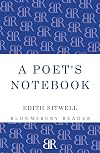
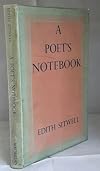
Fiction. Poetry. HTML:First published in 1943, this is a selection of writings from Dr. Sitwell's private notebooks. It includes essays on prosody, the role of the poet, the nature of poetry, and includes her full length work 'A Notebook on William Shakespeare', as well as discussion of Chaucer, Herrick, Wordsworth, Pope and Byron amongst others.The section on Shakespeare consists of essays on the general aspect of the plays - those great hymns to the principle and the glory of life. There show more are long essays on King Lear, Macbeth, Othello, and Hamlet. Miss Sitwell believes, with all humility, that she has discovered new sources of the inspiration of King Lear, throwing a new light on the whole play , and giving us new meaning to the mad scenes, of an unsurpassable grandeur, depth and terror. There are essays on many of the comedies, and long passages about the Fools and Clowns, all of which serve to illiminate Shakespeare's mighty and many-sided genius. show less
Tags
Recommendations



















Member Reviews
Members
- Recently Added By
Author Information

103+ Works 2,156 Members
The first child of Sir George Sitwell and Lady Ida Sitwell, Edith Sitwell became famous both as poet and bohemian. Reacting against what she called the "dim bucolics" of the Georgians, she and her brothers Osbert and Sacheverell constituted a kind of aristocratic bohemian vanguard after World War I. Sergei Diaghilev's (see Vol. 3) Russian Ballet show more joined T. S. Eliot and, improbably, Alexander Pope among the early influences on her work. A skilled publicist as well as poet, Sitwell exploited her upper-class nonconformity in numerous public controversies. Her collaboration with William Walton to produce musical settings of the Facade poems (1923) created an uproar when the work was performed. Sitwell also put her talents to work for young writers in whom she believed, chief among them Dylan Thomas, whose reputation she helped launch. Despite later public honors---Elizabeth II created her a Dame Grand Cross of the British Empire, and Oxford and Cambridge bestowed honorary degrees---she remained proudly eccentric throughout her celebrated career. Sitwell's early poetry displayed a pyrotechnic surface of dazzling images and leaps. She saw Eliot's Prufrock and Other Observations (1917) as heralding "a new era in poetry," which would lead to poets seeing the world with new eyes. Breakthroughs in perception often became the themes as well as goals of her poetry. Interested particularly in French symbolist theories of sound, she developed an intricate tonal play of verbal patterns in her verse. Her work displayed an increasingly religious orientation, and during World War II, she engaged such public themes as politics more overtly in works like Three Poems for an Atomic Age. Besides her own verse, she wrote several books of prose and edited numerous anthologies of poetry. (Bowker Author Biography) show less
Edith Sitwell has a Legacy Library. Legacy libraries are the personal libraries of famous readers, entered by LibraryThing members from the Legacy Libraries group.
Classifications
Statistics
- Members
- 35
- Popularity
- 820,529
- Rating
- (5.00)
- Languages
- English
- Media
- Paper, Ebook
- ISBNs
- 3
- ASINs
- 3