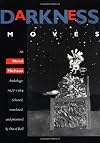
Darkness Moves: An Henri Michaux Anthology, 1927-1984
by Henri Michaux, David Ball (Editor)
On This Page
Description
Henri Michaux defies common critical definition. Critics have compared his work to such diverse artists as Kafka, Goya, Swift, Klee, and Beckett. Allen Ginsberg called Michaux "genius," and Jorge Luis Borges wrote that Michaux's work "is without equal in the literature of our time." This anthology contains substantial selections from almost all of Michaux's major works, most never before published in English, and allows readers to explore the haunting verbal and pictorial landscape of a show more twentieth-century visionary. show lessTags
Recommendations







































Member Reviews
"Everyone enjoys economy for its relation to a certain morality,"
— Sheila Heti, How Should a Person Be
On Wasted Years
One wonders what excuse Michaux employs when he visits his bourgeois in-laws who are always asking about his current project. Perhaps he would claim to be working on a sequel to those Mr. Plume pieces everyone loved so much, and which, after witnessing their success in various salons, he could never bring himself put to paper again. Walter Benjamin, who always has the Arcades Project in his back pocket (in the sense of Capitalist Economies), was nowhere as economical as Michaux (in the sense of "Economy Class"), who one imagines rarely writing anything good in his pocket diaries and therefore saving quite a bit on show more chap-books over the years. In this way, many a Parisian has saved on shoe-leather by never visiting the Louvre. Such a thing is life. By the end of his career, Michaux has written perhaps five good sketches altogether (detailed below). On the subject of these un-productive years spent on mescaline, a (paraphrased) Arendt would recall, "well, he was neither the first nor the last to be ruined by [economy]."
Michaux's brightest moments are humorous investigations of the so-called "miraculating" moment; i.e. moments so "taken-for-granted" that they give the impression of having come into existence out of nothing. It takes a bit of real thought to suss out these hidden moments of origin and put something strange in their place.
On Bad Writers
"There may easily be thousands of sentences in a chapter and I've got to sabotage every one of them" (22).
On Catholic Virgins
When you come home on your wedding day, if you stick your wife in a well to soak all night she is flabbergasted. Even if she had always been vaguely worried about it . . . "Well, well," she says to herself, "so that's what marriage is like. No wonder they kept it all so secret. I've been taken in by the whole business" (28).
On Behavior in a Tragedy (for Insects and Man)
"The Wasp Relates: It is often not difficult to enter the dwellings of men. When you want to leave, it has happened more than once that you suddenly come up against an extraordinary, absolute prohibition. In vain do your eyes roam over the whole field of the visible. Flowers wave quite near you in the breeze. All you get are peremptory knocks on the head as soon and as many times as you try to reach them. So what can you do? Giving up all reasoned action, you have to throw yourself into the most violent delirium and, flying around blindly in all directions . . . suddenly you find yourself outside, safe and sound! This is the Secret. We don't know any other way of getting out of that jam" (162).
Michaux's elegiac pieces (mostly on the subject of pure suffering), are somewhat less brilliant, albeit tinged with the inventiveness of the absurd (though Michaux is not an "Absurdist").
Magic (good poem, work poem)
I used to be quite nervous. Now I'm on a new track:
I put an apple on my table. Then I put myself inside the apple. What peace!
It looks simple. And yet I'd been trying for twenty years; and I would never have succeeded if I had wanted to begin like that. Why not? Perhaps because I would have thought myself humiliated. This is possible. Then, too, I had to grope around, experiment—there's quite a story behind all this. Setting out isn't easy and neither is explaining it. But I can tell it to you in a word. 'Suffering' is the word. When I arrived in the apple, I was ice-cold" (33).
Dragon (good poem. cancer patient poem)
A dragon came out of me. He pulled out a hundred tails of flames and nerves.
What an effort I made to force him to rise, whipping him over me! His lower part a steel prison: I was locked inside. But I kept at it and his furor I withstood and the bars of the implacable jail finally came apart little by little, forced by the impetuous whirling motion.
It was because everything was going so badly, it was in September (1938), it was on a Tuesday, that's why I had to take on this peculiar form in order to live. And so I fought for myself alone when Europe was still hesitating, and set forth as a dragon, against the endless paralysis that arose from what was happening, over the voice of the ocean of mediocre men whose immense importance was once again suddenly, dizzyingly, revealed (36).
The best Plume sketch (the one about the solicitious surgeon) concludes with the punchline: "and besides, you may change," as if one could part with personality as easily as plume parts with his index finger — The implication being that one despairs of giving up these ghastly personality traits (in this case, the hatred of "cripples") even more than one despairs of giving up a slightly-swollen digit. Perhaps this applies also to such (antiquated) notions of personal economy, "wasted years," a life-work, and so on. It would be better to let such things go . . .
VII. Plume's Finger was Hurting him
Plume's finger was hurting a bit.
"You'd better see a doctor," said his wife. "Often all it takes is a little ointment." And Plume went.
"One finger to cut off," said the surgeon, "no problem at all. With anesthesia, it takes six minutes at the most. Since you're rich, you have no need for so many fingers. I'll be delighted to perform this little operation for you. After that, I'll show you several models of artificial fingers. Some of them are extremely graceful. A bit expensive no doubt. But naturally there's no question of cutting corners. We'll give you the best there is."
Plume sadly looked at his finger and apologized.
"Doctor, it's the index finger, you know, a most useful finger. In fact I was just going to write my mother again. I always use my index finger when I write. My mother would be worried if I put off writing her any longer; I'll come back in a few days. She's a very sensitive woman, she gets upset so easily."
"No problem," the surgeon said, "here's some paper, white paper, with no letterhead of course. A few heartfelt words from you will put her right. Meanwhile I'll call the Hospital and tell them to set everything up, so all we'll have to do is get out the sterilized instruments. I'll be back in a minute . . . "
He was back in a flash.
"Everything's perfect, they're waiting for you."
"So sorry, Doctor," said Plume, "you see, my hand's shaking, there's nothing I can do about it . . . umm . . ."
"There, there," said the surgeon, "you're quite right, it would be better not to write. Women are terribly sharp, especially Mothers. When it's their son, they can spot a bit of hesitation anywhere, and then make a mountain out of a molehill. For them, we're just little children. Here's your hat and your cane. The car is waiting for us."
And they went into the operating room.
"Listen, Doctor. Really . . . "
"Oh!" said the surgeon, "don't worry, you're being over-scrupulous. We'll write that letter together. I'll think about it while I operate on you."
And bringing the mask to his face, he put Plume to sleep.
"At least you could have asked my opinion," said Plume's wife to her husband.
"Don't go thinking it's so easy to find a lost finger once again. I don't much like the idea of a man with stumps. As soon as your hand gets a bit too bare, you can just forget about me. Cripples are nasty, they become sadistic right away. But I haven't been brought up the way I was brought up just to live with a sadist. You probably thought I'd volunteer to help you with those things. Well, you were wrong, and you should have thought before you . . . "
"Look," said Plume, "don't worry about the future, I still have nine fingers, and besides, you may change." show less
"A sweater of earthworms may provide warmth, but it provides it as the expense of many other feelings" (58).
Ratings
Members
- Recently Added By
Author Information

180+ Works 2,277 Members

David Ball lives in Golden, Colorado with his wife and two children.
Awards and Honors
Classifications
Statistics
- Members
- 145
- Popularity
- 223,520
- Reviews
- 2
- Rating
- (4.10)
- Languages
- English, Italian
- Media
- Paper, Ebook
- ISBNs
- 6
- ASINs
- 2