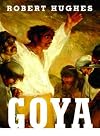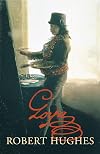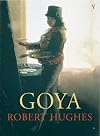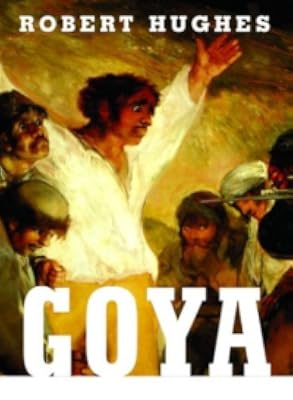
Goya
by Robert Hughes
On This Page
Description
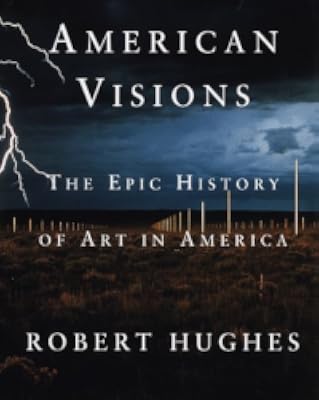
Publisher's description: Robert Hughes, who has stunned us with comprehensive works on subjects as sweeping and complex as the history of Australia (The Fatal Shore), the modern art movement (The Shock of the New), the nature of American art (American Visions), and the nature of America itself as seen through its art (The Culture of Complaint), now turns his renowned critical eye to one of art history's most compelling, enigmatic, and important figures, Francisco Jos ̌de Goya y Lucientes. show more With characteristic critical fervor and sure-eyed insight, Hughes brings us the story of an artist whose life and work bridged the transition from the eighteenth-century reign of the old masters to the early days of the nineteenth-century moderns. With his salient passion for the artist and the art, Hughes brings Goya vividly to life through dazzling analysis of a vast breadth of his work. Building upon the historical evidence that exists, Hughes tracks Goya's development, as man and artist, without missing a beat, from the early works commissioned by the Church, through his long, productive, and tempestuous career at court, to the darkly sinister and cryptic work he did at the end of his life. In a work that is at once interpretive biography and cultural epic, Hughes grounds Goya firmly in the context of his time, taking us on a wild romp through Spanish history; from the brutality and easy violence of street life to the fiery terrors of the Holy Inquisition to the grave realities of war, Hughes shows us in vibrant detail the cultural forces that shaped Goya's work. Underlying the exhaustive, critical analysis and the rich historical background is Hughes's own intimately personal relationship to his subject. This is a book informed not only by lifelong love and study, but by his own recent experiences of mortality and death. As such this is a uniquely moving and human book; with the same relentless and fearless intelligence he has brought to every subject he has ever tackled, Hughes here transcends biography to bring us a rich and fiercely brave book about art and life, love and rage, impotence and death. This is one genius writing at full capacity about another--and the result is truly spectacular. show lessTags
Recommendations
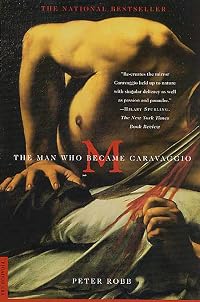
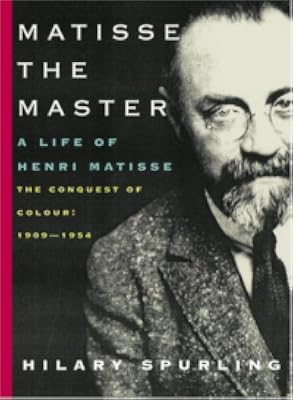
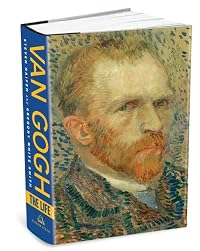
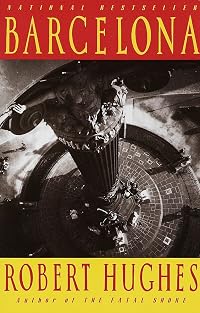










Member Reviews
Hughes’ substantial life of Goya appears to have been a lifelong dream. From the opening chapter in which we learn of the near-fatal automobile accident that immobilized him for much of a year, but also revitalized his desire to complete this work, we hear the recognizable voice of Hughes, often irascible, fiercely intelligent, obliquely sentimental, but insistently objective when it comes to the actual artworks. Reading a Hughes description of one of Goya’s paintings and then turning the page to see its reprint on the following page is like hearing a precise echo before hearing the sound that triggered it. And for the most part Hughes’ descriptions avoid illicit interpretation. When he doesn’t have documentary evidence from show more Goya’s life, in writing and not just through hearsay, Hughes refuses to countenance innuendo. A painting of a maja is just a painting of a typical Spanish woman if there is no proof that it is of Godoy’s mistress (or Goya’s). And while that deflates some of the potential narrative arc to this life, it solidifies the firm foundation on which Hughes’ opinions, when he offers them, are to be believed.
The writing is always readable and compelling, with just enough cutting asides to remind you that Hughes was an art critic during the cutthroat days of the New York art world in the 80’s.
Recommended for those who want to know more about Goya’s work or for those who want to hear again Hughes’ very particular voice. show less
The writing is always readable and compelling, with just enough cutting asides to remind you that Hughes was an art critic during the cutthroat days of the New York art world in the 80’s.
Recommended for those who want to know more about Goya’s work or for those who want to hear again Hughes’ very particular voice. show less
Hughes begins his book with a description of his encounters with Goya, from his childhood in Australia to what he refers to as “the triggering event that cleared me to write this book” – the horrific car accident in 1999 in which he almost died, and in the aftermath of which he experienced a nightmare vision of Goya, tormenting him in his pain. Though initially sceptical, I found this unorthodox and highly subjective approach to work; partly because of the hallucinogenic drama of Goya’s art, and partly because so much of his interior life remains mysterious and is only accessible through his etchings and paintings. Hughes envisions Goya as “the last Old Master and the first Modernist”, and convincingly locates him in the show more appropriate political and socio-historical contexts, giving enough background information to ground the reader who may not be familiar with that period of Spanish history. This is an excellent book; beautifully illustrated, with a compelling narrative and vivid descriptions of his paintings and etchings which not only locate them in the history of European art, but make their emotional content comprehensible and available to a 21st century viewer. But is this a biography? A more suitable category would be “Art History”. Hughes does the best he can to make Goya real, given the scarcity of facts about his life, but his primary interest is in the art and its context, and he spends far more textual space on the Bourbons and successive rulers than he does on the artist. So, a great book; but I cannot recommend it as a great biography. show less
I zipped through this diagonally more to get to see the paintings and etchings with some glimpses of his life -- but this is a good book to learn about Goya and his time, his contemporaries.
Very well written and gave me a better insight into an artist that I love but was always confused by. After reading this in between a couple of Ross King's books, it is still enjoyable and informative but not as gripping as Ross King's writing.
Tedious
Cartoné son sobrecubierta ilustrada
Buen estado
Buen estado
Sep 16, 2023Spanish
Ratings
Members
- Recently Added By
Author Information

53+ Works 11,271 Members
Robert Hughes was born in Sydney, Australia on July 28, 1938. He studied art and architecture at the University of Sydney. He pursued art criticism mostly as a sideline while painting, writing poetry and serving as a cartoonist for the weekly intellectual journal The Observer. He left Australia and spent time in Italy before settling in London, show more where he became a well-known critical voice and wrote for several newspapers. He was chief art critic for Time magazine for over 30 years. He wrote several books including The Fatal Shore, American Visions: The Epic History of Art in America, Culture of Complaint: The Fraying of America, Things I Didn't Know, and Rome. He also hosted an eight-part documentary about the development of modernism from the Impressionists through Warhol entitled The Shock of the New. It was seen by more than 25 million viewers when it ran first on BBC and then on PBS. He also wrote a book by the same name about the series. He died after a long illness on August 6, 2012 at the age of 74. (Bowker Author Biography) show less
Awards and Honors
Common Knowledge
- People/Characters
- Francisco Goya; María del Pilar de Silva, 13th Duchess of Alba; María Josefa Pimentel, Duchess of Osuna, 12th Countess-Duchess of Benavente; Fernando VII
- Important places
- Spain
Classifications
Statistics
- Members
- 544
- Popularity
- 54,872
- Reviews
- 6
- Rating
- (4.18)
- Languages
- 6 — English, German, Italian, Polish, Portuguese, Spanish
- Media
- Paper, Ebook
- ISBNs
- 12
- UPCs
- 1
- ASINs
- 3