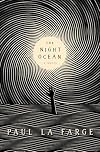
I highly recommend THE NIGHT OCEAN (2017) by Paul La Farge. It is less H. P. Lovecraft and his Cthulhu Mythos and more Roberto Bolano and The Savage Detectives.
This novel is a love story to literature through the lens and lives of some of the purveyors of weird fiction. Plus there are jellyfish!
•
Frederick Pohl, Clark Ashton Smith, August Derleth, Donald Wandrei, Hart Crane, and many other weird authors and science fiction authors make cameos. Ambrose Bierce is mentioned. William S. Burroughs makes appearances in multiple storylines as Bill and as Lee.
The main stories are anchored upon two apparent (although maybe not) suicides—Charlie Willett in the present day and Robert Barlow in 1951—and the author/weird fiction fan L. C. Spinks who is their connection. A possibly homosexual relationship between Barlow and Lovecraft and the discovery of "The Erotonomicon" underlie all. And it is all complicated by Charlie Willett's fandom of Lovecraft, as a black man who reads and relishes a (now) known (and known to him) racist.
This novel is a love story to literature through the lens and lives of some of the purveyors of weird fiction. Plus there are jellyfish!
•
Frederick Pohl, Clark Ashton Smith, August Derleth, Donald Wandrei, Hart Crane, and many other weird authors and science fiction authors make cameos. Ambrose Bierce is mentioned. William S. Burroughs makes appearances in multiple storylines as Bill and as Lee.
The main stories are anchored upon two apparent (although maybe not) suicides—Charlie Willett in the present day and Robert Barlow in 1951—and the author/weird fiction fan L. C. Spinks who is their connection. A possibly homosexual relationship between Barlow and Lovecraft and the discovery of "The Erotonomicon" underlie all. And it is all complicated by Charlie Willett's fandom of Lovecraft, as a black man who reads and relishes a (now) known (and known to him) racist.
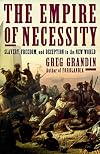
I learned quite a few new things about slavery in South America, and was reintroduced to many more. Slavery in Spanish America laid the template for slavery in the South in ways that are complex and culturally tied to the newly burgeoning merchant class in the New World (whalers, seal hunters, plantation owners, timber barons, slave traders, speculators, and the like) and industrial capitalism. Slavery was also partly responsible for major changes to modern medicine, law, trade agreements, revolutions and/or governmental shifts, etc.
In addition, there are also a lot of strange connections between the slave revolt that influenced Herman Melville’s novel Benito Cereno and the book of fiction that was birthed from its non-fiction narrative. Melville and his relatives were connected to real-life players in the slave revolt drama on the Tryal (San Dominick in the novel) in ways that challenge the boundaries of “the real” and “the fictive.”
There are many digressions and interludes along the way. For me, they functioned much like many of the tangents in Moby-Dick, always leading back to the main narrative and propping it up in ways that I didn't anticipate when the break began.
I have to go back and read this again. Dense and chewy, without being overly "academic" or pretentious (although it is heavily researched and noted).
Highly recommended.
In addition, there are also a lot of strange connections between the slave revolt that influenced Herman Melville’s novel Benito Cereno and the book of fiction that was birthed from its non-fiction narrative. Melville and his relatives were connected to real-life players in the slave revolt drama on the Tryal (San Dominick in the novel) in ways that challenge the boundaries of “the real” and “the fictive.”
There are many digressions and interludes along the way. For me, they functioned much like many of the tangents in Moby-Dick, always leading back to the main narrative and propping it up in ways that I didn't anticipate when the break began.
I have to go back and read this again. Dense and chewy, without being overly "academic" or pretentious (although it is heavily researched and noted).
Highly recommended.
This novel is a whirlwind of lives lived by one man, Johan Ot. Fortune, misfortune, fortune, misfortune: such is the pattern stamped upon his soul. I found myself reading quickly to keep the story moving and then halting and slowing down to savor the text and its details.
The story is all the more engaging knowing that it was written in 1978 during the height of the Cold War in the then-nation of Yugoslavia, held together by Tito and his version of communism. The parallels of Leopold's Holy Roman Empire, its accompanying Inquisition, and the attempt to hold together peoples being cobbled together by Catholicism (in the face of challenges from Lutheranism, a merchant class, emerging middle class, and the like) to its contemporary setting (1978), as well as that of the American empire of 2011 (when the English translation makes its debut) is absolutely stunning when I really pause to think about it. Looking backward and forward in time, while focusing on the specific story of one man in a particular space and time, this novel is breathtaking in its beauty, humor, and horror.
The story is all the more engaging knowing that it was written in 1978 during the height of the Cold War in the then-nation of Yugoslavia, held together by Tito and his version of communism. The parallels of Leopold's Holy Roman Empire, its accompanying Inquisition, and the attempt to hold together peoples being cobbled together by Catholicism (in the face of challenges from Lutheranism, a merchant class, emerging middle class, and the like) to its contemporary setting (1978), as well as that of the American empire of 2011 (when the English translation makes its debut) is absolutely stunning when I really pause to think about it. Looking backward and forward in time, while focusing on the specific story of one man in a particular space and time, this novel is breathtaking in its beauty, humor, and horror.
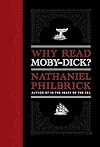
For the newcomer, this is a helpful introduction to themes encountered within the pages of Moby-Dick, as well as the life of Melville. For the convert, each brief chapter acts as a meditation, a devotion, for this "one book that deserves to be called our American bible" (9). For everyone, it is a tribute from an admiring and passionate reader to an author influenced by Owen Chase, Nathaniel Hawthorne, Shakespeare, the Bible, and his own whaling experiences.

I liked The Bad Girl. I thought it well written and entertaining. The problem I have with it, however, is that the character of Ricardo is unbelievable. No one would suffer as much abuse as he does at the hands The Bad Girl and keep returning for more. It just doesn't ring true. (Unless he is a masochist, which doesn't match the rest of his character.)
 This review was written for LibraryThing Early Reviewers.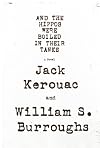
"It was prescient on the part of Burroughs that this novel remained hidden away. It could have easily gotten either Kerouac or Burroughs (or both) labeled as hacks very early in their careers, which would have been a major blow to modern literary history.
I only wish James Grauerholz and company had honored the wishes of Burroughs and left this one to molder in some damp attic, never to be discovered."
Read it all at http://troysworktable.blogspot.com/2009/03/and-hippos-were-boiled-in-their-tanks...
I only wish James Grauerholz and company had honored the wishes of Burroughs and left this one to molder in some damp attic, never to be discovered."
Read it all at http://troysworktable.blogspot.com/2009/03/and-hippos-were-boiled-in-their-tanks...
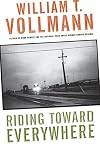
"[Vollmann] may not "spell it out" for us in the way we would like or hope for, but if we are already that dead or numb to what Vollmann is saying then we may as well put the book down, grab another Diet Coke, and turn on another exciting and thrilling episode of Dancing with the Stars on our 52-inch plasma screen television."
Read it all at http://troysworktable.blogspot.com/2008/05/riding-toward-everywhere.html
Read it all at http://troysworktable.blogspot.com/2008/05/riding-toward-everywhere.html
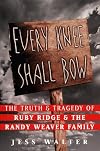
"Walter also made the terrain and climate of northern Idaho really come alive for me. I can picture the Weaver cabin, the hills, the rutted roads, the wet, and the winter as easily as I can picture the egos of Weaver, his attorney Gerry Spencer, and many of the federal agents."
Read it all at http://troysworktable.blogspot.com/2008/05/every-knee-shall-bow.html
Read it all at http://troysworktable.blogspot.com/2008/05/every-knee-shall-bow.html
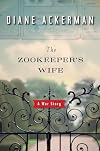
I was really looking forward to reading Diane Ackerman's The Zookeeper's Wife. I had read favorable reviews and the book jacket blurbs were by authors whose work I respect—Dava Sobel (Longitude) and Jonathan Safran Foer (Extremely Loud and Incredibly Close). I was intrigued by the story—a Polish couple saves the animals of the Warsaw Zoo as well as three hundred Jews during the German occupation of World War II.
But, halfway through the fourth chapter, I have completely abandoned the book, with no plans on returning to it. I am glad that I checked it out from the library.
---
The book appears to be meticulously researched. Ackerman has obviously done her homework. However, she tries too hard to get into the minds of the people and animals that she is portraying. In her attempts to draw the reader into the narrative, she has instead alienated this one. I think it would work well as a piece of dada writing that was intended to frustrate, but it does nothing for me as an historical work or a biography.
---
The first chapter was too frenetic, too scattershot, too disjointed. Paragraphs didn't follow one another. It was as though stream-of-consciousness was used to "set the scene." The atmosphere and tone never materialized because it wasn't apparent how we were moving between images. It was as though someone was throwing Polaroid pictures in front of me but not explaining the relevance of one to the others. Instead, I was supposed to guess. And, I don't mind working to figure show more out what is going on in a book. I like stories that challenge. This one just didn't make sense.
Ackerman attempts to establish some of the flavor of nineteen-thirties Warsaw. She describes particular Polish foods and floral arrangements. She conveys the smells and sights and sounds of a particular open-air market. Her attempts feel forced and pretentious at times. When explaining the movements of klipspringer antelopes, which seems extraneous to begin with, she writes
Startle them and they will bounce around the enclosure and possibly leap the fence, and, like all antelopes, they pronk. Legend has it that, in 1919, a Burmese man invented the closest human equivalent to pronking—a hopping stick for his daughter, Pogo, to use crossing puddles on her way to school. [30-31]
The merely extraneous becomes exponentially tangential.
---
She also writes in metaphors to which I cannot relate. I read what she wrote and found it difficult to imagine the connection between her words and the images they are supposed to describe.
Example one:
Not their breathing, though, and at night the sleepy tempo of breaths and snufflings created a zoological cantata hard to score. [24]
This just feels like someone trying too hard to impress, or someone trying to be overly precious. The analogy of the breathing of animals and classical music?
Example two:
The older boys believed, as Antonina did, that war belonged to the world of adults, not children. She sensed Rys yearned to grill them with questions, though he didn't want to look stupid or, worse, like a little kid, so he kept quiet about the invisible hand grenade lying at his feet that everyone feared might explode. [42]
First, he is a little kid. Second, what is the invisible hand grenade? His worries about the war? The possibility he may have to give his life in conflict or service to war? Antonina being overly dramatic? Ackerman being overly dramatic on Antonina's behalf? I sense the latter.
Example three:
Just before dawn, Antonina woke to the distant sound of gravel pouring down a metal chute, which her brain soon deciphered as airplane engines. [45]
I have heard gravel pouring down a metal chute and I have heard airplane engines. I don't see the similarity. I cannot "hear" the similarity.
Example four:
As they approached Zbawiciel Square, the engine noise ground louder and then planes floated overhead, appearing in the gap between the rooftops like stereopticon slides. [47]
Stereopticon slides? That was when I realized that I was done. I was finished not only because of the images that were just too divorced from the way that I see the world, but also due to the fact that I still had nothing that intrigued me. No character had been developed in any way. The attempts at establishing tone or setting or narrative thread were non-existent. I had nothing to grasp. I closed the book and then closed my eyes.
---
A couple of minutes later, I opened my eyes again and thought I would peek at a few pages farther along to see if things improved. I came upon a Nietzsche quote from Twilight of the Idols ("That which doesn't kill you, makes you stronger.") that was pulled out of context and that Ackerman tries to have me believe that Antonina related to her young son, who wasn't even present at the German aerial bombing of Zbawiciel Square, or in Warsaw, for that matter.
I was, and am, done with this book. It gets returned to the library tomorrow.
http://troysworktable.blogspot.com/2008/03/zookeepers-wife.html show less
But, halfway through the fourth chapter, I have completely abandoned the book, with no plans on returning to it. I am glad that I checked it out from the library.
---
The book appears to be meticulously researched. Ackerman has obviously done her homework. However, she tries too hard to get into the minds of the people and animals that she is portraying. In her attempts to draw the reader into the narrative, she has instead alienated this one. I think it would work well as a piece of dada writing that was intended to frustrate, but it does nothing for me as an historical work or a biography.
---
The first chapter was too frenetic, too scattershot, too disjointed. Paragraphs didn't follow one another. It was as though stream-of-consciousness was used to "set the scene." The atmosphere and tone never materialized because it wasn't apparent how we were moving between images. It was as though someone was throwing Polaroid pictures in front of me but not explaining the relevance of one to the others. Instead, I was supposed to guess. And, I don't mind working to figure show more out what is going on in a book. I like stories that challenge. This one just didn't make sense.
Ackerman attempts to establish some of the flavor of nineteen-thirties Warsaw. She describes particular Polish foods and floral arrangements. She conveys the smells and sights and sounds of a particular open-air market. Her attempts feel forced and pretentious at times. When explaining the movements of klipspringer antelopes, which seems extraneous to begin with, she writes
Startle them and they will bounce around the enclosure and possibly leap the fence, and, like all antelopes, they pronk. Legend has it that, in 1919, a Burmese man invented the closest human equivalent to pronking—a hopping stick for his daughter, Pogo, to use crossing puddles on her way to school. [30-31]
The merely extraneous becomes exponentially tangential.
---
She also writes in metaphors to which I cannot relate. I read what she wrote and found it difficult to imagine the connection between her words and the images they are supposed to describe.
Example one:
Not their breathing, though, and at night the sleepy tempo of breaths and snufflings created a zoological cantata hard to score. [24]
This just feels like someone trying too hard to impress, or someone trying to be overly precious. The analogy of the breathing of animals and classical music?
Example two:
The older boys believed, as Antonina did, that war belonged to the world of adults, not children. She sensed Rys yearned to grill them with questions, though he didn't want to look stupid or, worse, like a little kid, so he kept quiet about the invisible hand grenade lying at his feet that everyone feared might explode. [42]
First, he is a little kid. Second, what is the invisible hand grenade? His worries about the war? The possibility he may have to give his life in conflict or service to war? Antonina being overly dramatic? Ackerman being overly dramatic on Antonina's behalf? I sense the latter.
Example three:
Just before dawn, Antonina woke to the distant sound of gravel pouring down a metal chute, which her brain soon deciphered as airplane engines. [45]
I have heard gravel pouring down a metal chute and I have heard airplane engines. I don't see the similarity. I cannot "hear" the similarity.
Example four:
As they approached Zbawiciel Square, the engine noise ground louder and then planes floated overhead, appearing in the gap between the rooftops like stereopticon slides. [47]
Stereopticon slides? That was when I realized that I was done. I was finished not only because of the images that were just too divorced from the way that I see the world, but also due to the fact that I still had nothing that intrigued me. No character had been developed in any way. The attempts at establishing tone or setting or narrative thread were non-existent. I had nothing to grasp. I closed the book and then closed my eyes.
---
A couple of minutes later, I opened my eyes again and thought I would peek at a few pages farther along to see if things improved. I came upon a Nietzsche quote from Twilight of the Idols ("That which doesn't kill you, makes you stronger.") that was pulled out of context and that Ackerman tries to have me believe that Antonina related to her young son, who wasn't even present at the German aerial bombing of Zbawiciel Square, or in Warsaw, for that matter.
I was, and am, done with this book. It gets returned to the library tomorrow.
http://troysworktable.blogspot.com/2008/03/zookeepers-wife.html show less
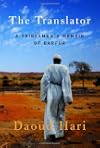
"But for now it was ashes and graves. This had been a good village."
—page 60, The Translator: A Tribesman's Memoir of Darfur by Daoud Hari
The Translator traverses familiar terrain. True, we may not have visited Darfur before. True, Daoud Hari was certainly not our guide. But, we have visited similar places. We have visited the killing fields of Rwanda in Philip Gourevitch's We Wish To Inform You that Tomorrow We Will Be Killed with Our Families: Stories from Rwanda, we have heard tales of terror, rescue, and redemption from Valentino Achak Deng in Southern Sudan in Dave Egger's What is the What: The Autobiography of Valentino Achak Deng, and we have experienced firsthand the roles of victim and perpetrator of violence in Liberia in Ishmael Beah's A Long Way Gone: Memoirs of a Boy Soldier.
Yet, this is new territory as well. The Translator is a slender and sparse volume. It lacks much of the research, historical detail, and knowledge of local and international politics that fill the other three books. Its primary strength, however, lies in the oral history of its storyteller, Daoud Hari. His words, as related to Dennis Burke and Megan McKenna, relate his story in a humble manner, which focuses on family, village, and community. His heart truly grieves for his people.
---
"We walked through a strange world of occasionally falling human limbs and heads. A leg fell near me. A head thumped to the ground farther away. Horrible smells filled the grove like poison gas that even show more hurts the eyes. And yet this was but the welcome to what we would eventually see: eighty-one men and boys fallen across one another, hacked and stabbed to death in that same attack."
—page 112, The Translator: A Tribesman's Memoir of Darfur by Daoud Hari
Another strength of Hari's memoir is that he presents us with the violence, horror, and carnage of Darfur without resorting to cinematic violence. The above passage is as graphic as it gets. It would have filled pages in the books by Gourevitch, Eggers, and Beah. Instead, Hari brings us to the violence and laments and mourns. He is asking us to do the same.
He is part of a group of Zaghawa survivors who interview their fellow survivors under the auspices of the United Nations and non-governmental organizations in the refugee camps of N'Djamena, Chad. He only presents a few of the 1,134 stories that his group collected during their interviews. He only needs to present a few because the rape, torture, slaughter, and decimation of those few are representative of the whole.
After this, he places his own life in jeopardy, once again highlighting the community over the individual, by acting as a translator and guide for foreign journalists who are trying to make the international community aware of the genocide. After reading the final chapters of his story, it is amazing that he cares about anyone at all. His spirit shines through in the final paragraphs, in the final sentences. It is still vibrant and strong, even amidst its experienced brokenness and loss. He asks, "What can one person do?" The answer—if we can use his own life, his own story, as example—is that there is plenty that one person can do: live life fully, love those around you, and act in justice and mercy. show less
—page 60, The Translator: A Tribesman's Memoir of Darfur by Daoud Hari
The Translator traverses familiar terrain. True, we may not have visited Darfur before. True, Daoud Hari was certainly not our guide. But, we have visited similar places. We have visited the killing fields of Rwanda in Philip Gourevitch's We Wish To Inform You that Tomorrow We Will Be Killed with Our Families: Stories from Rwanda, we have heard tales of terror, rescue, and redemption from Valentino Achak Deng in Southern Sudan in Dave Egger's What is the What: The Autobiography of Valentino Achak Deng, and we have experienced firsthand the roles of victim and perpetrator of violence in Liberia in Ishmael Beah's A Long Way Gone: Memoirs of a Boy Soldier.
Yet, this is new territory as well. The Translator is a slender and sparse volume. It lacks much of the research, historical detail, and knowledge of local and international politics that fill the other three books. Its primary strength, however, lies in the oral history of its storyteller, Daoud Hari. His words, as related to Dennis Burke and Megan McKenna, relate his story in a humble manner, which focuses on family, village, and community. His heart truly grieves for his people.
---
"We walked through a strange world of occasionally falling human limbs and heads. A leg fell near me. A head thumped to the ground farther away. Horrible smells filled the grove like poison gas that even show more hurts the eyes. And yet this was but the welcome to what we would eventually see: eighty-one men and boys fallen across one another, hacked and stabbed to death in that same attack."
—page 112, The Translator: A Tribesman's Memoir of Darfur by Daoud Hari
Another strength of Hari's memoir is that he presents us with the violence, horror, and carnage of Darfur without resorting to cinematic violence. The above passage is as graphic as it gets. It would have filled pages in the books by Gourevitch, Eggers, and Beah. Instead, Hari brings us to the violence and laments and mourns. He is asking us to do the same.
He is part of a group of Zaghawa survivors who interview their fellow survivors under the auspices of the United Nations and non-governmental organizations in the refugee camps of N'Djamena, Chad. He only presents a few of the 1,134 stories that his group collected during their interviews. He only needs to present a few because the rape, torture, slaughter, and decimation of those few are representative of the whole.
After this, he places his own life in jeopardy, once again highlighting the community over the individual, by acting as a translator and guide for foreign journalists who are trying to make the international community aware of the genocide. After reading the final chapters of his story, it is amazing that he cares about anyone at all. His spirit shines through in the final paragraphs, in the final sentences. It is still vibrant and strong, even amidst its experienced brokenness and loss. He asks, "What can one person do?" The answer—if we can use his own life, his own story, as example—is that there is plenty that one person can do: live life fully, love those around you, and act in justice and mercy. show less
This review was written for LibraryThing Early Reviewers.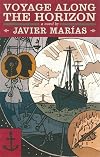
I am halfway through Voyage Along the Horizon, originally published in Spanish in 1972, and reissued in English in 2006. I find the book fascinating for many reasons.
First, it is a novel about a novel that is being read to someone. Within the novel being read there have been some additional writings that further distance me, the reader, from the characters, and, possibly, the truth. (The truth I am "closest" to may not necessarily be entirely reliable either.)
Second, there are elaborate, potentially unwieldy sentences, like the one quoted above, that actually dance upon the tongue or the mind as they are read. And, some of the sentences really do beg to be read out loud.
Third, for a story that is ostensibly about a book being read by one person to another, after meeting at a dinner party—and, the plot of the book being read mostly happens on a rather boring voyage by ship along the Mediterranean coastline en route to Antarctica—there is a lot of tension and strange goings-on...
Read it all at
http://troysworktable.blogspot.com/2007/05/short-report-voyage-along-horizon.htm...
First, it is a novel about a novel that is being read to someone. Within the novel being read there have been some additional writings that further distance me, the reader, from the characters, and, possibly, the truth. (The truth I am "closest" to may not necessarily be entirely reliable either.)
Second, there are elaborate, potentially unwieldy sentences, like the one quoted above, that actually dance upon the tongue or the mind as they are read. And, some of the sentences really do beg to be read out loud.
Third, for a story that is ostensibly about a book being read by one person to another, after meeting at a dinner party—and, the plot of the book being read mostly happens on a rather boring voyage by ship along the Mediterranean coastline en route to Antarctica—there is a lot of tension and strange goings-on...
Read it all at
http://troysworktable.blogspot.com/2007/05/short-report-voyage-along-horizon.htm...
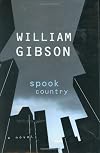
"Spook Country hints at a culture that trusts in celebrities because of their place of prominent media exposure. It hints at the grandiosity of events that are so unreal and ridiculous that they cannot, they will not, be taken seriously; they are merely games to be played, distractions to be embraced. It hints at a world where our very lives are constantly exposed and examined, where there are no secrets. That kind of place scares me. Oh, wait. We already live there."
Read it all at
http://troysworktable.blogspot.com/2007/11/spook-country.html
Read it all at
http://troysworktable.blogspot.com/2007/11/spook-country.html
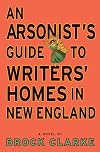
"The story is intriguing because Sam—more properly, author Brooke Clarke, and, therefore, Sam—is questioning the nature of story and narrative. What direct effect can a story, does a story, have on the world? What if that world has no soul—a life that feels hollow in a community that feels shallow with its seemingly happy families and cookie-cutter Camelot housing developments with cookie-cutter houses and superstore Book Warehouses? I hope to soon discover Sam's (and Brooke's) answer to these questions."
[And, I did!]
Read more about it here
http://troysworktable.blogspot.com/2007/11/dissection-of-dayan-arsonists-guide.h...
and here
http://troysworktable.blogspot.com/2007/11/pilate-asked-jesus-what-is-truth-john...
[And, I did!]
Read more about it here
http://troysworktable.blogspot.com/2007/11/dissection-of-dayan-arsonists-guide.h...
and here
http://troysworktable.blogspot.com/2007/11/pilate-asked-jesus-what-is-truth-john...
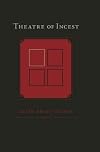
This is a horrible book, and not because of the subject matter. It is poorly conceived and poorly written...
The house imagery of windows and doors, which could also be parts of stage scenery, also fails. Instead of "providing" the story a soul, as the house does for Roderick and Madeline in Edgar Allan Poe's "The Fall of the House of Usher," the psychoanalytic framework of windows, doors, scenery, and structure is static. It frames the uninspired "erotic" scenes that are really non-scenes. Using the words "cock," "mound," and "pudenda" incessantly doesn't create a sensual scene. It bores. If you want to write about sex, then sear it into the reader's mind, like Henry Miller or William S. Burroughs or the Marquis de Sade do. If you are going to write about sexual taboos, then you better "go all the way."
Read it all at
http://troysworktable.blogspot.com/2008/01/theatre-of-incest.html
The house imagery of windows and doors, which could also be parts of stage scenery, also fails. Instead of "providing" the story a soul, as the house does for Roderick and Madeline in Edgar Allan Poe's "The Fall of the House of Usher," the psychoanalytic framework of windows, doors, scenery, and structure is static. It frames the uninspired "erotic" scenes that are really non-scenes. Using the words "cock," "mound," and "pudenda" incessantly doesn't create a sensual scene. It bores. If you want to write about sex, then sear it into the reader's mind, like Henry Miller or William S. Burroughs or the Marquis de Sade do. If you are going to write about sexual taboos, then you better "go all the way."
Read it all at
http://troysworktable.blogspot.com/2008/01/theatre-of-incest.html
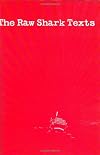
"The Raw Shark Texts holds great promise. It is pregnant with possibilities in the same way that Jeff Noon's Vurt and William Gibson's Neuromancer and Idoru are. It presents and sustains those possibilities until the final of four sections, whereupon it collapses in on itself..."
Read it all at http://troysworktable.blogspot.com/2007/07/raw-shark-texts_25.html
Read it all at http://troysworktable.blogspot.com/2007/07/raw-shark-texts_25.html
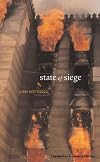
"The voices of a siege are myriad and multivalent, even though we are usually only treated to that of the victor—either the voice of the army that finally storms the beleaguered city or the collective voice of the citizenry that successfully repels the besiegers. Rarely do we hear the voice of the military commander of the impotent and inept International Mediation Force. Rarely do we hear the voice of the victim of fatal sniper or mortar attack. Rarely do we hear the voice of one enduring the siege, attempting to navigate bullets and a "war" economy. Yet, these are exactly the voices that we hear in Juan Goytisolo's novel of war-torn Sarajevo, State of Siege, in addition to the voice of one who has been in the city to observe and write about it (as Goytisolo has).
His novel is a Möbius strip of narrative. There are at least three main interconnected narratives woven into one seamless story that falls in on itself again and again. A character in one of the narratives reads about himself in another; a character in that other narrative reads about himself in the prior. The absurd, claustrophobic, paranoid existence of a siege is perfectly captured by Goytisolo."
Read it all at http://troysworktable.blogspot.com/2007/05/siege-dreams.html
His novel is a Möbius strip of narrative. There are at least three main interconnected narratives woven into one seamless story that falls in on itself again and again. A character in one of the narratives reads about himself in another; a character in that other narrative reads about himself in the prior. The absurd, claustrophobic, paranoid existence of a siege is perfectly captured by Goytisolo."
Read it all at http://troysworktable.blogspot.com/2007/05/siege-dreams.html
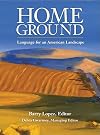
"I am alone, except for the occasional sea gull or group of plovers. I am wearing my father-in-law's spare coat because I forgot mine in the final chaotic moment of packing up and departing. The neck of the coat is drawn up over my mouth and nose. My fleece cap is pulled down to my brow. I am shielding the half-inch of space between with both gloved hands, walking into the wind."
Read it all at http://troysworktable.blogspot.com/2007/01/ocean-calls.html
Read it all at http://troysworktable.blogspot.com/2007/01/ocean-calls.html

"Like Blood Diamond, it combines individual heroics with the problems of the modern world, in this case how the rape of the global environment, capitalism and colonialism run amok, and the need of nation-states/corporations to establish and maintain control are leading us down a path of our own destruction."
Read it all at http://troysworktable.blogspot.com/2007/04/cities-of-red-night-1.html
Read it all at http://troysworktable.blogspot.com/2007/04/cities-of-red-night-1.html
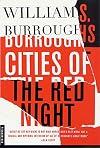
"Time collapses in on itself, such that all times are present. The Cities of the Red Night exist a hundred thousand years ago, yet the armies that battle there consist of seventeenth-century pirates, modern police and military forces, creatures from the future, gods of the golden age."
Read it all at http://troysworktable.blogspot.com/2007/04/cities-of-red-night-2.html
Read it all at http://troysworktable.blogspot.com/2007/04/cities-of-red-night-2.html
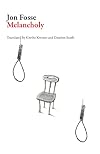
"It is just that he plays them out so many times in his head that we see them from angles that are just slightly askew from one another. It is like a kaleidoscope of thought, and we are moving through his mind with him."
Read it all at http://troysworktable.blogspot.com/2007/02/melancholy.html
Read it all at http://troysworktable.blogspot.com/2007/02/melancholy.html
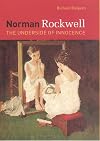
"Therefore, Halpern's discussion centers not only on what Rockwell brings to the canvas or magazine cover, but also how it reflects the society that Rockwell paints for and lives within. The elements of nostalgia and innocence in Rockwell's work turn out to not be quite so concerned with the past or with purity. They are ways of masking the foibles and flaws, the sexuality and violence, the gaze and voyeurism of painter and audience, that pulse just beneath our conscious acknowledgement."
Read it all at http://troysworktable.blogspot.com/2007/02/physiological-manifestations-of.html
Read it all at http://troysworktable.blogspot.com/2007/02/physiological-manifestations-of.html
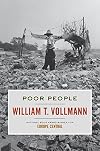
"Throughout the book, I read about people who have been dispossessed of property, belongings, employment, dignity, or security due to circumstances that are oftentimes beyond their control. It made me thankful for what I do have and who I am. It saddened me for those whose lives consist of a struggle for mere survival."
Read it all at http://troysworktable.blogspot.com/2007/04/poor-people.html
Read it all at http://troysworktable.blogspot.com/2007/04/poor-people.html
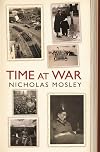
"What I liked about the book is Mosley's deflation of his younger self. He challenges his youthful arrogance from the standpoint of a man at the end of life, but also shows how he was challenging many of his assumptions and values even as a young man. He is snivelling and brash and spoiled. He is warm and compassionate and warm-hearted...This humanity and confusion and self-effacement and reevaluation makes him rather endearing."
Read it all at http://troysworktable.blogspot.com/2007/01/time-at-war.html
Read it all at http://troysworktable.blogspot.com/2007/01/time-at-war.html
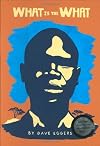
"Tuesday night brings more tales of the destruction of Marial Bai. Of the armed militias of Arab horsemen, known then as the murahaleen, known now as the janjaweed, who were intent on killing the Dinka, the tribe of which Achak belongs. Of death and survival in the bush. Of the loss of so many friends. Of years living in refugee camps in Ethiopia and Kenya. Of an opportunity to come to the United States, almost thwarted, since he was initially flying here on September 11, 2001, and incoming air traffic was halted due to the terrorist attacks in Washington DC and New York. Of the difficulty of adjusting to a new language and culture and people. Of his being mugged and robbed. The tales were right from the mouth of the man known as Valentino Achak Deng."
Read it all at http://troysworktable.blogspot.com/2007/01/valentino-achak-deng.html
Read it all at http://troysworktable.blogspot.com/2007/01/valentino-achak-deng.html
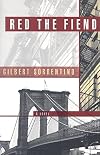
"I want to look away but cannot. I am pulled into the story, even as I find it difficult to identify with any of the characters. It is even somewhat to identify with Red, since he is a difficult character to love in spite of the abuse he endures. He is not very sympathetic."
Read it all at http://troysworktable.blogspot.com/2007/01/shades-of-red.html
Read it all at http://troysworktable.blogspot.com/2007/01/shades-of-red.html