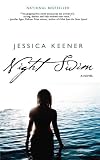
Night Swim
by Jessica Keener
On This Page
Description
"Sixteen-year-old Sarah Kunitz lives in a posh, suburban world of 1970 Boston. From the outside, her parents' lifestyle appears enviable--a world defined by cocktail parties, expensive cars, and live-in maids to care for their children--but inside their five-bedroom house, all is not well for the Kunitz family. Coming home from school, Sarah finds her well-dressed, pill popping mother lying disheveled on their living room couch. At night, to escape their parents' arguments, Sarah and her show more oldest brother, Peter, find solace in music, while her two younger brothers retreat to their rooms and imaginary lives. Any vestige of decorum and stability drains away when their mother dies in a car crash one terrible winter day. Soon after, their father, a self-absorbed, bombastic professor begins an affair with a younger colleague. Sarah, aggrieved, dives into two summer romances that lead to unforeseen consequences. In a story that will make you laugh and cry, Night Swim shows how a family, bound by heartache, learns to love again."--from cover, p. [4] show lessTags
Recommendations












































Member Reviews
There are certain books that have an intangible quality that transcends the nuances and the mechanics of good writing and literature. Such books somehow have, through their language and the emotions they evoke on the page, the ability to transport the reader right back to a pivotal and critical time in one's life.
Night Swim is that kind of book for me.
Those of you who know my personal history will know why Night Swim resonated so deeply (especially in February, especially this week). This is the coming-of-age story of 16-year old Sarah Kunitz, growing up in a dysfunctional family in an affluent suburb of Boston in 1970, and grieving the sudden, tragic loss of her mother. Just substitute Philadelphia for Boston, 1985 for 1970, father for show more mother ... and Sarah Kunitz becomes Me, minus some of the dysfunction and a couple of details - and one significant storyline that happens to Sarah in the aftermath of her mother's death.
Jessica Keener captures so precisely the inner emotions of a teenager who has lost a parent that it is natural to assume (as I did) that this element of Night Swim is completely autobiographical. It is not (it's based on Keener's experience with a close friend) and to be able to render that so perfectly in fiction is just one of the reasons why this makes Keener such a talent and a writer worth watching.
Keener has the ability to seamlessly change the novel's tone to fit the scene, and that's a trait that sometimes even much more supposedly seasoned writers have difficulty accomplishing. For example, while reading the descriptions of Sarah's mother's funeral and shiva, my initial thoughts were that the tone felt flat ... and then I thought: of course it feels flat. It needs to feel that way because at such a time your world IS flattened. YOU ARE emotionally flattened.
What gives Night Swim its authenticity are the little, minuscule details surrounding a parent's death (or really, any significant loss) that Keener weaves into Sarah's story.The way teachers pause when saying your name while taking attendance when you come back to school the week after your parent dies. The quick, stealth-like glances that other students give you in the hallway right before their eyes avert from yours.
And if the little details contained within give Night Swim its authenticity, it is the big themes that gives Jessica Keener's debut novel the power to become one of the defining coming-of-age novels of our time and the potential to become among the classics in this genre. There is an element of Night Swim that truly feels reminiscent of the work of Judy Blume, and knowing what a revered icon in literature Ms. Blume is (to myself included), I don't say that nor draw that comparison lightly. But it's there, and it exists, and although I am not a big young adult novel (YA) reader, of those such novels I have read I cannot recall any modern YA/coming-of-age novel that has so poignantly reminded me of what I believe to be the standard-bearer.
Because like Judy Blume, Jessica Keener tackles the big themes and the larger societal, cultural issues - the dysfunctional disconnect of a family before and after a tragic loss, anti-Semitism, racism, Vietnam, feminism, one's emerging sexuality and personal experimentation - and connects them throughout Night Swim in a way that isn't heavy-handed nor patronizing to her reader.
"Mr. Bingham told us to keep in mind what we learned about molecules and to turn to the section on ecosystems and the evolution of swamps. He looked at me, but then he talked in his usual stern way about beavers, and trees and water interacting as one system. ' The deletion of one affects the processing of the others,' he said. 'Mr. Beaver makes his dam, the water pools up, the tree roots begin to rot.' He lifted his bearded chin, perused the row of students then looked at me again and said, 'all things connected,' in a surprisingly gentle voice." pg. 146
If there's one over-riding theme or message in Night Swim, it's that of the connections we make with those we love and what happens when that goes missing and we seek substitutes. We see this with each member of the Kunitz family, each of whom finds solace in something separate but absolutely essential to him or herself in order to cope with the family's dysfunction as they grieve and heal in the loss of their mother.
For their father, it's a relationship with a younger colleague. For Sarah's brother, Robert, it's nurturing his fish and delving into reading a series of time travel books; for Elliot, the youngest brother, it's a communion with a vast menagerie of plastic animals, lining them up in circles by patterns, delving into an imaginary world.
"It might have been easy to think that Elliot didn't notice unruly behavior precisely because it was all he had known. But I knew that wasn't so. He simply chose to ignore certain aspects of others' personalities. Robert treated Elliot poorly whenever Elliot came in to look at his fish. The fishbowl was a magnet for Elliot. It held a transcendent light that captured a silence and an intensity that Elliot identified with. .... In this way, Elliot possessed weight, self-knowledge, and a natural understanding of the multiple ways other people responded to the same stimulus.
So it was that Elliot also had a way of accepting Mother's death, albeit, not without a sage's wisdom and sad face. He accepted the illogicality of it. In his nine-year-old mind that had matured emotionally beyond the clumsiness of his body, he said that God was like clay and that all things on earth came in different shapes - including Mother - and that Mother had simply been remolded, but still remained a part of us. He was certain of this.
"Mother visits me after school," he said.
I sat on the floor of his room, next to the windowsill, and watched him line up a group of dogs and cats in a circle. He alternated cat, dog, cat, dog. I didn't know what to say to this. What he said scared but comforted me.
"How?"
"She came with the wind."
"That's beautiful, Elliot."
"You don't believe me."
I didn't know if I did but I felt her puzzling silence, her completely muted presence, an unspoken puzzle I had not solved.
"Yes and no. I don't know. It's confusing."
If these vespers, these harbingers of changing weather added up to some kind of ghostlike substance, then I did believe. But I doubted. Doubt obscured me. The question mark would remain. Yet sitting next to Elliot calmed me. If he could manage so could I.
What I began to learn, though, is that the question mark - my mother - stayed with me, followed me wherever I went. She floated inside, a buoy without a boat." (pg. 168-169)
As the mom of a child with autism, I adored Elliot's character and Keener's gentle, sensitive rendering of him - and knowing that Night Swim is set in 1970 when diagnosis criteria and services weren't what they are today, wondered how Elliot fared as an adult.
Keener gives her reader a small glimpse into that world, thankfully - albeit a small one. (I admit, I wanted more.) Night Swim opens with an adult Sarah receiving an email from a former neighbor who has come across her music online and sampled the links. "Mickey Fineburg's email brings everything back again." (prelude)
For Sarah, her escape and connection (one that she shares with her brother Peter) comes in the form of music, which plays a predominant role in Night Swim and is again used to bridge that connection with Sarah and her mother. (Her mother was a violinist before having children and developing arthritis.)
"By the time I reached the last lines of the first stanza, and love - will steer the stars - I had left the auditorium on a solo ride, as if I were in a hot-air balloon drifting over high branches and the chorus like leaves rustling below. Together we sang 'This is the dawning of the Age of Aquarius." I stood taller, turning my palm out, offering up my heart. It was here, in this moment of singing, that I shed my shadows and ghosts." (pg. 182)
That concept of being able to shed shadows and ghosts, even temporarily, is what gives Night Swim its heft as a novel. While there are elements in our lives that can work wonders to help soothe our pain, it is always there - always present in the form of a reminder, in a memory, a Friend Request, in an email from a former neighbor coming across the country in the midnight hours. Our past is part and parcel of what makes us the people we are.
All things connected. show less
Night Swim is that kind of book for me.
Those of you who know my personal history will know why Night Swim resonated so deeply (especially in February, especially this week). This is the coming-of-age story of 16-year old Sarah Kunitz, growing up in a dysfunctional family in an affluent suburb of Boston in 1970, and grieving the sudden, tragic loss of her mother. Just substitute Philadelphia for Boston, 1985 for 1970, father for show more mother ... and Sarah Kunitz becomes Me, minus some of the dysfunction and a couple of details - and one significant storyline that happens to Sarah in the aftermath of her mother's death.
Jessica Keener captures so precisely the inner emotions of a teenager who has lost a parent that it is natural to assume (as I did) that this element of Night Swim is completely autobiographical. It is not (it's based on Keener's experience with a close friend) and to be able to render that so perfectly in fiction is just one of the reasons why this makes Keener such a talent and a writer worth watching.
Keener has the ability to seamlessly change the novel's tone to fit the scene, and that's a trait that sometimes even much more supposedly seasoned writers have difficulty accomplishing. For example, while reading the descriptions of Sarah's mother's funeral and shiva, my initial thoughts were that the tone felt flat ... and then I thought: of course it feels flat. It needs to feel that way because at such a time your world IS flattened. YOU ARE emotionally flattened.
What gives Night Swim its authenticity are the little, minuscule details surrounding a parent's death (or really, any significant loss) that Keener weaves into Sarah's story.The way teachers pause when saying your name while taking attendance when you come back to school the week after your parent dies. The quick, stealth-like glances that other students give you in the hallway right before their eyes avert from yours.
And if the little details contained within give Night Swim its authenticity, it is the big themes that gives Jessica Keener's debut novel the power to become one of the defining coming-of-age novels of our time and the potential to become among the classics in this genre. There is an element of Night Swim that truly feels reminiscent of the work of Judy Blume, and knowing what a revered icon in literature Ms. Blume is (to myself included), I don't say that nor draw that comparison lightly. But it's there, and it exists, and although I am not a big young adult novel (YA) reader, of those such novels I have read I cannot recall any modern YA/coming-of-age novel that has so poignantly reminded me of what I believe to be the standard-bearer.
Because like Judy Blume, Jessica Keener tackles the big themes and the larger societal, cultural issues - the dysfunctional disconnect of a family before and after a tragic loss, anti-Semitism, racism, Vietnam, feminism, one's emerging sexuality and personal experimentation - and connects them throughout Night Swim in a way that isn't heavy-handed nor patronizing to her reader.
"Mr. Bingham told us to keep in mind what we learned about molecules and to turn to the section on ecosystems and the evolution of swamps. He looked at me, but then he talked in his usual stern way about beavers, and trees and water interacting as one system. ' The deletion of one affects the processing of the others,' he said. 'Mr. Beaver makes his dam, the water pools up, the tree roots begin to rot.' He lifted his bearded chin, perused the row of students then looked at me again and said, 'all things connected,' in a surprisingly gentle voice." pg. 146
If there's one over-riding theme or message in Night Swim, it's that of the connections we make with those we love and what happens when that goes missing and we seek substitutes. We see this with each member of the Kunitz family, each of whom finds solace in something separate but absolutely essential to him or herself in order to cope with the family's dysfunction as they grieve and heal in the loss of their mother.
For their father, it's a relationship with a younger colleague. For Sarah's brother, Robert, it's nurturing his fish and delving into reading a series of time travel books; for Elliot, the youngest brother, it's a communion with a vast menagerie of plastic animals, lining them up in circles by patterns, delving into an imaginary world.
"It might have been easy to think that Elliot didn't notice unruly behavior precisely because it was all he had known. But I knew that wasn't so. He simply chose to ignore certain aspects of others' personalities. Robert treated Elliot poorly whenever Elliot came in to look at his fish. The fishbowl was a magnet for Elliot. It held a transcendent light that captured a silence and an intensity that Elliot identified with. .... In this way, Elliot possessed weight, self-knowledge, and a natural understanding of the multiple ways other people responded to the same stimulus.
So it was that Elliot also had a way of accepting Mother's death, albeit, not without a sage's wisdom and sad face. He accepted the illogicality of it. In his nine-year-old mind that had matured emotionally beyond the clumsiness of his body, he said that God was like clay and that all things on earth came in different shapes - including Mother - and that Mother had simply been remolded, but still remained a part of us. He was certain of this.
"Mother visits me after school," he said.
I sat on the floor of his room, next to the windowsill, and watched him line up a group of dogs and cats in a circle. He alternated cat, dog, cat, dog. I didn't know what to say to this. What he said scared but comforted me.
"How?"
"She came with the wind."
"That's beautiful, Elliot."
"You don't believe me."
I didn't know if I did but I felt her puzzling silence, her completely muted presence, an unspoken puzzle I had not solved.
"Yes and no. I don't know. It's confusing."
If these vespers, these harbingers of changing weather added up to some kind of ghostlike substance, then I did believe. But I doubted. Doubt obscured me. The question mark would remain. Yet sitting next to Elliot calmed me. If he could manage so could I.
What I began to learn, though, is that the question mark - my mother - stayed with me, followed me wherever I went. She floated inside, a buoy without a boat." (pg. 168-169)
As the mom of a child with autism, I adored Elliot's character and Keener's gentle, sensitive rendering of him - and knowing that Night Swim is set in 1970 when diagnosis criteria and services weren't what they are today, wondered how Elliot fared as an adult.
Keener gives her reader a small glimpse into that world, thankfully - albeit a small one. (I admit, I wanted more.) Night Swim opens with an adult Sarah receiving an email from a former neighbor who has come across her music online and sampled the links. "Mickey Fineburg's email brings everything back again." (prelude)
For Sarah, her escape and connection (one that she shares with her brother Peter) comes in the form of music, which plays a predominant role in Night Swim and is again used to bridge that connection with Sarah and her mother. (Her mother was a violinist before having children and developing arthritis.)
"By the time I reached the last lines of the first stanza, and love - will steer the stars - I had left the auditorium on a solo ride, as if I were in a hot-air balloon drifting over high branches and the chorus like leaves rustling below. Together we sang 'This is the dawning of the Age of Aquarius." I stood taller, turning my palm out, offering up my heart. It was here, in this moment of singing, that I shed my shadows and ghosts." (pg. 182)
That concept of being able to shed shadows and ghosts, even temporarily, is what gives Night Swim its heft as a novel. While there are elements in our lives that can work wonders to help soothe our pain, it is always there - always present in the form of a reminder, in a memory, a Friend Request, in an email from a former neighbor coming across the country in the midnight hours. Our past is part and parcel of what makes us the people we are.
All things connected. show less
This book surprised the heck out of me. I don’t know what I loved more – Jessica Keener’s descriptions of the world contained within the book, or her ability to really capture the voice of each and every individual character. When I picked up Night Swim and started to read, I struggled a little bit to find a groove, figure out what Keener was doing, but man – once I got into a groove I couldn’t put this book down, to the detriment of the stacks upon stacks of homework I had to do.
A sort of coming-of-age story, but also a story about relationships between parents and children, different races and classes, religions, and more. This was a hodge-podge of everything that is dynamite in a story, and instead of overwhelming that show more story with too much, it worked very, very well, creating a compelling story that’s been stuck in my mind since I put the book down.
Every once in a while I pick up a book that I wouldn’t normally pick up in a book store. The biggest complaint about this book is the cover, I find it way too boring and bland considering the content it’s hiding. If I had seen it in a bookstore, I just wouldn’t have been interested – but I didn’t. Instead I was hooked by a description and that hook was enough to get me to look past the cover and find the story.
Y’all, this one was very much worth the read. show less
A sort of coming-of-age story, but also a story about relationships between parents and children, different races and classes, religions, and more. This was a hodge-podge of everything that is dynamite in a story, and instead of overwhelming that show more story with too much, it worked very, very well, creating a compelling story that’s been stuck in my mind since I put the book down.
Every once in a while I pick up a book that I wouldn’t normally pick up in a book store. The biggest complaint about this book is the cover, I find it way too boring and bland considering the content it’s hiding. If I had seen it in a bookstore, I just wouldn’t have been interested – but I didn’t. Instead I was hooked by a description and that hook was enough to get me to look past the cover and find the story.
Y’all, this one was very much worth the read. show less
I've been taking a writing class, and the teacher asked us to buy and read this book. Then we Skyped with author Jessica Keener in class this week. I have to say, I much preferred the author to the book.
Our writing teacher's opinion was that the writing in Night Swim was far and away the best she'd read in years. I just didn't see it. Certainly there were standout moments - for instance, when the narrator describes her father eating dinner standing at the counter, bits of food dropping like pieces of him falling apart - but on the whole, I thought it was a little choppy. It also seemed to get sloppier toward the end.
I always feel bad for an author when the book is poorly edited, and that was the case here. Maybe some readers don't show more notice or mind, but grammar and punctuation errors yank me out of the story, as do glaring editing oversights like a very specific word used twice on the same page or used incorrectly.
Here's what I did like about the book: nearly all the supporting characters were well-developed, and Keener didn't offer any easy answers. Near the end, I found myself thinking, "Isn't she going to offer a final judgment on whether or not we are supposed to like Sherry, or some conclusive evidence that Sarah either does or does not regret her decisions?" But there's none of that, and even though it makes me uncomfortable as a reader, I appreciate the ambiguity. show less
Our writing teacher's opinion was that the writing in Night Swim was far and away the best she'd read in years. I just didn't see it. Certainly there were standout moments - for instance, when the narrator describes her father eating dinner standing at the counter, bits of food dropping like pieces of him falling apart - but on the whole, I thought it was a little choppy. It also seemed to get sloppier toward the end.
I always feel bad for an author when the book is poorly edited, and that was the case here. Maybe some readers don't show more notice or mind, but grammar and punctuation errors yank me out of the story, as do glaring editing oversights like a very specific word used twice on the same page or used incorrectly.
Here's what I did like about the book: nearly all the supporting characters were well-developed, and Keener didn't offer any easy answers. Near the end, I found myself thinking, "Isn't she going to offer a final judgment on whether or not we are supposed to like Sherry, or some conclusive evidence that Sarah either does or does not regret her decisions?" But there's none of that, and even though it makes me uncomfortable as a reader, I appreciate the ambiguity. show less
Sarah, the teenager in this novel, is part of a complicated family dynamic, and has a lot of outside angst to deal with in the midst of her own coming of age. Keener paints a realistic picture of a teenager trying to sort out what life means amidst problems that adults have a struggle to handle. She develops her characters well and does make you care what happens to them--Sarah in particular. My favorite character in the book is Dora, the black maid, who is comforting and compassionate underneath a tough (it's got nothing to do with me) veneer. I like the way Dora sees what is going on in the family, when most of its members seem sadly clueless.
Unfortunately, this just isn't my kind of book. It does not touch on what the 70s were like, show more it touches on the cliche of what the 70s were like. Sarah is too modern, independent and sophisticated in her thinking for a girl of the 70s. I think it would have much more traction with a younger reader. Keener writes very well and the story moves at exactly the right pace and if it had felt closer to home for me, I might have rated it higher. show less
Unfortunately, this just isn't my kind of book. It does not touch on what the 70s were like, show more it touches on the cliche of what the 70s were like. Sarah is too modern, independent and sophisticated in her thinking for a girl of the 70s. I think it would have much more traction with a younger reader. Keener writes very well and the story moves at exactly the right pace and if it had felt closer to home for me, I might have rated it higher. show less
Night Swim by Jessica Keener
This coming of age book took me a bit by surprise.
'It's about a young lady who has lost her mother to a tragic accident.
From that point on she is bullied and deals with it at school with help from her friends.
She tries to fit in being Jewish also. Her father sends her away for school during the week and she experiments with a boy and sex.
After they are reprimanded and sent back home they have no contact but she finds a new boy.
Like that the mother figure in the house is NOT the father's new girlfriend but a housemaid. She comes to the young girls aid and they talk to one another as she helps her get over problems.
Found at times the adult situations were a bit explicit.
Received this review copy from The show more Story Plant and this is my honest opinion. show less
This coming of age book took me a bit by surprise.
'It's about a young lady who has lost her mother to a tragic accident.
From that point on she is bullied and deals with it at school with help from her friends.
She tries to fit in being Jewish also. Her father sends her away for school during the week and she experiments with a boy and sex.
After they are reprimanded and sent back home they have no contact but she finds a new boy.
Like that the mother figure in the house is NOT the father's new girlfriend but a housemaid. She comes to the young girls aid and they talk to one another as she helps her get over problems.
Found at times the adult situations were a bit explicit.
Received this review copy from The show more Story Plant and this is my honest opinion. show less
3.5 stars. i sincerely wish Goodreads would add half star rating options, or increase the scale from 1-5 to 1-10.
Sarah Kunitz, 15 Jahre alt, lebt mit ihren drei Brüdern und den Eltern in einer Vorstadt von Boston. Der Vater ist Professor für Literatur, sehr streng und reagiert cholerisch, wenn etwas nicht nach seinen Vorstellungen läuft. Die Mutter scheint über dem Ganzen zu schweben, ihr Interesse gilt den Rosen im Garten und ihrem Club. Beide trinken zu viel, die Mutter nimmt außerdem Tabletten gegen ihre Schmerzen. Die Kinder flüchten in ihre eigenen Welten, weil sie spüren, dass etwas nicht in Ordnung ist.
Den ersten Unfall überlebt die depressive Mutter, beim nächsten Unfall stirbt sie. Keiner redet mit den Kindern über die Hintergründe. Die Familie droht auseinander zu brechen. Peter flüchtet aus dem Haus, um Musik zu machen. show more Robert versinkt in seinen Fantasybüchern. Elliot das Nesthäckchen ist ein abgeklärtes, liebenswertes Kind, das mit seinen Spielzeugtieren redet und von ihnen Antwort erhält. Sarah kümmert sich um die kleineren Brüder so gut sie kann, aber sie kann die Mutter nicht ersetzen. Sie brauchte ihre Mutter ja selbst dringend. Die Musik spielt auch für Sarah eine immer größere Rolle.
Es ist eine autobiographische Geschichte, die sehr eindringlich ist. Der Schreibstil ist voller Metaphern und Bildern.
Eine bewegende Geschichte und ein empfehlenswertes Buch. show less
Den ersten Unfall überlebt die depressive Mutter, beim nächsten Unfall stirbt sie. Keiner redet mit den Kindern über die Hintergründe. Die Familie droht auseinander zu brechen. Peter flüchtet aus dem Haus, um Musik zu machen. show more Robert versinkt in seinen Fantasybüchern. Elliot das Nesthäckchen ist ein abgeklärtes, liebenswertes Kind, das mit seinen Spielzeugtieren redet und von ihnen Antwort erhält. Sarah kümmert sich um die kleineren Brüder so gut sie kann, aber sie kann die Mutter nicht ersetzen. Sie brauchte ihre Mutter ja selbst dringend. Die Musik spielt auch für Sarah eine immer größere Rolle.
Es ist eine autobiographische Geschichte, die sehr eindringlich ist. Der Schreibstil ist voller Metaphern und Bildern.
Eine bewegende Geschichte und ein empfehlenswertes Buch. show less
May 26, 2019German
Members
- Recently Added By
Lists

Top Five Books of 2014
1,064 works; 398 members

thinking of reading in 2016
99 works; 1 member
Author Information

6 Works 274 Members
Jessica Keener has been listed in The Pushcart Prize under "Outstanding Writers." Her fiction has appeared most recently in: Connotation Press: An Online Artifact, Night Train, and Wilderness House Literary Review. A recipient of a Massachusetts Cultural Council Artist's Grant Program, and second prize in fiction from Redbook magazine, her feature show more articles have appeared in The Boston Globe, Design New England, O, The Oprah Magazine and other national publications. Her first novel, Night Swim was published to critical acclaim and was a national bestseller. show less
Common Knowledge
- Canonical title
- Night Swim
- Original title
- Night Swim
- Original publication date
- 2012
- Epigraph
- Constantly in the darkness
Where's that at?
Joni Mitchell
"A Case of You"
So winter froze the river
And winter birds don't sing,
So winter makes you shiver
So time is gonna bring you spring
Laura Nyro<... (show all)br>"Time and Love" - Dedication
- For Barr
- First words
- Mickey Fineburg's email brings everything back again.
Classifications
Statistics
- Members
- 141
- Popularity
- 231,479
- Reviews
- 8
- Rating
- (3.86)
- Languages
- English, German
- Media
- Paper, Ebook
- ISBNs
- 10
- ASINs
- 4